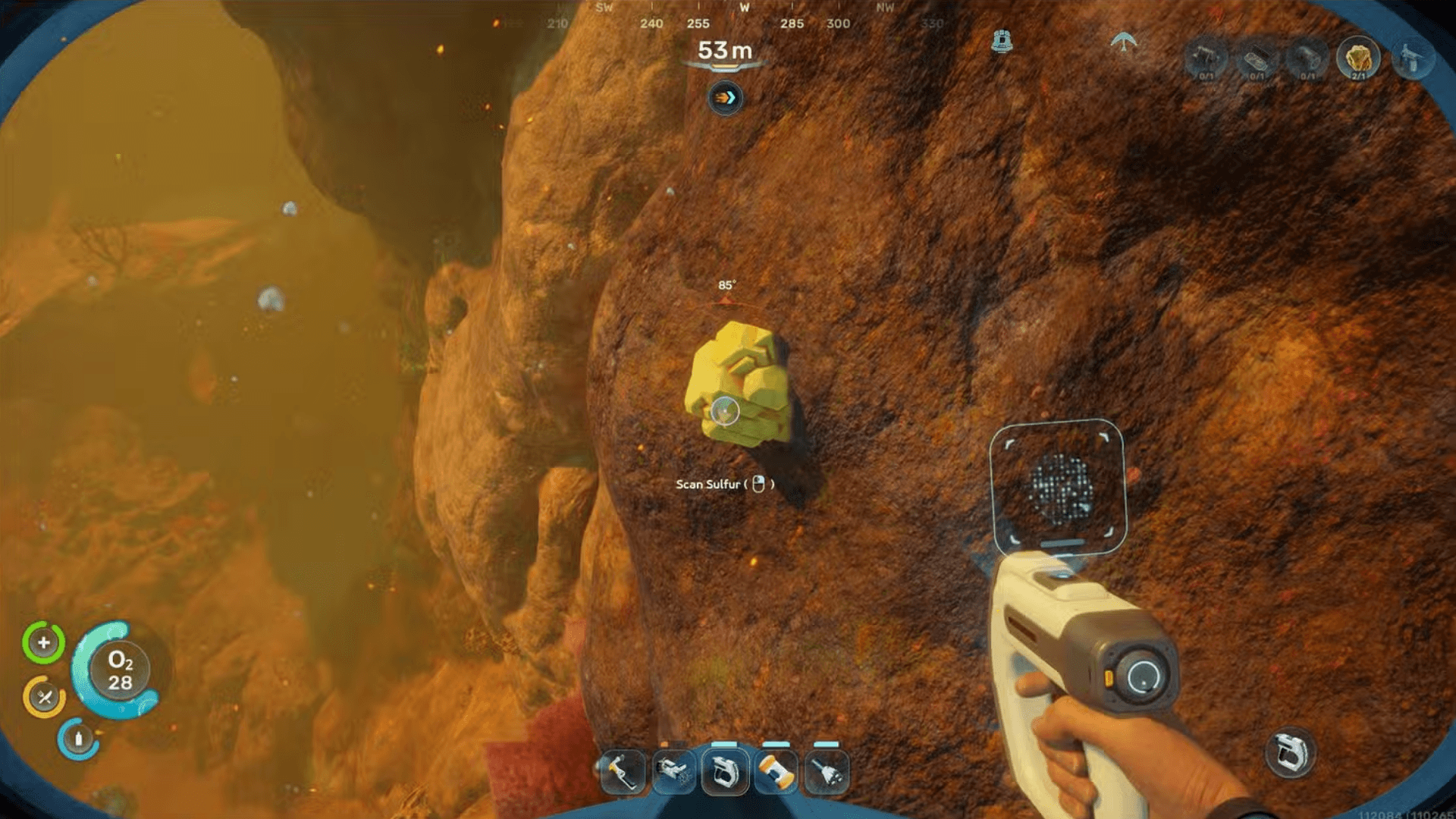

Sulfur is one of those resources in Subnautica 2 that you won't need constantly, but when you do need it, you really need it. The problem is that it only spawns in the hotter parts of the ocean, and heading there without the right adaptation will kill you fast. This guide covers where to find sulfur, the best farming spot for bulk collection, and exactly what you can craft with it.
Where does sulfur spawn in Subnautica 2?
Sulfur appears as bright yellow crystals, similar in shape to salt deposits but with a more jagged, clustered look. Sulfur exclusively spawns near heat sources, particularly around lava geysers and volcanic vent regions. You won't find it in the shallow, temperate waters near your starting area.
The resource comes in three sizes. Loose pieces scattered on the sand can be picked up by hand. Medium deposits require a bit more effort. Large deposits need the Sonic Resonator to break apart, and those are the ones worth targeting when you want to farm in bulk.
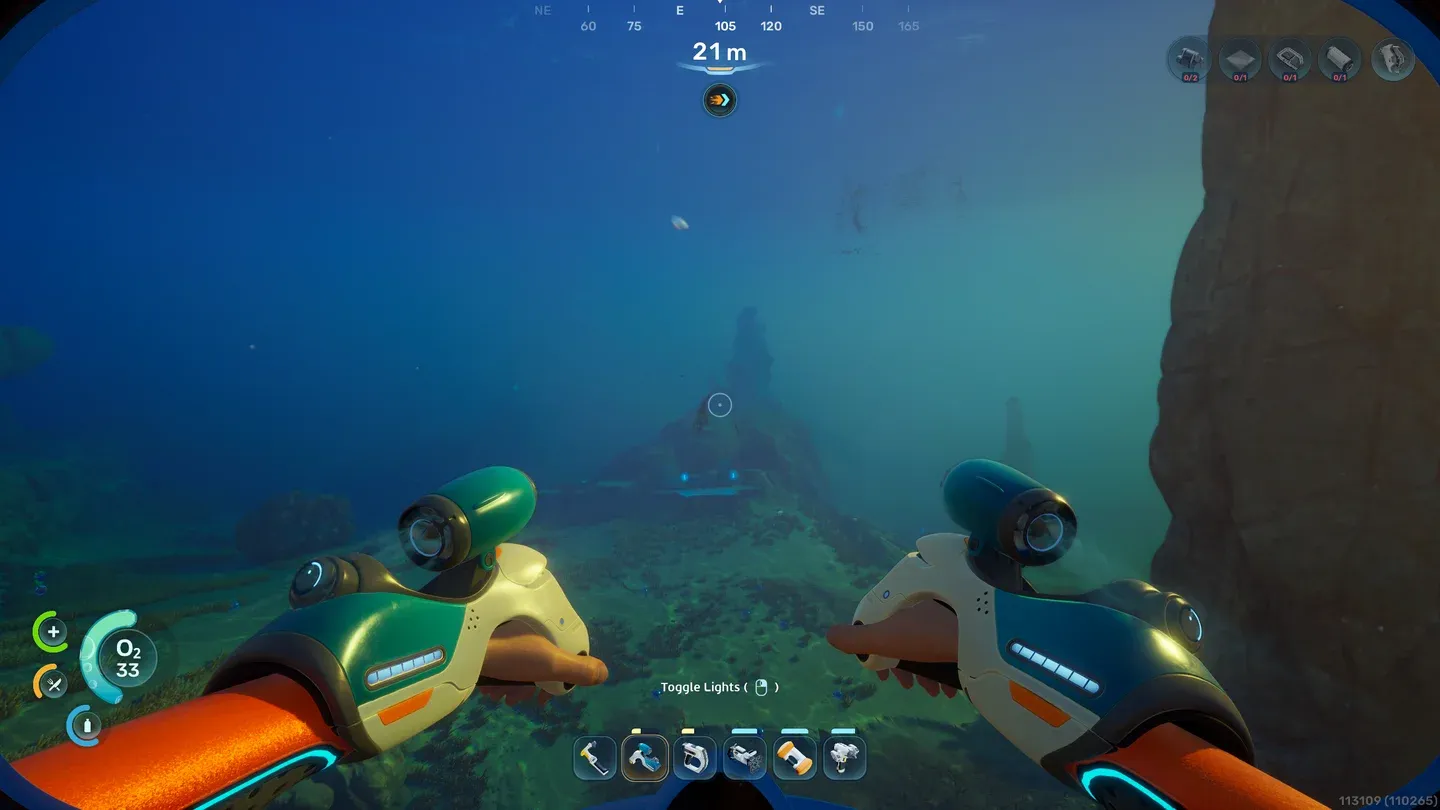
Large sulfur deposit location
Do you need heat tolerance to collect sulfur?
For most sulfur farming, yes. The Heat Tolerance Adaptation is required to survive in the areas where sulfur is most abundant. Without it, the high water temperatures will damage your character quickly.
To unlock heat tolerance, follow the main story progression by tracking new signals and interacting with every blackbox you find. The sequence goes like this: obtain a Sonic Resonator, use it to reach the Wander Blackbox, cure the Angel Comb, then place your hand on the Angel Comb to receive the adaptation. Heat tolerance is the third adaptation in the progression, coming after pressure tolerance and digestion.
That said, there is a way to grab a small amount of sulfur before unlocking heat tolerance. Two small pieces sit near Chap's Blackbox, 220 meters southeast of the Lifepod. Exit the cave to the left after leaving the hatch and you'll spot them ahead of you. It's not enough for heavy crafting, but it gets you through an early bottleneck.

Heat tolerance adaptation unlock
What is the best sulfur farming location?
The most productive sulfur farming spot in Subnautica 2 is a large rock pillar in the open seabed, roughly 250 meters south-southeast of the Lifepod. You can also reach it by swimming to Chap's Blackbox and heading 90 meters northeast from there. The pillar sits close to the lava region boundary and is identifiable by the Coral Crabs and a human-made platform nearby.
Circle the entire pillar and you'll find:
- 4 large sulfur deposits (require the Sonic Resonator)
- 3 medium deposits
- Several loose pieces on the sand
That combination yields up to 24 sulfur pieces from a single visit. The pillar sits around 25 meters deep and approximately 200 meters from the Lifepod at roughly 120 degrees southeast, past the Welcome Centre.
Additional sulfur can be found on the rock formation to the southeast of the main pillar, and on the large fiery coral structures to the northeast. Both are secondary sources worth sweeping if you need even more.
What is sulfur used for in Subnautica 2?
Sulfur feeds into a small but important set of crafting recipes. The most immediate use is the Repair Tool, which lets you cut open wreck doors and access locked areas. The Repair Tool requires:
- 1x sulfur
- 2x titanium ingots
- 1x wiring kit
- 1x basic battery
Once you have the Repair Tool, heading to the large shipwreck roughly 360 meters northeast of the Lifepod lets you unlock the Rebreather equipment inside.
Beyond the Repair Tool, sulfur is also needed to process Strong Acid (alongside gold) and to craft Advanced Wiring Kits. Those kits feed into higher-tier recipes including vehicles and Dedicated Cores, which means sulfur becomes indirectly important even when you're not crafting it directly.
Compared to Titanium or Quartz, sulfur demand is relatively low. The occasional farming run to the main pillar is usually enough to stay stocked. You're not grinding this one every session.
For more on surviving the depths, check out our Subnautica 2 beginner tips covering oxygen, scanning, and base building, and browse the full Subnautica 2 strategy guide collection for everything else you need to know about this survival game.