Overview
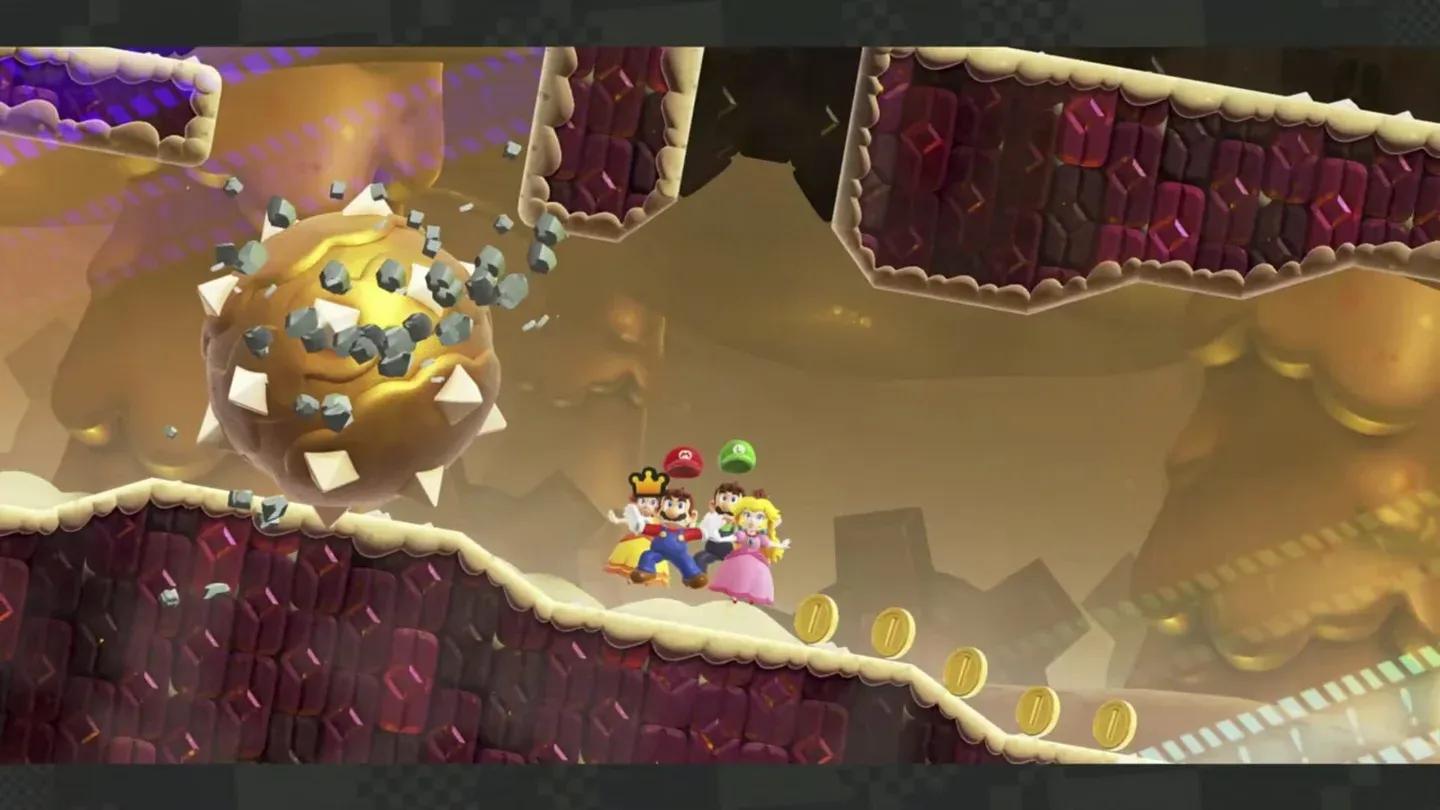
Super Mario Bros. Wonder, released October 20, 2023, is Nintendo EPD's return to 2D side-scrolling Mario after New Super Mario Bros. U Deluxe in 2019. Set in the Flower Kingdom, the game follows Mario and friends attempting to stop Bowser after he merges with the kingdom's Wonder Flower castle, transforming the world into something unpredictable. Every course carries that instability forward through a single collectible mechanic that changes everything.
The Wonder Flower is the game's defining feature. Touch one in any course, and the rules of that level bend or break entirely. Pipes sprout legs and march across the screen. Enemies flood in by the hundreds. The player character shrinks, stretches, or transforms into something else. No two Wonder sequences are identical, and Nintendo keeps them hidden until the moment you trigger them, which means first playthroughs carry a genuine sense of the unknown.
What does the Wonder Flower actually do?
The Wonder Flower is a course-specific collectible that triggers a dramatic, temporary transformation of the level's environment, enemies, or player character. Each course has exactly one, and the effect is unique to that stage. Some shift the camera perspective, others turn Mario into a Goomba, and a few rewrite the physics entirely. The transformations last for a limited time before the course snaps back, rewarding players who explore rather than rush.
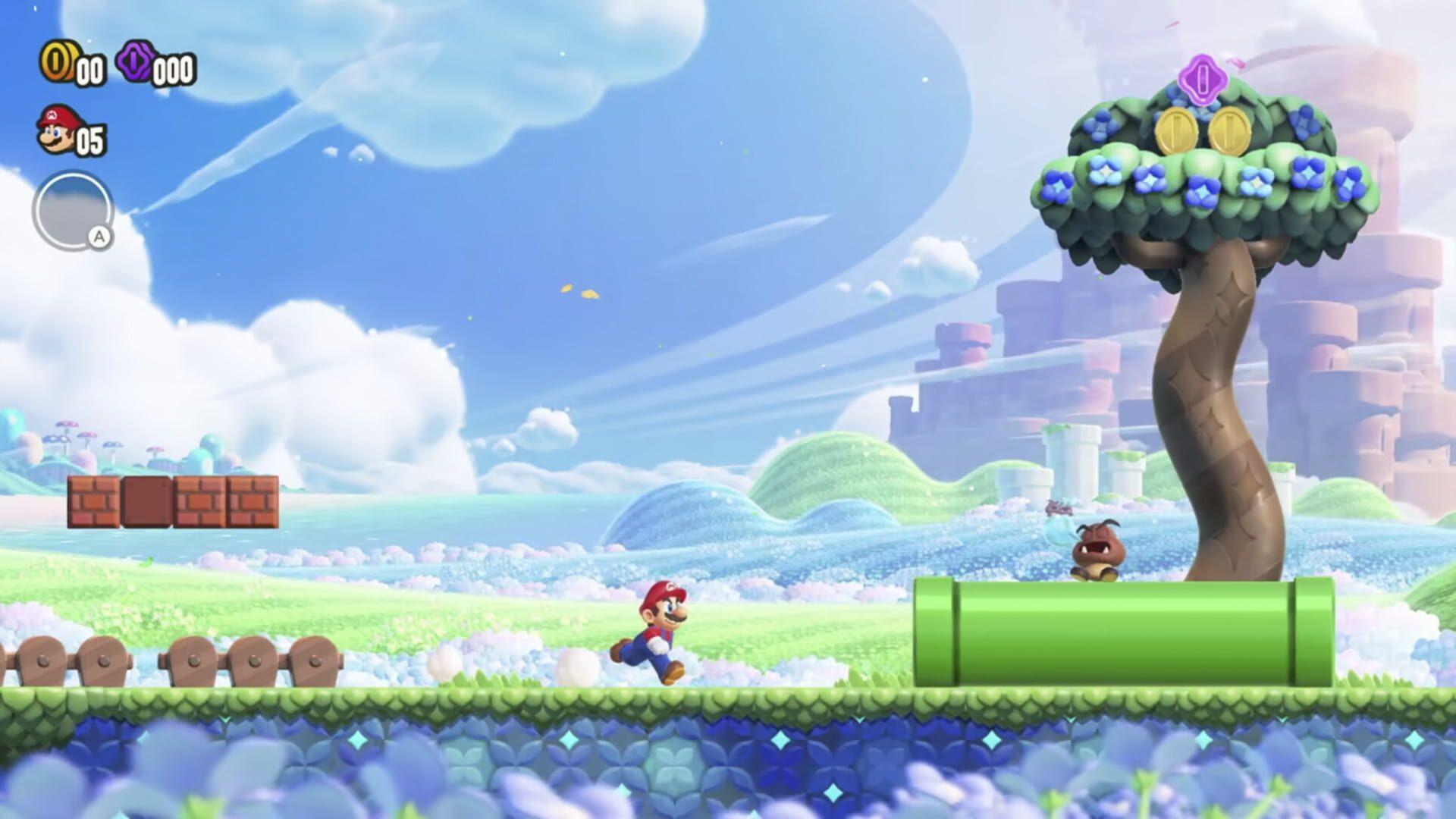
Key mechanics in Super Mario Bros. Wonder:
- Wonder Flower transformations per course
- Badge system for customizable abilities
- Talking flowers that offer hints and commentary
- Wonder Seeds as primary collectibles
- Online and local co-op for up to four players
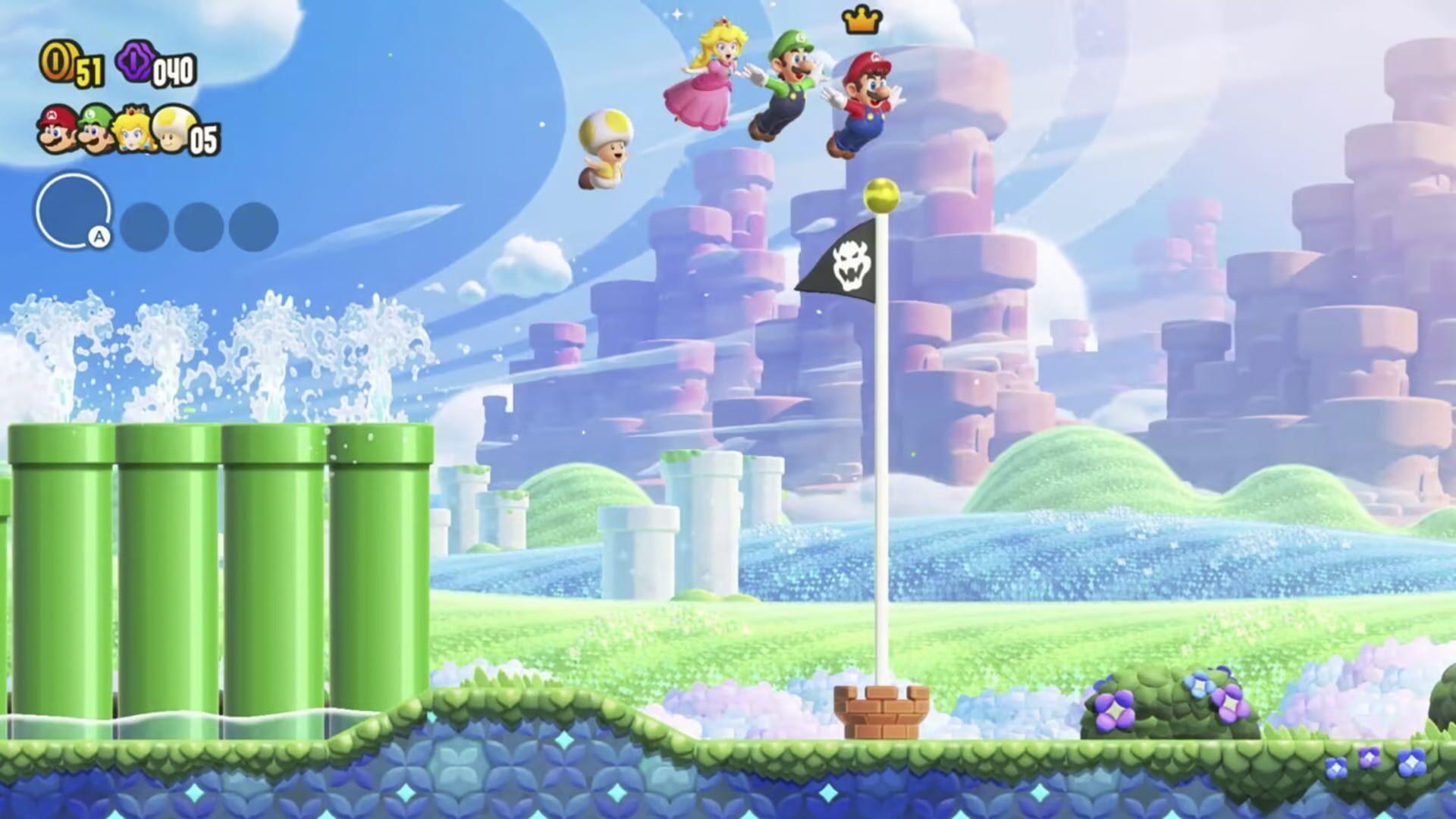
The badge system adds a second layer of customization that the series hasn't had before. Players equip one badge before entering a course, and each badge grants a passive ability, such as floating jumps, wall-climbing, or a dolphin kick in water. Badges are unlocked through exploration and can be swapped freely between courses, giving the game a light progression element without locking core abilities behind a skill tree.
Playable characters and co-op
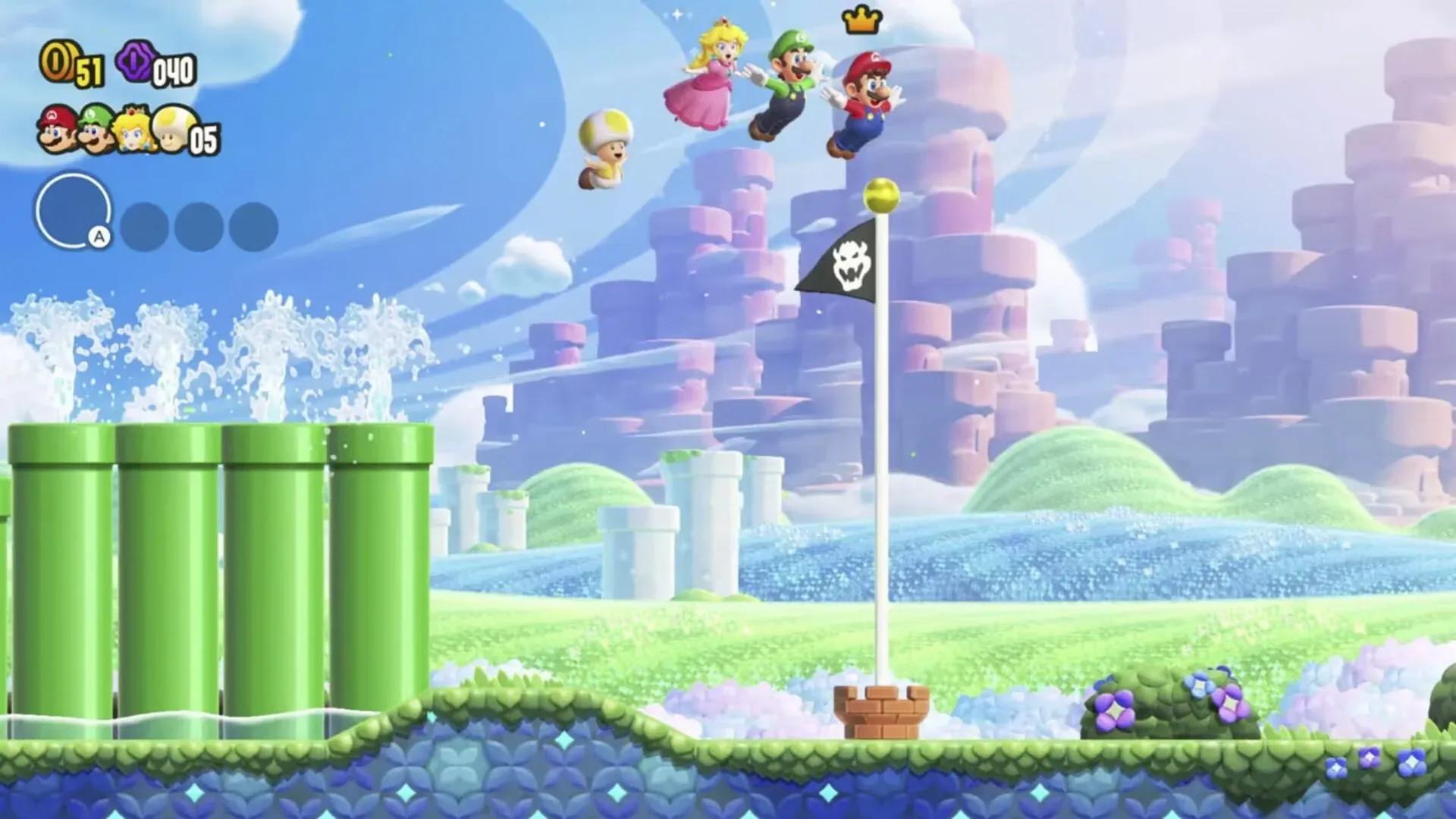
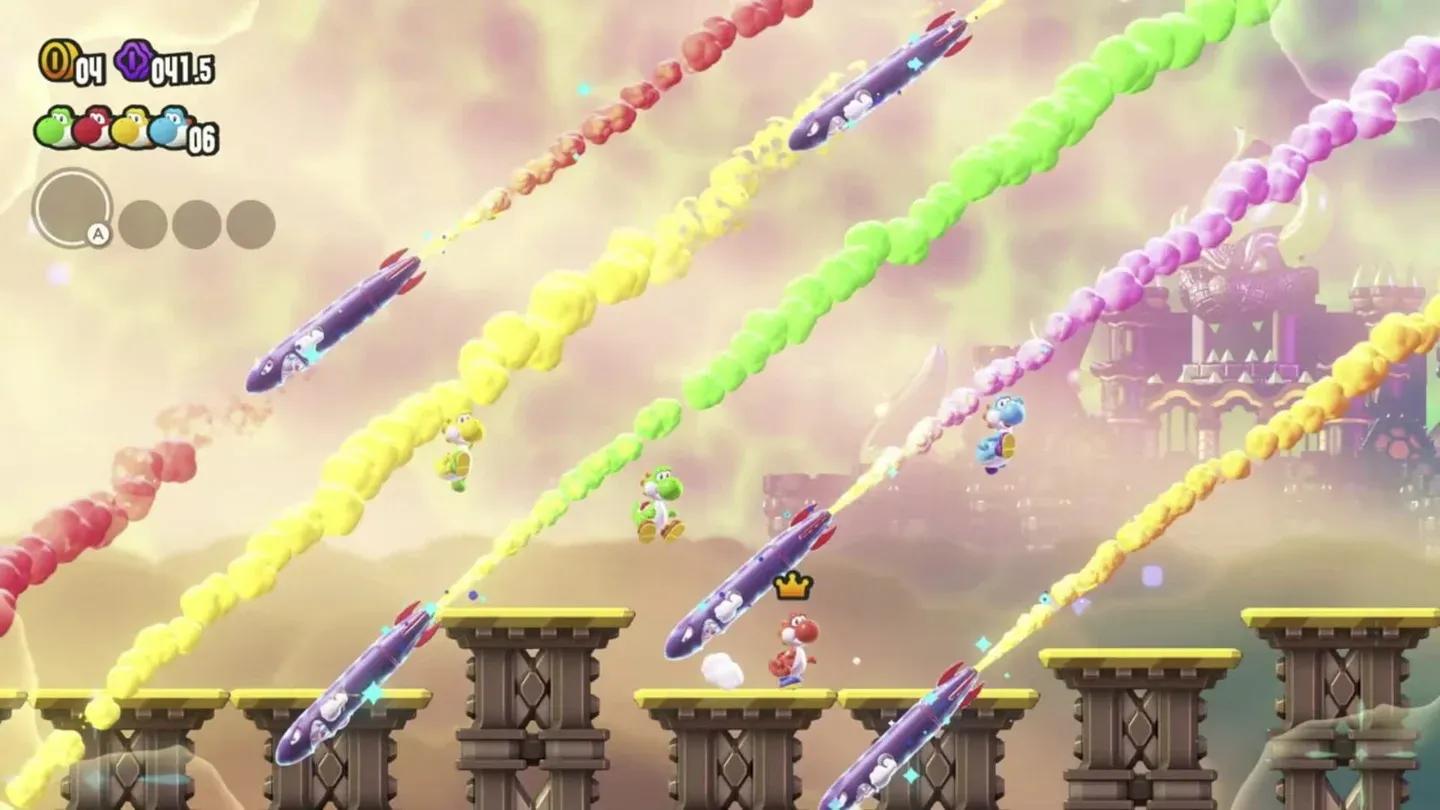
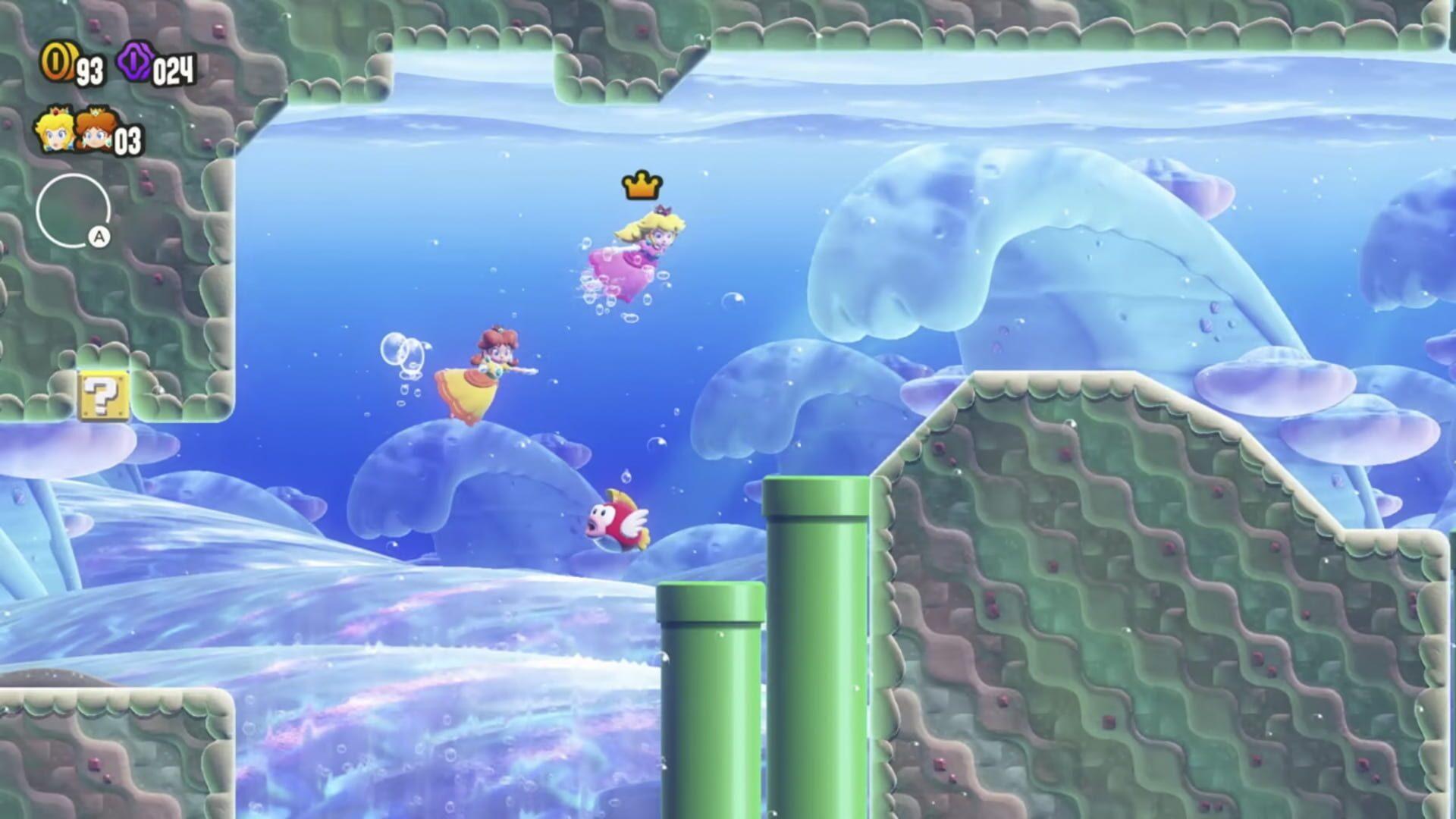
Super Mario Bros. Wonder launches with the largest playable roster in a 2D Mario game to date. Mario, Luigi, Peach, Daisy, Toad, Toadette, and Yoshi are all available from the start, and all play identically in terms of movement and abilities. Nabbit and the Yoshi variants function as assist-mode options, taking no damage from enemies. The parity between characters is intentional, letting players pick based on preference rather than stat differences.
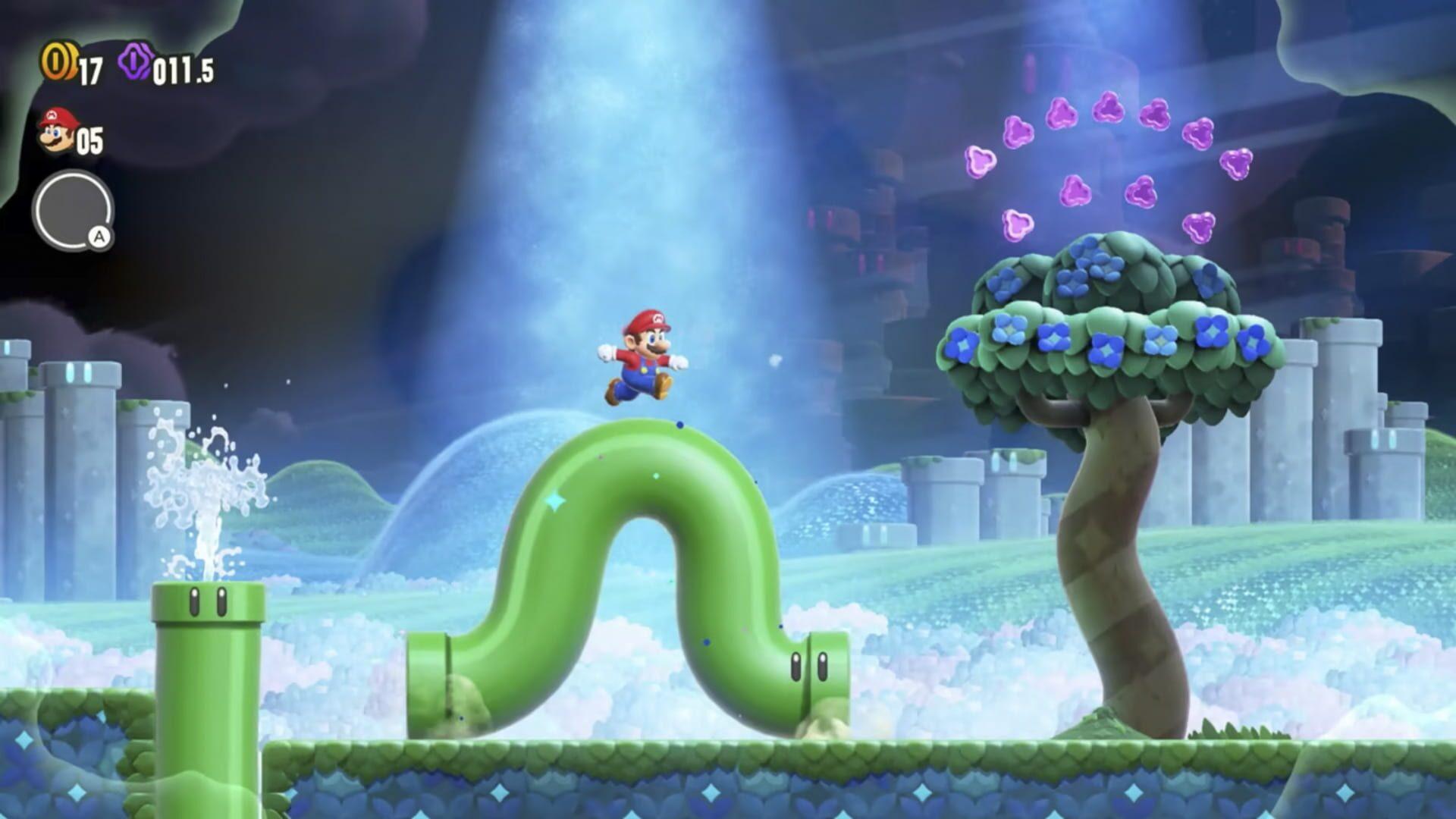
Multiplayer supports up to four players locally or online. Online play adds a passive social layer through ghost-like player silhouettes that appear in courses from other players' sessions, allowing limited interaction even when playing solo.
Visual and audio design
The art direction moves away from the flat, plastic aesthetic of the New Super Mario Bros. series toward something more expressive. Characters animate with exaggerated squash-and-stretch movements, backgrounds carry more depth and detail, and the Wonder sequences push the visual variety even further with effects that wouldn't have been possible in earlier entries. The soundtrack, composed by a team at Nintendo EPD, shifts tone to match each transformation, making the audio a reliable signal that something unusual is about to happen.
Super Mario Bros. Wonder delivers a 2D platformer that feels genuinely fresh rather than iterative. The Wonder Flower mechanic gives every course a reason to slow down and explore, the badge system adds replay value through experimentation, and the expanded character roster makes co-op more accessible than any previous entry in the series. For anyone looking for a side-scrolling platformer on Nintendo Switch that rewards curiosity, Wonder makes a strong case for itself.