
The Slayer in TBH: Task Bar Hero trips up a lot of players early on because it sits in an awkward middle ground. He's not a tank, not a pure glass cannon, and his kit demands you lean hard into physical damage to get results. Pick the wrong passives or abilities and he feels sluggish. Pick the right ones and he tears through entire waves while healing himself in the process.
What makes the Slayer tick?
Before touching abilities or gear, you need to understand the Slayer's core design. All of his best damage outputs come from getting close to enemies and landing physical hits. His toolkit rewards aggression, and several of his skills chain naturally into each other when you're in the middle of a pack. The trade-off is survivability: he can absorb some punishment, but he's nowhere near as durable as the Knight, so you'll need your team to cover that gap.
The bleed mechanic is central to the Slayer's identity. Applying bleed to an enemy increases all incoming damage to that target, which means every other member of your party benefits from it too. That alone makes the Slayer a strong team asset, not just a solo damage dealer.


What are the best Slayer abilities?
After testing both major ability options across multiple encounter types, two abilities stand out clearly above the rest.
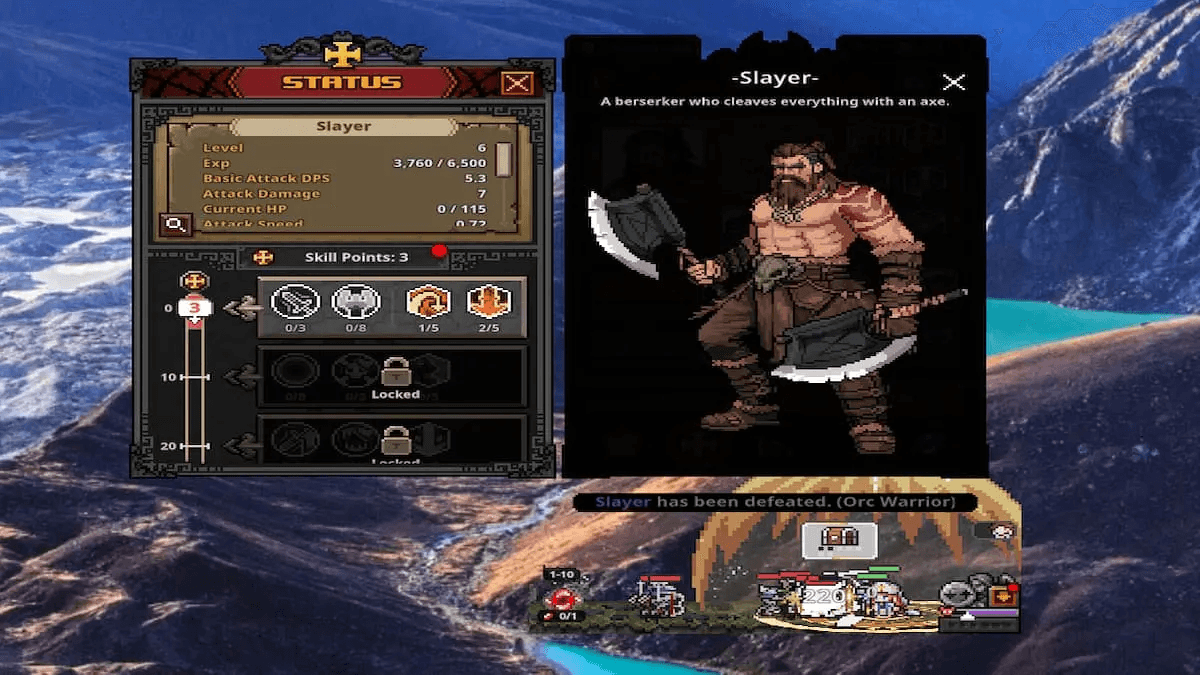
TBH: Task Bar Hero Guide: Best Slayer Build
Axe Spin
Axe Spin is the stronger choice for most situations. The Slayer spins his axe and deals physical damage to every enemy caught in the surrounding radius, and critically, the attack has a chance to apply bleed. Against bosses, that bleed proc keeps the damage multiplier ticking throughout the fight. Against minion groups, the AoE coverage clears packs fast. The versatility here is hard to beat.
Crushing Blow
Crushing Blow operates differently. It front-loads a single heavy hit against one target using the Slayer's axe. If that target dies from the strike, all nearby enemies take shockwave damage. This makes it excellent for clearing weakened minions or finishing off a priority target while punishing the enemies clustered around it. It's a solid secondary pick when you want burst over sustained pressure.
| Ability | Damage Type | AoE | Special Effect | Best Against |
|---|---|---|---|---|
| Axe Spin | Physical | Yes | Bleed chance | Bosses and groups |
| Crushing Blow | Physical | Conditional | Shockwave on kill | Minion clusters |
Which passive skills should you prioritize?
The passive skill selection is where most Slayer builds fall apart. Here's the priority order based on how the class actually plays:
- Attack Damage: The single most important passive. Every physical hit the Slayer lands scales off this, so stacking it raises your DPS ceiling across the entire build.
- Physical Damage Boost: Works directly with both Axe Spin and Crushing Blow, amplifying the output of your two core abilities. Take this alongside Attack Damage whenever possible.
- Add HP Per Kill: The Slayer kills frequently, which turns this passive into a constant self-healing loop. Keeping him alive without relying entirely on your Priest frees up your healer for other targets.
- Max HP: A buffer for the hits he can't avoid. The Slayer doesn't need to be a tank, but he does need enough health to survive a bad engagement without immediately collapsing.
- Area of Effect: Only worth investing in if you're building around Axe Spin specifically. If Crushing Blow is your primary ability, skip this and put those points elsewhere.
What gear should the Slayer use?
Gear selection for the Slayer follows a straightforward rule: look for decorations and equipment that reinforce the passives listed above. Anything that boosts Attack Damage, Physical Damage, or HP per Kill directly extends what this build already does well. There's no exotic gear interaction to chase here. The Slayer rewards consistent stat stacking over trying to find clever item combinations.
For the best builds and formation guide, positioning the Slayer in a spot where he can reach enemies quickly without absorbing the first wave of hits is the general principle to follow.
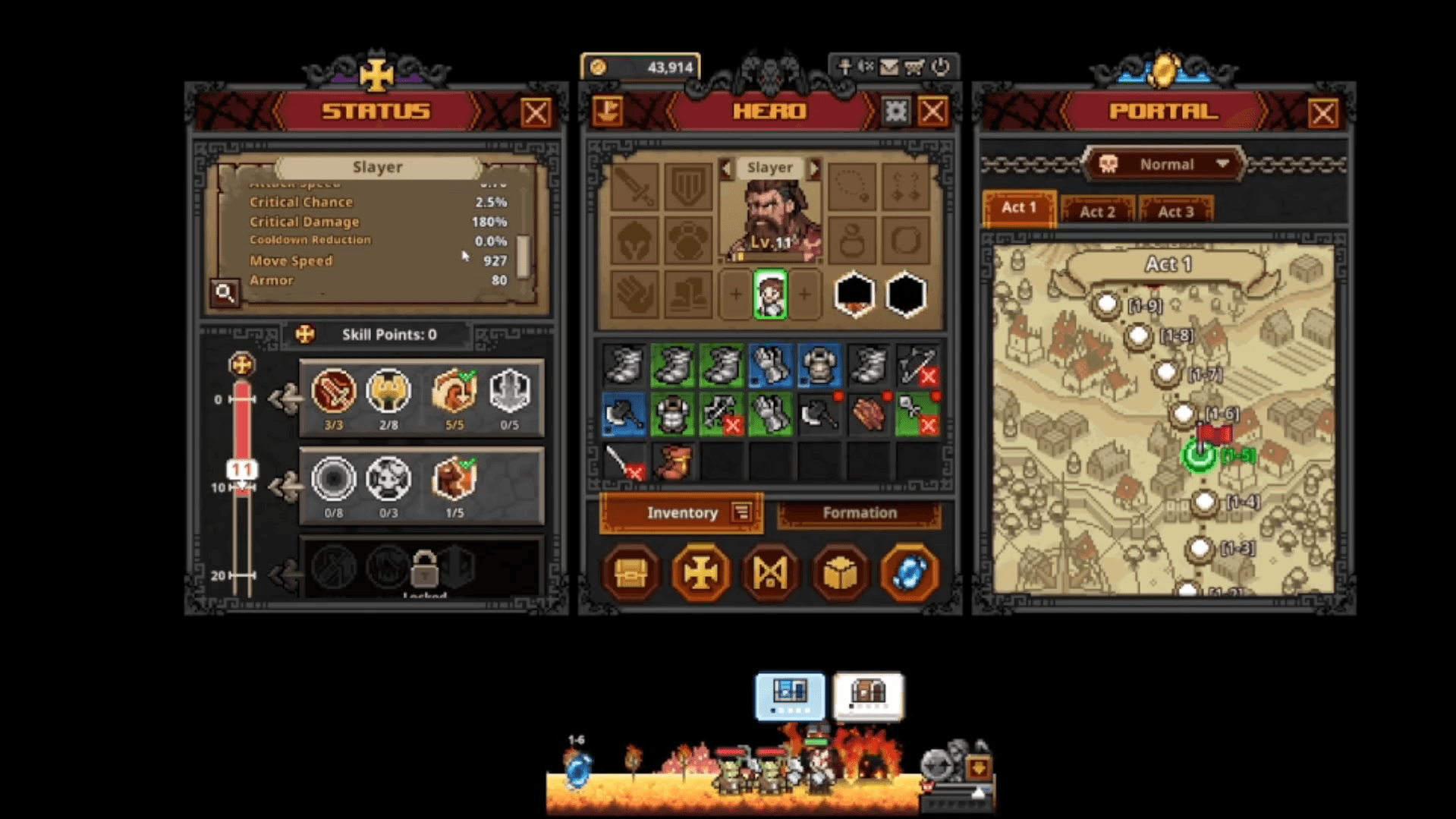
TBH: Task Bar Hero Guide: Best Slayer Build
What's the best team composition for the Slayer?
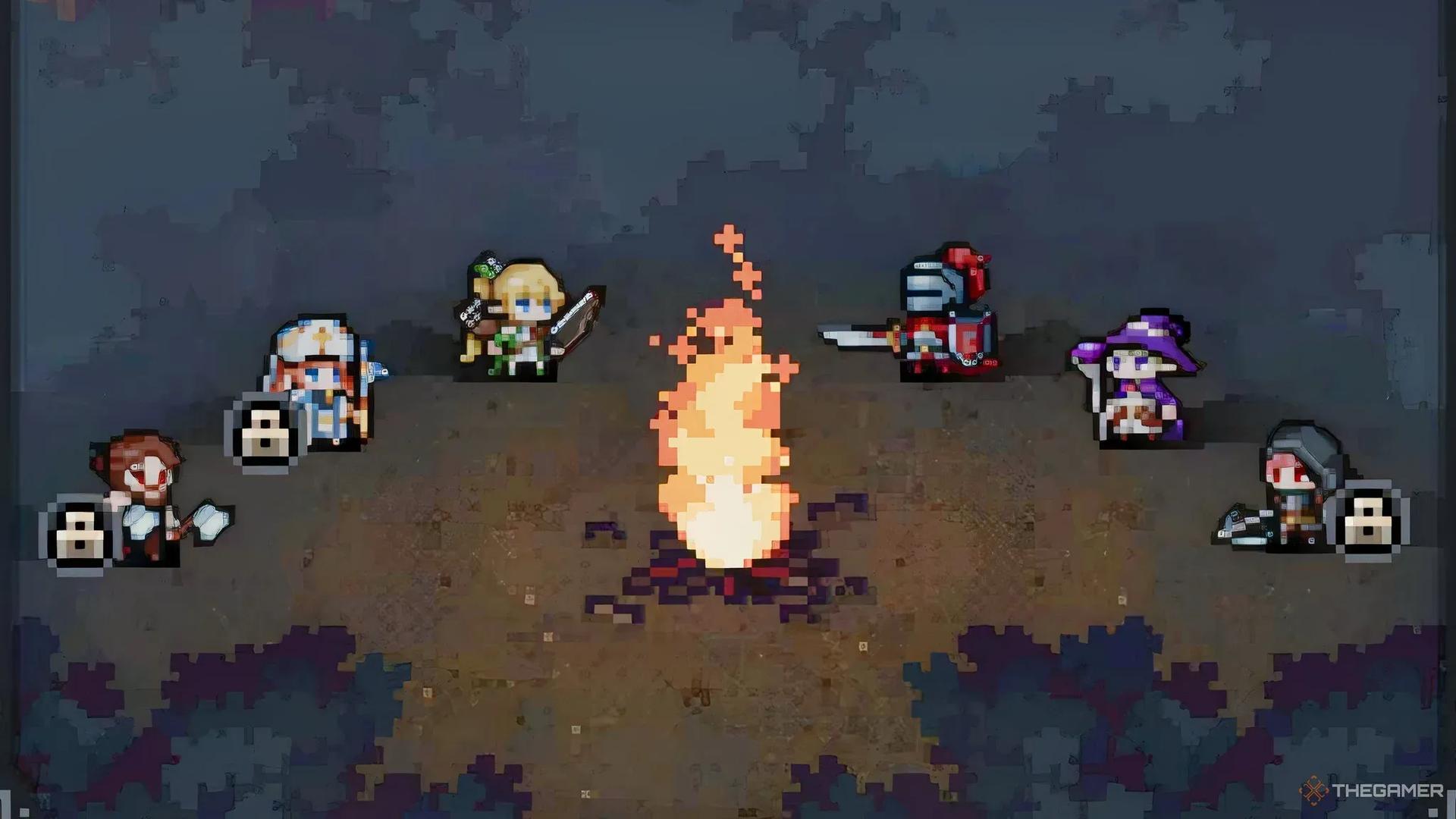
The Slayer works best in a three-hero party built around covering his weaknesses while amplifying his strengths. The recommended combination is Slayer, Priest, and Hunter.
The Priest handles the healing the Slayer can't provide for himself in tougher fights. While the Add HP Per Kill passive covers light skirmishes, sustained boss encounters demand dedicated support. The Priest fills that role without needing much investment to be effective alongside the Slayer.
The Hunter brings crowd control through stuns, which creates openings for the Slayer to land free hits. Stunned enemies can't reposition or attack, which is exactly the kind of situation where Axe Spin and Crushing Blow deal maximum damage. The Hunter essentially converts her stun uptime into bonus Slayer damage, making the two classes naturally complementary.
For a broader look at how different heroes work together, the best team combinations guide covers pairings across the full roster.
How does the Slayer compare to other damage classes?
The Slayer sits in a specific niche between the raw tankiness of the Knight and the range-focused output of the Sorcerer. He deals more damage than the Knight in most scenarios but requires more careful positioning than the Sorcerer. If you want to understand how every class stacks up, the TBH: Task Bar Hero class tier list breaks down the full rankings.
The bleed application from Axe Spin is the mechanic that genuinely separates the Slayer from other melee options. No other class in the current roster applies a damage amplifier that benefits the entire team the same way, which gives the Slayer a team utility angle that pure damage numbers don't capture.