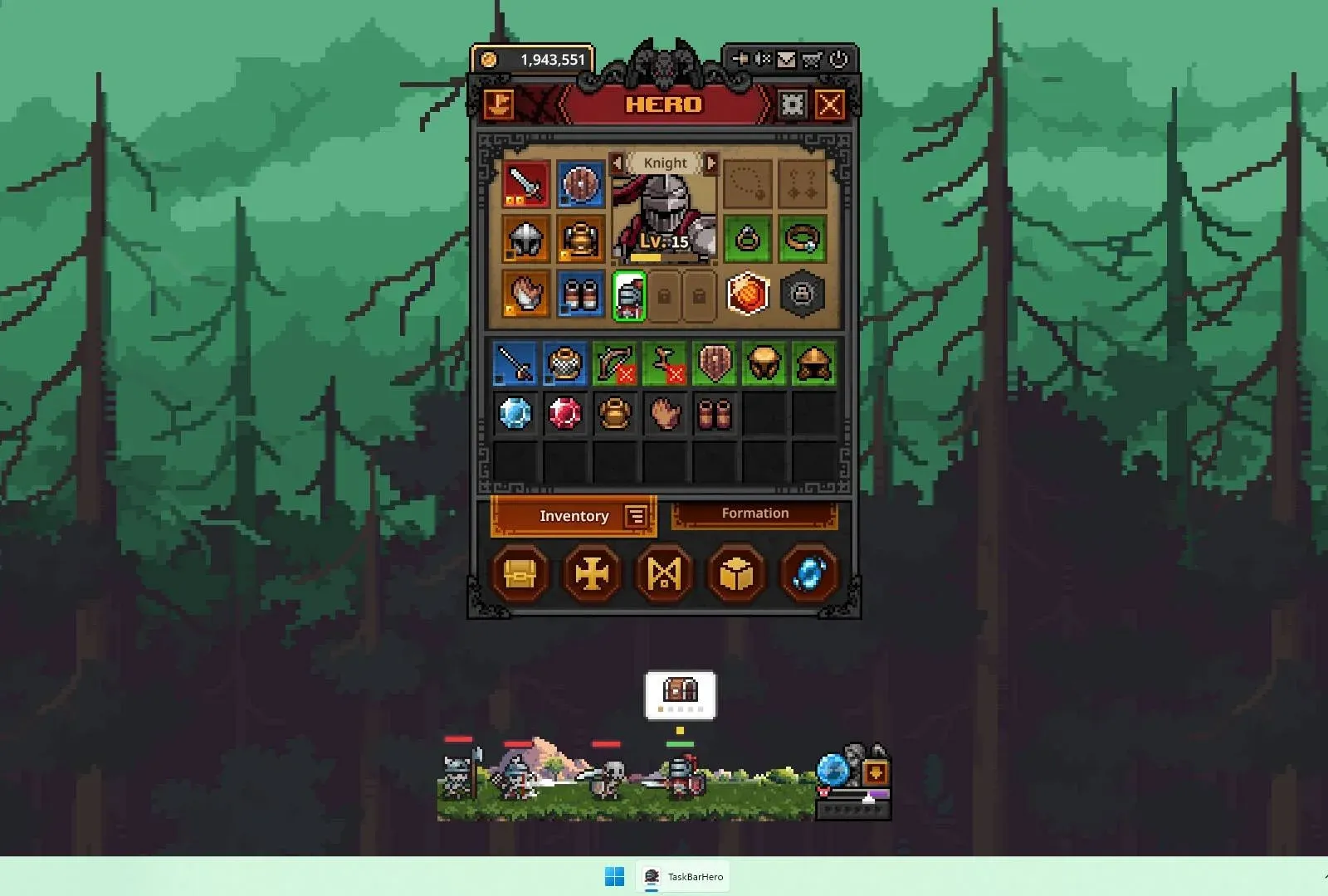

Elemental resistance in TBH: Task Bar Hero has a hard cap that most players hit without realizing points invested beyond it are completely wasted. If your tank is melting in Hell difficulty despite stacking what looks like enough defensive stats, the answer is almost never "more resistance" — and understanding why takes about two minutes.
What is the elemental resistance cap?
The maximum elemental resistance you can reach in TBH: Task Bar Hero is 75%. Any passive skill points or gear bonuses that push your resistance above that threshold do nothing. The resistance passive skill can technically be leveled up 10 times, which would theoretically add +200% resistance, but every point past the 75% cap is dead investment.
This matters a lot when you're planning a tank build. Dumping 10 levels into a resistance passive to feel safer in Hell 3-7 sounds logical, but once you've hit 75%, those points belong elsewhere — HP, leech, or movement speed all scale better at that stage.

Resistance caps at 75%

Why is your tank still dying at 75% resistance?
Hitting the elemental resistance cap doesn't make a character unkillable — and in Hell difficulty, tanks can still melt fast. There are two main reasons this happens.
First, armor and HP need to scale alongside resistance. Sitting at 2,200 HP and 3,000 armor with 75% resistance is a reasonable baseline for earlier content, but Hell-tier enemies deal enough raw damage that those numbers stop being adequate. Leech becomes a meaningful survival tool here because passive regeneration can't keep up with incoming burst.
Second, and more commonly missed: chaos damage. Chaos damage shows up as black numbers on screen, and it operates on a completely separate resistance track from elemental damage. If your chaos resistance is at zero or negative, you're taking full chaos hits even while your elemental resistances are perfectly capped. A negative chaos resistance of -40%, for example, means you're taking 40% more damage from every chaos hit. Identifying whether your tank is dying to chaos or elemental damage is straightforward — watch the damage number colors. Black numbers mean chaos is the problem.
Black numbers signal chaos damage
Is melee viable in Hell difficulty?
This is a point the community is fairly direct about: melee characters struggle in Hell and beyond. The general consensus among experienced players is that three ranged damage dealers outperform any melee-heavy composition at that difficulty tier. The Ranger in particular is strong enough to solo Hell Act 3 content with the right setup.
For players running a Priest as a tank alongside ranged damage dealers, the survivability ceiling of that composition is lower than a full ranged party. If you're committed to keeping a melee or support character in the lineup, prioritizing chaos resistance gear and leech becomes non-negotiable rather than optional.
For players looking to maximize damage output, check out the best Ranger build guide for ability priorities and gear recommendations that make Hell-tier soloing realistic.

Ranger excels in Hell solo runs
Resistance vs. other defensive stats: what to prioritize
Once you've capped elemental resistance at 75%, the priority order for defensive investment shifts. Here's how the main defensive stats compare at Hell difficulty:
| Stat | Cap | Priority after cap |
|---|---|---|
| Elemental Resistance | 75% | Stop investing — redirect points |
| Chaos Resistance | Separate track | High priority if negative |
| HP | No hard cap | Scale continuously |
| Armor | No hard cap | Useful but diminishing |
| Leech | No hard cap | Strong in sustained fights |
The table reflects a clear priority order: fix chaos resistance first if it's negative, then build HP and leech to handle the raw damage that elemental resistance can't cover.
What gear should you target for Hell survival?
Gear quality becomes the primary bottleneck in Hell difficulty. Crafting level-appropriate weapons and armor is possible but slow due to chest drop rates, which means the in-game market is a practical alternative for filling gaps. Selling gear your class can't use and buying what you actually need is a legitimate progression path, not a shortcut.
For weapons, Attack Damage is the core offensive stat. Physical Damage percentage is especially strong on the Ranger because it boosts both Attack Damage and Skill Damage simultaneously — effectively doubling the return on that stat compared to other classes. Movement Speed on jewelry and boots also matters more than it might seem, since closing gaps to enemies faster means fewer hits taken over a run.
For defensive slots, Damage Absorption in glove sockets outperforms armor sockets if your build is designed to avoid getting hit in the first place. A build that minimizes contact with enemies needs less raw mitigation and more burst damage to eliminate threats before they connect.
For more party composition options and build paths, the TBH: Task Bar Hero guides collection covers every class in detail.
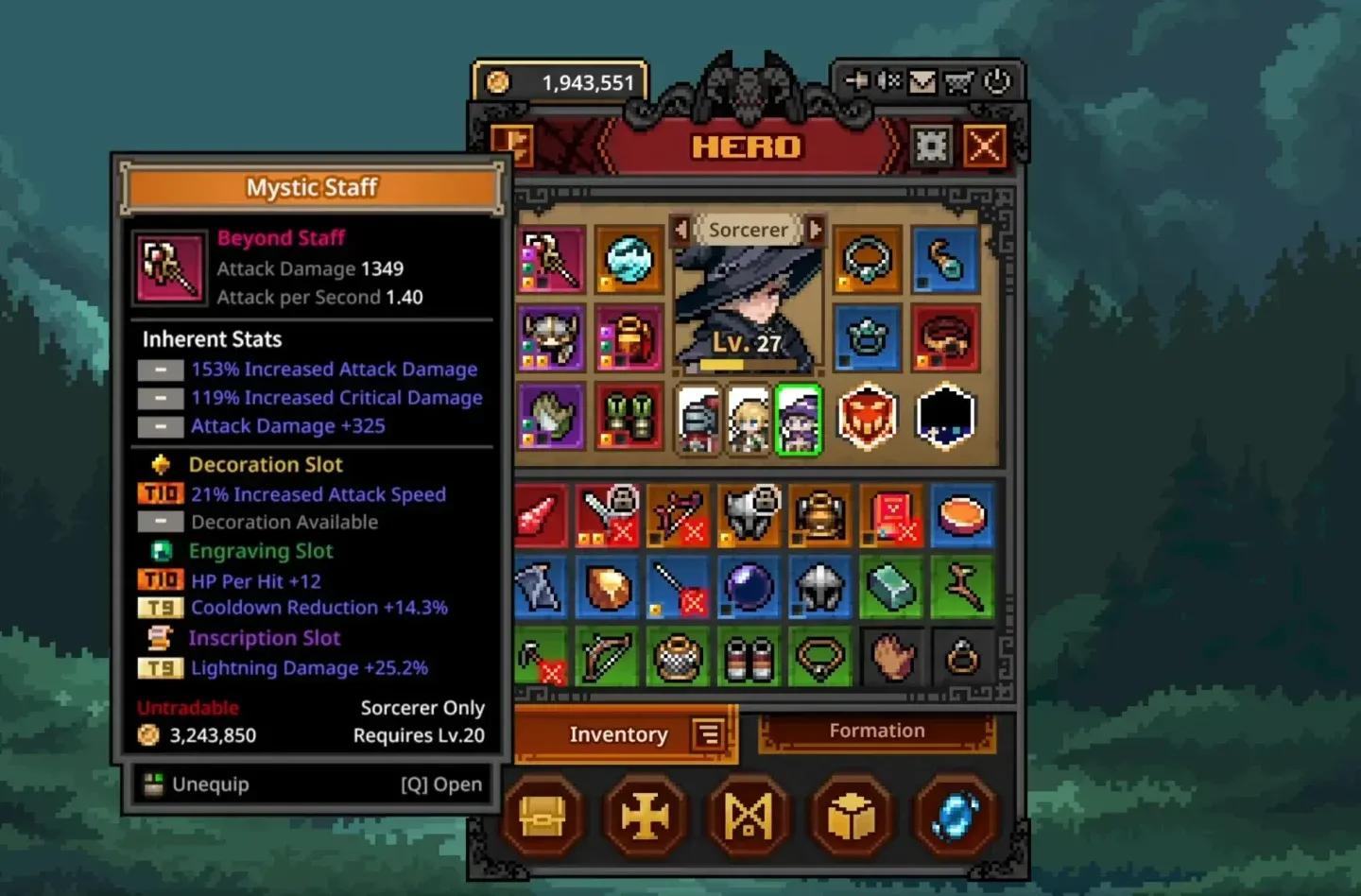
Socket gems for your playstyle
Quick reference: resistance checklist for Hell difficulty
Before pushing into Hell content, run through this list:
- Elemental resistance at 75% on all relevant elements
- Chaos resistance checked — if negative, address it before anything else
- HP scaled beyond 2,200 for sustained survivability
- Leech invested in for fights where enemies do connect
- Passive skill points not wasted on resistance beyond the 75% cap
- Gear level appropriate to the act you're attempting
For players building toward a Knight or Sorcerer alongside their main, the best Knight build covers tank-specific passive and gear priorities that apply the same resistance logic covered here.