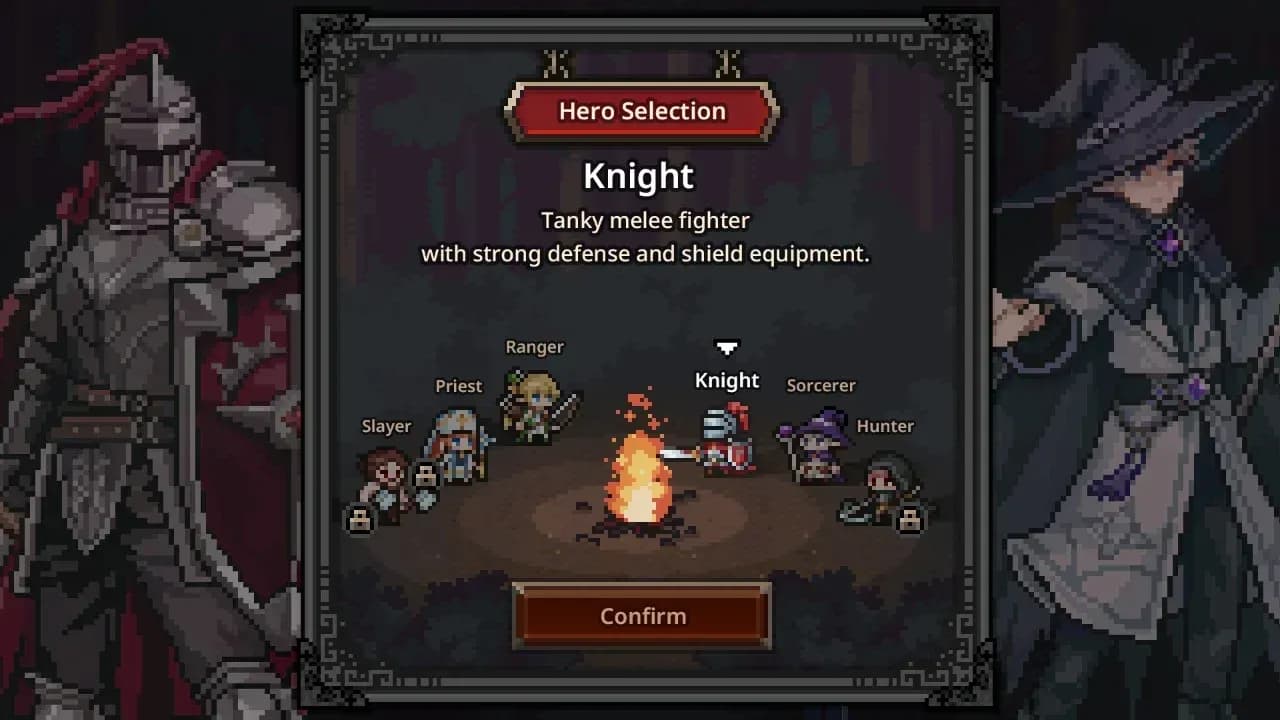


The Knight is the class every player in TBH: Task Bar Hero starts with, and that accessibility masks just how much depth the class actually has. Played wrong, he's a slow frontliner who soaks hits but contributes little else. Played right, he's the anchor that holds every team composition together from the first wave through the hardest content in the game. Here's exactly how to build him.
Why the Knight is worth building properly
The Knight covers three roles at once: frontline damage absorber, direct melee attacker, and team-wide shield provider. No other free class matches that combination, which is why he stays in the lineup even after you unlock premium options. He's available from your very first hero slot, so your early account progress never stalls behind a fragile opener.
The key thing to understand before speccing him is that a pure-offense Knight is a waste. After testing both extremes, the pure tank version also underperforms because the Knight's damage contribution matters, especially in the early and mid game when your roster is thin. The sweet spot sits between those two poles.
What are the Knight's best abilities?
Two abilities define the Knight's kit, and understanding what each one actually does changes how you prioritize your leveling path.
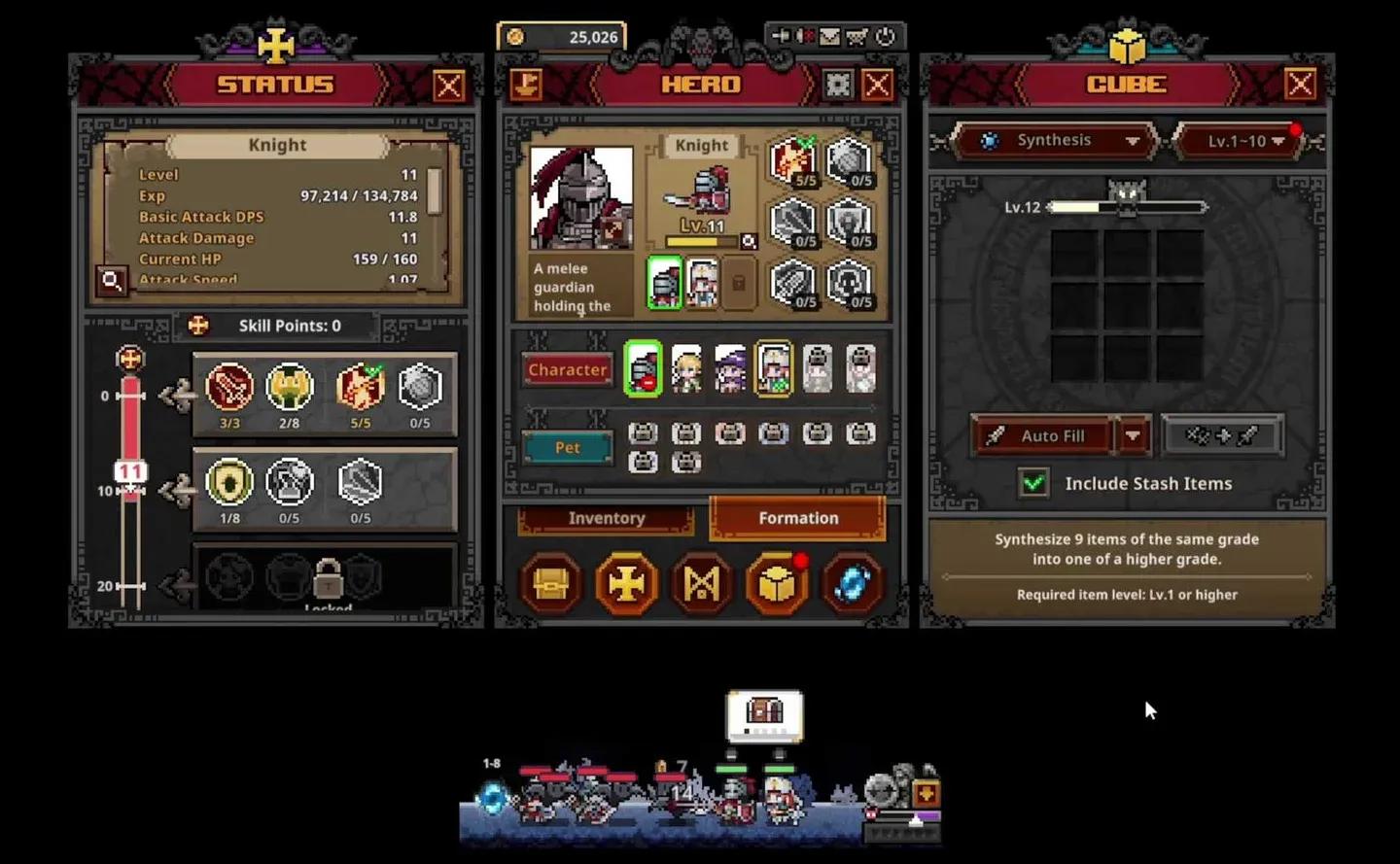
Aegis Field is the Knight's signature skill. When active, it deploys a shield that blocks 110 damage for every ally in the area, regardless of formation or team composition. That coverage makes it the most team-friendly defensive ability in the game. You want this active as often as possible during tough waves.
Sacred Blade unlocks at level 30 and should be your primary leveling goal. It buffs the Knight's attack stat and grants 2 HP recovered per kill. That heal-on-kill mechanic is more useful than it sounds: it gives the Knight a self-sustain loop that keeps him standing when the Priest's healing output falls short or gets interrupted. Before you hit level 30, slot any available offensive skill in that second ability slot as a placeholder.
Prioritize defense before offense
Which build path is right for you?
The answer depends entirely on what the rest of your team brings. If you're running a dedicated damage dealer like the Hunter, Ranger, or Sorcerer, the tank build lets them carry the offense while the Knight focuses on staying alive. If your DPS options are limited, the hybrid build picks up the slack.
Every stat point you put into pure attack on a tank-focused Knight is a point not spent keeping him alive. Survivability is the value he provides that nothing else on a free roster replaces.
What passive skills should the Knight run?
Passive skills and gear both reinforce the same core stats. Here's what to prioritize and why each one earns its slot.
- Max HP: The Knight needs a large health pool to absorb punishment across full enemy waves. This is the baseline of every viable build.
- HP Regen per sec: Passive healing that ticks every second after taking damage. With a high enough base HP, the Knight can survive sustained pressure even when active healing is on cooldown.
- Armor Enhancement: Reduces incoming damage directly, making each point of HP Regen stretch further. Stack this alongside Max HP for the best defensive results.
- Add HP per kill: Grants HP every time the Knight kills an enemy. This passive rewards the hybrid build specifically, since it only pays off when the Knight has enough DPS to secure kills consistently.
How should you prioritize gear for the Knight?
Gear selection follows the same logic as passive skills: health and armor are the two attributes that matter most. The longer the Knight survives, the more value he generates for the entire team.
Decorations are where you can add elemental damage to raise the Knight's DPS without sacrificing his defensive core. Adding elemental damage through decoration slots is the cleanest way to build the hybrid version, since it boosts output without touching your armor or health investments.
For the class tier list context and how the Knight compares to every other option, the TBH: Task Bar Hero class tier list covers the full ranking with build notes for each class.
Knight must anchor the front row
What are the best team compositions for the Knight?
The Knight and Priest pairing is the foundation of every working team in the game. The Knight absorbs the damage, the Priest keeps his HP topped up, and the combination holds together even with basic ability builds. From there you add the strongest damage option your roster allows.
If you own the DLC, the Slayer can fill the frontline slot, but the Knight is the more consistent choice across different content types. His all-around profile means the Priest's healing is never wasted on a hero who drops too quickly.
For deeper team pairing strategies, the best team combinations guide covers free and premium roster pairings in detail.
Positioning
The Knight belongs in the front row so he intercepts incoming damage before it reaches the Priest or any ranged carry. Put a fragile class like the Ranger or Hunter up front and they die before contributing anything meaningful. The build is working correctly when the Knight holds aggro through full enemy waves while back-row DPS finishes the fight uninterrupted.
If the Knight is dying too quickly on harder waves, the problem is almost always one of two things: his defensive stats are underinvested, or the Priest isn't specced for maximum healing output. Fix the Knight's armor and HP first, then verify the Priest's healing uptime. Both changes together push the Knight's effective survivability well past what his base numbers suggest.
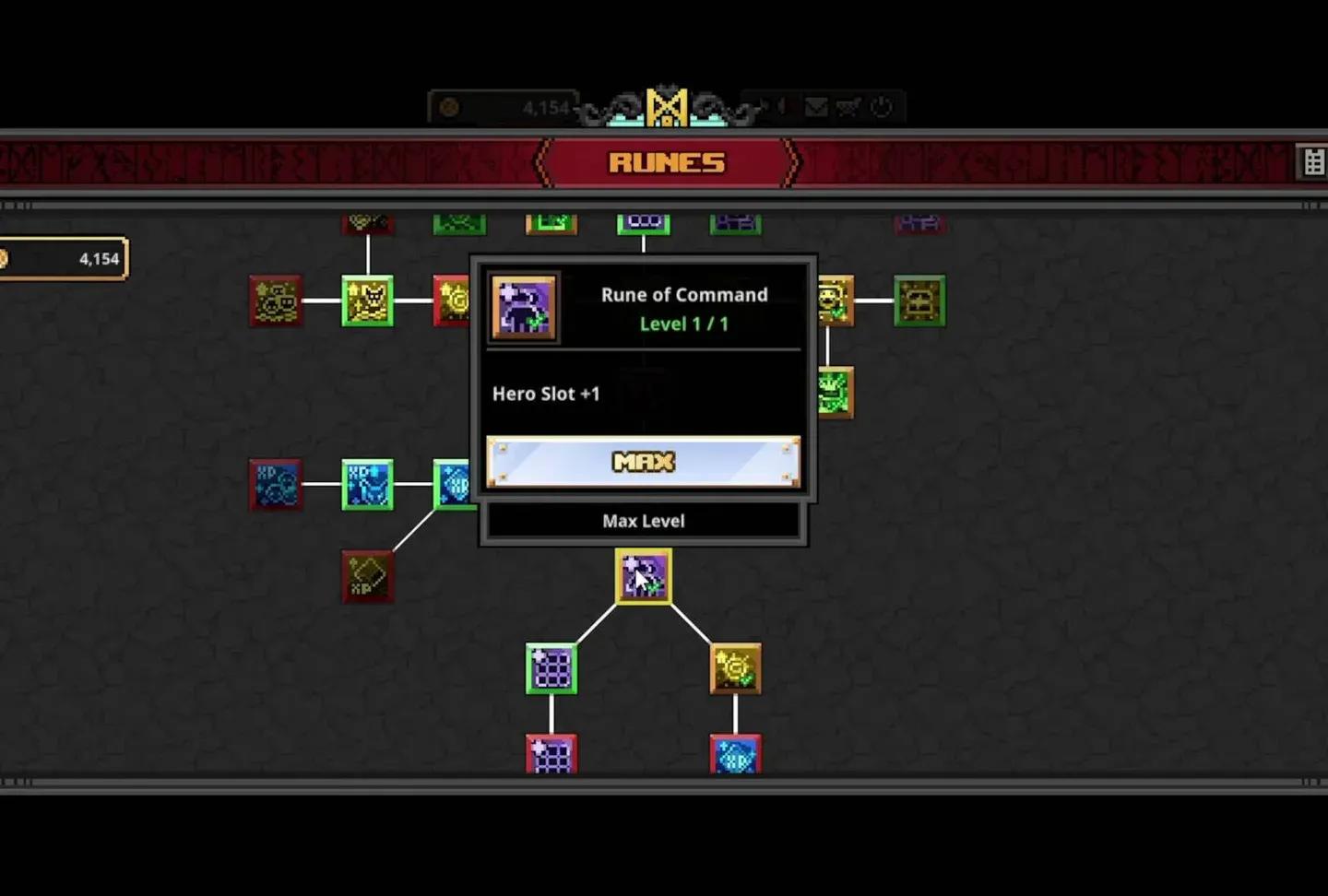
Get the defensive core in place, slot in a healing-focused Priest, and pair them with the strongest damage dealer you can field. That structure works from the opening stages through the toughest encounters. For everything else you need to get started, the TBH: Task Bar Hero beginner's guide covers Rune priorities, party composition, and Cube mechanics from day one.