Overview
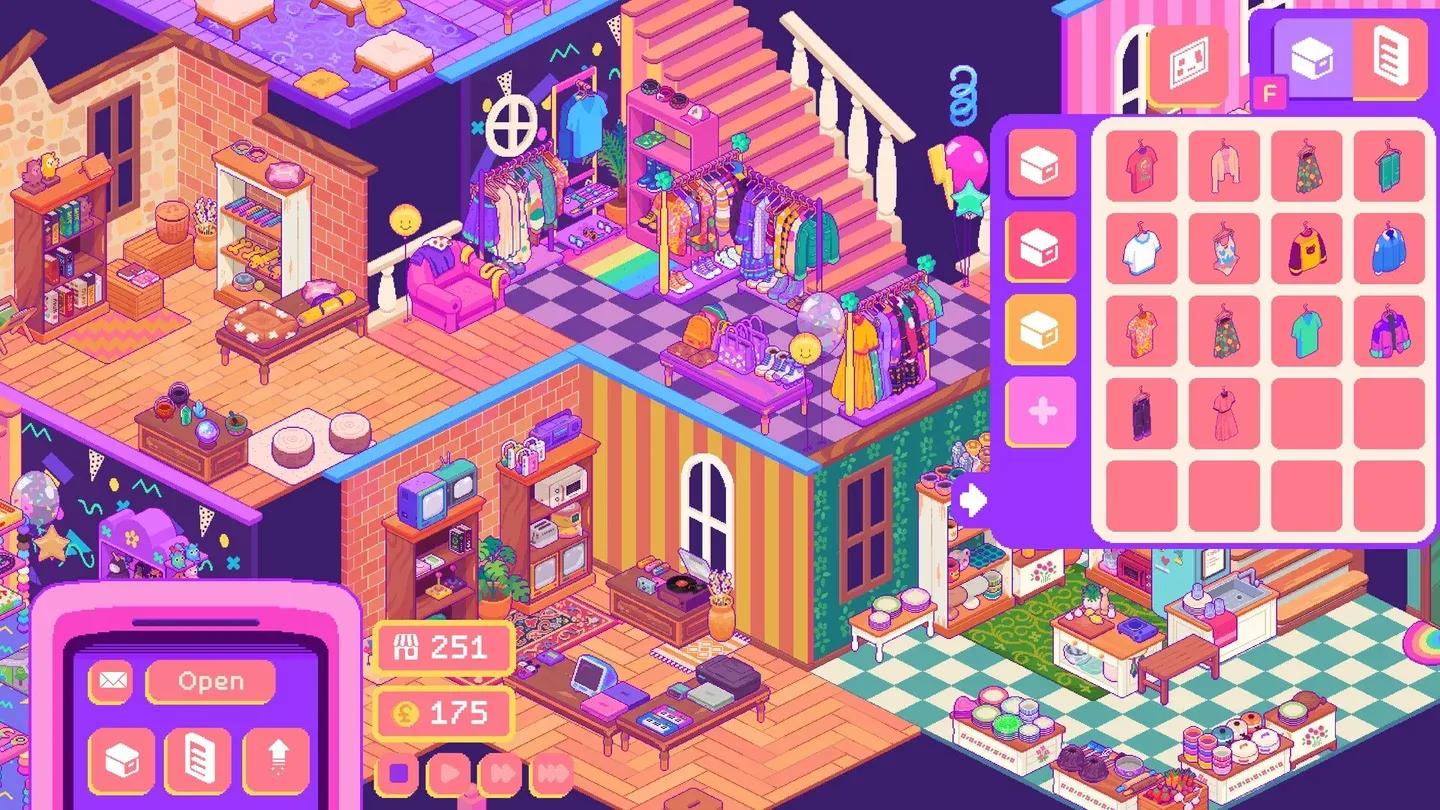
Thrifty Business is a casual simulation game from Spellgarden Games, a small indie studio based in Germany and Scotland. The premise is simple: you run a thrift shop, sort through donated boxes, price up finds, and arrange your store to attract and satisfy a growing cast of regulars. There is no combat timer ticking down, no resource crisis to manage. The game is deliberately unhurried, designed around the quiet pleasure of organization and discovery.
Spellgarden is the team behind Sticky Business, a well-received cozy sim about running a sticker shop that built a loyal following for exactly this kind of low-pressure, character-driven gameplay. Thrifty Business follows the same philosophy but expands the scope considerably, moving from a single online storefront to a physical community space that grows as you play.

Gameplay and mechanics
The core loop in Thrifty Business revolves around sorting through donation boxes to uncover items, then deciding how to display and price them. Key activities include:

- Sorting boxes for hidden treasures
- Arranging displays by category and aesthetic
- Pricing items to attract the right buyers
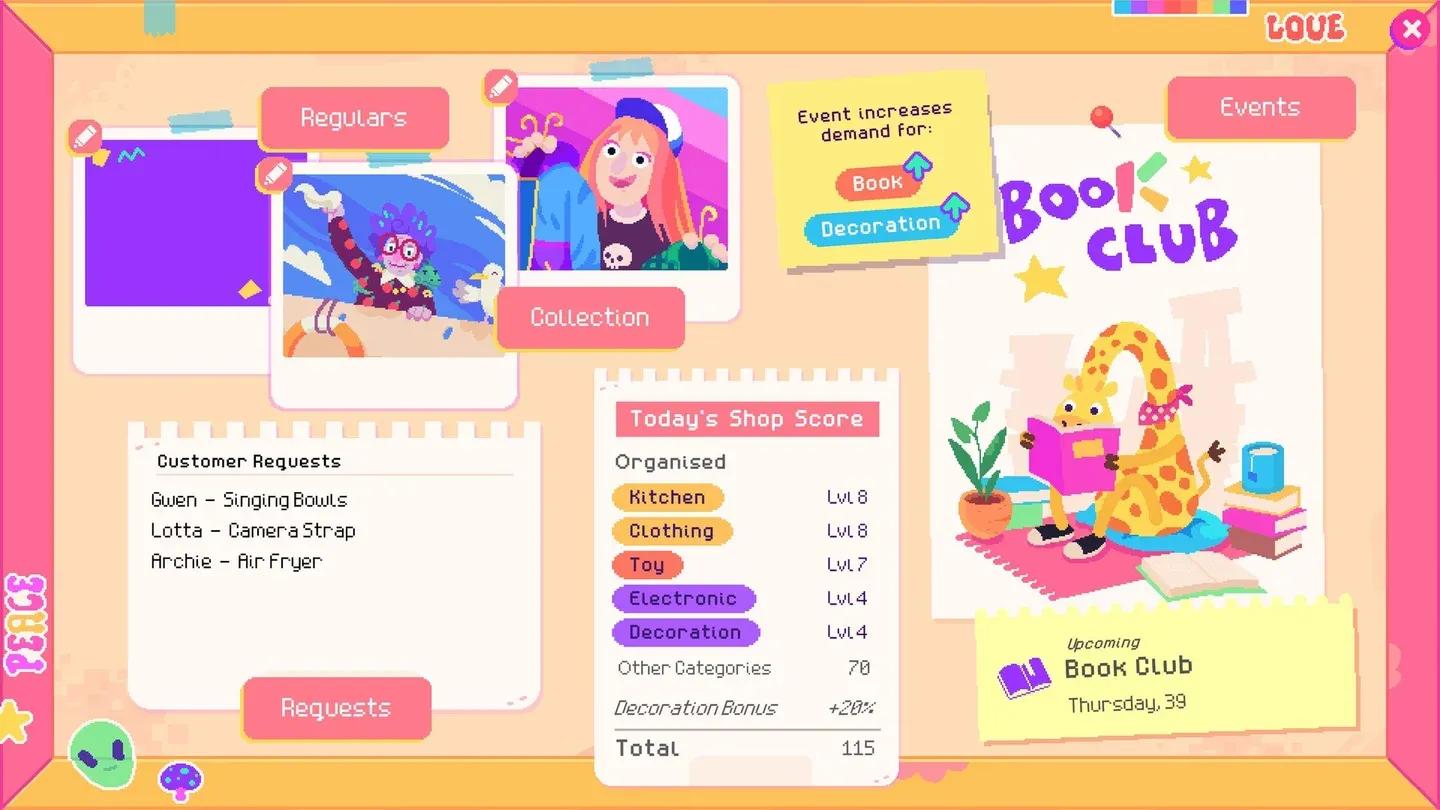
- Fulfilling specific requests from regulars
- Expanding your store layout over time
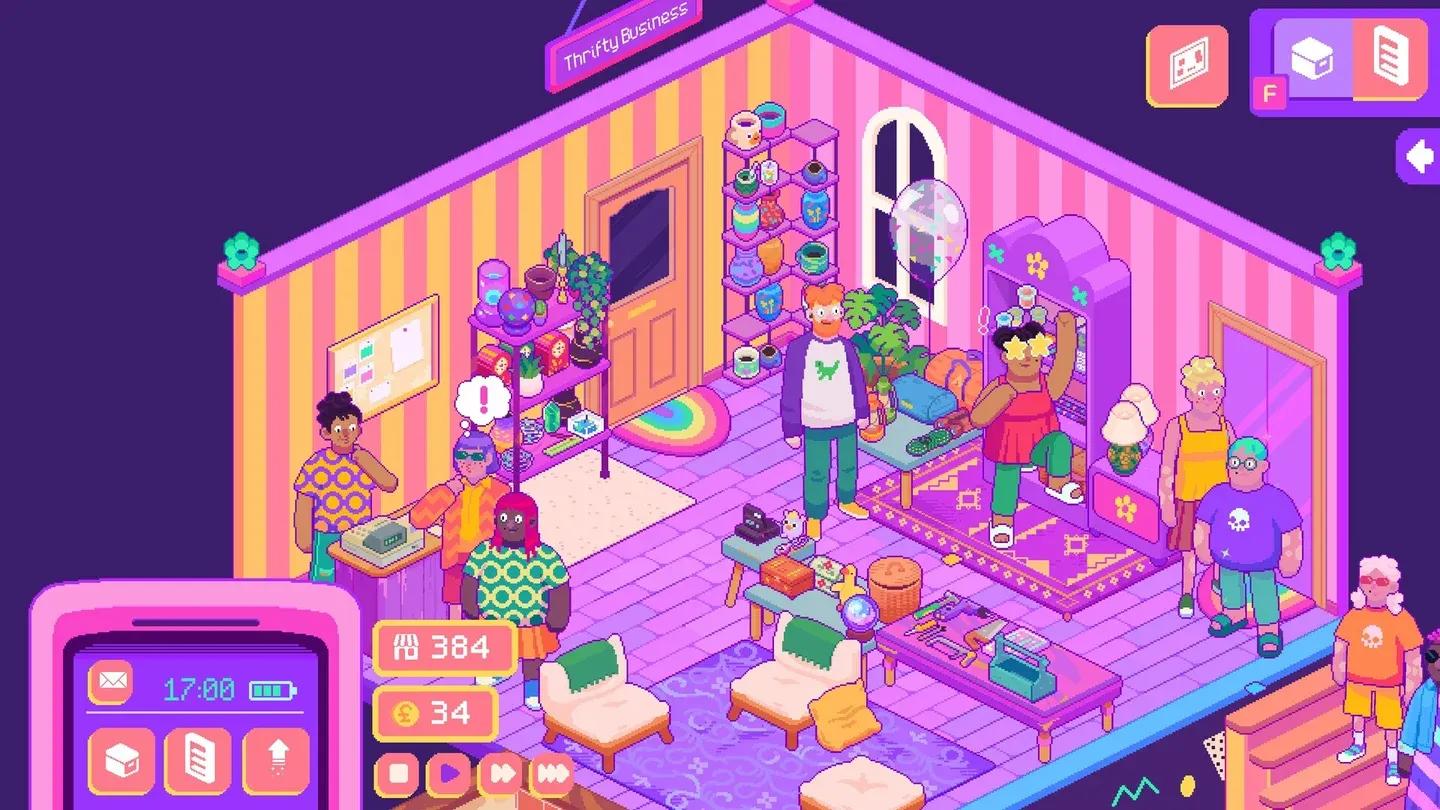
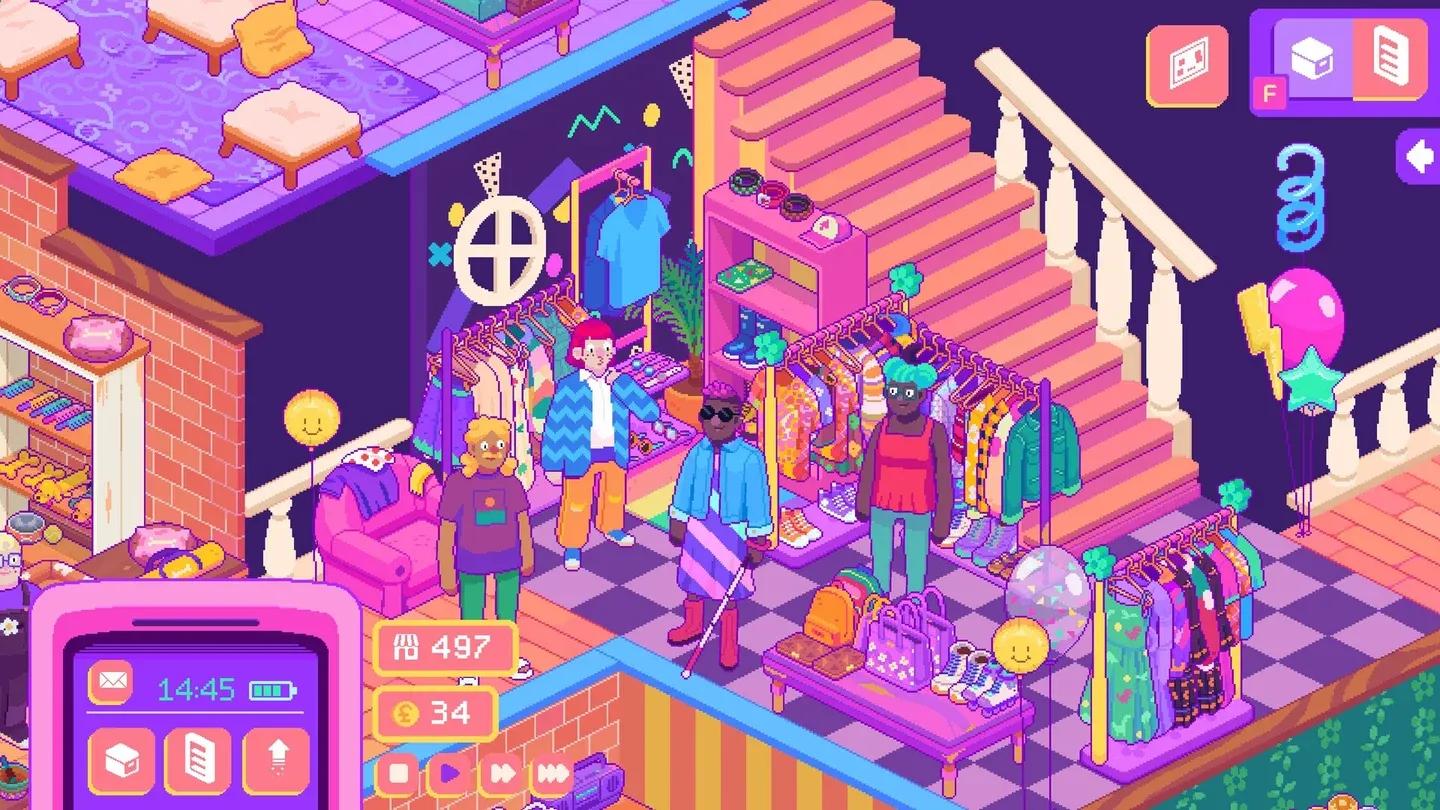
The display system is where the game gets genuinely engaging. Arranging a shelf of vintage toys or a rack of retro clothing is not just cosmetic. How you group and present items affects which customers take interest and how your shop develops its identity. It is the kind of system that rewards players who like to tinker.

Who are the regulars?
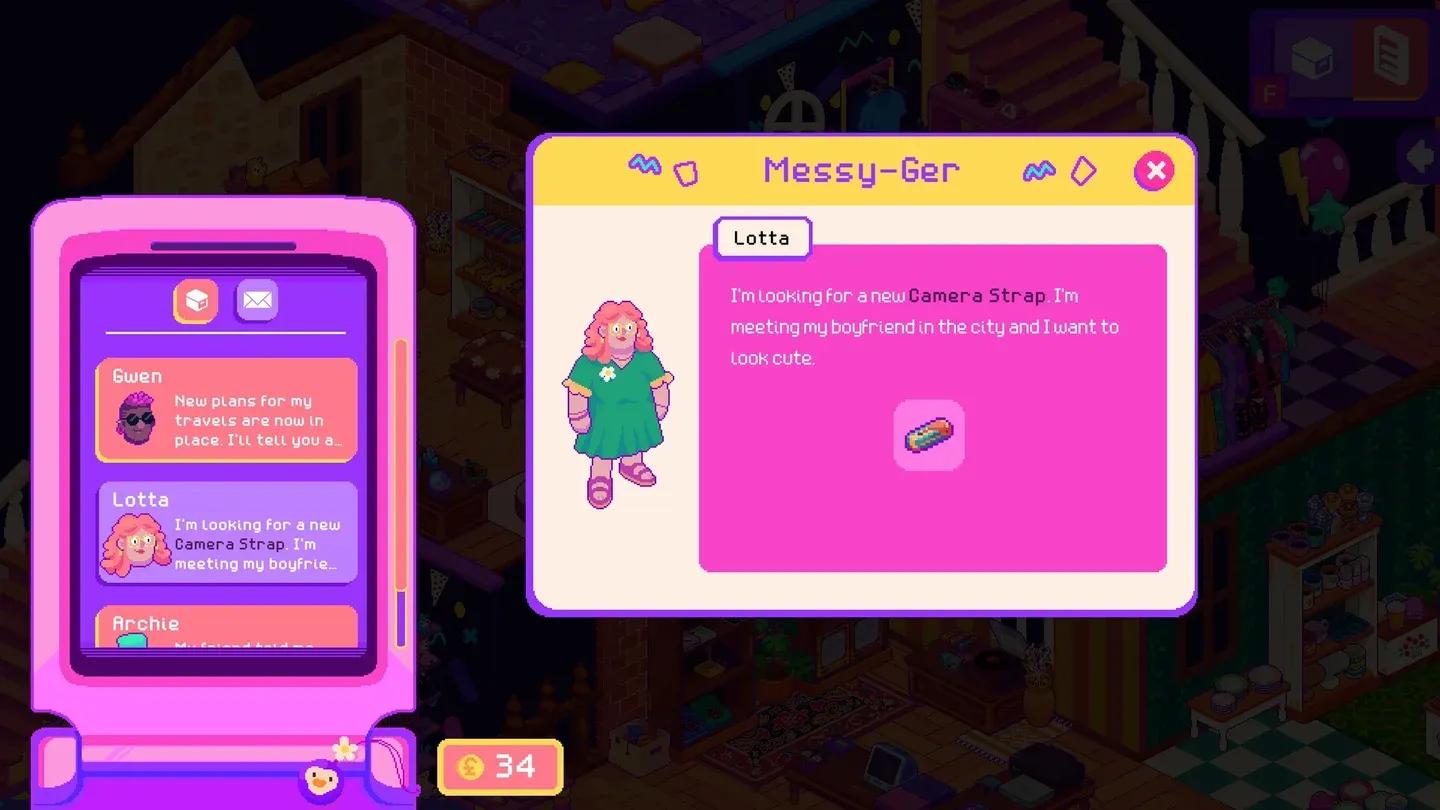
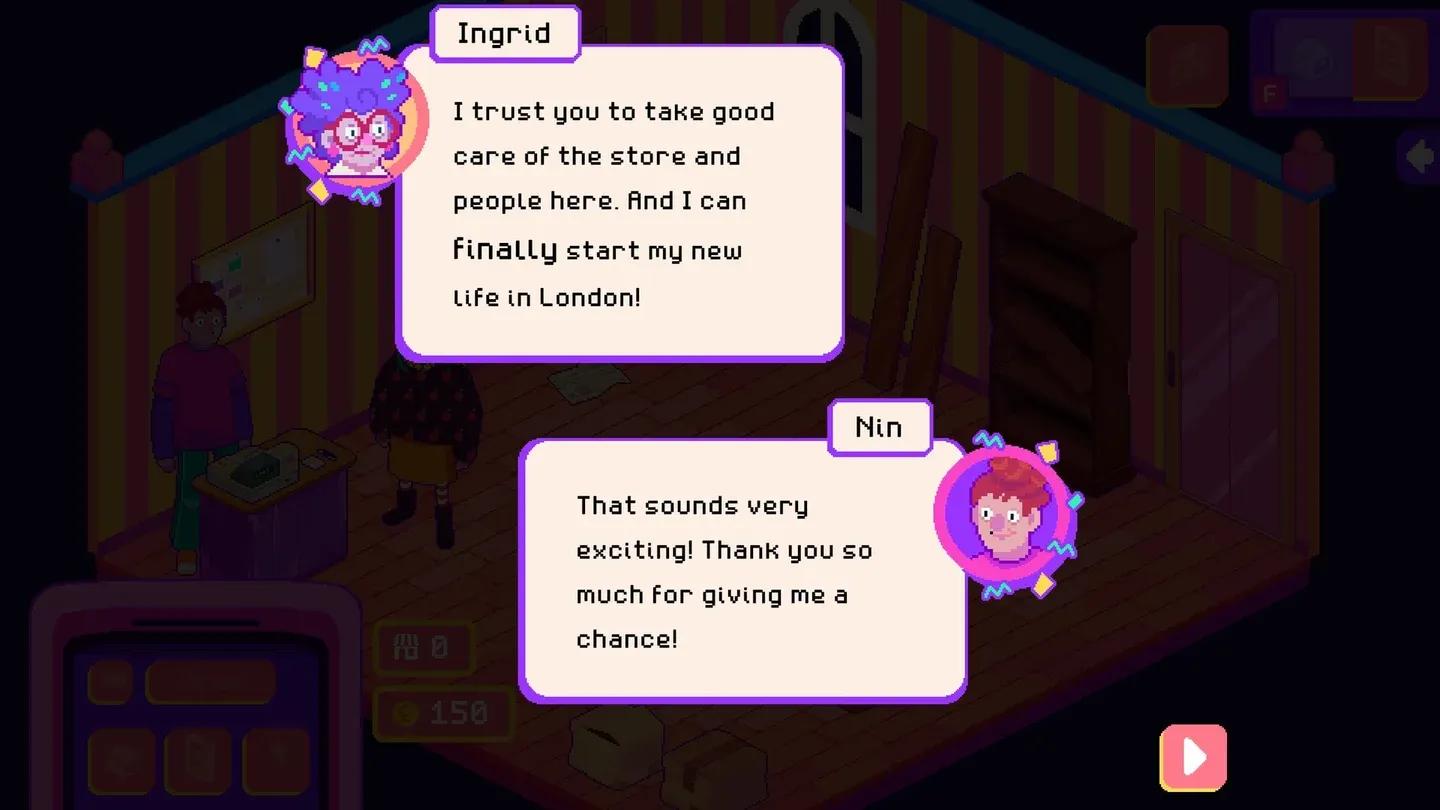
The social layer of Thrifty Business sets it apart from a pure management sim. Rather than anonymous customer traffic, the game features a cast of recurring characters who visit your shop, share their stories, and bring specific requests. Befriending these regulars is not a side mechanic. It is central to how the store evolves into a community hub.
This approach echoes the kind of NPC relationship systems found in life sims like Stardew Valley, but filtered through the specific context of a thrift shop. A regular might be hunting for a particular type of antique, or they might just want somewhere comfortable to browse. Responding to those needs shapes the direction of your shop.
Visual and audio design
Spellgarden Games works exclusively in pixel art, and Thrifty Business continues that tradition with a colorful, detailed style that makes the shop feel lived-in from the start. The nostalgic items you discover and display carry that aesthetic through, with vintage clothing, old toys, and antiques rendered with enough character to feel like real finds rather than generic inventory icons.
The studio describes its games as filled with wholesome escapism, and the visual tone backs that up. Nothing here is grim or clinical. The shop looks like somewhere you would actually want to spend an afternoon.

Content and replayability
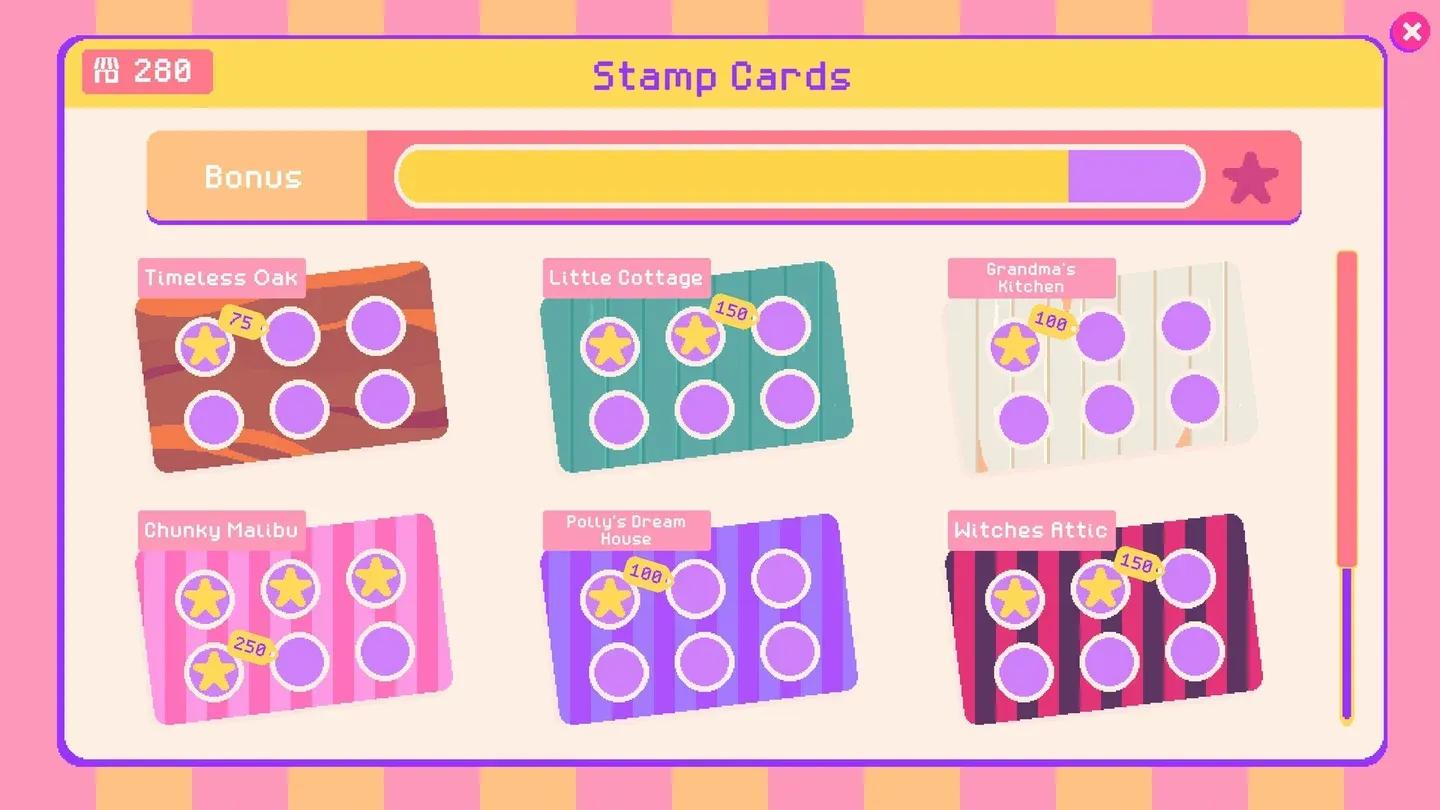
Thrifty Business is built around gradual store expansion, which gives the game a natural sense of progression without artificial urgency. As you serve customers and fulfill requests, the shop grows from a modest space into a genuine local institution. That arc gives players a clear sense of building something over time, which is the emotional core of the cozy sim genre.
For players who connected with Sticky Business or similar titles like Unpacking, this is a game that understands what makes the genre work. The thrift shop setting is specific enough to feel fresh while the management sim mechanics stay accessible, making Thrifty Business an easy recommendation for anyone who wants a relaxing game with genuine heart.
| Requirement | Minimum |
|---|---|
| OS | Windows 10 |
| Processor | Intel Core i3-2100 or AMD FX-6300 |
| Memory | 8 GB RAM |
| Graphics | NVIDIA GeForce GT 530, 2 GB or AMD Radeon R7 250, 1 GB |
| DirectX | Version 11 |