
The best beginner ranged build in ArcheAge Chronicles is a Longbow-focused Ranger, with a Hatchet secondary and Agility supported by defensive stats.
Use this setup for early PvE, questing, and learning boss attacks from a distance. Your goal is to make the bow your dependable damage source without spending every resource on offense. The Hatchet provides a mobile melee alternative, but mastering its resource management can wait until you are comfortable maintaining space. Start with a simple bow routine, learn your pressure-control abilities, and add complexity gradually.
Ranged build overview
Ranger and Mage both offer ranged damage, but their learning demands differ. The Longbow gives you a direct set of damage skills alongside a freeze and a close-range counter. The Elemental Staff adds spell retention and Energy Core management, making it a more demanding starting point.
| Ranged option | Weapon pair | Main appeal | Beginner drawback |
|---|---|---|---|
| Ranger | Longbow and Hatchet | Ranged archery with an evasive melee alternative | The bow needs space, and Hatchet resource management takes practice |
| Mage | Elemental Staff and Wavesword | Elemental area damage with a frost-based melee alternative | More spell and resource management, with low durability |
Choose Ranger if your priority is learning ranged positioning through a manageable bow toolkit. Mage suits players who specifically want to learn a more involved casting system.
Your class is tied to your character. Compare the ArcheAge Chronicles classes and weapon pairs before committing, because playing another class requires another character.
Recommended weapons and equipment
Starter loadout
Equip the Longbow and Hatchet together. Press Q to switch weapons during combat; the swap changes your active toolkit, not just the weapon in your hands.
| Component | Recommendation | Purpose |
|---|---|---|
| Main weapon | Longbow | Your primary damage source and first trait investment |
| Secondary weapon | Hatchet | Access to mobile melee attacks and a parry |
| Armor | Compare listed bonuses against your survival needs | Favor useful defensive improvements when incoming damage is ending fights |
| Accessories | Compare listed bonuses against your damage and survival goals | Support physical damage without ignoring the weaknesses of your current setup |
| Initial trait investment | Concentrate on Longbow | Develop one dependable weapon before dividing scarce points |
For armor and accessories, judge the bonuses actually shown on each item. Where the choice exists, physical damage supports your attacks, while HP, stamina, and defense support survival. A damage-focused item is less useful if equipping it leaves you unable to survive the encounters you are learning.
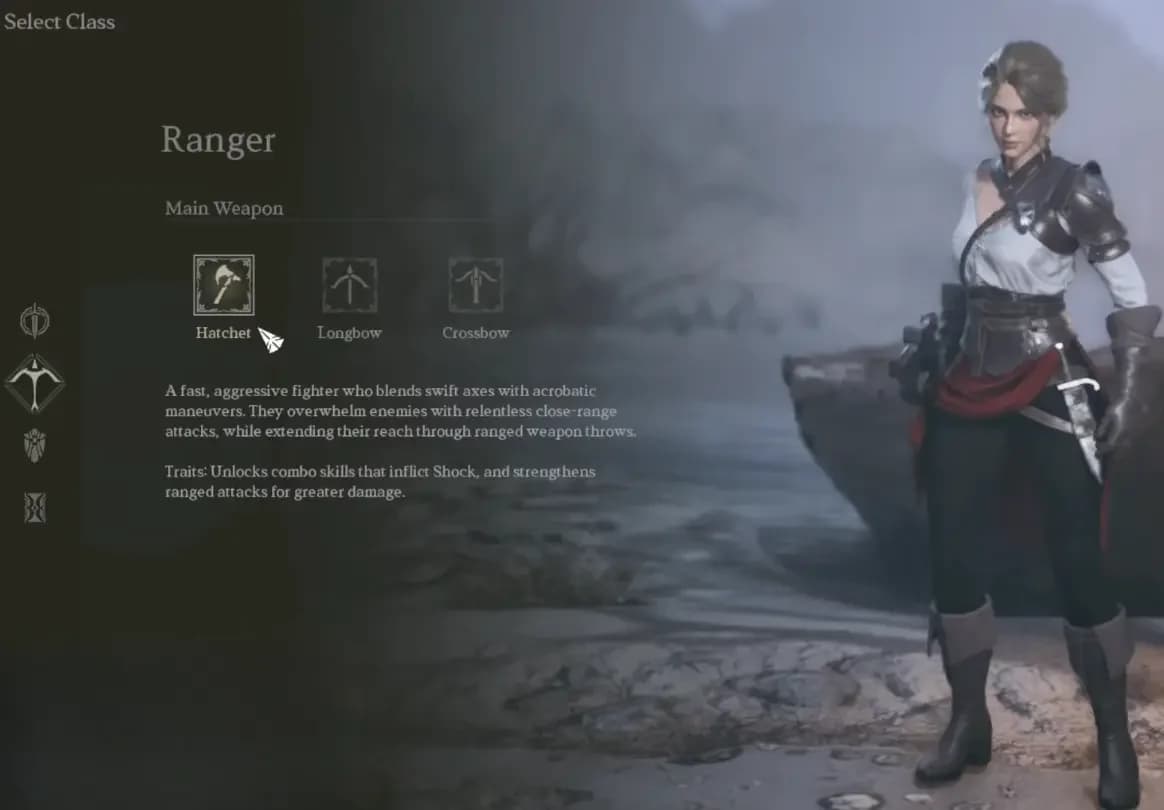
Equip the Ranger weapon pair
Later specialization
Keep your first progression goal narrow: a bow setup you can use without constantly retreating or exhausting your stamina. Do not divide your opening trait points evenly simply because both weapons are equipped.
Once your ranged routine is reliable, invest in the Hatchet if you want to use its melee toolkit regularly. Its Stormsplitter, Overcharge, Shocking Kick, Wind Blade, and Storm Chaser skills create a separate combat style to learn. Carrying the weapon does not require building around all of those abilities immediately.
Abilities to prioritize
Learn control before extending your damage sequence
Treat these priorities as a learning order, not a level-based unlock order or a fixed rotation. Your first objective is to recognize when you can safely attack and when you need to recover distance.
| Ability | What it does | Beginner priority |
|---|---|---|
| Ice Arrow | Freezes targets | Learn how to use its control to create room to move |
| Crescent Kick | Counters an attacker and gets you back to a safer distance | Learn your response when an enemy reaches you |
| Rapid Fire | Deals bow damage | Make it part of your basic ranged routine |
| Fire Arrow | Deals bow damage | Add it during safe attack opportunities |
| Aimed Shot | Deals bow damage | Use it when enemy behavior gives you room to attack |
Do not assume every encounter will let you stand still and use every damage ability. An interrupted sequence followed by a successful evade is preferable to completing another attack and taking a heavy hit.
Focus your trait points
Trait points come from Raeven's Coilstones, which are guarded by bosses in the world. They are separate from the stat points you receive through character levels, and weapons do not gain levels from XP.
Open Traits with K and concentrate your initial spending on the Longbow. Read the full choice before selecting a path: choosing one side of a trait branch locks out the other. Favor improvements to the attacks you actually use instead of spreading points across unfamiliar options.
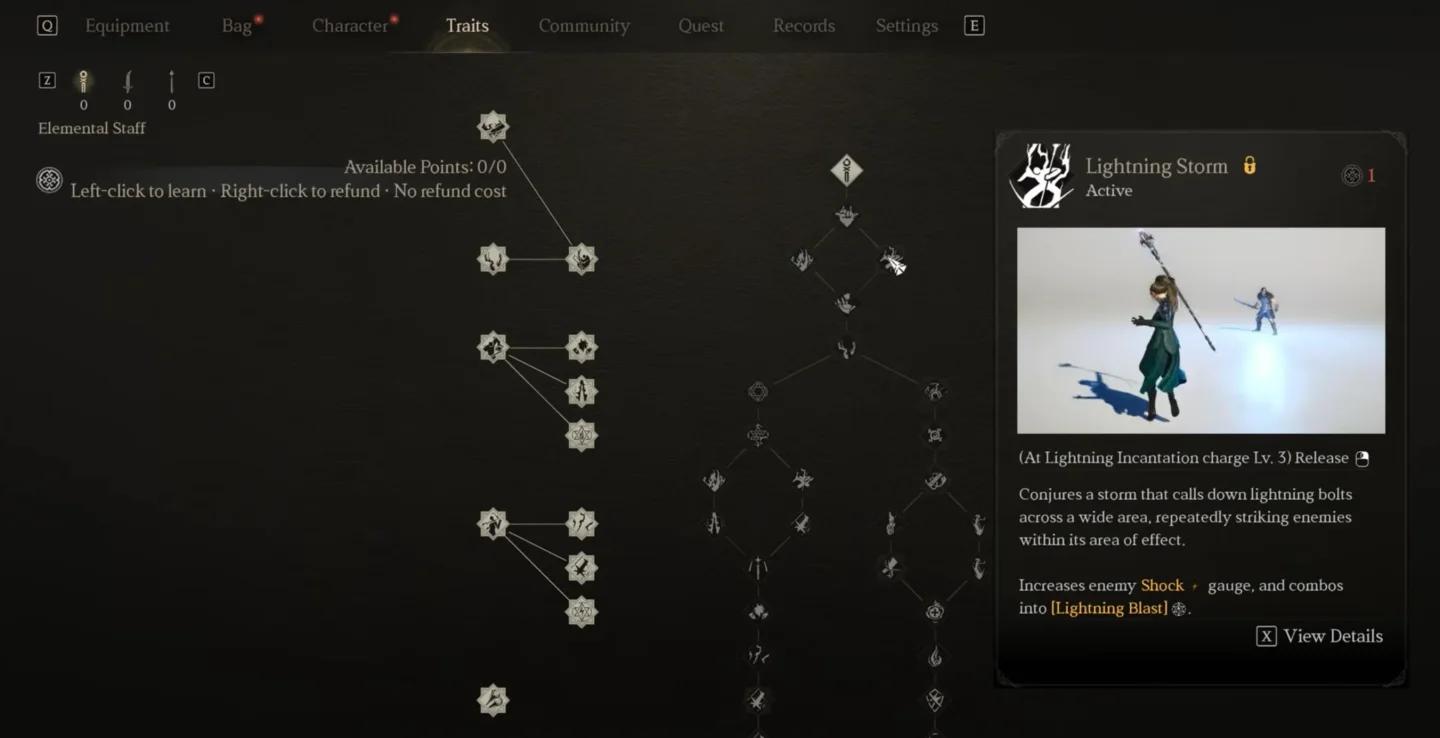
Focus your first trait points
Damage and survival stat priorities
Start with Agility, then address your weak point
Agility is the starting damage priority for this build because it improves both physical attack and critical chance. Your next investment should respond to what is stopping you from fighting safely, not follow an arbitrary fixed ratio.
| Attribute | Supported effects | When to prioritize it |
|---|---|---|
| Agility | Physical attack and critical chance | Your main offensive investment |
| Endurance | Stamina and defense | You regularly run short of stamina or need more defense |
| Constitution | HP and critical resistance | Hits leave too little room to recover from mistakes |
| Strength | Physical attack | Consider it as another physical-damage option after checking the stat preview |
Spend your stat points when you level. Open Character info with C and inspect the preview before confirming an allocation. The preview lets you compare the actual change instead of assuming each offensive attribute is equally valuable to your current character.
If a damage-heavy allocation is getting you killed, core attributes can be reallocated at major town settlements or regional campsites. Change the stat causing the problem: more HP and more stamina solve different failures.
Positioning and combat sequence
Use an adaptable sequence
Combat follows the stamina discipline of other action games: attacks and evades draw from the same bar. Stop attacking before your next defensive response becomes unaffordable.
Choose an approach with open ground beside or behind you. A wall removes retreat space, and an additional enemy can turn a comfortable firing position into a close-range fight.
- Start at range. Give yourself room to observe the enemy's approach and attack animations.
- Use your bow damage skills during openings. Work Rapid Fire, Fire Arrow, and Aimed Shot into the time the enemy gives you.
- Control pressure before continuing. When Ice Arrow's freeze affects the target, use that opportunity to restore space if needed.
- Respond when an attacker gets close. Use Crescent Kick to counter and create distance, or evade an incoming attack.
- Reposition before restarting damage. Do not immediately spend the opening on another attack if your position is still unsafe.
- Use the Hatchet deliberately. Swap when you intend to use its melee tools, not because changing weapons alone will protect you.
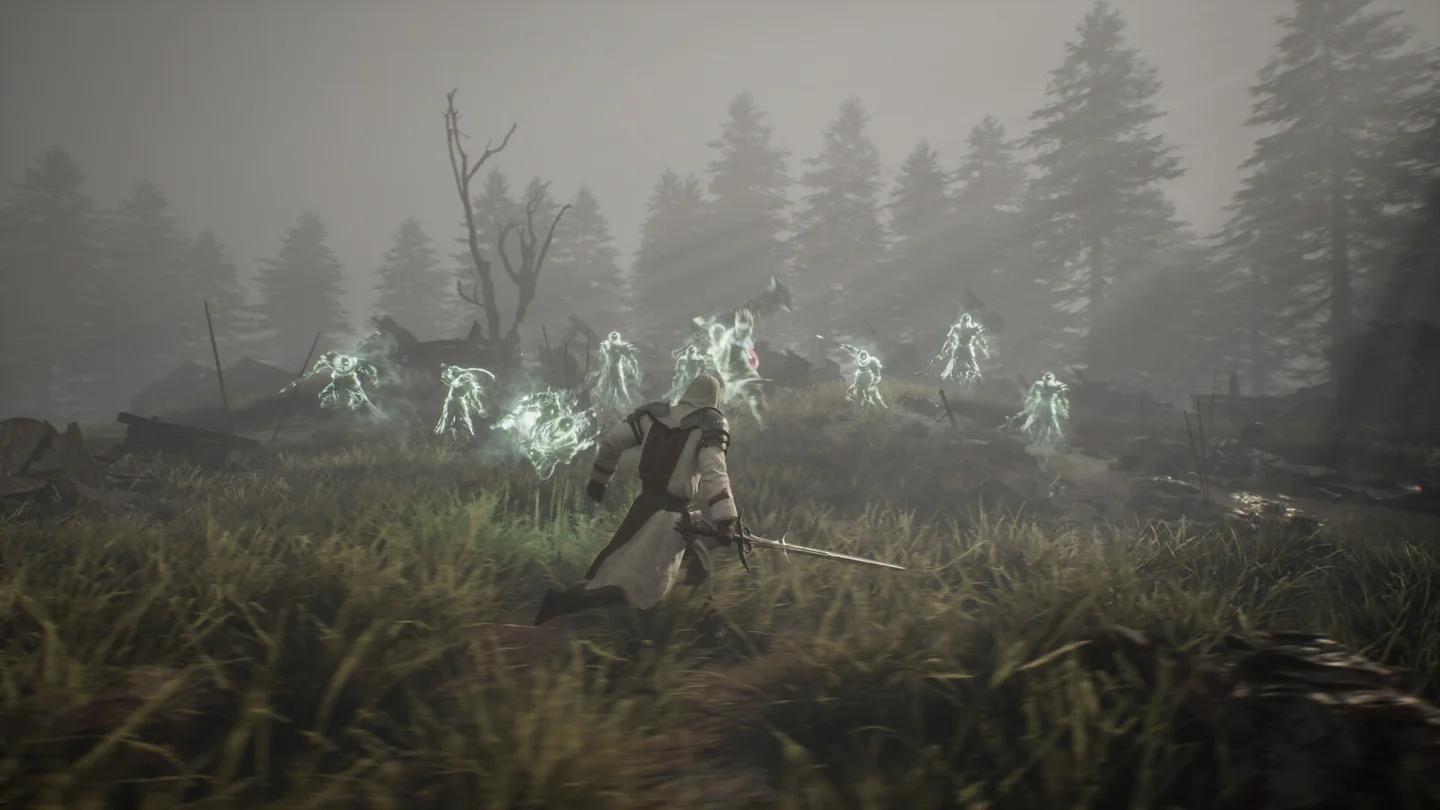
Leave stamina for your escape
Treat the Hatchet as a practiced backup
The Hatchet has a parry; the Longbow does not. Several Hatchet skills also include evasive movement, but its resource management makes it a demanding weapon to master.
Practice that toolkit against familiar enemies before depending on it during a difficult boss fight. If you're struggling with close-range pressure, first shorten your bow attack sequences and improve your escape route. Adding unfamiliar melee inputs can make the same situation harder to read.
Adjustments for solo and group play
Solo play
Keep your early fights controlled. Avoid drawing another pack while learning the first enemy's attack patterns, and reposition before pursuing a target into crowded ground.
Use your failed attempts to identify one specific problem. Running out of stamina calls for shorter attack sequences or more Endurance. Surviving a hit with almost no HP makes Constitution worth considering. Taking repeated hits while trying to finish another attack calls for a change in timing, not just more damage.
Group play
The Longbow suits back-line boss damage, but another player standing closer to the enemy does not remove your need to watch its attacks. Pick a position that keeps the target visible and leaves you room to move when its attention changes.
Use safe openings for damage without following melee teammates into close range unnecessarily. After a boss forces you to relocate, rebuild your firing position first, then resume attacking. Your contribution is more dependable when movement interrupts a few shots instead of a preventable defeat ending your damage entirely.