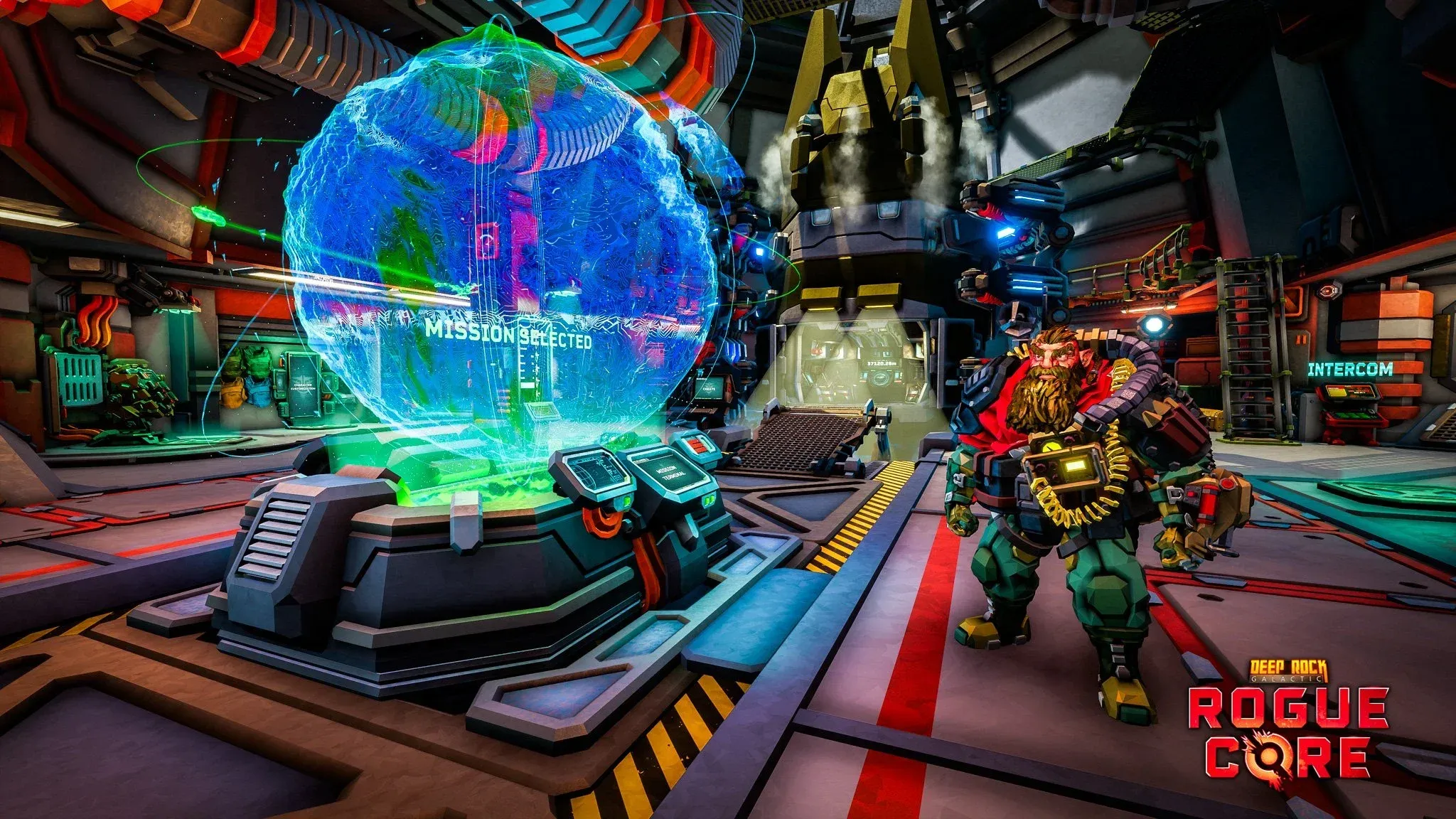

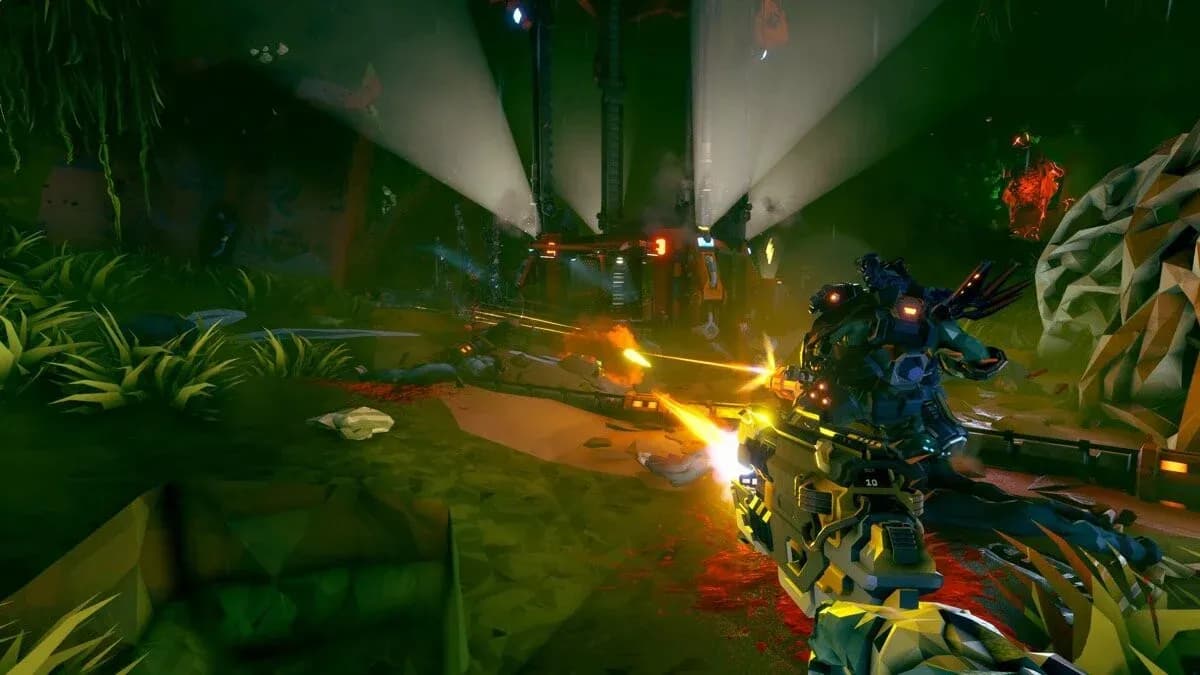
Deep Rock Galactic: Rogue Core drops you into Hoxxes IV with minimal gear, a malfunctioning robot companion, and enough alien hordes to make even veteran DRG miners sweat. Ghost Ship Games built this standalone roguelite spin-off around constant pressure, randomized builds, and team coordination that actually matters. Runs start lean and escalate fast. Knowing what to prioritize from the first floor makes the difference between extracting in one piece and getting dragged underground by a Cosmic Nightmare Tentacle.
Why is Rogue Core so much harder than standard DRG?
The difficulty gap surprises a lot of players. In standard Deep Rock Galactic, solo on lower hazard levels is forgiving. In Rogue Core, even the easiest complexity setting puts you under real pressure from the first room.
Three factors drive this. First, enemy counts do not scale down much for solo play, so you are shooting through roughly the same swarms a full squad would face. Second, ammo runs dry faster than you expect because you are the only gun in the room. Third, wrong weapon choices compound both problems. Running without a weapon that can target weak spots makes elites and bosses dramatically harder to kill, with one source estimating the difficulty roughly doubles without that coverage.
The narrative reason for your limited starting gear is the Grayout Barrier, an enormous electromagnetic disturbance surrounding the deepest facilities on Hoxxes IV. It blocks advanced equipment from passing through, so Reclaimers deploy with basic loadouts and scavenge everything useful from inside the facilities themselves. That is not just lore flavor. It is the structural reason every run resets your gear.
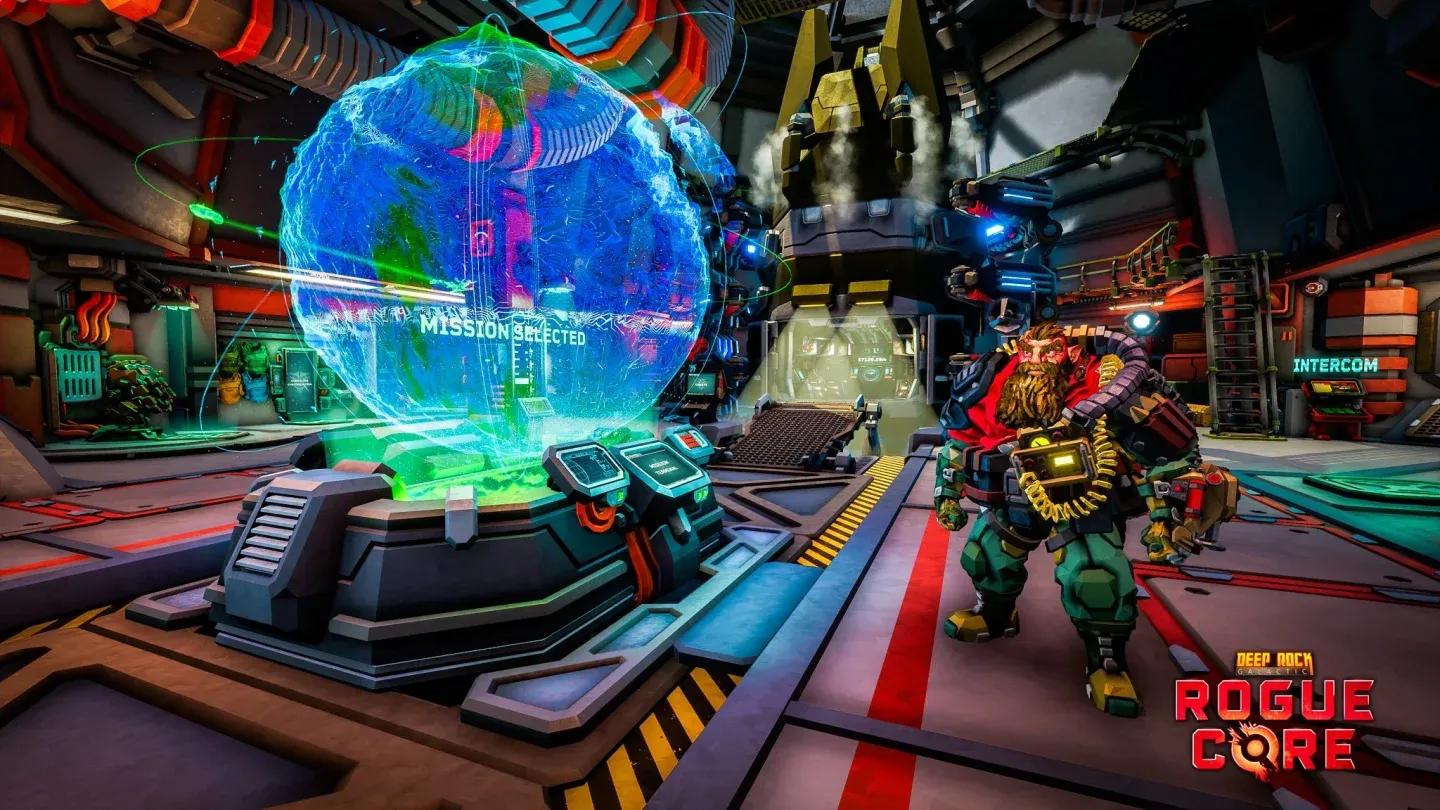
Every run starts from scratch


What are the five Reclaimer classes?
Rogue Core launched on Steam Early Access on May 20, 2026 with five playable Reclaimers. Duplicate class selection is not allowed, which pushes squads toward genuinely varied compositions.
| Class | Role | Standout Ability |
|---|---|---|
| Guardian | Defensive frontline | Zone control, armor restoration for allies |
| Spotter | Support marksman | Toxin darts that mark targets for bonus damage; sees enemies through walls |
| Falconer | Aerial crowd control | Assault drone with remote revive capability |
| Slicer | Close-quarters melee | Energy blade with friendly-fire-safe cleave; advanced movement tech |
| Retcon | High-risk damage dealer | Time-reversal ability restores health and ammo; rage meter doubles damage |
Each class has a primary ability, a secondary, and an ultimate. The Guardian, for example, spends 1 point on a primary that pushes enemies away and 2 points on a secondary that creates a sustained damage zone around him while also displacing enemies. His ultimate regenerates armor for the entire team over time. That support identity is baked into every ability he has, and teams that ignore it waste his value entirely.
The Spotter can also deploy spare ammo before a standard resupply pod gets used, which lets coordinated squads maximize total ammunition efficiency across longer runs. That is the kind of detail that separates a team running four random classes from one that actually thinks about composition.
For a deeper breakdown of each class's abilities and how to build them, the Deep Rock Galactic: Rogue Core Ultimate Beginner's Guide covers class roles and the elevator defense encounter in detail.
How does Expenite work, and how do you get enough of it?
Expenite is the primary mid-run currency. You mine it throughout each of the four stages and deposit it to unlock upgrades, similar to leveling up mid-mission. Each subsequent upgrade costs more, but the power gains are real enough that slacking off on collection noticeably weakens your run.
Beyond standard mining, three additional sources add meaningful Expenite:
- Kicking over buckets filled with Expenite scattered around stages
- Killing Test Subject enemies during their corresponding event
- Completing the Giant Drill event, which winds up a drill to smash into a large Expenite Crystal
You should realistically collect enough for 6 to 7 upgrades per run if you hit all these sources. Skipping them leaves you noticeably weaker heading into later stages.
Expenite gets processed through Ellis, the squad's robotic support assistant who functions as a mobile upgrade station during missions. Workbenches found throughout facilities offer additional weapon modifications. Finding a strong Workbench at the right moment often matters more than what weapons you started the floor with. Interacting with a Workbench marks the toolbox needed to complete it, so tracking it down is straightforward once you know it exists.
For a full list of every Expenite player upgrade sorted by rarity, check the Deep Rock Galactic: Rogue Core All Expenite Upgrades guide.
Expenite upgrades stack fast
How should you manage ammo and resupply pods?
Ammo management is one of the first places new players bleed runs. The instinct to hit a resupply pod the moment you see one is wrong. Each resupply pod has 4 slots, one per player in a full squad, and each slot restores 50% armor and 50% ammo. Using a slot when you are nearly full wastes most of that value.
The correct approach is to wait until you are below half ammo on both weapons before using a slot. Never burn a pod slot purely to top off armor. That armor recovery is a bonus, not the primary reason to use it.
In multiplayer, there is also an unspoken etiquette around resupply pods. Each of the 4 slots belongs to one player. Taking a second slot without asking is a fast way to make teammates hostile. You can ask to double-dip if someone does not need theirs, but do not assume.
What is Core Agitation, and why does it matter?
Core Agitation is the mechanic that defines Rogue Core's pacing. The longer your squad stays on any floor, the more the core destabilizes. Enemy counts increase, threats escalate, and once a run enters the Red Zone, effectively endless waves begin spawning to force movement.
At late-stage escalation, Cosmic Nightmare Tentacles can emerge. These are massive, invulnerable entities that drag players beneath the terrain and temporarily remove them from the run. If players fail to reach the elevator before the floor becomes overwhelming, teammates may start the next stage trapped in hostile cocoons, requiring rescue before the run can stabilize.
This is the sharpest departure from standard DRG. Thorough exploration is rewarded in the original game. In Rogue Core, lingering is punished. Every run ends at a Rift Gate, a portal connected to the Corespawn infestation, where squads face the concentrated end-of-run boss encounter.
The Corespawn themselves look and behave differently from Glyphids. They are more corrupted, more aggressive, and built around relentless pressure rather than swarming patience.
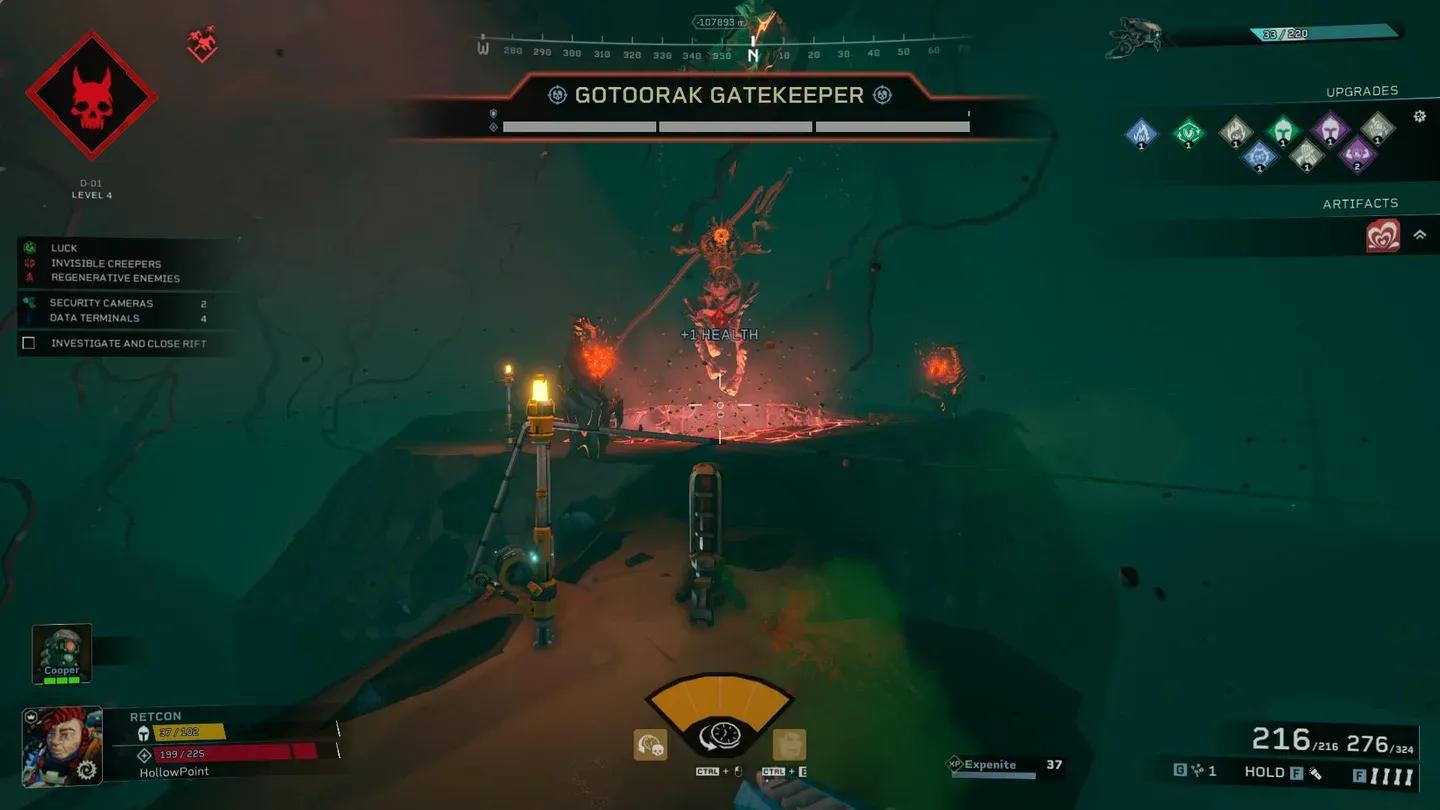
Core Agitation climbs fast
How does the Negotiation System and hazard selection work?
Between stages, you see a screen where you select 1 hazard modifier and 1 upside to offset it. The upsides are frequently worth taking. One of the strongest options increases your luck when rolling upgrades for the rest of the run. The base luck roll is around 3%, which sounds forgettable, but the difference is noticeable when it is active.
The broader lesson is that the downsides are usually manageable while the upsides can reshape an entire run. Take the risk.
The Negotiation System governs how upgrades are distributed during runs. Squads draw from a communal pool rather than receiving entirely separate rewards. Taking an upgrade removes it from your teammates' options. Some upgrades are clearly better on specific classes. Health reward options are an exception and can be selected by multiple players without removing the choice for others.
Squads that coordinate upgrade picks outperform those that grab whatever looks individually strongest. The system is designed to punish selfish selection.
What carries over between runs?
Most weapons and gear reset when a run ends. That is the roguelite structure, and the Grayout Barrier provides the in-world reason for it. What persists is your permanent progression aboard the RV-09 Ramrod, the hub ship that handles loadouts, cosmetics, statistics, and long-term class development.
Permanent unlocks and Clearance Level progression carry across runs regardless of whether a mission succeeds or fails. Completing Intel tasks in the Mission Terminal drives Clearance Level gains, which unlock additional areas and side events. The Enhancements, Pickaxe, and Loadout terminals on the Ramrod all support long-term growth.
After completing missions you earn tokens to spend in your skill tree, found near the mission select screen on the ship. The limit is currently 8 upgrades attached to your character at once. They stack meaningfully even in small numbers.
The Ramrod holds your permanent gains
Is team composition actually important in Rogue Core?
More than in standard DRG. The original game lets you run four of the same class without much penalty. Rogue Core is built around class synergy in a way the original was not.
The clearest example is the Spotter and Slicer combination. Spotter marks a target with a toxin dart, increasing the damage it takes. Slicer then dashes to that target and hits it with a melee attack. The value of the mark effectively doubles because a teammate can act on it immediately. Without the Slicer, the Spotter's marking is still useful but much less explosive.
This kind of cross-class interaction is present across the roster. Falconer controls space with lightning area denial while Guardian restores armor for allies surviving inside that controlled zone. Retcon absorbs damage to build its rage meter for doubled damage output, which pairs well with teammates who can keep enemies focused on it.
Playing with friends and coordinating class picks before a run makes a measurable difference. The Deep Rock Galactic: Rogue Core Co-op Guide covers how to invite friends and set up lobbies for up to four players.
Quick-start survival checklist
Before your first run, run through these:
- Pick a class with at least one weak-spot targeting weapon available
- Prioritize some HP and armor upgrades early, before the modifiers stack up in later stages
- Do not use resupply pods until below half ammo on both weapons
- Check the Intel task list before dropping and keep it in the back of your mind
- Use Bosco for mining high-up deposits, not as a reliable combat partner
- Hit all Expenite sources per stage: buckets, Test Subject events, Giant Drill event
- Coordinate upgrade picks with your squad before selecting from the communal pool
- Keep moving. Core Agitation punishes squads that camp
For more guides covering mechanics like Bio-Boosters, Security Override Alpha, and graphics optimization, browse the full Deep Rock Galactic: Rogue Core guide collection on GAMES.GG.