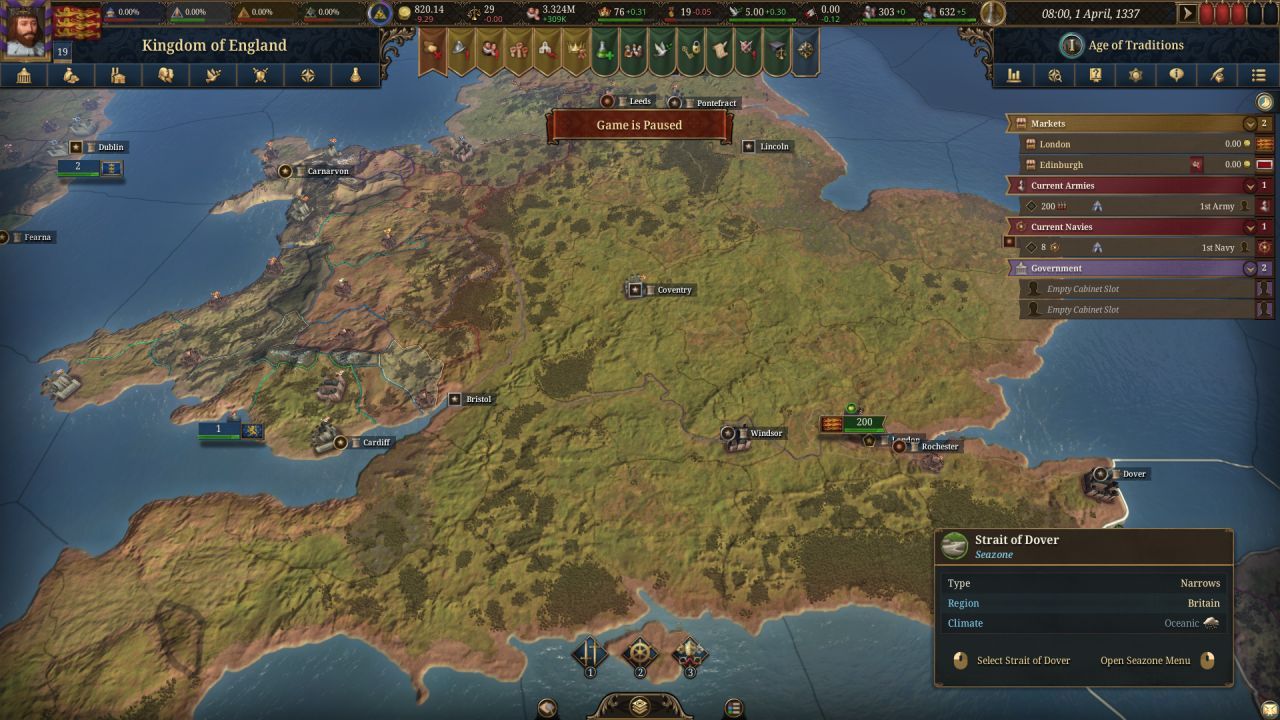
Europa Universalis V transforms grand strategy by simulating every person alive in 1337. You're no longer managing abstract numbers. You're directing the lives and choices of millions who shape your empire through their daily needs and decisions.
What makes EU5's population system different?
Each POP (Part of Population) exists as an individual entity with distinct traits. Every person belongs to a specific culture, religion, societal class, and location that determines their behavior, output, and loyalty.
The system runs on interconnected layers that generate emergent gameplay. Building a cathedral in Barcelona creates jobs for clerics, raises religious satisfaction, pulls in migration, and shifts the region's demographic makeup.

Societal classes and power dynamics
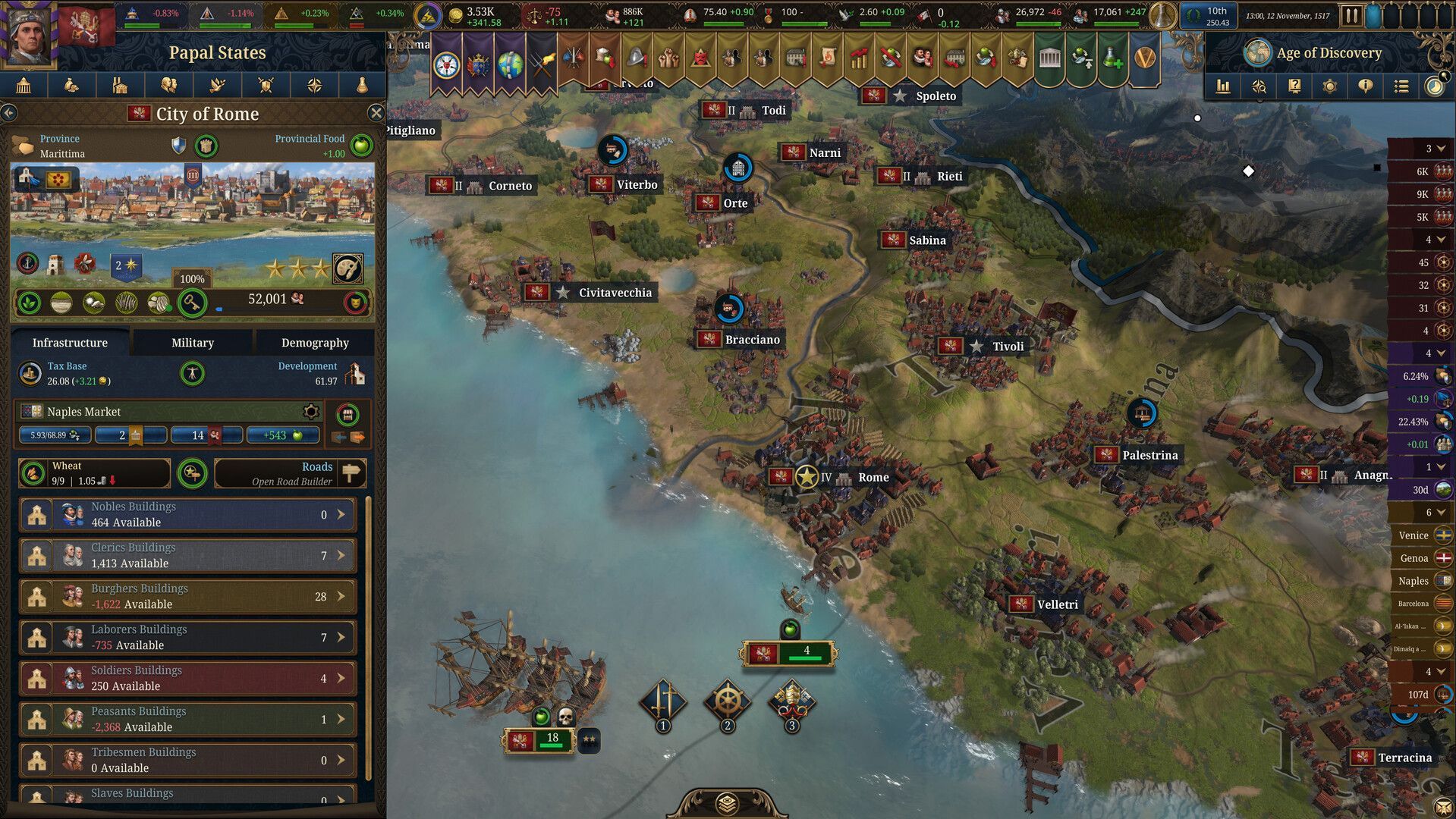
Your population arranges itself in a strict hierarchy mirroring medieval society. Nobles sit at the top, followed by clerics, burgers, laborers, soldiers, peasants, tribesmen, and slaves at the bottom.
Here's what matters: societal classes aren't fixed. A peasant can climb to noble status through the right mix of opportunity, prosperity, and time. This social mobility becomes your strongest tool for reshaping society.
| Societal Class | Primary Function | Political Power | Economic Impact |
|---|---|---|---|
| Nobles | Administration | 1,250% per pop | Luxury demand |
| Clerics | Research | High | Religious goods |
| Burgers | Trade/Production | Medium | Manufacturing |
| Laborers | Industry | Low | Raw production |
| Peasants | Agriculture | Minimal | Food production |
The insight: Estate satisfaction directly affects pop satisfaction. Since peasants vastly outnumber nobles, improving commoner estate satisfaction through lower taxes and privileges creates massive satisfaction gains across your population.
Population growth through resource management
Population growth runs on three pillars: food security, population capacity, and prosperity. How these interact separates successful rulers from those watching their empires collapse.
Food: the foundation
Food consumption works through a three-tier system:
- Local consumption - Food produced in a location feeds that location first
- Provincial stockpile - Excess food flows to provincial reserves
- Market purchase - Shortfalls trigger market buying
The mistake most players make? Urbanizing their best food-producing locations. Cities apply massive negative modifiers to food production, so placing your capital on prime farmland creates supply chain vulnerabilities that enemies can exploit.
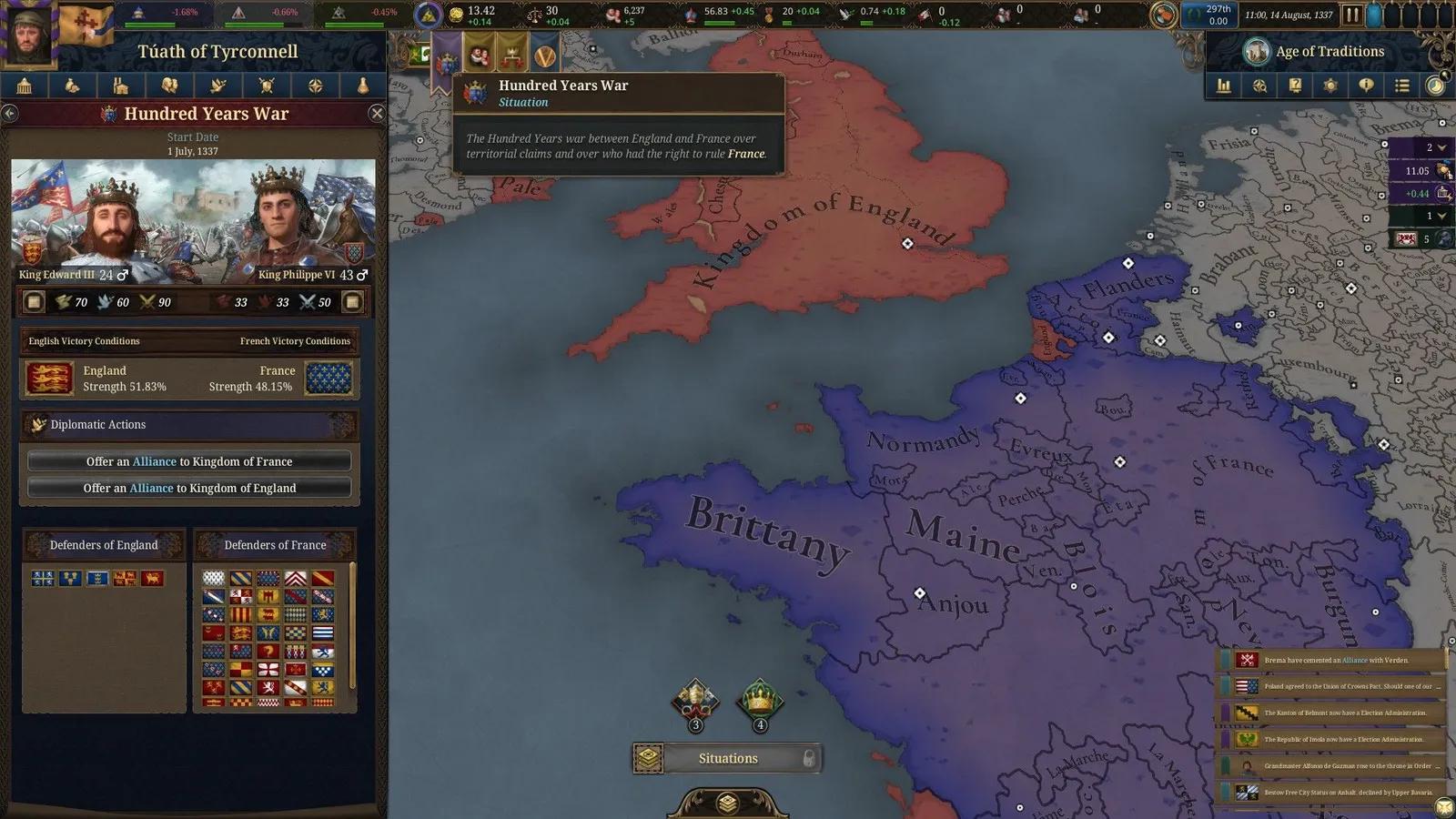
Smart food management means identifying locations with farmland vegetation (100,000 population capacity) and keeping them rural to maximize RGO levels and food output. Build cities strategically in locations that can import food reliably through secure trade routes.
Population capacity: geography matters
Every location has a maximum population it can support based on terrain, climate, and vegetation. Farmland provides the highest capacity at 100,000 pops, double that of grasslands. This isn't just a number. It's your empire's potential.
Population growth receives a 0.2% bonus when under capacity, scaling down as you approach the limit. Hit maximum capacity and growth stops entirely while triggering migration penalties and increased demotion rates.
The strategic implication? You can deliberately overpopulate locations to force migration toward areas where you need workers. This becomes especially powerful when combined with migration attraction modifiers from buildings like cathedrals and market centers.
Migration: moving people where you need them
Migration in EU5 isn't random. It follows predictable patterns you can manipulate. Pops move from low attraction areas to high attraction areas within your market, preferring nearby locations and following legal restrictions.
Migration attraction factors include:
- Market center status
- Capital designation
- High development levels
- Prosperity ratings
- Specific buildings (cathedrals, markets)
- Land availability and market prices
Here's the advanced strategy: deliberately create migration pressure by building job-creating structures in target locations while allowing source locations to hit population capacity. The combination forces movement exactly where you want it.
Development and prosperity: the wealth engine
Development measures how cultivated your land becomes, directly impacting population capacity and migration attraction. Higher development creates a positive feedback loop. More people want to move there, creating more economic activity, generating more development.
Prosperity drives development growth but builds slowly through positive conditions and collapses rapidly through negative events. A prosperous location enjoys increased migration attraction, monthly development, population growth, and character life expectancy.
The asymmetry matters: low prosperity builds quickly and devastates your regions, while high prosperity accumulates slowly with modest benefits. This makes protecting prosperous areas critical. Losing prosperity is far more damaging than gaining it is beneficial.
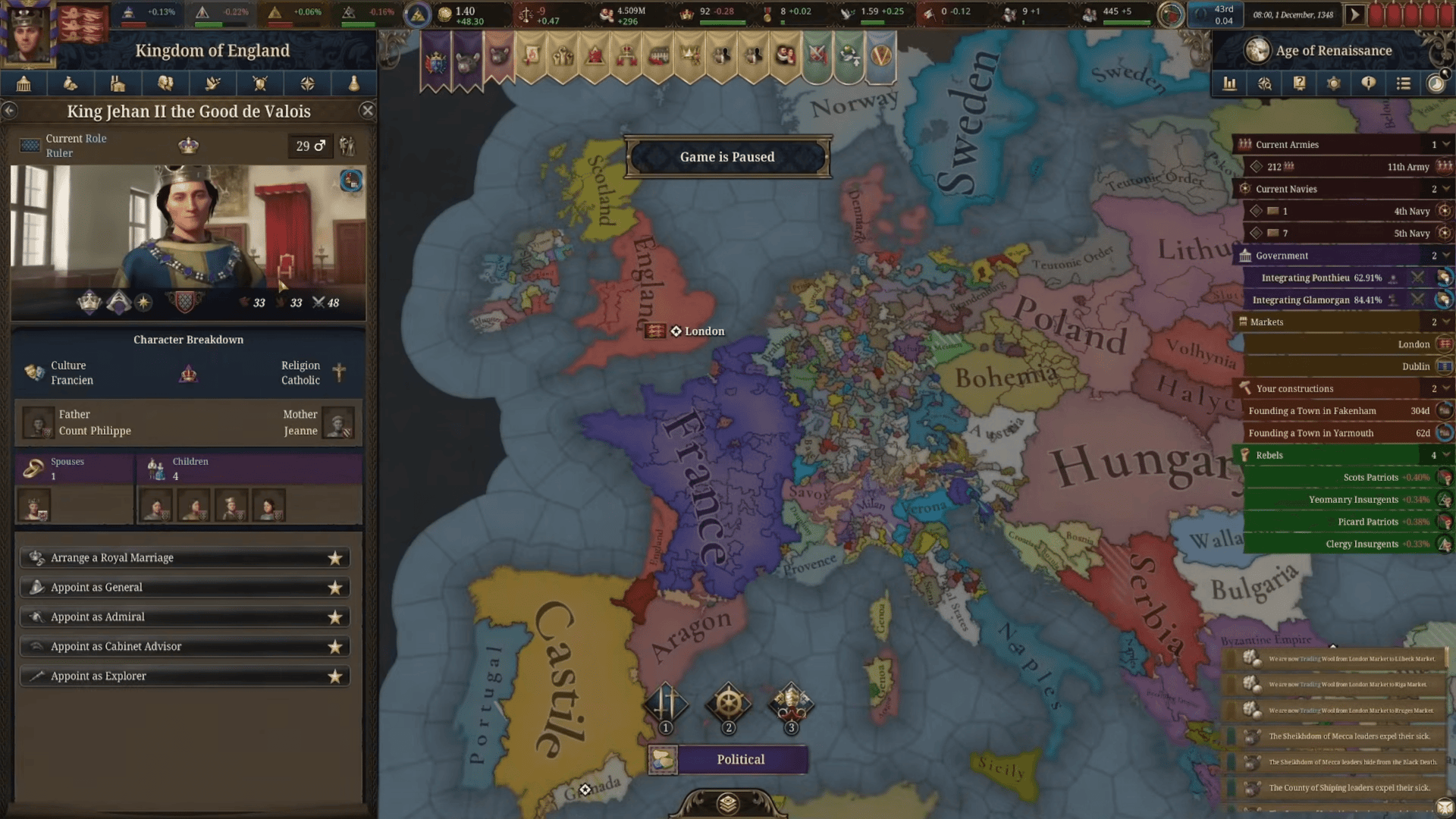
Prosperity killers include:
- Low pop satisfaction
- Disease outbreaks
- Military sieges
- Naval blockades
- Army looting
Smart players recognize this as a viable warfare strategy. You might lack the strength for major sieges, but fast raids targeting prosperous regions can cripple an enemy's economic foundation and war funding capacity.
Satisfaction: keeping your people content
Pop satisfaction determines everything from tax collection efficiency to rebellion risk. The satisfaction system operates on four primary factors: culture acceptance, religious tolerance, estate satisfaction, and needs fulfillment.
Cultural dynamics
Your cultural acceptance system creates satisfaction tiers:
- Primary culture: +25% satisfaction
- Accepted cultures: +10% satisfaction
- Tolerated cultures: +5% satisfaction
- Discriminated cultures: Severe penalties
Managing cultural capacity becomes a strategic puzzle. You can accept more cultures by increasing your kingdom rank and advancing through institutions, but going over capacity triggers empire-wide penalties.
The advanced play involves understanding cultural influence versus cultural tradition. Your influence acts as cultural offense for assimilation, while tradition provides cultural defense against foreign influence. Both impact integration speed, spy networks, diplomacy, and even siege effectiveness.
Religious harmony
Religious tolerance directly converts to satisfaction at a 5% rate per tolerance point. Heathens at 5 tolerance gain 25% satisfaction, while your primary religion enjoys maximum benefits.
The clergy estate receives massive bonuses equal to 10% of your religious unity percentage. At 87% religious unity, clergy gain +8.7% estate satisfaction, which cascades through all clerical pops.

You face a strategic choice: embrace tolerance for diverse satisfaction or pursue conversion for unity. Conversion naturally occurs over time but can be accelerated through cabinet actions, though forced conversion risks rebellion.
Control: your administrative reach
Control represents your state's ability to exert authority over locations, affecting tax collection, pop conversion, assimilation rates, and promotion speed. Low control means uncollected taxes funding rebel movements instead of your treasury.
Control radiates outward from your capital and propagates through infrastructure networks. Building roads and maintaining maritime presence along coastlines extends your administrative reach into distant territories.
The satisfaction-control feedback loop is critical: low satisfaction reduces maximum control, low control hampers pop development, and poor development decreases satisfaction. Breaking negative cycles requires targeted intervention through cabinet actions and infrastructure investment.
Building your economic foundation
Buildings in EU5 require specific pop types to function. Constructing a building creates job opportunities equal to its employment requirements, encouraging pop promotion into those roles. An unemployed building provides zero benefits, while underemployed buildings operate at reduced efficiency.
This creates strategic depth around urbanization timing. Rural locations provide +100% RGO level modifiers and population growth bonuses, making them ideal for resource extraction. Towns unlock burger-focused economic buildings that become increasingly important as your economy develops. Cities offer the highest-tier opportunities but consume enormous food quantities.
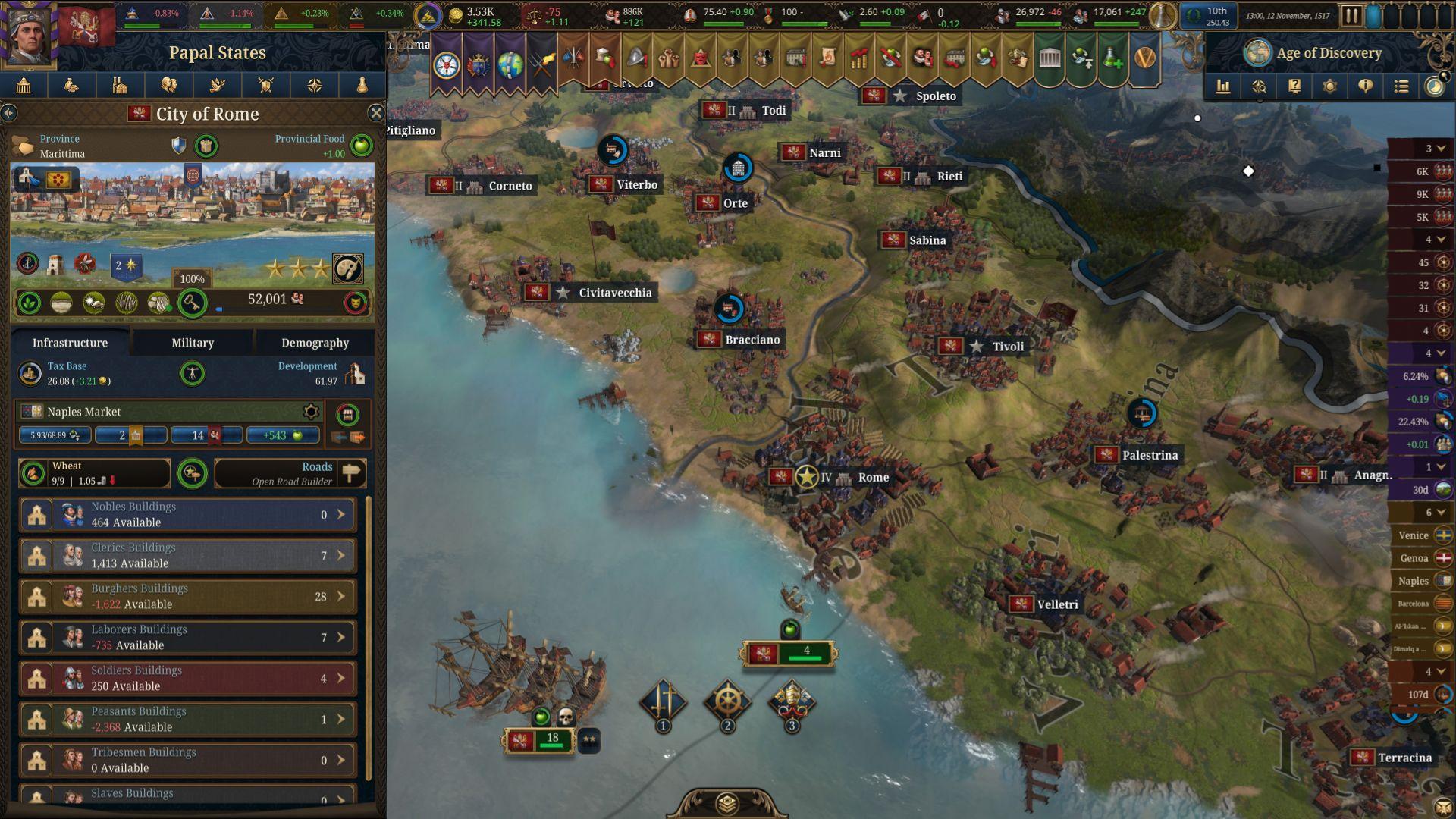
The promotion system operates at different speeds for different classes. Higher-tier pops promote much slower than lower-tier ones, and promotion speed depends on stability, control, literacy, and works of art presence.

Strategy: Create job vacancies to encourage promotion, but ensure you can feed the promoted pops. Higher-tier pops consume significantly more resources than lower-tier ones.
Surviving the Black Death and other catastrophes
Disease outbreaks, particularly the Black Death, will devastate your population regardless of preparation. The bubonic plague kills across all social classes, leaving buildings vacant and economies shattered.
Your response strategy should focus on:
- Building disease resistance structures for marginal advantages
- Increasing control through infrastructure to extract more from surviving populations
- Constructing villages that employ peasants without promotion requirements
- Monitoring disease resistance growth (diseases become harmless at 100% resistance)
The Black Death situation panel provides specific actions for mitigation, but accept that massive population loss is inevitable. Plan for recovery rather than prevention.
Advanced population strategies
Art and Artists: Employ artists to create works of art that boost cultural influence. Art pieces increase pop promotion speed, conversion rates, and assimilation in their display locations while accelerating institution growth.
Core Territory Development: Focus development on locations that can become cores, requiring integration and majority accepted/primary culture populations. Cores receive +20% maximum control and generate only accepted/primary culture pop growth.
Economic Specialization: Match your building choices to pop availability and regional advantages. Don't fight geography. Embrace it and build accordingly.
The population system in Europa Universalis V transforms grand strategy from abstract resource management into dynamic human drama. Every decision ripples through your society, creating emergent stories of growth, migration, prosperity, and survival. Master these mechanics, and you'll build empires that endure through the centuries while your rivals struggle with rebellions, famines, and demographic collapse.
Your people are your greatest asset. Treat them well, and they'll carry you to greatness. Neglect them, and watch your empire crumble from within, no matter how mighty your armies or vast your territories.