

To avoid losing money on Grand Theft Auto 6 robberies, count only the payout you can secure after escape costs and stolen-goods conversion.
The most valuable target is not automatically the most profitable one. Time inside, damage to a safe's contents, and the route to a buyer can all change what you keep. Use the checks below to compare a small store with a larger score, decide which extras to skip, and stop a successful holdup from turning into a loss.
How to calculate robbery profit
Use the payout you actually receive, not the value you expect to find inside a building:
Net robbery profit = secured payout minus job-specific spending.
Jewelry is not spendable cash. It needs to reach a fence, while marked bank bills and other illegal goods need the appropriate contact to turn them into money. Until that handover is complete, treat the contents of your bag as an unfinished job.
Keep new earnings separate from money you carried into the robbery. Returning with cash does not prove that the job increased your balance if you spent heavily preparing for it. Record purchases made specifically for the run, and do not charge the same purchase again when you reuse it later.

Separate profit from exposure
Two jobs can produce similar proceeds while putting very different amounts of your existing money at risk. A short store robbery followed by a deposit limits how much you carry into the next encounter. Chaining several jobs keeps a growing haul exposed throughout the session.
Do not treat a full bag as a reason to attempt one more target. Decide whether the next robbery is worth risking everything that still needs to be deposited or sold.
How to compare robbery targets
Scout the business before you start. Look for cameras, customers, guards, exits, and the distance between the counter and your getaway vehicle. These are more useful checks than assuming every business of the same type offers the same difficulty.
Zeke's provides an example of a strip mall target: Lucia approaches the gadget store alone, with her face covered and a pistol in hand. Use that kind of storefront to assess the surrounding space, including people outside and access to the road.
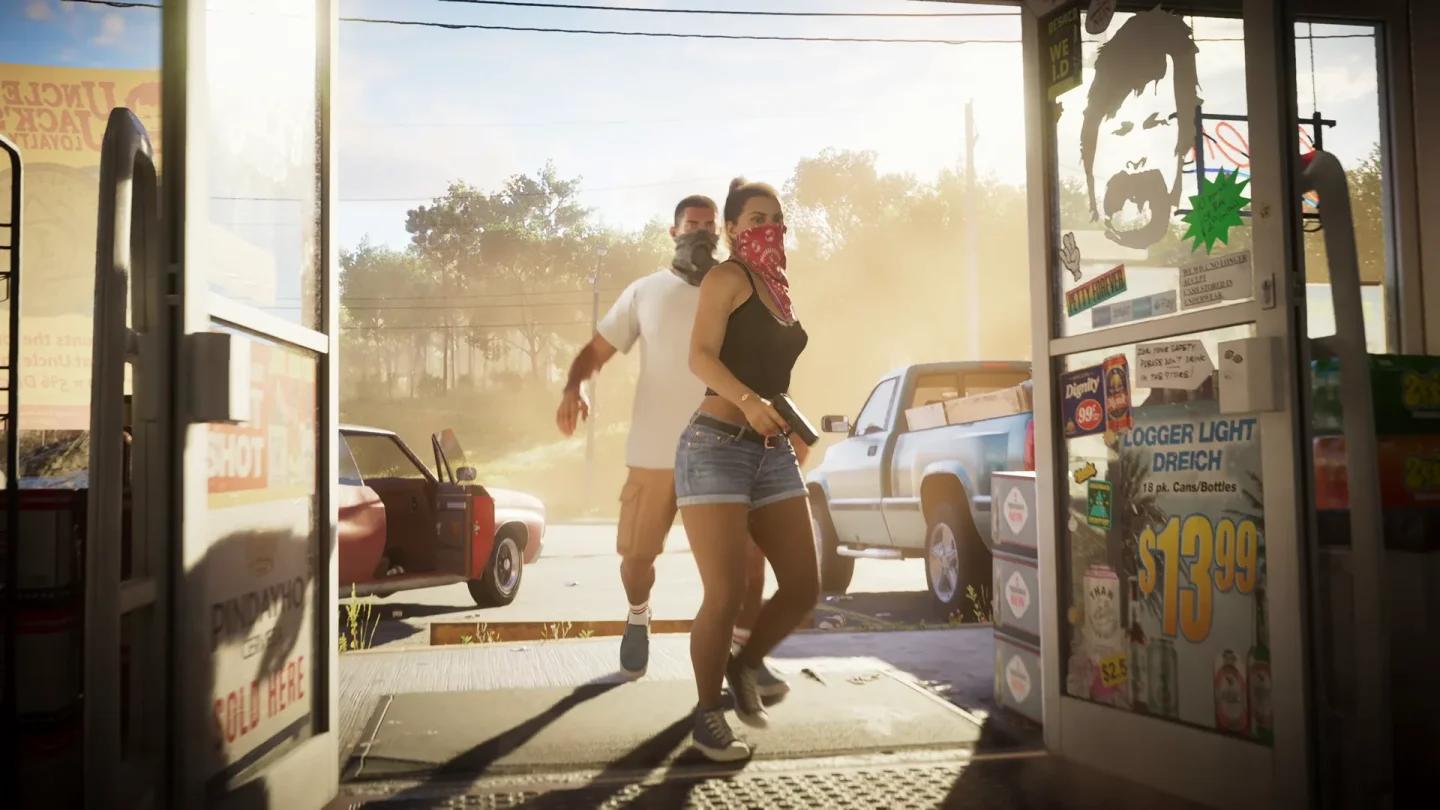
Zeke's strip mall storefront
| Target or opportunity | What you can gain | Main complication | Profit-focused choice |
|---|---|---|---|
| Convenience or liquor store | Register money, with an additional safe in some stores | Cameras, resistance, and time spent searching the back room | Favor a clear exit and a short visit |
| Unattended register | An opportunity to take money without confronting a clerk | Other witnesses, cameras, or a subsequent chase can still interfere | Check the surroundings before treating it as easy money |
| Jewelry store | Jewelry from display cases | The haul needs a fence before you can spend it | Include the buyer's location in your route |
| Small bank | Register money and a larger safe | Stronger security, a harder police response, and potentially marked bills | Prepare for the escape and conversion, not just entry |
Choose the layout, not just the business name
A quieter storefront is a sensible preference because it can have fewer observers. It is not a promise of slower police response. Judge the people and exits you can see instead of assuming a rural location carries a hidden safety bonus.
An unattended counter also does not guarantee an anonymous robbery. Removing the clerk from the encounter leaves the rest of the security problem intact. A nearby camera or customer can still make the getaway the difficult part.
For your first attempts, favor a target whose route you understand over a larger score with an unfamiliar interior. A back door is useful only if you know where it leads and can reach your vehicle from it.
Costs that reduce your take
Robbery losses fall into three practical categories: money spent preparing, loot sacrificed during the job, and proceeds lost before you secure them. Keep those separate when deciding what went wrong. Buying an unnecessary gun needs a different fix from spending too long searching for a safe combination.
Safe damage and time inside
Some store safes present a direct trade-off. Explosives open them quickly but damage the contents. Finding the combination preserves more money, but keeps you inside longer.
Choose the combination when you have room to search without sacrificing your exit. Choose explosives only if the reduced contents still justify the job. Skipping the safe is also valid when you already have register money and the situation is deteriorating.
Police can surround the building while you are still inside. Searching indefinitely for a code can turn optional extra loot into the reason you cannot leave. Set a stopping condition before entering, such as abandoning the safe once officers begin closing off your escape.
Unnecessary equipment and resistance
Weapon slots are limited. Use the Grand Theft Auto 6 weapons guide to choose the guns you will actually carry before spending money on another backup. Apply the same purchase check to clothes and vehicles: does the purchase solve a problem in this plan?
For an employee holdup, aim at the employee and hold L2 on PlayStation or LT on Xbox to bring up the interaction. Follow the displayed confirmation, typically Square or X, respectively, to demand money or information about valuables.
Compliance is not guaranteed. A gas station clerk can pull a shotgun and continue firing as you escape, while customers and security can also interrupt a robbery. A small business can become a dangerous encounter without offering a larger reward.
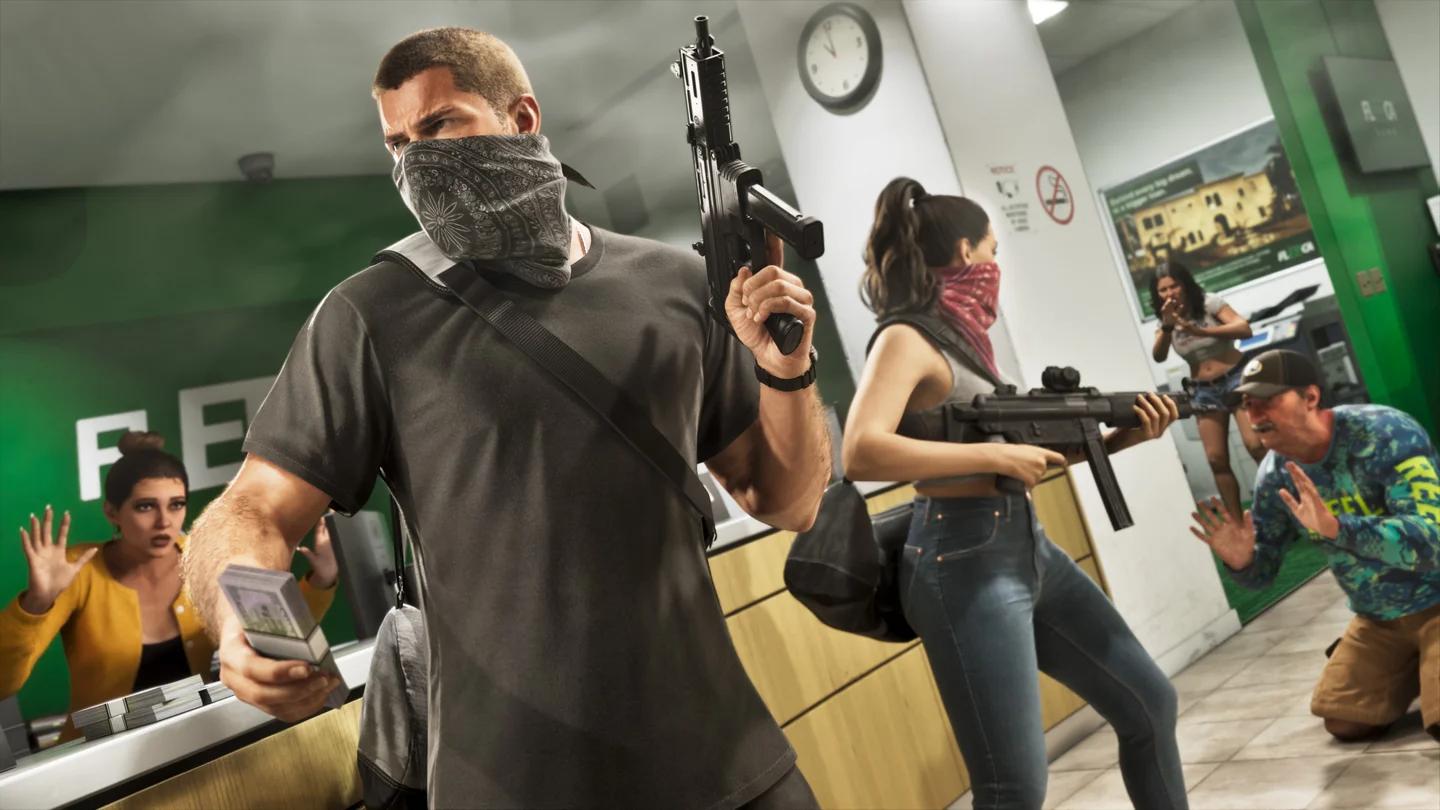
Leonida gas station forecourt
If resistance changes the job, reassess the optional loot immediately. Money already collected should not become an excuse to stay in a fight for an unopened safe.
How to limit escape costs
Plan the getaway before drawing a weapon. Park for the direction you intend to leave, identify an alternative exit, and consider positioning your partner with a car out back when working together. The Grand Theft Auto 6 wanted levels guide covers the police search once the robbery becomes a chase.
Police do not appear on the minimap. Watch the road and surrounding streets instead of treating an empty radar as proof that the route is clear. Dense traffic and narrow roads can also make an unfamiliar city escape harder to manage.
Break the description you created
Police can remember your outfit, appearance, and vehicle beyond the immediate pursuit. Wear a mask before entering, and account for any security recording. Some stores keep footage in a back room where it can be wiped, but reaching it also uses time.
Afterward, change your full outfit instead of relying on a hat or glasses. Switching to a vehicle police did not see you enter can help you escape recognition. If Jason and Lucia were identified together, separating them is another option to consider.
A replacement car is not automatically a clean getaway. Some stolen vehicles have trackers that can lead police to you. Do not build the entire escape around taking the first car you find outside.
Finish the job at the right destination
Once you have escaped, check what you are carrying and make the appropriate stop:
- Ordinary cash: Deposit it at an ATM before taking another unnecessary risk.
- Jewelry: Take it to the relevant fence.
- Marked bills or other illegal goods: Visit the appropriate green-marked contact, speak to them, and complete the handover prompt.
Choose that destination before starting the robbery when possible. A jewelry-store escape is incomplete if you have no plan for reaching its buyer.
When a robbery is not worth it
Skip a target, or end the attempt early, when the optional reward demands a risk you cannot control. Useful stopping conditions include:
- You cannot find the safe combination, and the police are approaching.
- The main exit is compromised, and you have no usable alternative.
- Armed resistance prevents a quick collection of the remaining loot.
- You are already carrying a valuable haul from an earlier job.
- The plan depends on purchases you cannot justify against the expected proceeds.
Story jobs and vehicle sales provide other ways to build your balance. Compare those options in the Grand Theft Auto 6 money guide when the next robbery would put a valuable carried haul at risk.
Set your stopping point before entering: which loot you want, what would make you leave, and where the proceeds go afterward. If the plan stops working, protect what you already have instead of chasing the original payout.