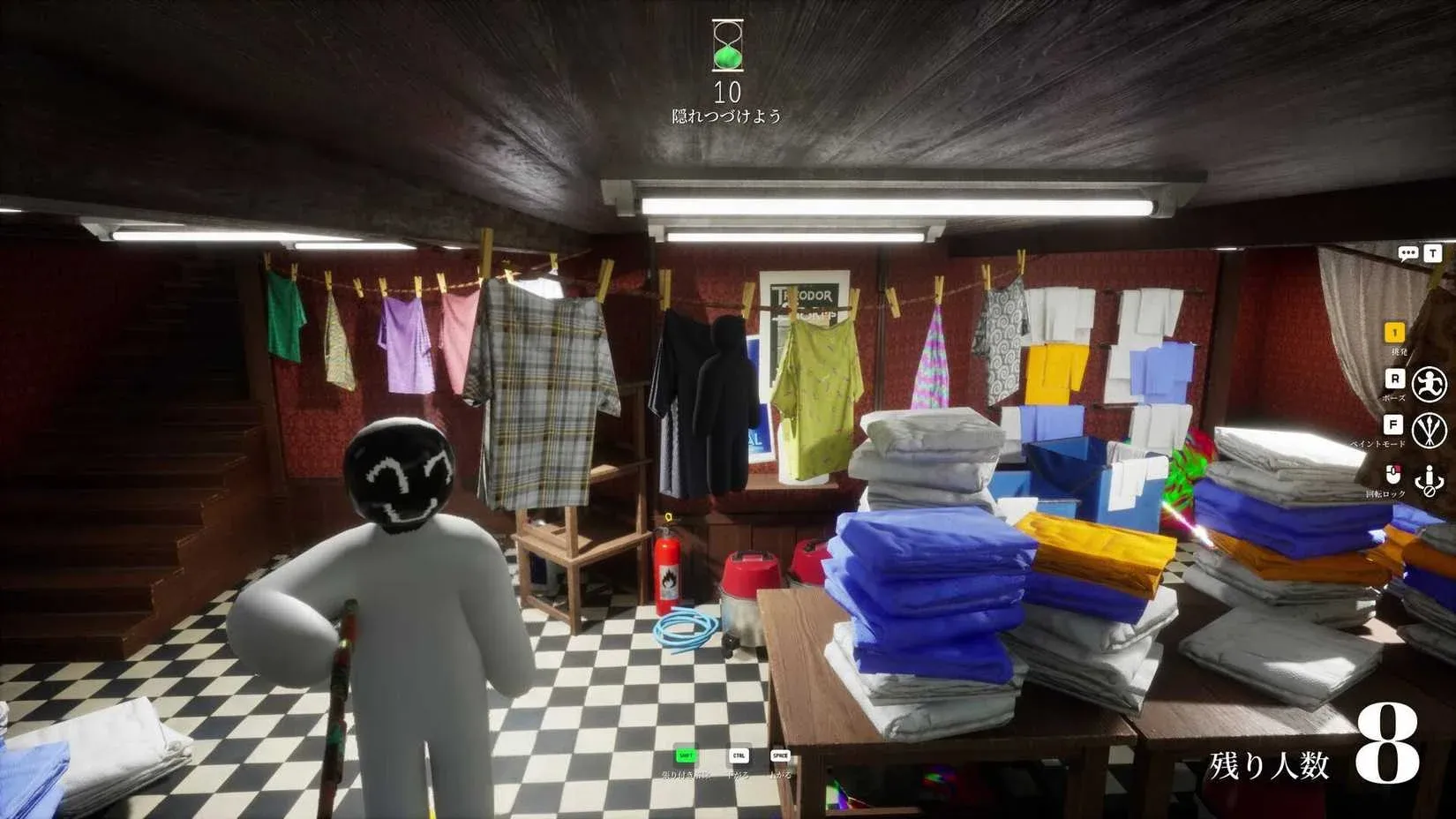


Paint alone won't save you, but it's where every disguise starts
MECCHA CHAMELEON drops you into a room as a bright white body and hands you a paint tool. The premise sounds simple: match the color around you, stay still, and the Seeker walks past. The indie hide-and-seek game from solo developer lemorion_1224 sold nearly 500,000 copies in its first 72 hours on Steam, so plenty of players are learning this lesson at the same time you are. What separates the ones who survive from the ones who get tagged in the first ten seconds isn't a perfect color match. It's understanding that paint is one piece of a four-part disguise: color, pose, placement, and surface all have to agree before you look like an object that belongs in the room.
Why color matching is harder than it looks
The game starts you as a bright white body, which means the paint step feels urgent. New players often sprint to the palette, pick something that looks close, and plant themselves wherever feels convenient. That order is backwards. Painting first and placing second almost always produces a mismatch because the color you chose in a panic rarely fits the corner you end up in.
What Seekers actually notice during a fast room scan isn't a slightly wrong shade. It's contrast, hard outlines, and objects that have no reason to be where they are. A muted, slightly imperfect color tucked inside a prop cluster will survive longer than a pixel-perfect match sitting alone in the middle of the floor. The room's visual noise is your real cover. Paint just reduces how much you stand out inside it.
What should you do first: paint or pick a spot?
Pick the spot first, every time. Walk the room, find a prop cluster or wall section that already has objects your body shape could plausibly join, then open the palette and match the general tone of that area. Matching one tiny highlight on a single prop is a trap. Seekers read the whole surface, not individual objects, so your goal is to fit the average tone of the cluster, not to clone one piece of it.
Once you've painted, pose before you commit. Your outline can give you away faster than your color. If the pose creates a clean, body-shaped silhouette that nothing else in the room repeats, even a good color won't hold up.
How do different surfaces change your paint strategy?
Not every surface punishes bad paint equally. Floors are the harshest because the Seeker often sees your entire body against a single flat plane with no visual clutter to break up the outline. Wall sections are more forgiving if nearby objects share a rough tone with you. Prop piles give you the most cover, but only when you match the average tone of the pile rather than one specific object in it.
Color transitions between surfaces are a common trap. Sitting exactly on the edge between two surfaces means neither color fully matches you, and edges naturally pull a Seeker's eye during a scan.
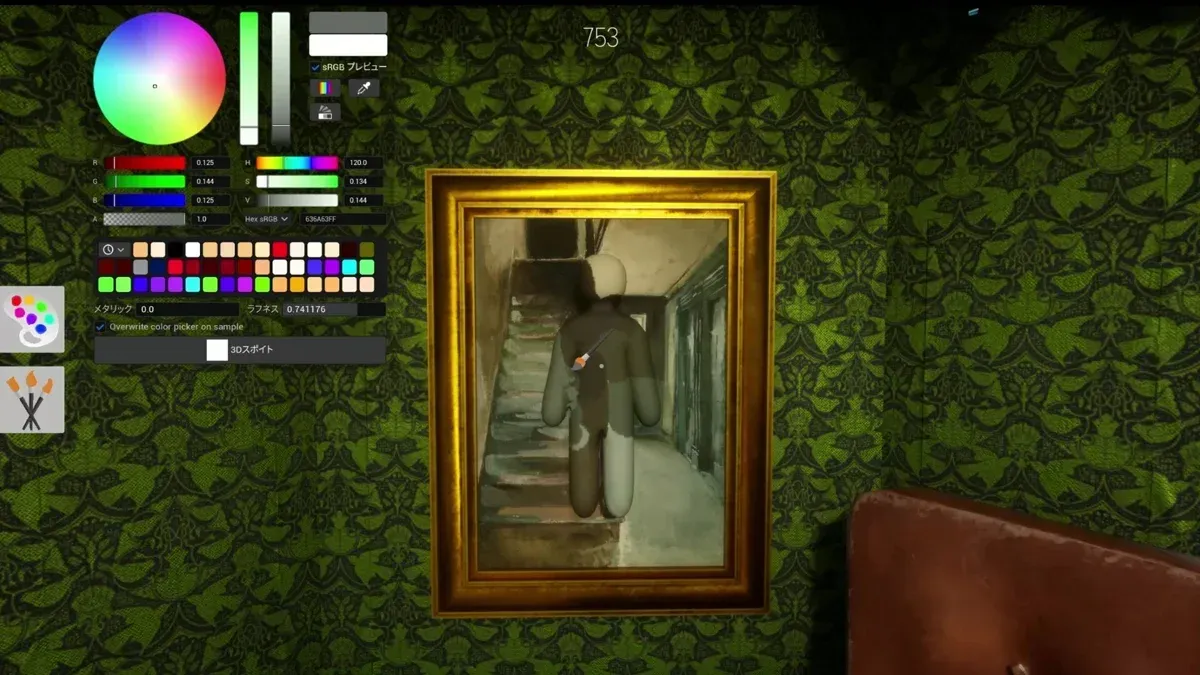
Blend the cluster, not one prop
What does the Seeker's feedback actually tell you?
The fastest way to improve your paint game is to ask the Seeker exactly what gave you away before they clicked. The answer tells you which part of your disguise failed, and that matters because fixing the wrong thing wastes rounds.
This feedback loop is the fastest skill accelerator in the game. After testing multiple rounds this way, the pattern becomes clear: most players get found because of pose or placement, not because their RGB values were off by a few points.
Common paint mistakes and how to fix them
The single most common error is treating paint as the whole disguise. A perfectly matched color on a body-shaped silhouette standing alone in an open area still looks like a player. Object logic matters as much as color logic. If the room has no reason for your shape to be in that spot, the Seeker will check it regardless of how well you matched the wall.
The second mistake is defaulting to darker colors as a safety net. Dark paint helps only when the surrounding area is also dark or visually busy. On a bright surface, dark paint makes your outline sharper and easier to read, not harder.
Bright paint can also cause problems even when it feels accurate on the palette. The stage lighting and surrounding objects affect how a color reads in context. If you keep getting found with what feels like a solid match, check whether your body is the loudest object in the cluster.
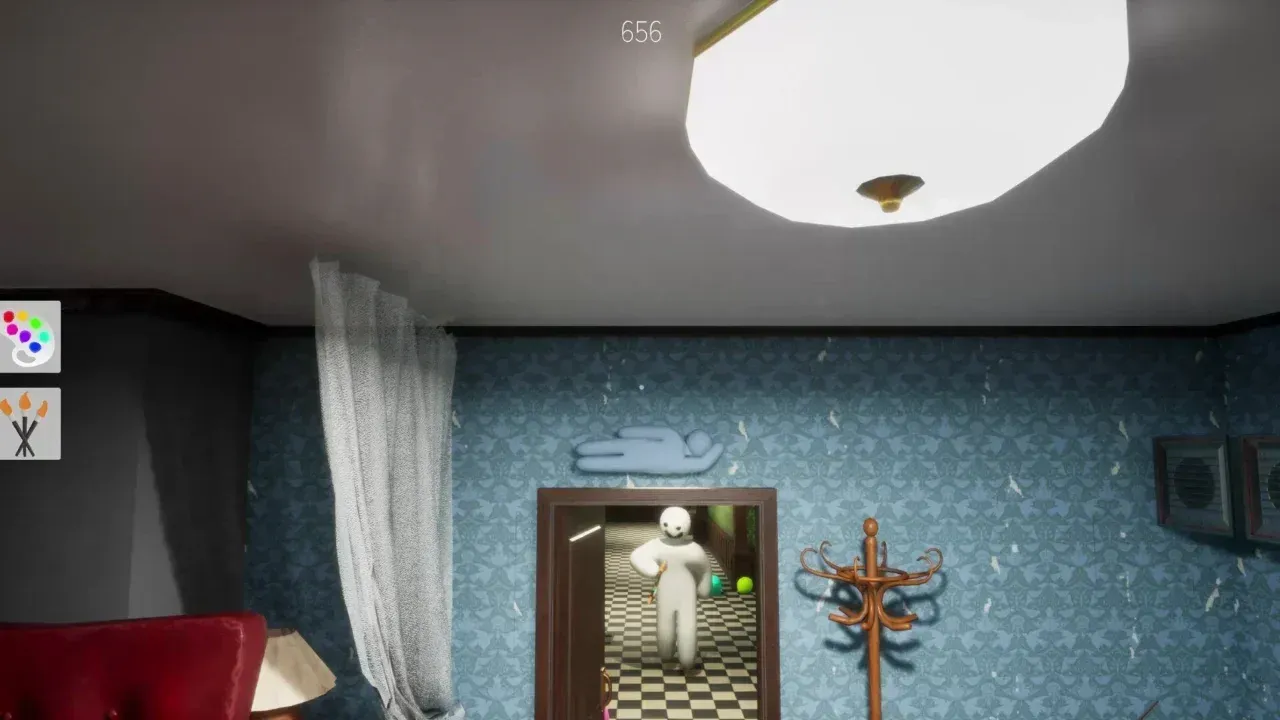
Pose repeats the wall shape
A five-step paint routine for every round
Keeping a consistent routine removes the panic decisions that produce bad disguises. Here's the sequence that holds up across different maps and surface types:
- Walk the room and identify a prop cluster or wall section with objects your body shape could join.
- Match the general surface tone of that area, not one specific prop.
- Apply your pose before committing to the spot, then check whether your outline repeats something already in the room.
- Only move if both your color and your shape fail in the current position.
- After the round ends, ask what gave you away and connect it to one specific decision.
For the first several sessions, give yourself one paint goal per round rather than trying to optimize everything at once. One round, focus only on reducing contrast. The next, focus only on matching a prop family. The improvement becomes easier to track because you can tie each outcome to a single variable.
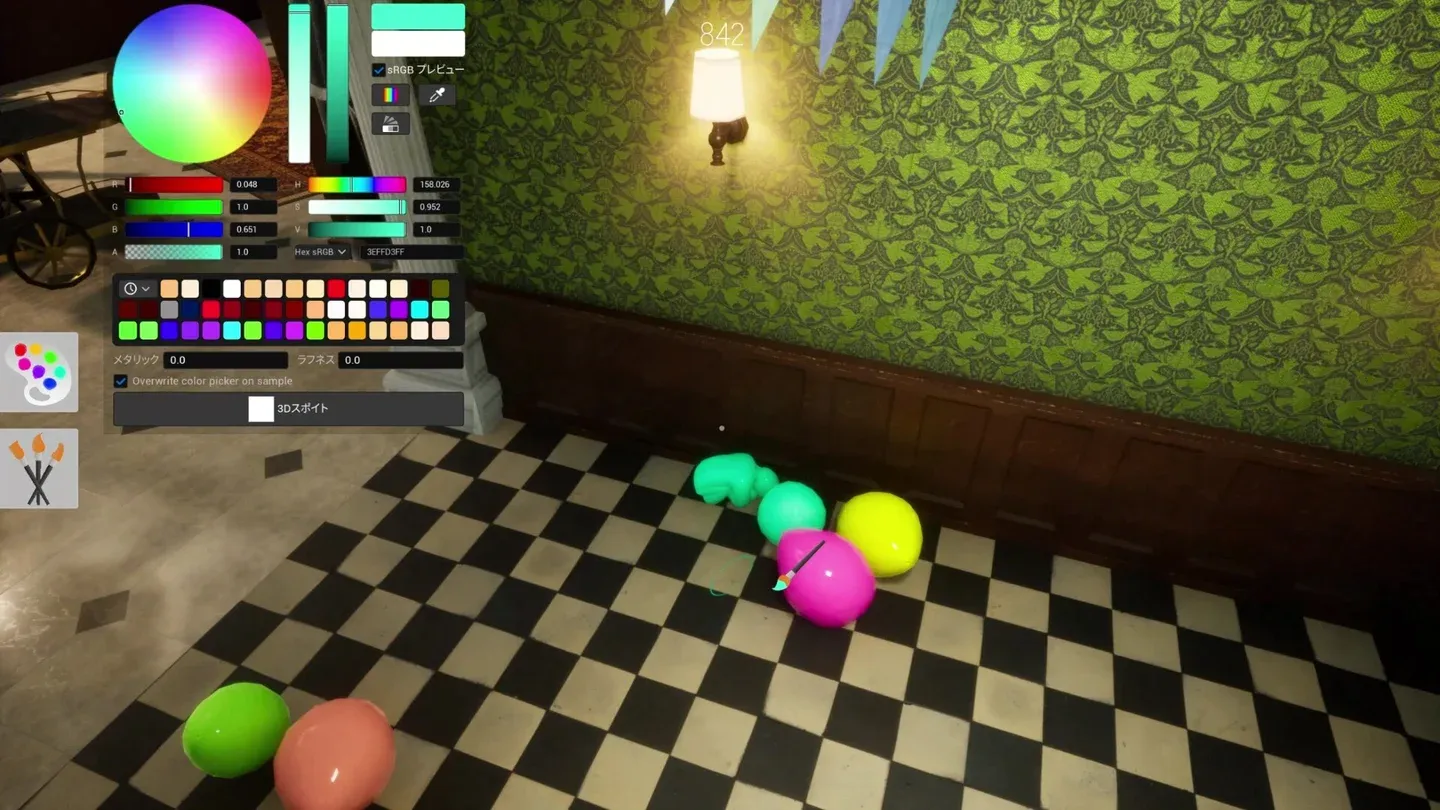
One goal per round builds faster
Go deeper with more MECCHA CHAMELEON guides
Paint is the foundation, but surviving full rounds requires combining color work with smart positioning and pose technique. For a complete breakdown of where to physically place yourself on each map, the best hiding spots guide covers every map ranked by difficulty and camouflage potential. If you want to connect paint choices to specific pose techniques that break up your silhouette, the hiding patterns and pose techniques guide walks through the combinations that work best together.
New to the game entirely? The full MECCHA CHAMELEON beginner's guide covers the paint system alongside Seeker strategies and the broader survival loop, which gives you the context to apply these color tips immediately. The complete MECCHA CHAMELEON guide collection has everything else you need to move from surviving your first round to consistently fooling experienced Seekers.