
White dye is one of those resources that quietly shows up in dozens of build projects. Planning a snow-white castle? Trying to mix lime or light blue dye? You need white dye first. The good news is that Minecraft gives you multiple ways to get it, and the fastest method takes less than a minute if you have the right materials on hand.
What do you need to craft white dye?
There are two ingredients that each convert directly into white dye: Bone Meal and Lily of the Valley. You only need one of them, and a single unit produces one white dye.
| Ingredient | Quantity | Where to find it |
|---|---|---|
| Bone Meal | 1 | Crafted from bones dropped by skeletons |
| Lily of the Valley | 1 | Spawns naturally in Flower Forest biomes |
Bone Meal is the faster pick for most players. Skeletons drop bones when killed, and you can craft those bones into Bone Meal at any crafting grid. Skeletons spawn at night and inside caves and dungeons, so you likely have bones stockpiled already. If you prefer to skip mob combat entirely, tossing seeds or crops into a Composter will also generate Bone Meal over time.
Lily of the Valley takes more legwork. You need to find a Flower Forest biome and pick the flowers there. They stand out because of their bright white petals, so spotting them is easy once you are in the right biome. The downside is that Flower Forests are not always close to your spawn point.
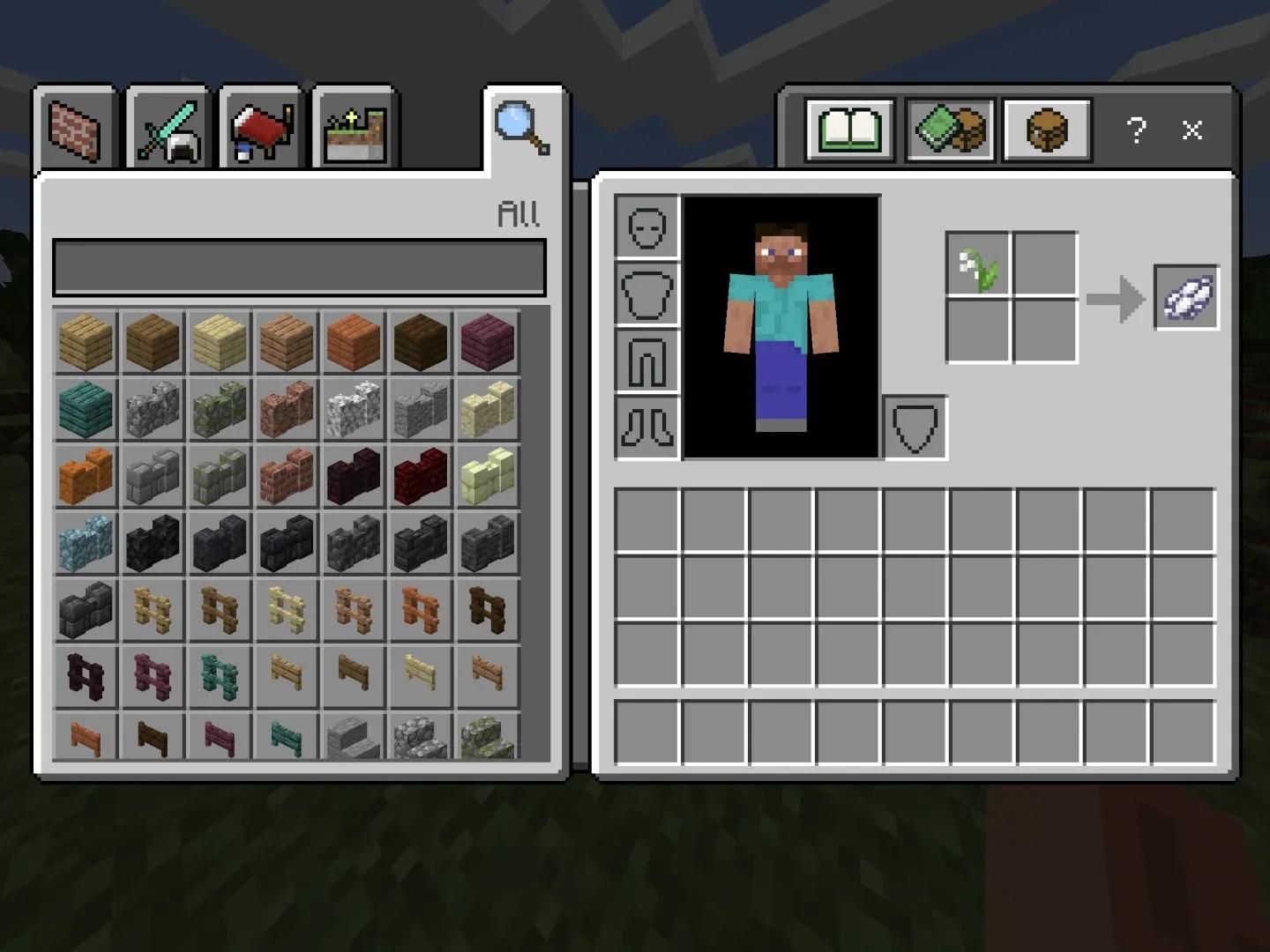
White dye crafting recipe


How to craft white dye
This recipe is as simple as Minecraft crafting gets:
- Open your inventory (press E on PC) or place a Crafting Table and open it.
- Put one Bone Meal or one Lily of the Valley into any slot in the crafting grid.
- The white dye appears immediately in the output slot.
- Drag it into your inventory.
No specific grid pattern is required. One ingredient in any slot produces one white dye. The crafting table is optional since the 2x2 inventory grid works just as well.
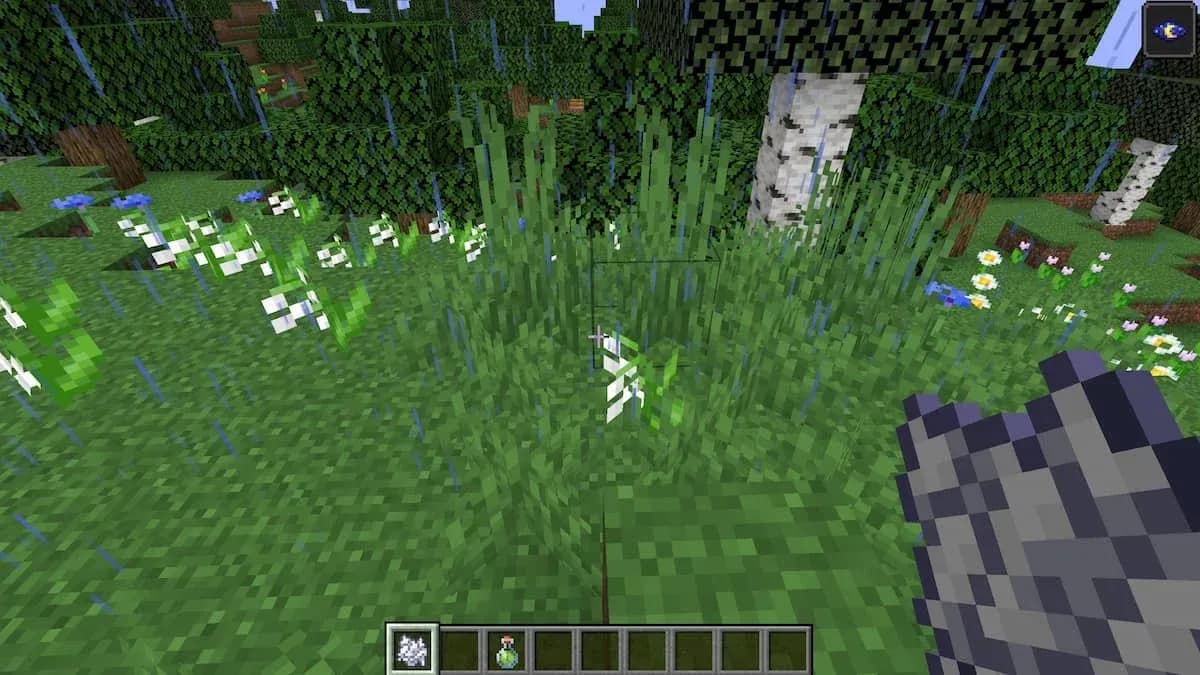
Lily of the Valley in the wild
Can you find white dye without crafting it?
Yes, two non-crafting methods exist for players who prefer exploration over resource farming.
Trading with Wandering Traders
Wandering Traders appear randomly in the world, always accompanied by two Llamas. Their stock rotates on every visit, and there is a small chance they carry white dye for sale in exchange for emeralds. It is not a reliable primary source, but if a Wandering Trader shows up near your base and has white dye in stock, spending a few emeralds is a painless shortcut.
Looting Trail Ruins
Trail Ruins are buried archaeological structures that hold suspicious gravel blocks. Brush those blocks with a Copper Brush and you may uncover white dye among the loot. The drop rate is not high, but Trail Ruins exploration pairs well with other loot goals, so it is worth checking while you are already digging.
What can you do with white dye?
White dye has two main roles: coloring blocks and gear, and serving as a base ingredient for four secondary dyes.
Decorative blocks you can craft
Applying white dye to standard blocks produces white variants across several categories:
- White wool
- White terracotta
- White stained glass and white stained glass panes
- White concrete powder
- White beds
- White candles
White dye decorative block variants
Dyeing armor and mobs
White dye works on leather armor, letting you paint your gear without needing a full set of new equipment. You can also apply it directly to sheep to recolor their wool, and use it to change the color of pet collars.
Crafting secondary dyes
This is where white dye becomes a multiplier for your whole dye collection. Mixing it with primary dyes unlocks four lighter color variants:
| Result | Ingredients |
|---|---|
| Lime Dye | Green Dye + White Dye |
| Light Blue Dye | Blue Dye + White Dye |
| Pink Dye | Red Dye + White Dye |
| Gray Dye | Black Dye + White Dye |
If you are running a build that relies on pastel tones, keeping a supply of white dye on hand means you can mix any of these four on demand.
Which method should you use?
For most players, Bone Meal crafting is the default choice. Skeletons are common, bones stack efficiently, and the conversion takes seconds. Lily of the Valley is a solid backup if you are near a Flower Forest and want to avoid combat. Wandering Trader purchases make sense only as an opportunistic grab, and Trail Ruins loot is a bonus rather than a farming strategy.
For more on what the Chaos Cubed update added to Minecraft's underground, the Minecraft Sulfur Caves guide covers every new block and the Sulfur Cube mob in detail. If you want to expand your resource collection further, the best Minecraft food farms guide walks through efficient setups from wheat fields to automated Nether farms. For everything else the game has to offer, browse the full Minecraft guides collection on GAMES.GG.