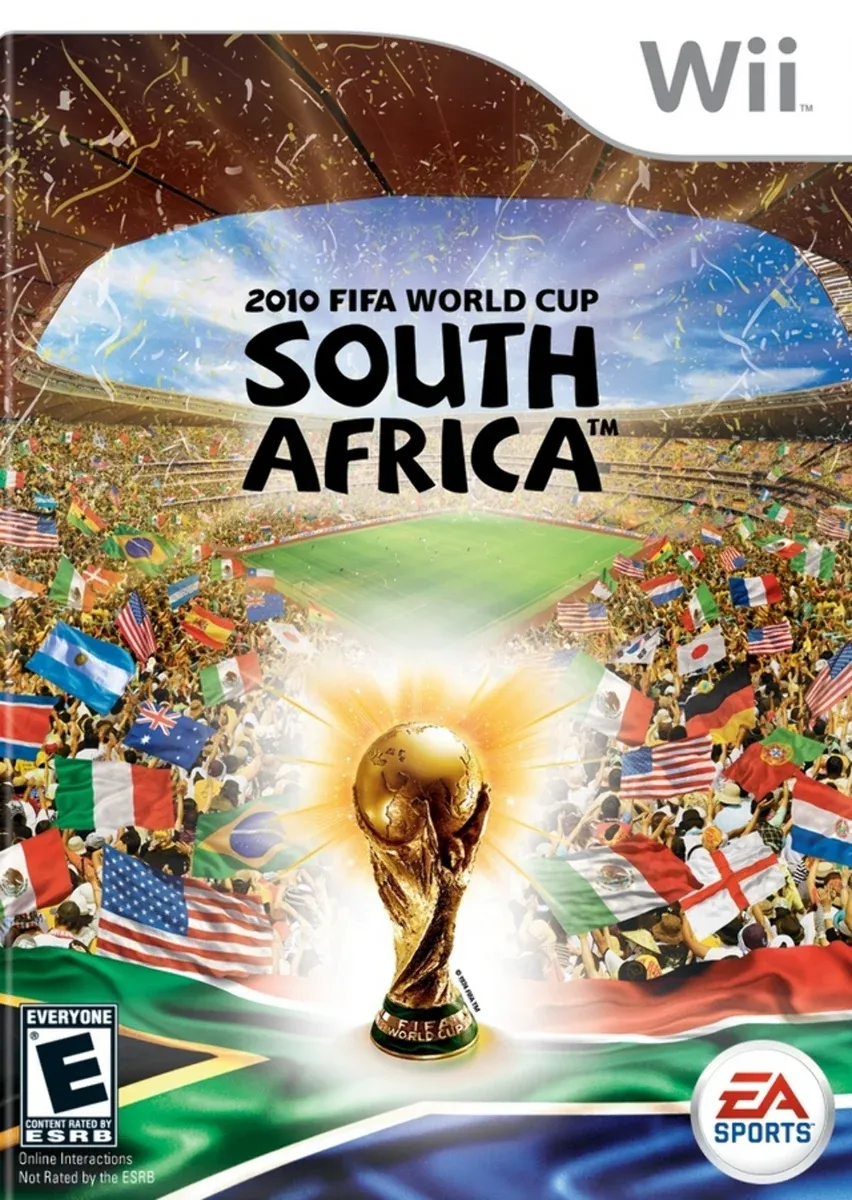


The 2026 FIFA World Cup kicked off this week with Mexico hosting South Africa at the Estadio Azteca, a fixture that carries a specific kind of historical weight for anyone old enough to remember the last time these two sides met on a World Cup stage. That was June 11, 2010, in Johannesburg, when Siphiwe Tshabalala thundered a left-footed strike past Iker Casillas to open the tournament and send the entire continent into a frenzy. It is one of the most iconic goals in World Cup history.
And for a lot of football game fans, that moment lives just as vividly inside a specific video game as it does on YouTube. The game is 2010 FIFA World Cup South Africa, released by EA Sports in April of that year, and the debate around whether it represents the peak of the entire FIFA franchise has quietly persisted for 16 years. With the World Cup back in full swing, that conversation is louder than ever.
Use code TRYHARD33 at checkout to redeem this offer before code expires again.
Get 33% Off GAMES+ Subscription
What made this game so different from every annual FIFA release
Here's the thing about the spin-off World Cup titles that EA Sports used to release alongside the main FIFA series: they were not just roster updates with a tournament mode bolted on. They were genuinely distinct products with their own physics tweaks, presentation layers, and atmosphere systems built specifically around the spectacle of a World Cup.
2010 FIFA World Cup South Africa leaned into this harder than any entry before or after it. The vuvuzela drone that filled every stadium. The Jabulani ball physics that frustrated real-world goalkeepers but translated into genuinely unpredictable, exciting shooting in-game. The commentary that felt tailored to the tournament rather than recycled from the club game. These were not cosmetic differences.
The gameplay itself sat in a sweet spot that the annual FIFA series rarely hit. Matches felt weightier than FIFA 10 but more fluid than FIFA 11. Shooting had a satisfying arc to it. Set pieces rewarded patience. The AI pressed with genuine intensity in the final third, which made holding possession under pressure feel like an actual skill rather than a button-holding exercise.
The atmosphere gap between this and modern football games
Compare that experience to where the series eventually ended up. EA SPORTS FC 25 is a technically impressive game with deep career modes, Ultimate Team mechanics, and presentation values that reflect real broadcast standards. But the atmosphere in a World Cup context? That specific electric charge of a tournament where every match carries elimination stakes and national identity?
The 2010 game had that in a way the modern series has never fully recaptured. Part of it was timing. The 2010 World Cup was the last tournament before social media completely consumed football culture, and there was something purer about the way the game reflected that moment. The squad rosters were full of players at their absolute peak: Xavi, Iniesta, Messi, Robben, Villa, Müller. Squads that felt genuinely balanced in a way that made picking underdogs viable and satisfying.
The Captain Your Country mode, which let you control a single player through qualification and the tournament itself, was years ahead of its time as a concept. Playing as a winger for a mid-tier national team, grinding through CONMEBOL qualifying, and eventually appearing in a World Cup semi-final felt meaningful in a way that modern career modes still struggle to replicate.
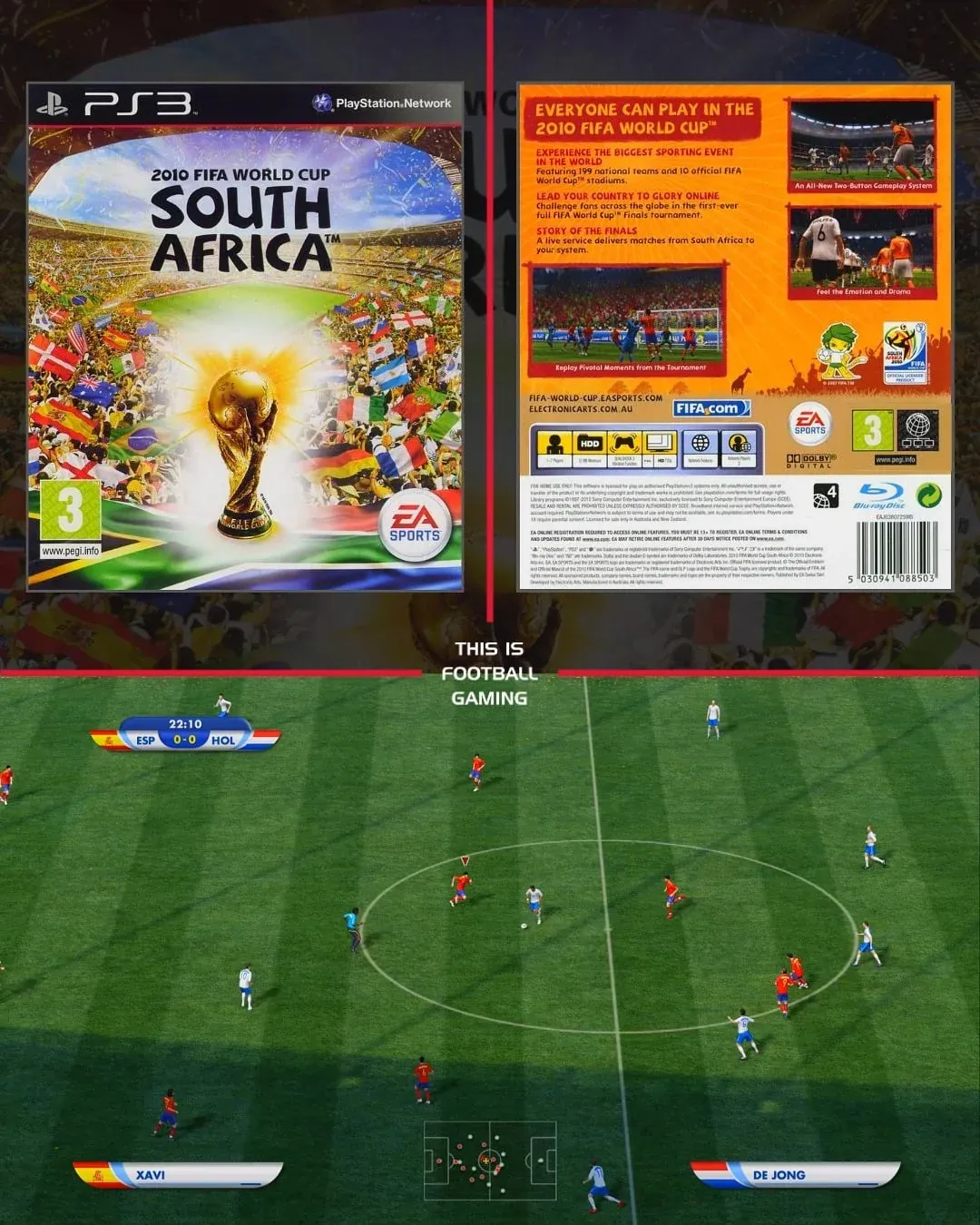
Captain Your Country mode
The nostalgia argument has limits, but not many
Some of this is obviously nostalgia doing what nostalgia does. The game had real flaws. Defending could be passive. The AI difficulty curve had a noticeable cliff between medium and hard settings. The content was inherently limited compared to a full FIFA release because it only covered one competition.
But those limitations are also part of what made it work. Focus tends to produce quality. When a development team builds a game around a single tournament with a specific identity, the result has a coherence that annual releases, stretched across every mode and monetisation system imaginable, rarely achieve.
The sports games genre has shifted dramatically since 2010. Live service models, Ultimate Team economies, and annual release cycles have changed what players expect from football games. The idea of a standalone World Cup title built with the care and specificity of the 2010 game feels almost quaint now.
Why this conversation matters in 2026
With the World Cup generating genuine global excitement again, and with South Africa back on the biggest stage for the first time since they hosted it 16 years ago, the timing feels right to revisit what made that era of football gaming so memorable. The 2010 game did not just simulate a tournament. It captured a feeling.
Whether you think FIFA 12, FIFA 16, or one of the more recent EA SPORTS FC 25 guides era releases represents the series at its best, the 2010 World Cup edition makes a compelling case that the franchise peaked not in its main annual line but in a focused spin-off built around the greatest show in football. Sixteen years on, that argument still holds up.