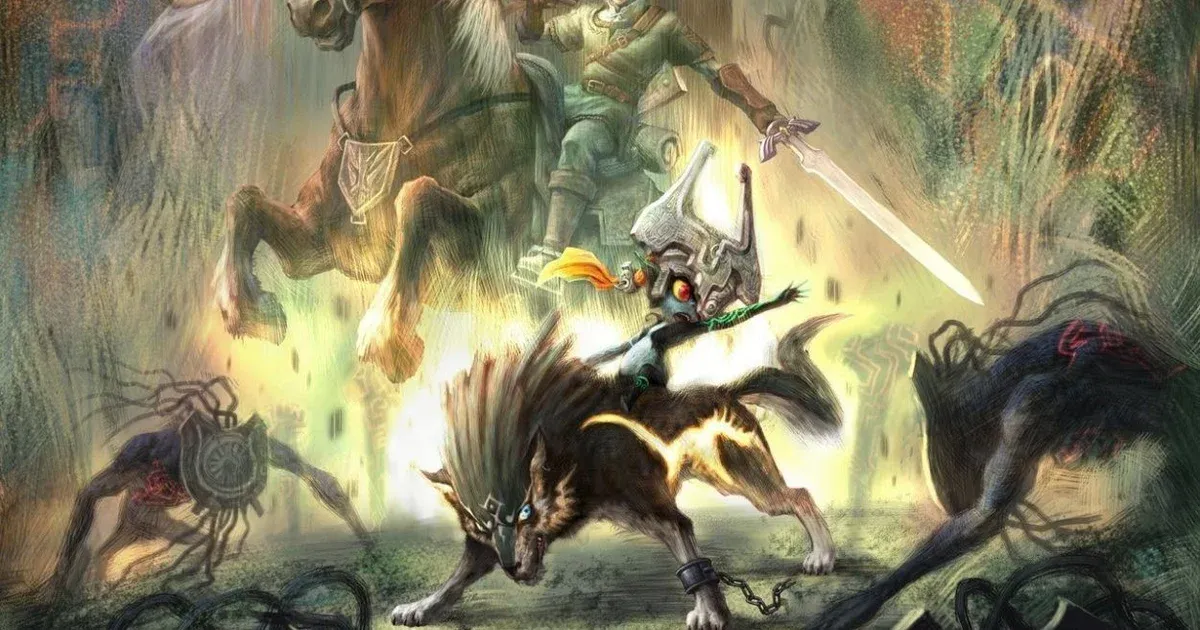


Twenty years after its December 2006 launch, The Legend of Zelda: Twilight Princess is getting a fresh wave of attention, and for good reason. The conversation keeps circling back to one specific argument: no Zelda game before or since has built dungeons that feel this consequential.
Here's the thing, that claim holds up. Two decades of Zelda releases, including the genre-reshaping Breath of the Wild and Tears of the Kingdom, have produced open worlds of enormous scale. But scale and consequence are different things entirely, and Twilight Princess understood that distinction better than any entry in the franchise.
Why smaller worlds hit harder
Twilight Princess launched on both Wii and GameCube at a moment when Nintendo was under pressure to prove the franchise could go darker and grittier after Wind Waker's cel-shaded divisiveness. The result was a Hyrule that felt genuinely oppressive, every room carrying the weight of something gone wrong in the world.
The key here is how that tone translated directly into dungeon design. Rather than treating each dungeon as a self-contained puzzle box, Twilight Princess built them as places that felt inhabited. The Goron Mines are the clearest early example: heavy doors groan when heaved open, bridges thud with real physical weight when an arrow drops them. You can picture the Gorons working these tunnels, which makes every interaction with the environment feel like you're disturbing a functioning space rather than flipping switches in a theme park.
Breath of the Wild's Divine Beasts are technically impressive, but the sheer openness of that game works against them. Moments feel weightless when the world around them has no walls. Twilight Princess keeps things contained on purpose, and that containment is what gives every solved puzzle a sense of genuine impact.
Snowpeak Ruins and the art of dungeon storytelling
If one dungeon makes the case for Twilight Princess as the series' dungeon peak, it's Snowpeak Ruins. The design move here is deceptively simple: the player discovers the area organically, only gradually realizing this frozen manor is the dungeon itself. The Yeti couple Yeto and Yeta are woven into the exploration throughout, turning what could be a series of locked rooms into something resembling an actual visit to someone's home.
By the time the boss fight arrives, the emotional groundwork is already laid. The fight reuses your understanding of the space and your relationship with the Yetis in a way that makes it land differently than a standard end-of-dungeon boss encounter. That kind of narrative integration inside a dungeon structure is rare in any game, let alone a 2006 Nintendo release.
Weapons that belong to their dungeons
What most players miss when revisiting Twilight Princess is how deliberately each dungeon's signature item was designed to feel like part of that specific world. The Spinner in Arbiter's Grounds is the best example. You pick it up and immediately understand why those jagged tracks are embedded in the dungeon walls. The item doesn't feel like a power-up dropped into a level; it feels like something that was always there, waiting to be found.
The Ball and Chain in Snowpeak Ruins follows the same logic. Swinging it through ice-covered furniture in a frozen manor feels appropriate in a way that's hard to quantify but impossible to miss. The boss fight against Stallord in Arbiter's Grounds takes the Spinner's mechanics and builds an entire encounter around them, which is the kind of confident, layered design that most action-adventure games still struggle to pull off.
The franchise has produced plenty of memorable items over the years, but Twilight Princess built its entire dungeon structure around making those items feel like they belonged to the world rather than just the player's inventory.
What the 20-year mark actually means
The anniversary conversation around Twilight Princess isn't purely nostalgic. With the Zelda series continuing to move toward open-world structures, the dungeon design philosophy of Twilight Princess represents something genuinely worth revisiting. The game proved that a smaller, more focused world with a strong sense of place can produce experiences that a 100-hour open-world game can't replicate.
Shigeru Miyamoto famously expressed reservations about whether dungeons were actually fun while developing Ocarina of Time. Twilight Princess answered that question definitively. When a dungeon feels like a real place with real inhabitants and tools that belong to that specific environment, the puzzle-solving stops feeling like homework and starts feeling like discovery.
Twenty years on, that formula hasn't been matched. If you want to revisit what made these dungeons work, the Twilight Princess guide collection is a solid starting point for working through the full dungeon lineup with fresh eyes. And if the anniversary has you thinking about dungeon design across gaming more broadly, the gaming guides hub covers the wider franchise and beyond.