

14.2 million concurrent players. That number puts 99 Nights in the Forest in territory that most multiplayer games never reach, and developer Alec Kieft (known online as Cracky4) has a clear explanation for how it happened: build on Roblox, where the audience already lives.
How a survival game found a massive audience
Kieft and his team at Grandma's Favourite Games are based in New Zealand, a country with roughly 5 million people. Their peak player count is 2.7 times the entire population. The game exists inside Roblox, a platform that analysts estimate pulled more than 10 billion player-hours per month in 2025, outpacing Steam, PlayStation, and Fortnite combined. That scale matters when you're trying to understand how a survival-crafting game from a small indie studio ended up with numbers that compete with the biggest live-service games on the planet.
"Kids are on Roblox, and that's where the players are," Kieft explains. "To find these behemoth player bases you need to be on a platform like Roblox."
Roblox functions less like a traditional game and more like an operating system for an entire generation of players. You don't need to win a Steam algorithm lottery or catch a viral TikTok moment. The audience is already there, already logged in.
From war clans to survival horror
Kieft's journey to building 99 Nights in the Forest began in Roblox's own subcultures. He entered the platform through war clans, organized communities that constructed bases and raided each other with laser guns in military roleplay scenarios. That's where he connected with his two co-creators. His first project, Defenders of Roblox, was a Left 4 Dead-inspired zombie shooter he built while still learning to code, based on other Roblox remakes of Left 4 Dead he'd played before ever experiencing the original.
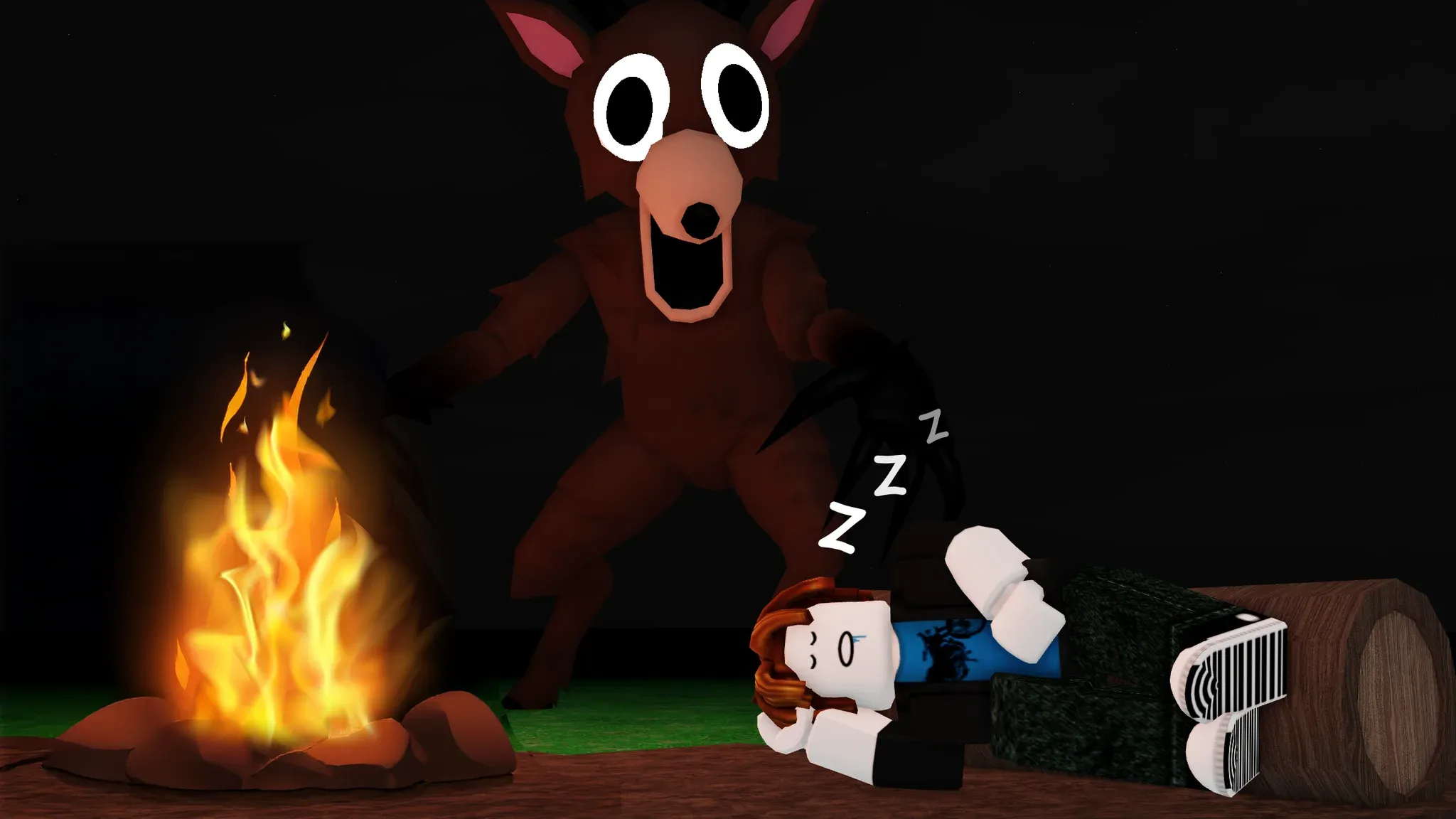
The game challenges players to survive 99 nights in a forest, using daylight hours to gather wood, scrap, and supplies while searching for four missing children. At night, the campfire becomes your lifeline. Wander too far into the darkness and you risk encountering the Deer, a goggle-eyed upright-walking creature that's far more disturbing than the name implies. It's the kind of horror game tension that thrives in a cooperative setting.
Standing apart from tycoons and simulators
When 99 Nights in the Forest launched, the dominant Roblox genres were tycoon games and simulator games, both essentially idle number-go-up experiences in the style of Cookie Clicker. Grow a Garden, which reportedly pulled more concurrent players than Fortnite at its peak, is the clearest example of that formula.
99 Nights in the Forest is something else entirely. Kieft describes it as a "very active experience" and a "very collaborative experience," one that thrives on weekends when players have time to gather a group and push through as many nights as possible together. There's enough breathing room in the resource-gathering phase for socializing, which Kieft connects to what he calls the "friendslop" genre, multiplayer games designed primarily to give friends something to do while they talk.
"I don't think survival games are too far removed from the friendslop genre," he says. "Which I think is my favorite genre to have emerged recently. Despite the name being a little bit derogatory."
The game's relative complexity compared to most Roblox experiences may also explain one of the more unexpected data points Kieft shared: even after two weeks without updates, 99 Nights in the Forest was still sitting at number three by daily active users on the platform.
Surviving without weekly updates
"We've been pleasantly surprised to see that the game hasn't fallen off a cliff as soon as we stopped doing those updates," Kieft said. "That was a fear that we had, that as soon as players sense there's no one at the wheel right now, they'll just move on to something else. But no, we're still I think number three by daily active users on the platform, despite having not updated now in two weeks. That's a huge relief."
Roblox's culture around updates is demanding, particularly among younger players who expect new content on a near-weekly schedule. Kieft draws an analogy to Flash games: nobody was messaging the Bloons developers demanding a new map every week. You just loaded the game and played. That expectation has changed, and he thinks it skews younger, with older players more willing to return to a game they already enjoy without needing a content drop as the excuse.
Grandma's Favourite Games does plan to expand the late-game and address gaps in the experience when they return from their break. But the fact that the audience held without constant updates suggests the game has something stickier than most Roblox experiences: players who haven't finished it yet.
For players looking to get the most out of the experience before the next content push, the 99 Nights in the Forest beginner's guide covers resource management, kid rescue strategies, and base defense. The full 99 Nights in the Forest guide collection has everything from daily quest optimization to the new classes added in recent updates.
Roblox Resources
Check out Roblox Gift Cards on Amazon here.
Learn about other popular Roblox experiences: