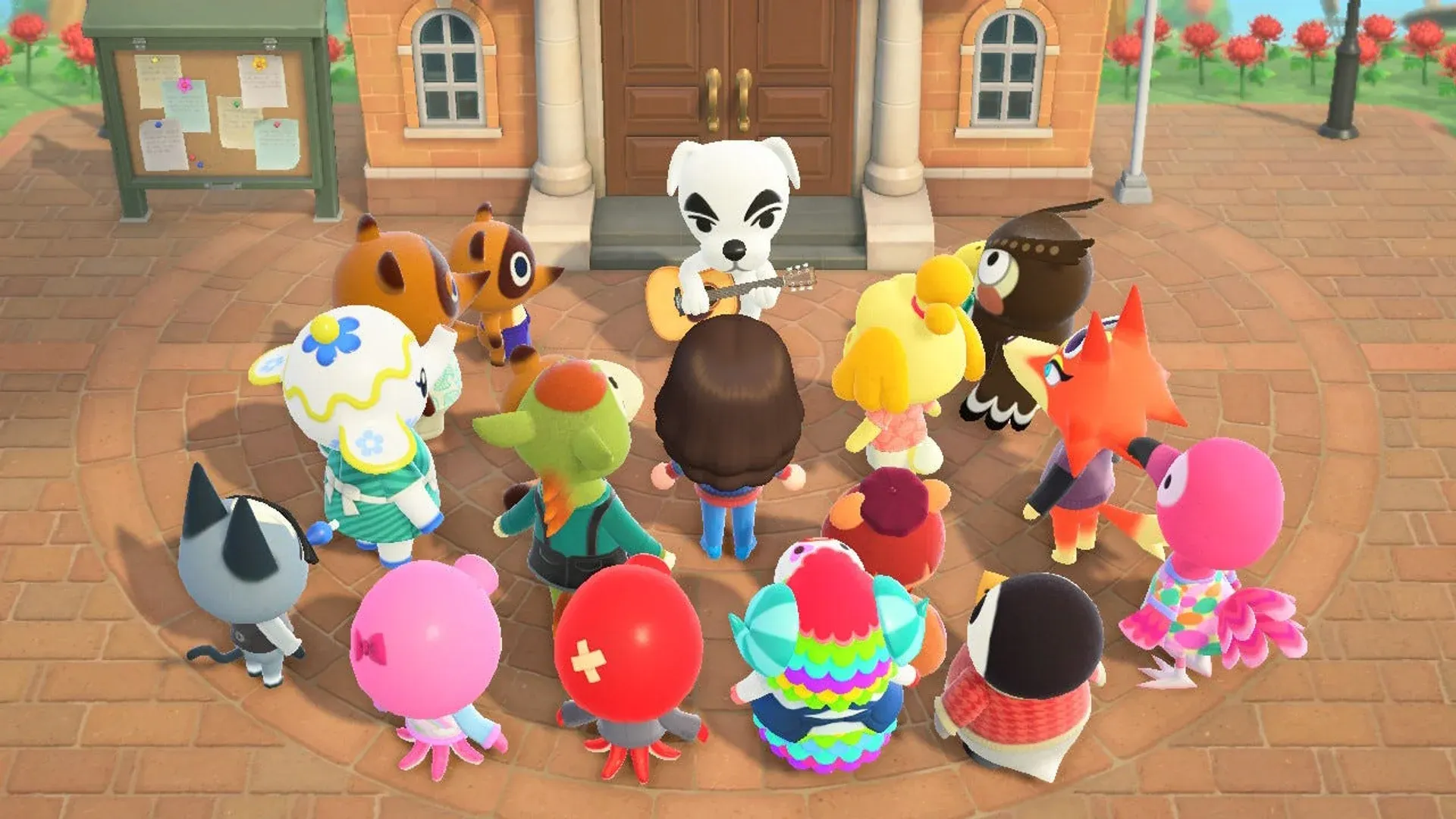


Six years after Animal Crossing: New Horizons launched and consumed the world during lockdown, Nintendo has a new life-sim on its hands. Tomodachi Life: Living the Dream is already drawing comparisons to New Horizons, and for a lot of players, those comparisons are not flattering to the older game.
Here's the thing: both games share obvious DNA. Both run on a real-time clock, both drop you onto a customizable island full of residents, and both give you a surprising amount of control over how that island looks and functions. But the experience of actually playing them day-to-day sits in a completely different place.
The burnout problem Animal Crossing never solved
Animal Crossing: New Horizons built its entire loop around daily obligation. Miss a few days and you come back to weeds, absent villagers, and a stalk market that has wiped out your turnip investment. That structure worked brilliantly during early 2020, when players had nowhere else to be. The game sold over 43 million copies on the back of that moment. But the same design that made it so compelling also made it punishing to put down.
Players who stepped away for even a few weeks returned to neglected islands, missing residents, and significant losses in the stalk market. Nintendo added a reset feature to New Horizons earlier this year, but for many players who had already walked away, that was not enough of a reason to return.
Tomodachi Life does not punish you for logging off.
What the overseer role actually changes
The key here is the shift in perspective. In New Horizons, your character is a participant in the island community, a villager with tasks, debts to pay off, and a daily checklist that quietly builds into something that feels like a second job. In Tomodachi Life: Living the Dream, you are the island's overseer. You design the residents, arrange the buildings, and then watch what happens.
That distinction sounds small. It is not. When your role is observer rather than participant, a five-minute session feels complete. You boot up the game, watch a few Mii interactions play out, laugh at something absurd, and put it down satisfied. There is no lingering guilt about the tasks you skipped.
The difference in pacing is stark: New Horizons demands the kind of sustained attention you'd give to a lengthy video essay, while Tomodachi Life delivers the quick satisfaction of watching a few funny short-form clips. The latter is simply less exhausting over time, even if it is not quite as deep.
Customization depth versus freedom to step away
Tomodachi Life: Living the Dream gives players meaningful control over nearly every resident, item, and building on the island. The depth is genuinely there. But the structure of that customization does not demand daily attention the way New Horizons' progression systems do.
New Horizons built its customization around unlocking tools, paying off mortgages to Tom Nook, and gradually terraforming your island over weeks of play. It rewarded consistency. Tomodachi Life rewards curiosity. You set things up, then see what the Miis do with them. The comedy and surprise come from stepping back, not from grinding forward.
Players have noted that Animal Crossing has drifted too far into micromanagement territory, losing the sense of discovery that made the original GameCube version special. Tomodachi Life feels closer to how Animal Crossing used to feel—and it is also "very, very funny."
Why this comparison matters right now
Nintendo has not released a new mainline Animal Crossing game since New Horizons launched in March 2020. The anniversary update this year acknowledged the series' 25th birthday, but it did not signal a new entry. Meanwhile, Tomodachi Life: Living the Dream is arriving as the first major Tomodachi game in over a decade, landing at exactly the right moment for players who want a life-sim without the daily commitment overhead.
The two games are not in direct competition, but they are absolutely competing for the same slot in a player's rotation. For anyone who bounced off New Horizons after the pandemic hype faded, Tomodachi Life is worth a serious look. For more context on both games, browse more guides covering Nintendo's current Switch 2 lineup.
The broader question this comparison raises is whether Nintendo will take notes. New Horizons' daily obligation loop was a deliberate design choice, and it worked for millions of players. But Tomodachi Life's lighter touch is already resonating with a crowd that burned out years ago. If a new Animal Crossing is in development, the team at Nintendo EPD will have a very clear data point to consider. For the latest takes on Nintendo's life-sim releases, check out the latest reviews as more coverage rolls in.