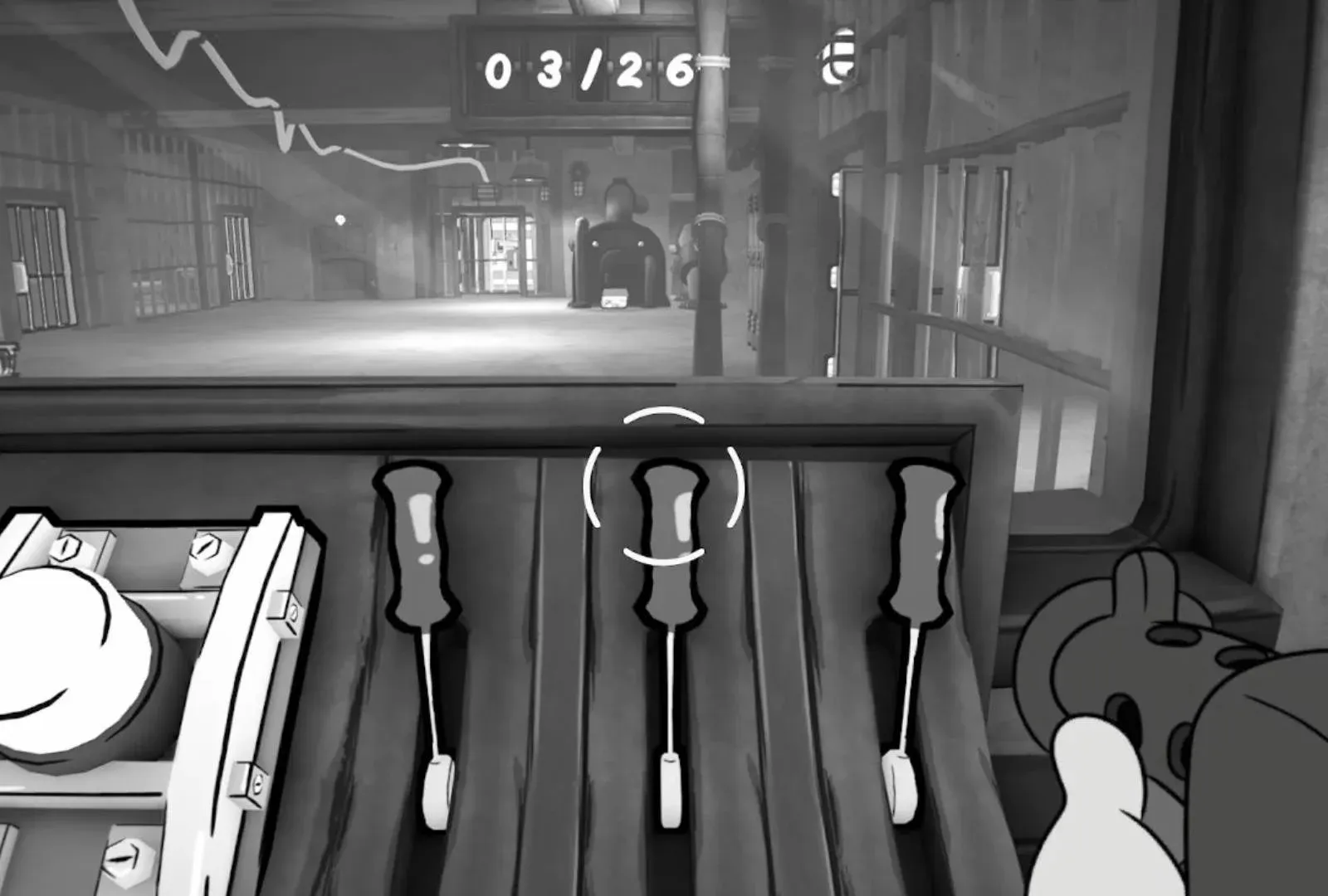


Locked doors and safes are scattered all over Mouse P.I. For Hire, and cracking them open is not as simple as holding a button. The game has its own spin on lockpicking called tailpicking, and if you go in blind, you will jam locks and lose progress faster than you'd expect.
What tailpicking actually is
Rather than the usual minigame where you wiggle a pick until tumblers click, tailpicking puts you inside the lock itself. Your job is to navigate a path that touches every spring in the lock and then reach the exit on the other side. Early locks are forgiving and almost tutorial-like. The deeper into the game you get, the more the layouts twist.
The core loop is spatial. Springs are placed at various points in the lock, and the route connecting them is not always obvious. Some springs sit inside tight corridors, and squeezing through them can leave you boxed in with no clean line to the next target.
When you hit a dead end
Getting stuck mid-lock is common, especially once the layouts start introducing narrow passages. The key here is that the game gives you an Undo option. Pressing it lets you backtrack along your current path and try a different route without restarting the whole puzzle. If a tight space has cut off your options, undo your last few moves and look for the line you missed.
This makes tailpicking feel closer to a sliding puzzle than a reflex challenge, at least on the standard locks. Planning a few moves ahead before committing to a corridor saves a lot of frustration.
Timed locks and the spike problem
Not every lock plays by the relaxed rules. Mouse P.I. For Hire introduces locks with countdown timers and others that are lined with spikes. Both variants punish mistakes in a way the standard locks do not.
A jammed lock is gone for good in that session. The game does not offer a second chance from within the puzzle itself. What it does offer is a manual save system, and loading your most recent save file is the only recovery option after a jam. The practical takeaway: save before attempting any lock that looks like it has spikes or a visible timer. That habit alone will prevent most of the frustrating setbacks players run into.
Why this mechanic stands out
Tailpicking is a small but smart design choice. Renaming lockpicking fits the game's noir-mouse aesthetic, and building the mechanic around path navigation rather than timing windows makes it accessible without being trivial. The spike and timer variants then layer in genuine tension for players who want a harder challenge.
For a game built around solving mysteries and uncovering secrets, having a lockpicking system that itself feels like a little puzzle is a neat bit of design consistency. Every locked safe or hidden room becomes a self-contained problem to work through, not just a gate to click past.
For more puzzle-heavy adventure games worth your time, browse more guides covering the latest releases across every genre. If you want to see what else is worth playing right now, the latest reviews are a good place to start.