

The handheld PC market has been creeping toward uncomfortable territory for a while now. The Ayaneo Next 2 just kicked the door wide open.
Ayaneo's flagship gaming handheld is officially live on IndieGoGo, and the pricing is not a typo. The top-spec configuration, packing 128GB of RAM and 2TB of storage, carries a full MSRP of $4,299. Even with early-bird discounts applied, that same model runs $3,499. For context, that's not a gaming PC. That's a used car. That's a semester of college. That's the kind of number that makes you stare at your screen for a few seconds before refreshing the page.

Use code TRYHARD33 at checkout to redeem this offer before code expires again.
Get 33% Off GAMES+ Subscription
Three tiers, three different ways to hurt your wallet
The Ayaneo Next 2 launches across three configurations, and none of them are exactly budget-friendly. The entry model pairs 32GB of RAM with 1TB storage and an AMD Ryzen AI Max 385 chipset, starting at $1,799.99 with the early-bird discount. Miss that window and you're looking at closer to $2,000.
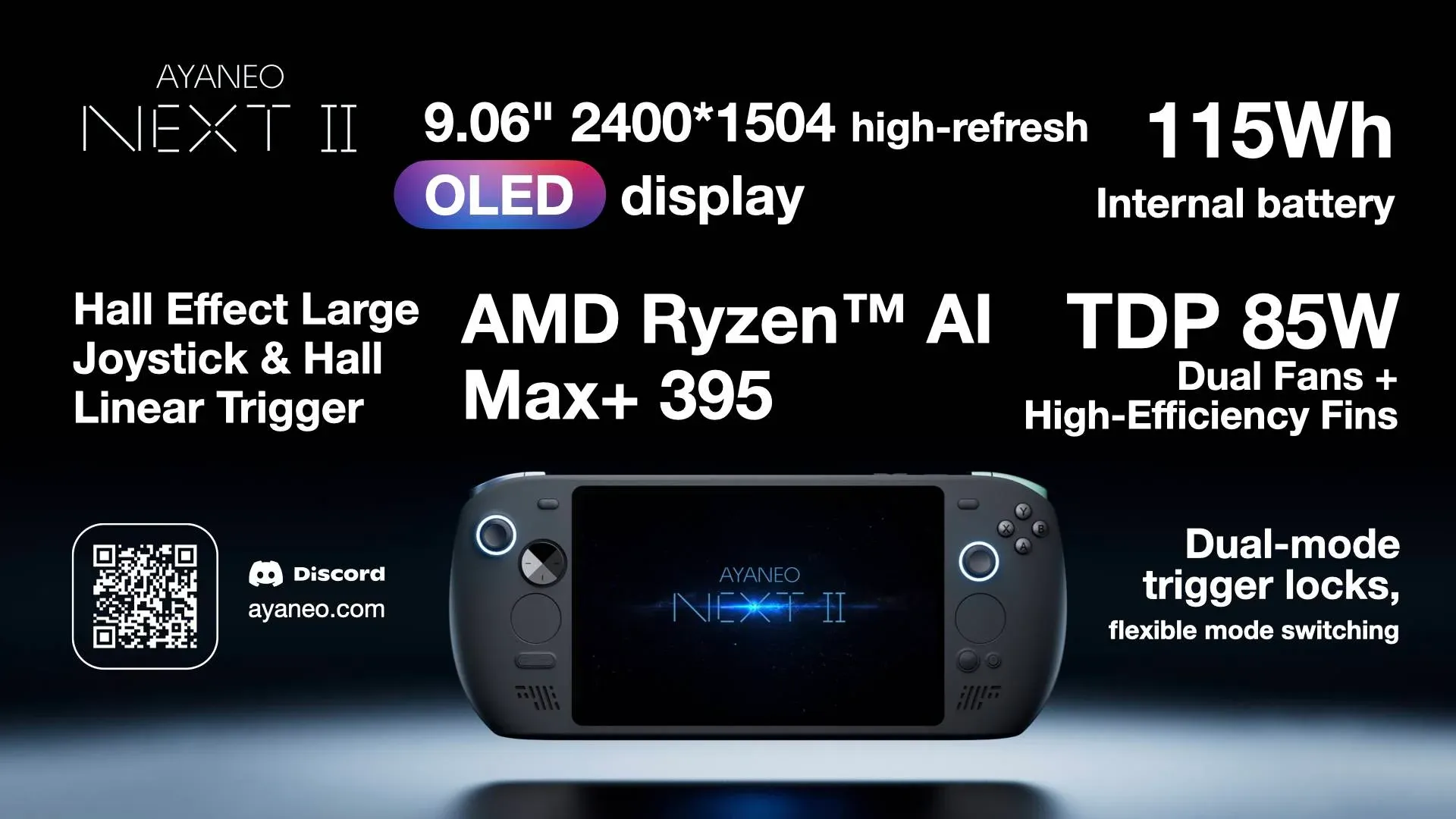
Step up to the mid-tier and you get 64GB RAM, an AMD Ryzen AI Max+ 395 APU, and a $2,299.99 early-bird price. That's the configuration most enthusiasts would actually want, and it already costs more than a high-end gaming laptop.
Then there's the top model. The 128GB/2TB version exists at $3,499 discounted and $4,299 at full price, and it's genuinely hard to identify who the target buyer is.
What you actually get for the money
Here's the thing: the hardware itself is genuinely impressive. The Next 2 ships with a 9.06-inch OLED display running at 165Hz with a maximum resolution of 2,400 x 1,504. It has adjustable TMR thumbsticks, dual touchpads, and the kind of feature list that would make any handheld enthusiast's eyes light up.
Part of the price spike also has a real-world explanation. RAM and storage costs have been inflated by AI data centre demand, a situation that has hit the broader PC hardware market hard. Ayaneo was not immune, and the Next 2 was actually suspended previously due to high production costs before this relaunch. That context matters, but it doesn't make the $4,299 figure easier to justify.
The chipset obsolescence problem nobody wants to talk about
The price would sting less if handheld PCs aged like consoles. They don't. Unlike dedicated consoles running custom silicon, handheld gaming PCs sit on a consumer chip cycle that moves fast. The AMD Ryzen Z2 Extreme in the ROG Xbox Ally X, considered a top-tier chip not long ago, is already being outpaced by newer Intel Arc G3 Extreme and Ryzen AI+ designs.
That rapid turnover is the key issue with paying $4,299 for any handheld right now. Most players upgrade their portable within two to three years as faster hardware arrives. Spending car-money on something with a shorter shelf life than a mid-range gaming laptop is a hard sell, even for the most dedicated PC gaming enthusiasts.
Where this price trajectory leads
The broader concern is not just Ayaneo. The handheld PC space has been trending upward in price across the board. The Lenovo Legion Go 2 starts at $1,200. The MSI Claw 8 EX AI+ hit $1,800. Valve pushed the 1TB Steam Deck OLED close to $1,000. Each new generation of hardware brings a new ceiling, and that ceiling keeps rising.
The risk is that premium hardware becomes so expensive that cloud streaming starts to look like the sensible alternative by comparison. If owning capable local hardware costs thousands of dollars and depreciates quickly, the pitch for subscription-based streaming becomes a lot easier to make. That's not a future most players want.
The Ayaneo Next 2 is a technically impressive device, and Ayaneo clearly knows how to build a premium portable. But the $4,299 flagship tier feels less like a product for gamers and more like a spec exercise for its own sake. The mid-tier $2,299 configuration is where the actual conversation starts, and even that number requires a serious look at how long you plan to hold onto the hardware before the next wave of faster chips makes it feel dated.
For players tracking the handheld space and looking for context on what games are worth playing on these devices, the gaming guides hub is a good place to start building your library knowledge before committing to any hardware purchase at these prices.