

Might and Delight is shutting down the servers for Book of Travels on July 31, but the studio is doing something most dying live-service games never bother with: giving the game a second life instead of just pulling the plug.
The small-scale MMO, which launched in early access on Steam back in 2021, is being converted into a single-player RPG priced at $4.99, down from its previous $29.99. Might and Delight confirmed the change in the game's final Steam announcement, where the team also detailed years of development struggles that ultimately made the multiplayer foundation unsustainable.

Use code TRYHARD33 at checkout to redeem this offer before code expires again.
Get 33% Off GAMES+ Subscription
What made Book of Travels different
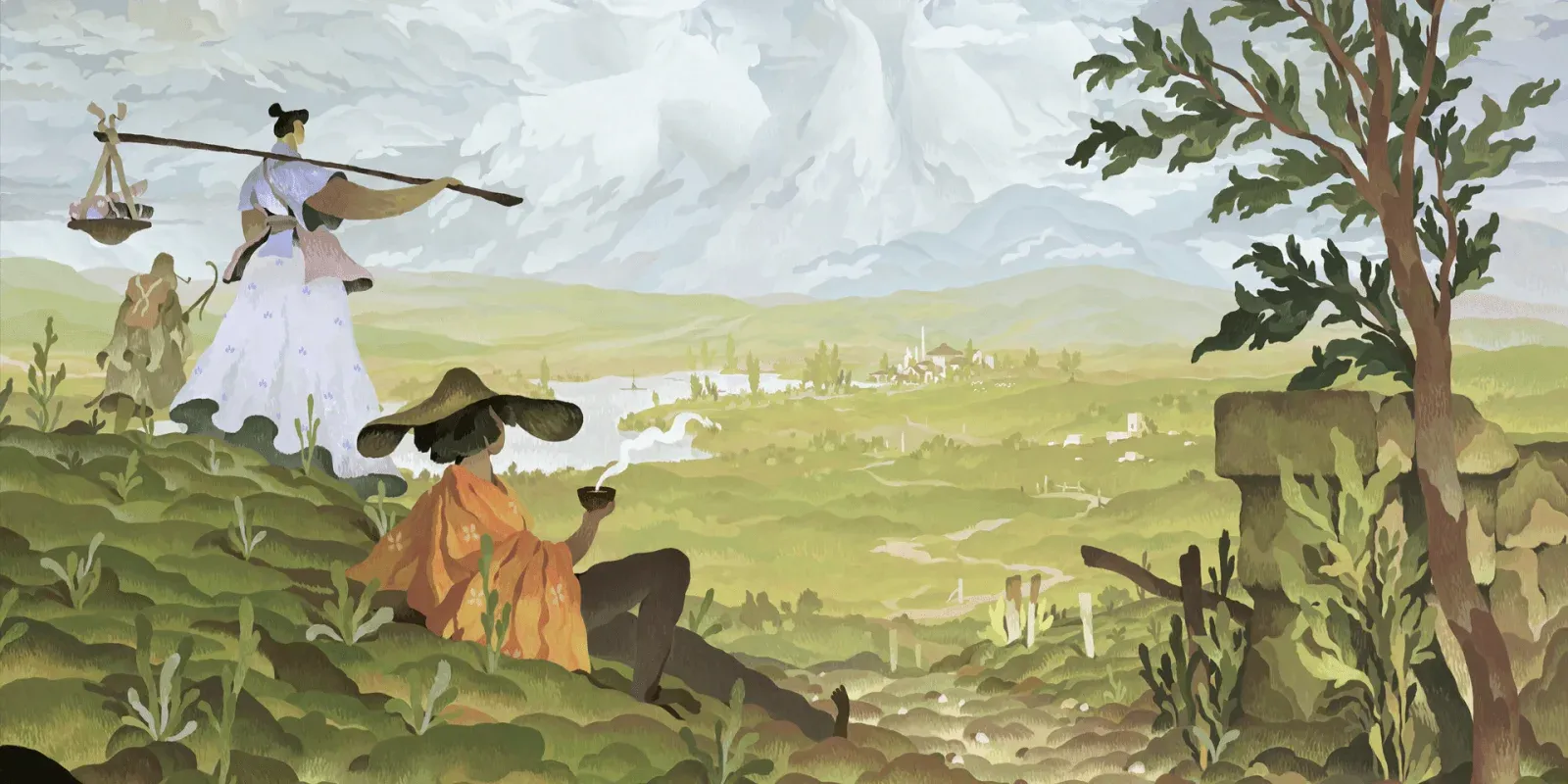
Book of Travels was never trying to be World of Warcraft. The game leaned hard into a meditative, open-ended experience that the developers compared to Animal Crossing or Journey. Players explored a hand-drawn world that genuinely looks like a moving painting, fishing, bartering, and wandering through a world that runs on its own internal schedule.
The most unusual design choice? No text chat. Player encounters happened through gestures and proximity, which gave the whole thing an almost magical quality when it actually worked. Servers were intentionally small, keeping the population intimate rather than overwhelming.
Here's the thing: even players who left negative Steam reviews acknowledged the concept was something special. The execution, though, never quite caught up to the vision.
Why the MMO couldn't survive
Low player counts created a brutal feedback loop. An MMO without players isn't really an MMO, and Book of Travels never escaped early access. Layoffs hit the studio, patches kept coming but couldn't solve what Might and Delight described as core structural problems with the game's foundation.
"No matter how many approaches we tried, workarounds we implemented, or patches we created we were never really able to solve the core issues," the studio wrote in their Steam announcement.
The price drop from $29.99 to $4.99 reflects that honestly. This isn't a triumphant relaunch. It's a preservation move, and the studio is framing it exactly that way.
The shutdown that isn't really a shutdown
Players who own Book of Travels have until July 31 to download their old characters before the servers go dark. After that, the game continues as a solo experience, and Might and Delight is adding mod support so the community can extend and reshape the world however they want.
"With this update, we can preserve Book of Travels in a way that still allows its world to live on," the studio wrote.
The Steam comments tell their own story. One player called it their all-time favorite RPG experience. Another admitted they didn't play it enough and wished they could go back. A third wrote: "I wish we'd live in a world where you can develop such poetic and soothing experience without having to compromise for money."
Not every player is sympathetic. At least one Kickstarter backer surfaced in the comments accusing Might and Delight of abandoning the game early and failing to deliver backer rewards, calling the whole project a scam. That perspective exists, and it's worth acknowledging alongside the warmer send-offs.
What this actually means for game preservation
Most struggling online games just disappear. Servers close, the store page vanishes, and that's it. What Might and Delight is doing here, dropping the price to near-nothing, converting to single-player, and opening the game to mods, is a genuine alternative to that outcome.
At $4.99, Book of Travels is basically a museum ticket for a hand-drawn world that took years to build. The water animations alone are worth a look. For anyone who was curious but never pulled the trigger at $29.99, the barrier is now almost nonexistent.
Book of Travels is available on Steam for Windows, Mac, and Linux. For more gaming news and analysis, check out the latest reviews and keep an eye on how other studios handle the growing number of live-service games facing similar crossroads. If you want to dig deeper into how games handle shutdowns and preservation, browse more guides covering the broader picture.