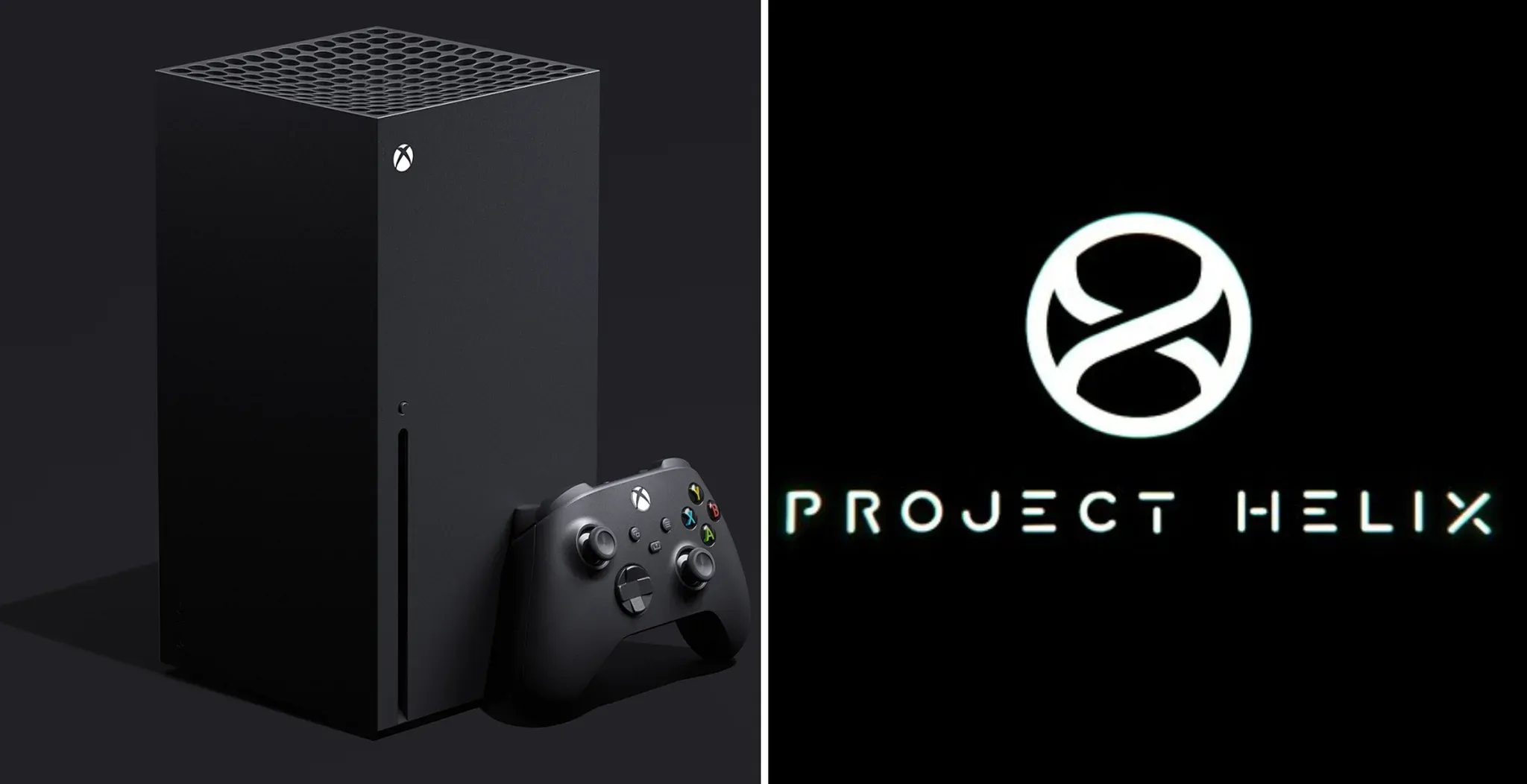


If you have been watching Xbox's next hardware move closely, Matt Booty just gave the clearest signal yet that Project Helix is further along in development than most people realize.
Booty, recently promoted to chief content officer at Xbox, appeared on the official Xbox podcast this week and addressed how Microsoft is building its next-gen hybrid device. His core point: the hardware and software teams got involved with Project Helix "early on," and that collaboration is already producing results.
"We're there every step of the way as these things come along," Booty said. "As we've done with many consoles before, those two teams will work hand-in-hand as we get that together. As the hardware comes online, our teams will be the first to get involved. There's already a lot of that already happening."

Use code TRYHARD33 at checkout to redeem this offer before code expires again.
Get 33% Off GAMES+ Subscription
Why Booty thinks this sets Xbox apart
Booty positioned the hardware-software alignment as a competitive edge, calling it "where Xbox really shines and where we stand apart and what shows off what's unique about us." That's a strong claim considering Sony and Nintendo also control both sides of the equation in-house. But the focus on early, integrated collaboration between engineering and game development teams signals real organizational change, not just talking points.
When hardware and software teams work in separate silos, launch lineups suffer. The Xbox Series X arrived with relatively few exclusives that actually pushed the new architecture. If Booty's description reflects how things are structured now rather than aspirational PR, Project Helix could ship with first-party games designed around its specific capabilities from the start.
What Project Helix actually is
Microsoft Gaming CEO Asha Sharma officially unveiled Project Helix in March, describing it as a hybrid device capable of running both PC and Xbox console games. At GDC that same month, next-gen VP Jason Ronald provided technical specs: the system uses a custom AMD SoC, is co-designed for the next generation of DirectX and FSR, and targets what Ronald called an "order of magnitude leap" for ray tracing performance.
Ronald also outlined the developer pitch: break down the walls between console and PC games, simplify the development path, and reduce the cost of supporting multiple platforms. That message is aimed at third-party studios currently building and optimizing separate versions for Xbox and PC.
The developer timeline and the price question
Alpha units will start shipping to developers in 2027, based on Ronald's GDC timeline. That means no consumer release is happening soon, and anyone expecting to buy one in the next year or two should reset expectations.
The bigger unknown is price. One industry analyst has already floated a starting point of $900 or higher, which would make Project Helix the most expensive Xbox hardware at launch by a significant margin. Other analysts have described it as a potential "make-or-break" moment for Microsoft's gaming hardware business.
What this actually means for players
Booty's comments matter because they indicate the first-party game lineup for Project Helix is being developed in parallel with the hardware, not bolted on afterward. The timing signal here: if studios are already working with early hardware, launch window titles are in production now, years before the device reaches consumers.
The hybrid concept is also worth attention. A device that runs both Xbox and PC games without compromise would collapse two separate ecosystems into one, which could matter for Game Pass subscribers who split time between a console and a gaming PC. For the full picture on what Xbox has in its first-party pipeline leading up to Helix, browse the latest gaming news for ongoing coverage.
Developer alpha units in 2027 means the consumer window is likely 2028 at the earliest. Between now and then, expect Microsoft to keep feeding details through its podcast circuit and showcase events as the hardware gets closer to final spec.