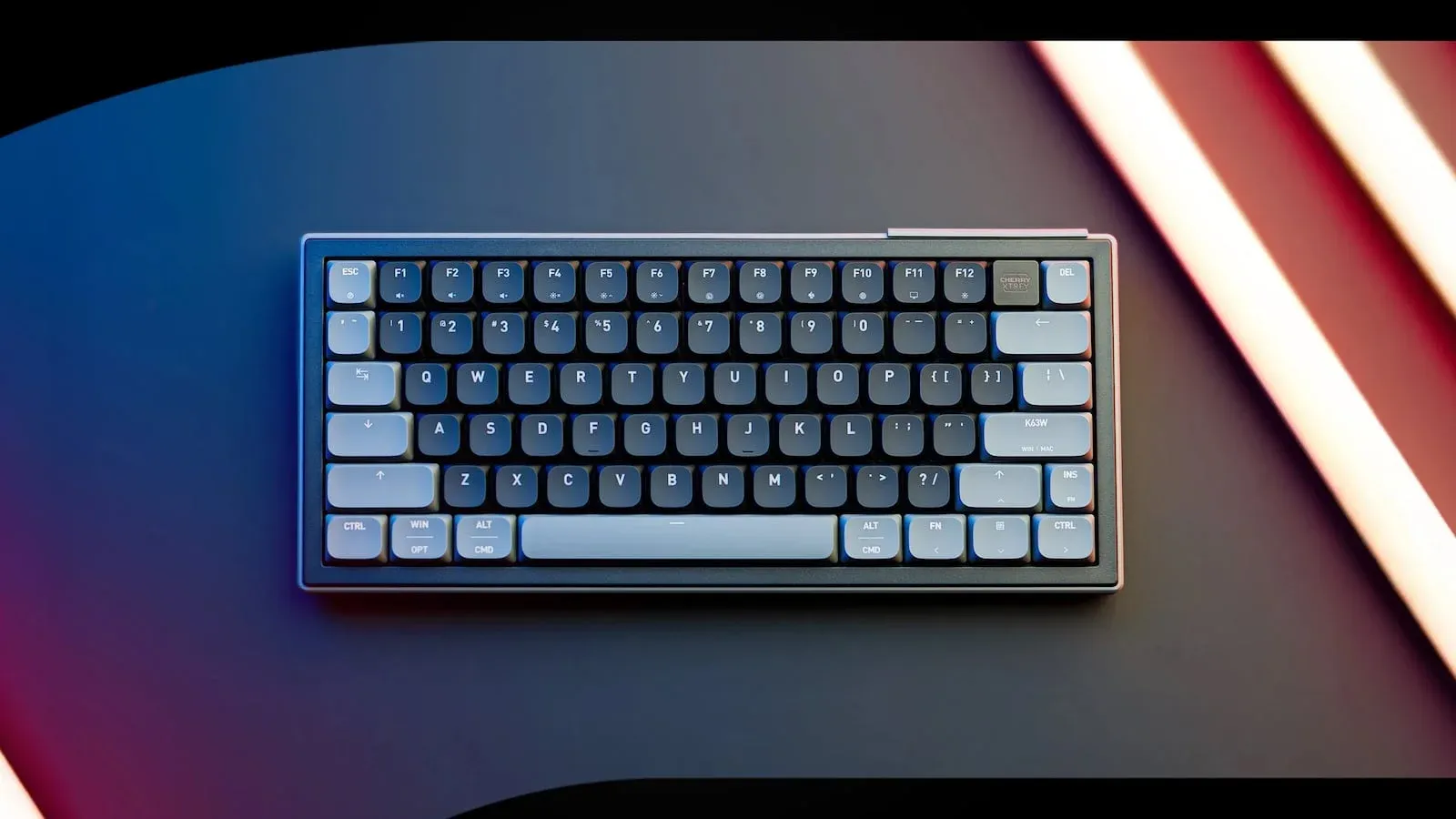


Wireless gaming keyboards have always had a credibility problem. Latency concerns and the constant battery anxiety that comes with a wired-to-wireless switch have kept most serious PC players firmly in the cabled camp. Cherry is betting that a new radio standard can finally crack that skepticism wide open.
Revealed at Computex, the Cherry XTRFY K63W Pro Compact is a 70% layout wireless gaming keyboard and, as far as anyone can tell, the first keyboard to ship with an Ultra-Wideband (UWB) wireless connection. That distinction matters because UWB operates differently from the 2.4 GHz band that most wireless peripherals share. The 2.4 GHz spectrum is genuinely crowded in a typical gaming setup, with mice, headsets, and controllers all competing for the same slice of radio real estate. UWB sidesteps that congestion by using a much wider frequency band with shorter, lower-power pulses.

Use code TRYHARD33 at checkout to redeem this offer before code expires again.
Get 33% Off GAMES+ Subscription
What Ultra-Wideband actually changes for keyboard players
The practical pitch here is cleaner signal integrity and, critically, a higher polling rate. The K63W Pro Compact supports up to an 8,000 Hz polling rate over UWB, matching what we have already seen from UWB gaming mice like the still-unreleased SteelSeries Rival Pro Mini. Whether 8 kHz polling is genuinely perceptible on a keyboard is a fair question. The key here is that competitive players who already run 8 kHz mice will at least have a consistent argument for parity across their peripherals.
The tradeoff worth knowing: UWB has a shorter effective range than standard 2.4 GHz. For a keyboard sitting on your desk, that is a non-issue. If you run a longer-range couch setup and type from the sofa, this one is not built for you.
The specs that will actually sell this thing
The headline number is the 6,000 mAh battery, which Cherry claims can stretch to up to 1,100 hours of use. That figure will shrink considerably with RGB lighting running at full brightness and the polling rate maxed out at 8 kHz, but even at a fraction of that ceiling, you are looking at weeks between charges for most players. Battery anxiety was always the biggest argument against wireless keyboards. Cherry has addressed it with what amounts to a power bank strapped to a keyboard.
Switch choice is Cherry MX Low Profile 2.0. Low-profile switches reduce the travel distance to the actuation point, which has real appeal for fast-input scenarios and players who prefer a flatter typing angle. The build also features a gasket-mounted construction that Cherry describes as delivering softer keystrokes and deeper acoustics, which is the kind of spec that sounds like marketing until you actually sit down and type on it.
The 70% form factor keeps things compact, dropping the numpad and function row to save desk space. That layout has become increasingly popular with competitive players who need more room for wide mouse sweeps.
Who this keyboard is actually aimed at
The UWB angle has niche written on it. Most players running a clean desk setup with a single wireless dongle are unlikely to hit the interference problems that UWB is designed to solve. The real audience is tournament players and hardware enthusiasts who already care about polling rates in the hundreds or thousands of Hz, and who want every peripheral on the same high-spec wireless standard.
The $170 price point reflects that positioning. This is not a budget wireless option. For context, plenty of well-regarded wired mechanical keyboards sit well below that number, and the latest reviews of competing wireless boards show strong alternatives in the $100 to $130 range.
Pro tip: if you are already running a UWB gaming mouse and want a matched setup, the K63W Pro Compact becomes a much easier recommendation. As a standalone entry point to wireless keyboards, the case is harder to make at $170.
Release window and what comes next
Cherry has the XTRFY K63W Pro Compact slated for a US release in August, priced at $170. EU availability arrives a month earlier in July.
The UWB keyboard category is effectively starting from zero right now, so Cherry has first-mover positioning. Whether that matters to the broader market depends on how quickly other peripheral makers follow. Given that UWB mice are still trickling out, a full UWB peripheral ecosystem feels like a 2027 conversation at the earliest. Until then, keep an eye on our gaming guides for a full breakdown once hands-on time with the K63W Pro Compact becomes available.