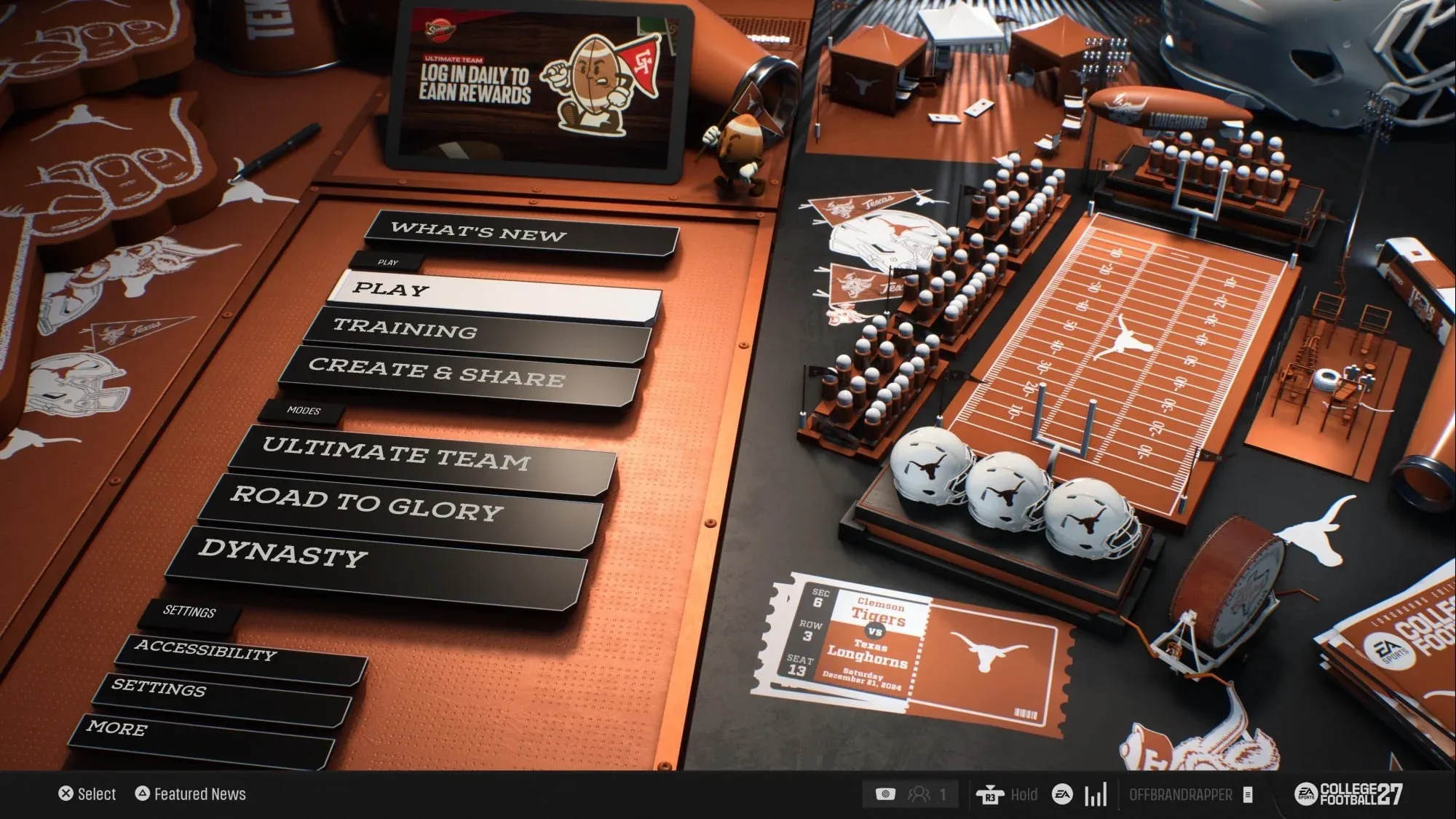


College Football 27 launched with serious momentum behind it. The series had been dormant for over a decade before College Football 25 brought it back to massive fanfare, and the follow-up had every reason to build on that goodwill. Instead, EA Sports College Football 27 walked straight into a wall of its own making, shipping with paid progression options tucked inside Road to Glory and Online Dynasty, two modes that sit in a $70 game.
The backlash was fast and organized. Within days of launch, the hashtag #CFBPlayDontPay was trending across social media, driven largely by YouTuber Bordeaux, who rallied the community against the monetization. The response from the playerbase was loud enough that EA Sports posted an official statement on X confirming the removal of all paid progression options from both modes.

Use code TRYHARD33 at checkout to redeem this offer before code expires again.
Get 33% Off GAMES+ Subscription
What EA said, and what it actually means
The official statement from the EA Sports College Football account did not frame this as a mistake. The phrasing is worth paying attention to: "This was added independent of deeper mode progression with the aim to give players more choice." EA's position is that the intent was fine, the execution missed.
That framing matters. The statement goes on to say the paid options "are not adding the value we intended," which stops well short of admitting the concept itself was the problem. The key here is the forward-looking language: "Our goal for live service plans in CFB 28 and beyond will be to deliver valuable features and content with greater transparency and communication."
Read that carefully. The goal for CFB 28 is not to abandon live service monetization. It is to communicate it better.
Why Road to Glory was the flashpoint
Paid progression in an online competitive mode is one thing. Players have argued about that tradeoff in sports games for years. Road to Glory is a single-player career mode. There is no opponent to gain an edge over. Putting a paywall inside a solo experience in a full-priced game is a different kind of ask entirely, and that distinction drove a lot of the anger.
College Football 25 had set expectations high. The series comeback was celebrated precisely because it felt like a genuine sports simulation without the aggressive monetization baggage that had weighed down EA FC and Madden. College Football 27 arriving with paid progression in a single-player mode felt like a step back from that goodwill.
The community response that actually worked
On Reddit, a thread celebrating the removal approached 5,000 upvotes, with players pointing out that organized pushback against large publishers does produce results when it moves fast enough. The turnaround here was measured in days, not months, which is genuinely unusual.
Bordeaux's response after EA's announcement was a clip from Breaking Bad, Walter White declaring "I won." The reaction across the community was celebratory, though some players are already noting that the win is partial. The features are gone from College Football 27. Whether they return in a different form for CFB 28 is a separate question, and EA's statement does not close that door.
What players jumping in now should know
With the paid progression options removed, Road to Glory and Dynasty are back to being straightforward mode experiences. If you are planning to build your player through Road to Glory, the College Football 27 Road to Glory complete guide covers player creation, Max Potential, Mental Abilities, and the weekly agenda in full. For Dynasty players looking to get the most out of the mode's depth, the Team Builder and Dynasty mode guide walks through Athletic Director goals, NIL strategy, recruiting, and the Stadium Builder.
The removal is live, so the game you are loading into now reflects the updated state. EA's next real test comes when CFB 28 details start surfacing and players see whether "greater transparency" translates to a genuinely different approach or just better PR timing on the same decisions.