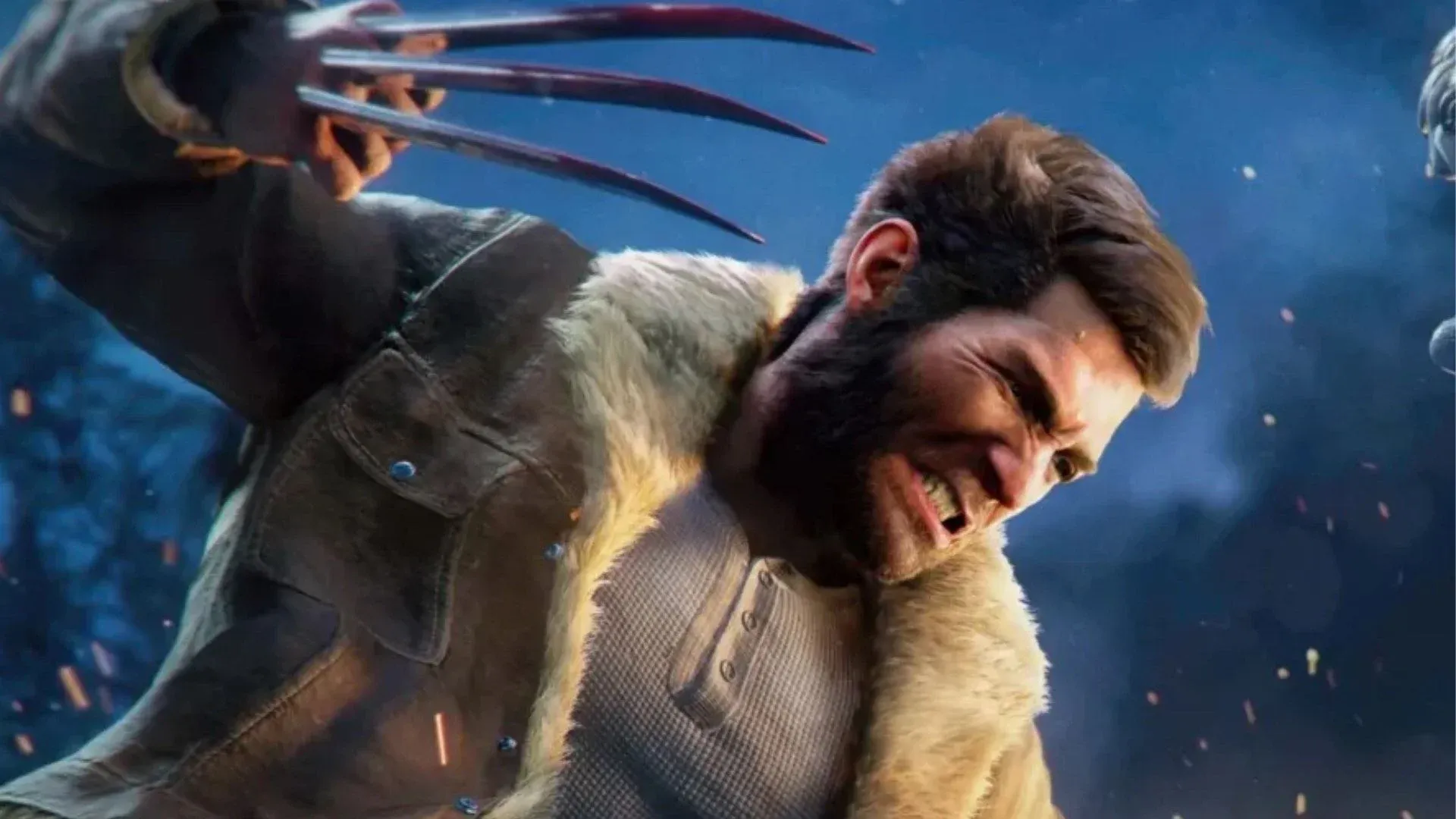


Electronic Arts has officially gone private. After months of regulatory back-and-forth, the publisher is now co-owned by a group of private equity firms and Saudi Arabia's Public Investment Fund (PIF). But the deal structure is what has industry watchers genuinely worried.
Rather than paying the full acquisition price upfront, the buyout was structured as a leveraged buyout, with roughly $20bn borrowed from Morgan Stanley. That leaves EA on the hook for approximately $1.8bn in annual interest payments. To put that in perspective, EA's most recent quarterly filing shows total net revenue of $1.98bn for the quarter, with $1.47bn of that coming from live services. The math is uncomfortable.
Use code TRYHARD33 at checkout to redeem this offer before code expires again.
Get 33% Off GAMES+ Subscription
What a leveraged buyout actually does to a company
Adrian Fernandez-Perez, a finance professor at the University of Dublin's Michael Smurfit Graduate Business School, puts it plainly: the moment a company is acquired through a leveraged buyout, its priorities fundamentally shift.
"The main goal then becomes paying back this debt. Whatever else they have in mind, making new games, research and R&D, these have to be postponed and the first priority becomes paying that debt," Fernandez-Perez explains.
Here's the thing: the debt doesn't belong to the buyers. It lands on EA itself. The private equity firms and the PIF get to acquire a massive company by putting up a fraction of its value, while EA's own revenues become the repayment mechanism. That's the fundamental logic of a leveraged buyout, and it explains why so many of them end in significant structural changes at the acquired company.
Fernandez-Perez's prescription for surviving that kind of pressure is blunt: specialise in the most profitable products, reduce labour if it represents a major expenditure, and cut anything that doesn't directly contribute to profitability. For EA, that almost certainly points toward doubling down on live service titles like EA Sports FC and Battlefield 6, while deprioritising smaller single-player projects.
The Manchester United warning sign
The football world has seen this movie before. When the Glazer family acquired Manchester United in 2005 through a leveraged buyout, they borrowed between $540m and $550m, including high-interest Payment-in-kind loans that reportedly cost the club over $1.5bn across the life of the deal.
Kieran Maguire, broadcaster and author of The Price of Football, frames the risk clearly: "If you take a look at the PIK notes, they were at 14.25 percent at one stage, which was indicative of the level of risk the market saw for the deal. It did put Manchester United unnecessarily at stake."
Manchester United survived because it had a generational manager and consistent Champions League revenue to offset the financial drain. Over a billion dollars in interest and dividends still left the club, money that could have gone into infrastructure and operations. For a club without that competitive cushion, like Burnley, the consequences of a leveraged buyout have been far more damaging.
The parallel for EA is real. Its biggest live service franchises are essentially the Champions League revenue in this analogy. As long as EA Sports FC and Battlefield keep generating, the debt is serviceable. The question is what gets sacrificed to keep those numbers healthy.
Saudi Arabia's actual play here
George Osborn, author of Power Play: Video Games, Politics, and the Battle for Global Influence, argues the PIF's interest in EA goes well beyond a financial return. Saudi Arabia's Vision 2030 plan includes specific targets for its gaming industry, aiming to generate roughly $13bn in economic value and over 39,000 jobs. EA, with $7.5bn in annual net revenue and a player reach of around 700 million people, is the kind of asset that can supercharge those targets in ways that acquiring smaller studios never could.
"While the acquisition of Niantic and Scopely were helpful, EA's just at a different scale," Osborn says.
The strategic logic extends into sport. Saudi Arabia has spent years trying to buy its way into traditional sports, with mixed results. LIV Golf has struggled to dent the established tour. Owning Newcastle United generates headlines but limited global influence. EA, though, sits one layer above all of it.
"EA has to maintain relationships with thousands of professional sports stars, hundreds of clubs and dozens of leagues through its popular games," Osborn explains. "What that means is all of those parties are invested in the success of those games."
Buying EA is effectively buying a seat at the table with every major sports league, federation, and athlete on the planet. That's a different kind of influence entirely.
Development shifting east, and what that means for jobs
Osborn believes it would be "really strange" if Saudi Arabia didn't use this acquisition to push EA toward establishing a meaningful presence in the country. Other gaming companies that received significant Saudi investment have followed this path: Scopely opened a Saudi studio in 2024, and the ESL Faceit esports group opened a regional office in Riyadh in 2025.
The cost differential is significant. A game developer based in Saudi Arabia costs considerably less than one based in the US, and Osborn notes the country has a growing pool of computer science talent coming through. If EA does announce workforce reductions in higher-cost regions, new hiring in Saudi Arabia to partially offset those cuts would fit the financial logic of the deal precisely.
Osborn also flags an intriguing overlap between the parties involved in the EA deal and those connected to proposed privatisation discussions around FIFA's commercial operations. With Saudi Arabia set to host the 2034 World Cup, the possibility of EA Sports FC eventually securing some form of official FIFA licensing, or a dedicated FIFA World Cup mode, is something Osborn considers genuinely plausible over the next five years.
What most players miss in all of this is that the near-term impact on the games themselves may be less visible than the structural changes happening beneath the surface. Layoffs, studio consolidations, and a shift away from niche single-player projects don't show up in a patch note. They show up two or three years later when a beloved franchise quietly disappears from the release calendar.
For anyone who wants to stay across the gaming industry's biggest shifts, our guides hub covers the titles most likely to matter regardless of who owns the publisher making them. If you're already playing games with web3 mechanics like Illuvium Overworld, the decentralised ownership model starts looking a lot more appealing when traditional publishers are navigating this kind of financial turbulence. EA's next earnings report and any official restructuring announcement will be the clearest signal yet of which direction this actually goes, and it's worth paying attention when those numbers drop. Check out our game reviews to keep tabs on how EA's output holds up through this transition.