There's a strange irony at the heart of Square Enix's ongoing identity crisis with Final Fantasy. The answer to most of the series' modern problems has been sitting right there since 2011, tucked inside a PSP spinoff that most Western players didn't even get to play until 2015.
Final Fantasy Type-0, set in the world of Final Fantasy 13, didn't just do something interesting. It demonstrated a way of building a Final Fantasy game that the series has never quite managed to replicate since. And that's become a talking point worth revisiting, especially as the franchise continues searching for its footing.
When Following Trends Actually Worked
Here's the thing: Type-0 was absolutely chasing a trend. Square Enix saw the international success of Persona 3 and Persona 4 and built a calendar system and social bonds between students into the game's structure. The cast of Class 0 juggles military missions with homework, exams, and the kind of mundane school life that sits in sharp contrast to the war happening just outside the academy walls.
But that's where the imitation stops. The school setting isn't the selling point. It's scaffolding. What Type-0 actually cares about is what happens when those students get sent out to fight the government's battles, and how each of them processes the increasingly disturbing things they're asked to do.
The game spreads its character development across the whole roster rather than funneling everything through a single hero. Each member of Class 0 brings a different social background and political perspective, and the story's themes develop through those colliding viewpoints. It's a structure Final Fantasy 15 tried on a smaller scale before the open world swallowed it, and one Final Fantasy 16 never attempted at all, leaning entirely on Clive to carry everything.
The Combat Had Ideas Worth Stealing
Final Fantasy Type-0 also did something genuinely clever with its combat that the series still hasn't fully absorbed. Each Class 0 member specializes in a specific weapon type and magic, which means choosing who to bring into battle actually matters in a meaningful way.
Spell upgrades go beyond the standard power-scaling formula too. Take fire magic as an example: RF fires flaming projectiles, while SHG fires flaming projectiles that explode on impact. That's the difference between single-target damage and crowd control, and it forces real decisions rather than just picking the highest-tier spell available.
The key here is that the depth came from creative iteration on existing ideas, not from grafting a popular genre onto the Final Fantasy name and hoping the combination would feel coherent.
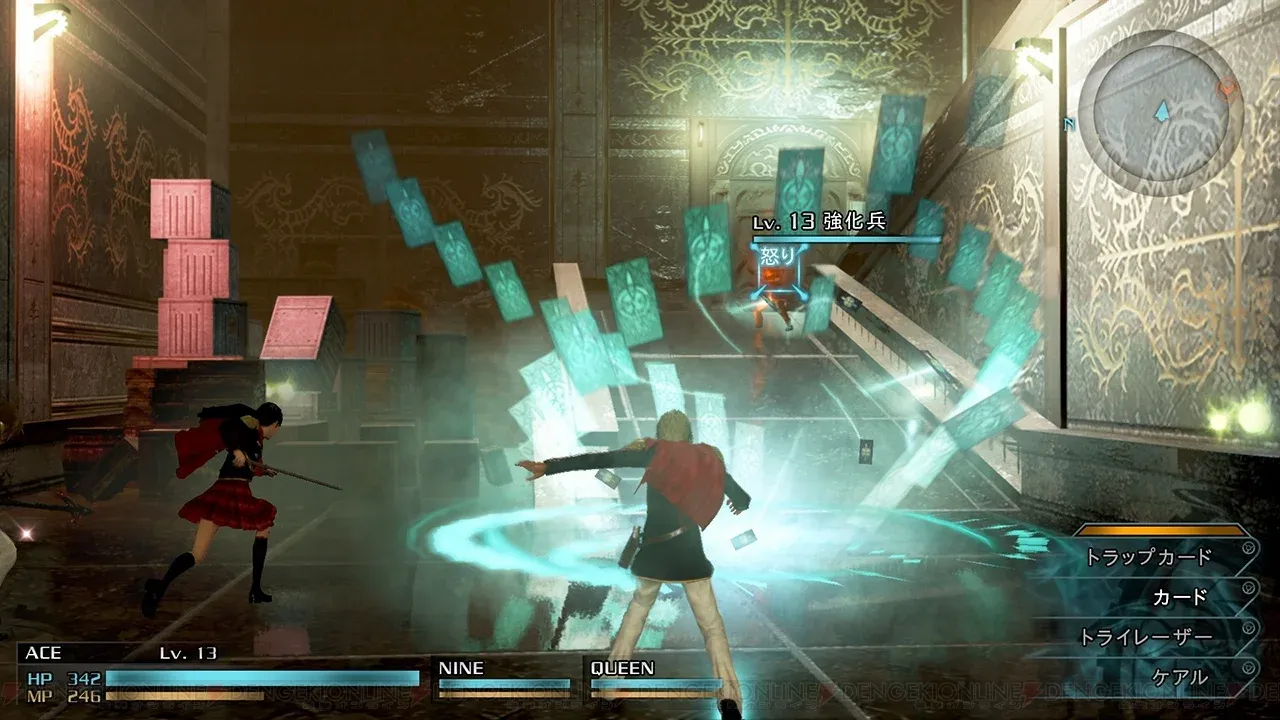
Spell variant system in Type-0
What the Series Became Instead
The contrast with recent Final Fantasy entries is hard to ignore. Final Fantasy 15 and Final Fantasy 7 Rebirth aren't Final Fantasies with open worlds built into them. They're open-world games with Final Fantasy elements layered on top. Final Fantasy 16 frames itself as prestige dark fantasy television more than it does an RPG, and the result is a game where the franchise's identity feels secondary to the aesthetic it's borrowing.
That shift, from incorporating popular elements into a Final Fantasy framework to building the game around a popular framework and adding Final Fantasy flavoring, is exactly what Type-0 avoided. The Persona-inspired structure serves the story. The story doesn't exist to justify the structure.
The Blueprint That Got Left Behind
Type-0 wasn't a perfect game. The real-time strategy components were a misfire, and the PSP's multiplayer focus left some content awkwardly gated on the first playthrough. But it had something modern Final Fantasy games are still visibly searching for: confidence in its own identity.
Some of the best things about Type-0 came from its willingness to experiment within its own framework rather than wholesale adopt someone else's. That's a lesson the series could still use. Make sure to check out more: