

Japan sets the bar for driving education. Learners there spend weeks navigating purpose-built courses, perfecting slow-speed precision maneuvers, S-curves, and the kind of controlled parking exercises that would humble most experienced drivers. Now, one dedicated Forza Horizon 6 player has rebuilt those courses inside the game with enough accuracy to make the whole thing feel like an actual lesson.
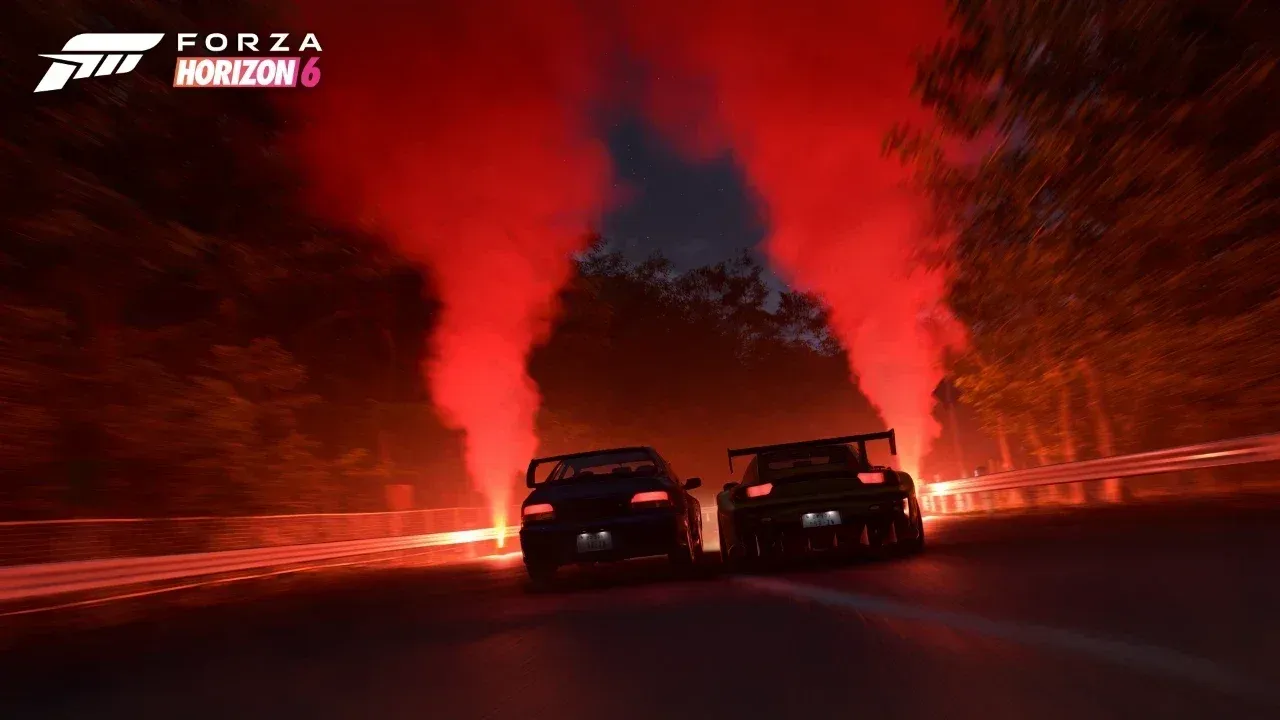
Japan driving course recreation
What the real Japanese driving test actually looks like
Japan's driver licensing system is famously demanding. Rather than a quick road test, candidates train at dedicated driving schools called kōtsū kyōshūjo, where instructors grade them on precise execution of specific course segments. Think slow-speed balance beams, tight S-curves, crank-shaped lanes, and hill starts timed to the second. Failing a single element means repeating the entire session.
The process can take weeks and cost well over $1,000 before a learner earns their license. That level of rigor has made Japan's roads among the safest in the world, but it also means the actual course layouts are very specific, very consistent, and very well-documented.
That documentation is exactly what this player used.
How the recreation came together
Using Forza Horizon 6's course creation tools, the builder mapped out the standard kōtsū kyōshūjo layout with real proportions and obstacle placements. The narrow crank section, the S-curve segment, and the low-speed balance strip are all present. Cone placements match the spacing used in actual Japanese driving schools, and the course boundaries are tight enough that sloppy inputs get punished just like they would in a real test.
Here's the thing: this kind of build only works because Forza Horizon 6 is set in Japan. The surrounding environment, the road markings, and even the general aesthetic all reinforce the illusion. Running the course in a small Japanese domestic market car makes it feel less like a game mode and more like a genuine simulation.
The creator shared the blueprint publicly, and players who have tried it report that the course exposes bad habits fast. Throttle control, steering smoothness, and spatial awareness all get tested in ways that open-road driving in Forza rarely demands.
Why this lands differently in FH6 than it would anywhere else
Previous Forza Horizon games had course creators too, but the Japan setting changes what players can build and how those builds feel contextually. The map's urban density, mountain passes, and mix of highway and side-street environments give creators a wider vocabulary to work with. A driving school recreation in a fictional European festival setting would feel like a novelty. In FH6's Japan, it feels like it belongs.
What most players miss about community-built courses is how much they extend a game's lifespan beyond its official content. Playground Games ships a map and a career, but players ship everything else: time attack variations, precision challenges, and now, apparently, functional driver education.
For anyone wanting to get comfortable with FH6's physics before tackling the game's mountain passes or competitive events, the Forza Horizon 6 beginner's guide covers the Japan map layout and core mechanics worth knowing first. And if the driving school recreation sparks an interest in the game's drift culture, the Forza Horizon 6 drift guide breaks down the best cars and techniques for Japan's mountain passes, which is a very different skill set from what the kōtsū kyōshūjo course demands.
The build is live and searchable in the community blueprints section. Load it up, pick something modest with front-wheel drive, and find out how your precision driving actually holds up.