
Sometimes the best projects start with no plan at all.
After spotting the Scrolly Hackathon on Twitter, I entered on a whim with no expectations and no game concept in mind. A few days later, I walked away with a $500 prize after building an AI-powered mobile game called Dungeon Cuties in just two nights.
The Scrolly platform is designed for mobile-first experiences, and the brief was straightforward: create a game using AI that works on a phone. With no prior game development experience, I had to figure things out as I went.
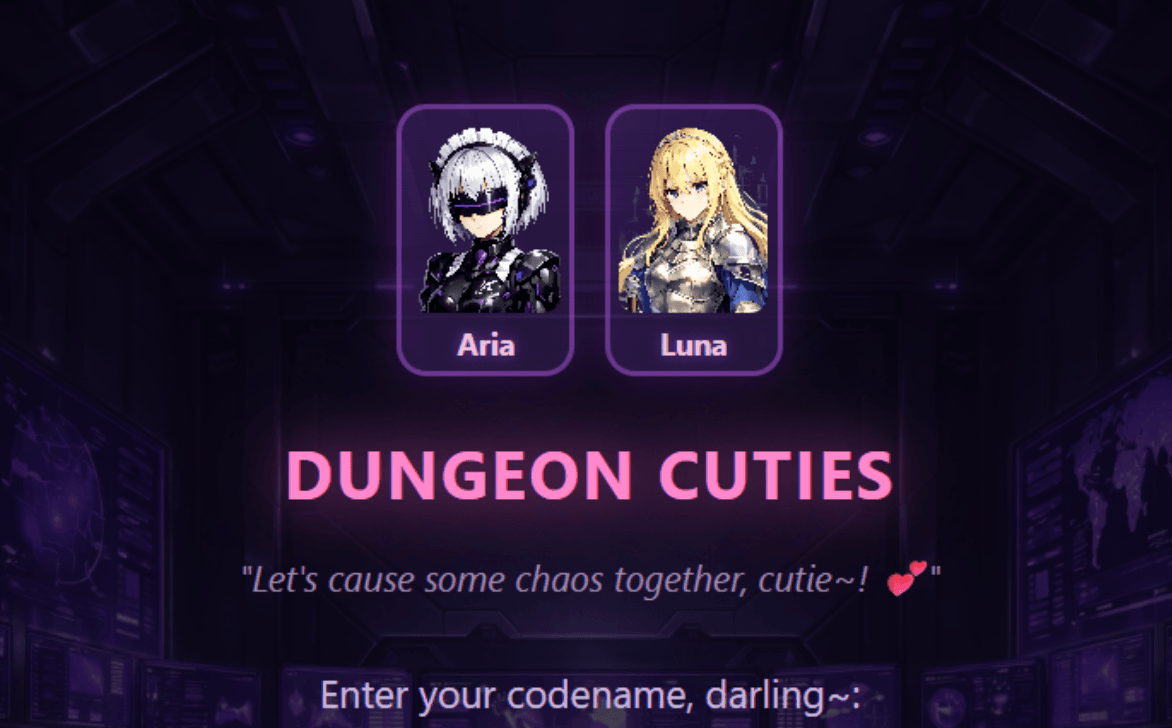
The result was Dungeon Cuties, a lighthearted dungeon crawler where four waifus accompany players through increasingly difficult runs. The gameplay revolves around selecting skills and perks as you progress through levels, while enough randomness keeps each run feeling different. It wasn't designed to be a serious RPG - it was exactly the kind of experimental project a hackathon is meant to inspire.
Building a Game With AI While Watching Anime
My development process was about as casual as it gets.
For two nights, I had Crunchyroll playing on one screen while I worked on the game on the other. Session by session, I used AI tools to generate code, tested the results, and refined what came back.
I'd heard plenty of discussion around "vibe coding," but this was the first time I fully committed to the process. The concept is simple: describe what you want, receive working code, test it, and iterate. The barrier to entry is remarkably low.
And in my experience, that promise held up.
Before this project, I'd never built a game. By the end of the first night, I already had something playable.
The First Version Was Ugly - and That Was Fine
The initial prompt generated a functional auto-battler framework.
Players moved through rooms, encountered bosses every five floors, and selected perks after victories. The AI produced roughly 1,200 lines of code that established the core gameplay loop.
Visually, it was rough. Enemies were represented by text labels. There was no artwork. Most information appeared as simple numbers on screen.
None of that mattered.
After about twenty minutes of testing, I already had a clear list of improvements. That's the right sequence for game development: get a playable prototype running, test it, and discover what's missing. Spending time polishing visuals before validating the gameplay loop is usually wasted effort.
The game needed to be fun before it needed to look good.
One Feature Per Prompt
I built the project using Cursor, allowing it to automatically select the most appropriate AI model throughout development.
Every new feature was introduced through a single focused prompt.
Examples included:
- Add a weighted ability wheel before each run with a respin option for gold.
- Add screen shake, damage numbers, and hit flashes on attack.
- Add procedural sound effects using Web Audio with no external files.
One decision that worked surprisingly well was keeping the entire project inside a single file. That meant the AI always had full context and didn't need to jump between multiple components or systems.
By the end of development, the file had grown to roughly 3,200 lines of code.
Would that be considered good practice for a production game? Absolutely not.
For rapid AI-assisted development inside a chat environment, however, it was ideal.
Creating the Art With ChatGPT Images
Art was another challenge.
I can't draw, so every character portrait, enemy sprite, and boss image was generated using ChatGPT Images. The process was straightforward: describe what I wanted, generate an image, place it into the project, and connect it to the game.
What surprised me was how much iteration each image required.
Very few visuals were usable on the first attempt. Most needed several rounds of refinement before reaching a quality level that fit the project. Some of the earliest artwork never even made it into the final build because the game's design evolved faster than the art pipeline.
Looking back, I'd generate the artwork later in the process and spend less time polishing images before the game's systems are fully established.
The Problems AI Couldn't Solve
Despite how much AI accelerated development, there were two major areas where human judgment remained essential.
Balancing the Gameplay
The first issue was balance.
No matter which strategy I tried, I consistently died at roughly the same point during a run. The randomization systems weren't providing players with enough opportunities to become powerful enough to reach later encounters.
If players hit a wall thirty seconds into every run, they simply won't return.
Fixing this required repeated tuning and testing until successful runs felt genuinely achievable.
Getting the Pacing Right
The second issue was pacing.
The AI optimized for speed, which meant gameplay events happened almost instantly. Screens transitioned too quickly, combat resolved too fast, and players barely had time to process what was happening.
A significant amount of iteration went into slowing the experience down.
I added pauses, improved timing between events, and allowed important moments to breathe. Those changes made the game feel dramatically better despite requiring relatively little code.
Neither of these challenges were programming problems.
They were design problems.
AI can generate code, but it can't reliably tell you when a game feels frustrating or rushed. That's still the developer's responsibility.
Launching Dungeon Cuties
Once development was complete, I hosted the game on Replit.
It may not have been the most optimized deployment solution, but it was familiar. I'd previously used the platform for AI-generated websites and didn't want to spend valuable hackathon time learning an entirely new hosting workflow.
The final version of the game can be played here: https://dungeon-cuties.replit.app/
Winning $500 and Looking Ahead
Will Dungeon Cuties become a chart-topping mobile hit?
Probably not.
But that was never the goal.
The game delivers a short, entertaining experience, and more importantly, it proved that I could create something I never would have been capable of building on my own before AI-assisted development tools became available.
To evolve into a full commercial game, it would need deeper progression systems, more content, additional features, and significantly more polish. As a hackathon project built over two nights while watching anime, however, it accomplished exactly what it set out to do.
What started as a spontaneous entry into a Twitter-discovered hackathon ended with a playable game, valuable development experience, and a $500 prize.
Needless to say, I'm already watching for the next one.