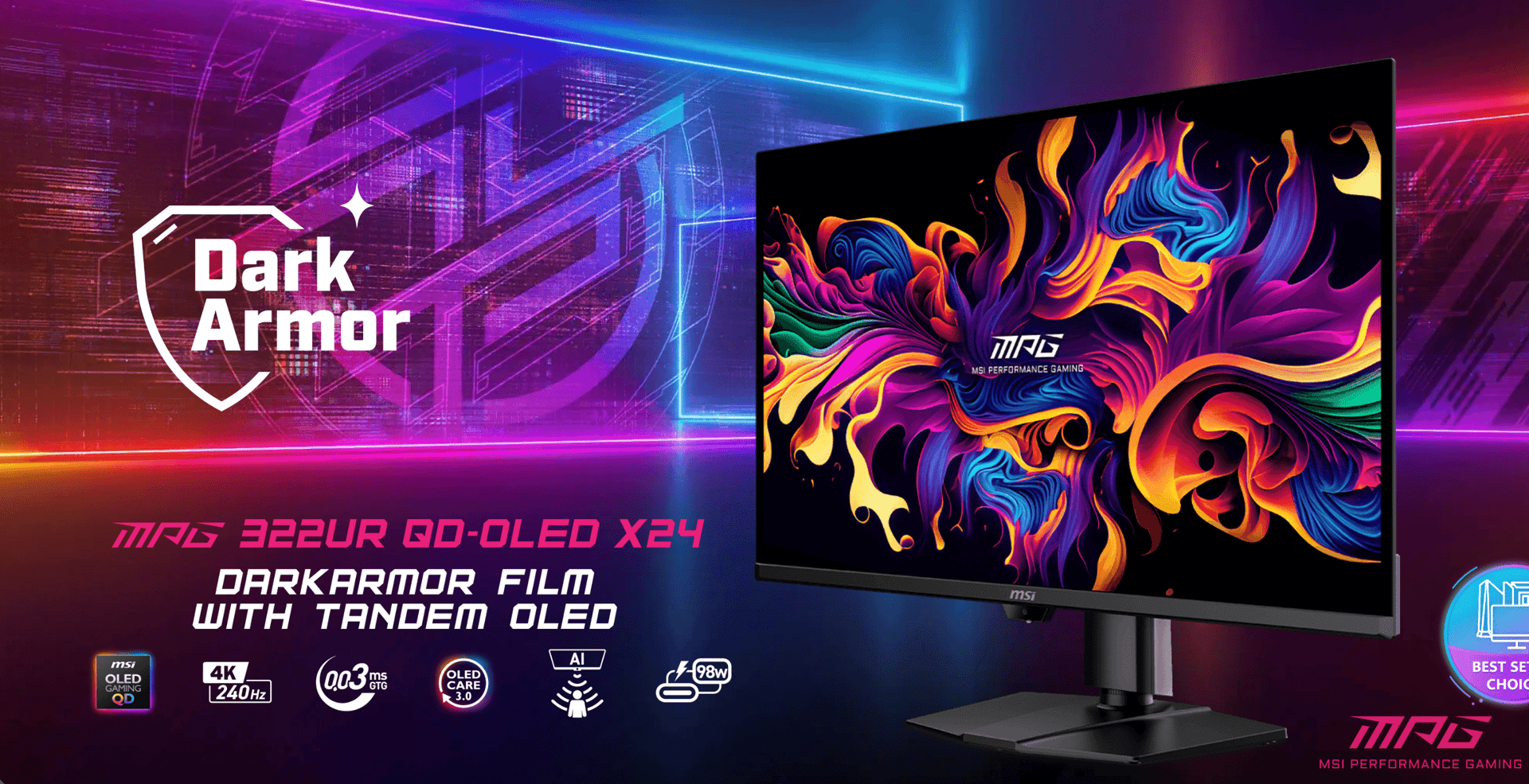


The MSI MPG 322UR X24 arrives as the first 32-inch 4K monitor to carry Samsung's updated QD-OLED panel, and it makes a strong case for being the best flat-panel display you can buy right now at $1,099.

Use code TRYHARD33 at checkout to redeem this offer before code expires again.
Get 33% Off GAMES+ Subscription
What changed from the previous generation
From the outside, the MPG 322UR X24 looks identical to MSI's earlier 32-inch OLED monitors. Same chassis, same stand, same design. The difference is entirely inside, where Samsung Display has delivered the first meaningful panel upgrade in this form factor since the original 32-inch 4K QD-OLEDs launched roughly two years ago.
Here's what actually changed:
- Full-screen brightness up to 300 nits from 250 nits on the previous generation
- VESA certification bumped from DisplayHDR TrueBlack 400 to TrueBlack 500
- New anti-purple-tint filtering layer added to the panel stack
- HyperEfficient EL 3.0 electroluminescent material, claimed to be twice as durable as the previous generation
- DisplayPort 2.1 UHBR20 replaces the older DP spec
- USB-C power delivery drops slightly from 98W to 90W
Everything else carries over: 3,840 x 2,160 resolution, 240Hz refresh, 0.03ms pixel response, 99% DCI-P3 colour coverage, two HDMI 2.1 ports, and a two-port USB-A hub.
The purple tint problem, nearly solved
QD-OLED panels have carried a well-known flaw since day one. In bright ambient light, black tones take on a noticeable purple cast that can be genuinely distracting. The MPG 322UR X24 does not fully eliminate this, but it reduces it to a point where most users in most environments simply will not notice it. That is a meaningful improvement, not a marketing claim.
The warm colour temperature that has historically made QD-OLED whites look slightly off is also significantly better here. Next to a well-calibrated IPS panel, a slight warmth remains. In isolation, the whites look clean. That is a fair trade-off at this price point.
How it actually performs in games
The brightness numbers tell part of the story. The rest of it only makes sense when you understand that QD-OLED handles colour brightness differently than LG's WOLED technology. WOLED adds a white subpixel to push peak brightness, but that white subpixel can wash out colour or simply not contribute at all in mixed-colour scenes. QD-OLED has no such compromise.
What most players miss is that the 300 nits full-screen spec undersells the real-world experience. For SDR content, the MPG 322UR X24 subjectively feels closer to a 400-nit IPS panel. For HDR, it is genuinely spectacular.
The key here is per-pixel lighting precision. No LCD, even one with full-array local dimming, can match what OLED does with contrast. Testing HDR performance in Cyberpunk 2077's basement nightclub scenes makes this obvious: neon lights and lasers against deep blacks, then a door opens at the far end of the room to reveal a sunlit street. The transition is exactly what HDR is supposed to feel like, and it lands every time.
MSI's EOTF boost mode returns here, combining the best aspects of the VESA HDR 400 and Peak 1000 nits modes to maximise brightness across both dark and bright scenes simultaneously. It works well enough that you can leave it on for all HDR content without second-guessing it.
The 240Hz refresh and 0.03ms response are not new, but they remain among the best numbers in the industry. In a 4K context, hitting 240fps in modern titles is genuinely difficult, so the refresh ceiling is unlikely to be a limiting factor for most setups.
The one real caveat: burn-in
Every OLED monitor review eventually arrives here. Burn-in is a real phenomenon, but independent long-term testing of the previous-gen QD-OLED 4K panel showed that burn-in only became apparent after two years of worst-case, maximum-stress usage. Gaming-centric use is considerably less aggressive, and this new HyperEfficient EL 3.0 panel is rated as twice as durable as its predecessor.
MSI backs the monitor with a three-year warranty, which provides a reasonable safety net. The practical expectation for gaming use is four to five or more years before burn-in becomes a real concern, though no one can guarantee that definitively.
The irony is that this monitor is so good that burn-in matters more than it did on previous OLED generations. Earlier panels had enough weaknesses that upgrading after a few years felt natural. The MPG 322UR X24 does not have those weaknesses, which means you will want it to last.
Specs at a glance
Worth the $1,099 price tag?
The MPG 322UR X24 is the best 32-inch 4K gaming monitor available. The brightness is finally punchy enough for daily use, the purple-tint issue is largely behind us, and the HDR performance remains in a category of its own compared to any LCD alternative.
The caveat is that MSI will almost certainly release a slightly de-featured version of this monitor at a lower price point within the next several months, potentially around $800 or less. If you can wait, that version may offer the same panel with reduced USB-C power delivery and fewer connectivity options. If you cannot wait, the $1,099 model is hard to argue against.
For more hardware breakdowns and buying guidance, check out our latest reviews, or head to our gaming guides section for setup and optimization tips to get the most out of high-end display hardware.