
"A little over 12 years ended unceremoniously the day before the DLC launch we all crunched to get out the door."
That's Derek Best, former principal VFX artist at id Software, writing on LinkedIn after being laid off this week. He spent 12 years at the studio. His departure was not a quiet exit.
For fans of Doomsday and the broader legacy of id Software's FPS catalogue, what Best describes is genuinely alarming. Microsoft has reportedly cut 136 of the studio's 185 developers, leaving a skeleton crew behind. The id Tech engine team, which powered every modern Doom game and influenced engines used across the entire industry, is now reportedly down to a single employee.
What id Software looked like before this week
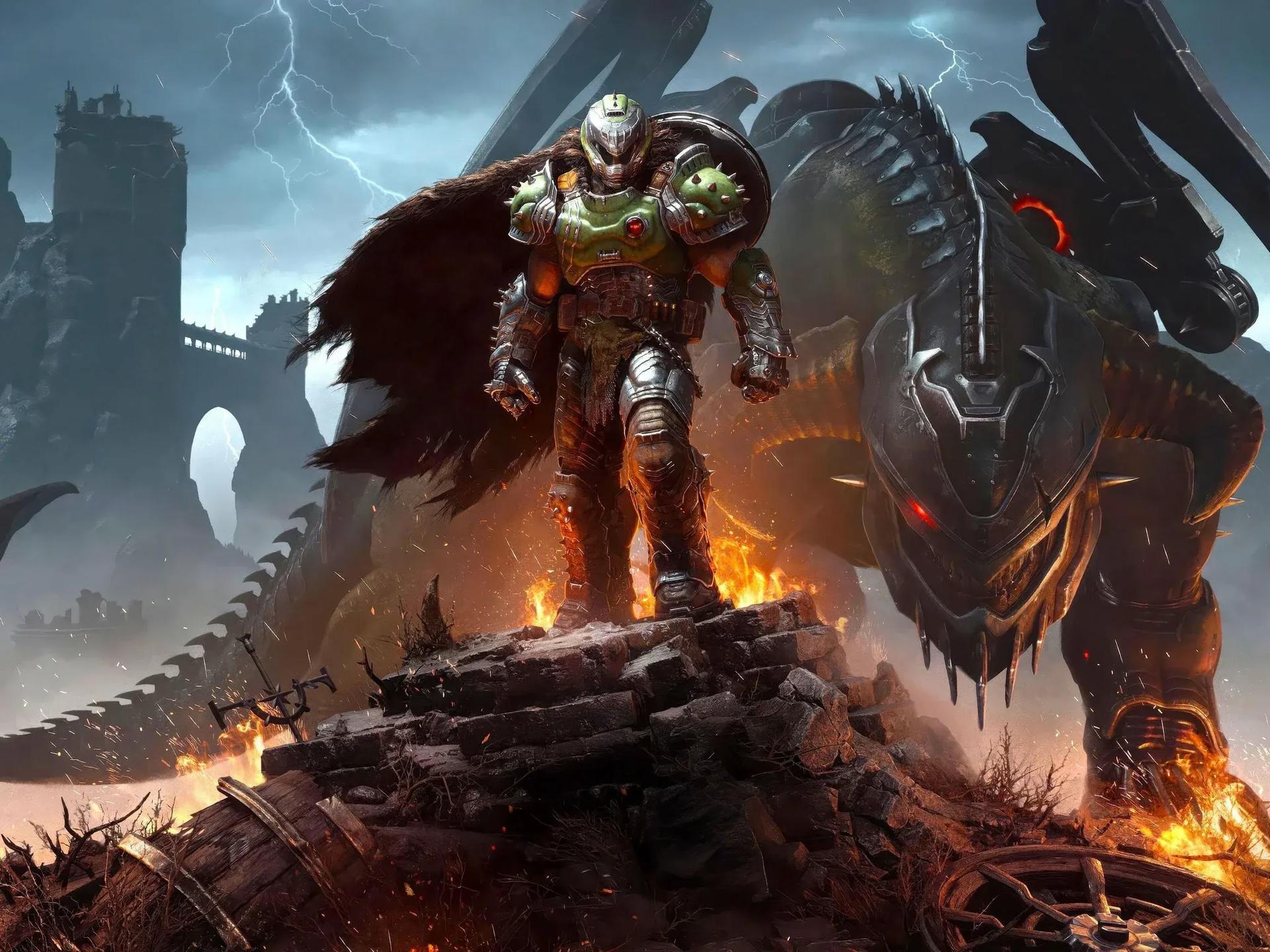
Before these cuts, id Software was a 185-person team with the institutional knowledge to build and maintain one of gaming's most respected proprietary engines. The id Tech engine is not a footnote. It powered Doom Eternal, Doom: The Dark Ages, Quake Champions, and Indiana Jones and the Great Circle. Treyarch's NGL engine and Infinity Ward's IW engine, both used for Call of Duty titles, trace their lineage directly back to id Tech 3. That's how deeply this technology runs through the industry.
The studio also had active development pitches in the pipeline. Ideas for a co-op Doom, a new Perfect Dark, and a John Wick-inspired cyberpunk game were reportedly in development before the cuts hit. None of those projects will move forward at the studio as it now stands.
What 136 layoffs actually means in practice
Best's LinkedIn post does not pull punches. "I'm still in shock at how brutal the layoff cuts were," he wrote. "Collectively decades of knowledge was wiped out of the studio."
He goes further, describing the specific damage to his own team: "The VFX team was eliminated down to one single artist with no lead or producer." That's not a restructure. That's a department effectively ceasing to function.
Best's summary of the situation is direct: "Great job Microsoft. Nothing says business success like nuking a team into the dirt and relegating them to support studio size while also throwing out massive technological achievements."
He is not alone in that assessment. The Duke Nukem 3D co-creator has publicly called id Software "essentially dead." John Romero, who co-founded id Software in the early 1990s, has been vocal in praising the developers who carried the studio's legacy through the modern Doom era, framing their work as something worth mourning.
The engine loss is the part most players will miss
Here's the thing: the games themselves are the visible part of this story, but the engine is the part with the longest tail. id Tech has been iterated on for over three decades. The knowledge required to build, maintain, and extend it is not documented in a wiki. It lives in the heads of the people who worked on it daily. When 136 developers walk out the door, that knowledge walks with them.
Microsoft has reportedly signaled interest in continuing Doom and Quake development, but with the id Tech team gutted, future entries in those franchises may move to Unreal Engine. That is not automatically a disaster, but it is a meaningful shift. The feel of Doom Eternal, the way it runs and moves, is inseparable from the engine built specifically to deliver it.
Where this leaves the franchise going forward
Xbox has reportedly been pushing Bethesda to accelerate work on tentpole franchises including Doom and Quake. The contradiction of simultaneously gutting the studio best positioned to make those games is not subtle. What remains of id Software appears to be a support team, not a lead developer capable of shipping a major title independently.
For players following the future of the Doom franchise or keeping tabs on what comes next, the Doomsday strategy guides collection covers the existing games in the series while the broader picture at id Software continues to develop. The broader gaming guides hub tracks ongoing coverage across the industry as Microsoft's studio strategy continues to unfold across its portfolio.