

Intel is having a hard time getting its latest laptop chips out the door, and if you were hoping to pick up a next-gen gaming laptop or handheld PC powered by Panther Lake anytime soon, this news is worth paying attention to.
Sources speaking at Computex 2026 paint a consistent picture: supply of Intel's 18A node laptop CPUs is tight, Intel hasn't been able to give manufacturers a clear timeline for when that changes, and the reasons behind it are more complicated than a simple manufacturing failure.

Use code TRYHARD33 at checkout to redeem this offer before code expires again.
Get 33% Off GAMES+ Subscription
What Computex sources are actually saying
Contacts at three of the world's top-six laptop manufacturers all gave the same read: supply is constrained. That's not one outlier with a grudge. That's a pattern.
Intel's own Alex Katouzian, general manager of Client Computing and Physical AI, acknowledged there are "some" shortages but told attendees Intel is "overcoming" them. That's a carefully worded non-denial. The key here is what he didn't say, which is when the situation resolves.
Smaller laptop makers and system assemblers are reporting the same squeeze. The feedback loop from Computex is unusually consistent for an industry where everyone usually has a different spin.
Why 18A itself may not be the actual problem
Here's the thing: the shortage doesn't appear to be because Intel's 18A manufacturing process is broken or underperforming. The more likely culprit is a supply chain tangle with multiple moving parts.
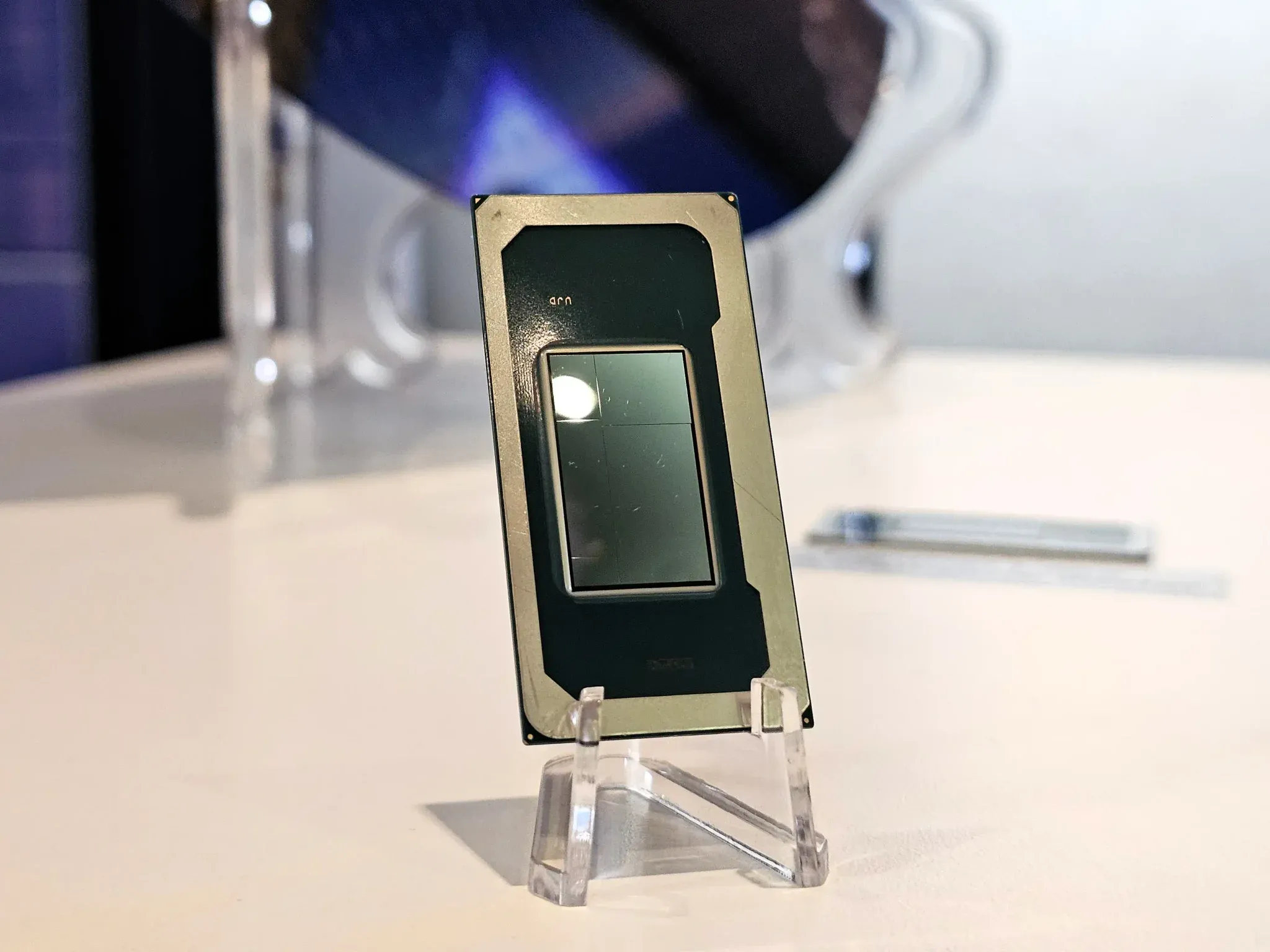
Panther Lake CPUs use a split-tile design. The CPU compute tile is built in-house on Intel's 18A node. The I/O tile, however, is manufactured by TSMC. And TSMC's capacity is famously stretched right now, with demand from Apple, AMD, Nvidia, and Qualcomm all competing for the same fab time. Intel is unlikely to be at the top of that priority queue.
The second factor is arguably more telling. Intel's new server chip, Clearwater Forest (branded as Xeon 6+), also runs on 18A. Multiple PC makers at Computex suspect Intel is allocating a significant portion of its 18A capacity to those higher-margin server chips, leaving laptop CPUs lower on the internal priority list.
When asked directly about how 18A capacity is being allocated between products, Intel's data centre head Kevork Kechichian gave a response that said a lot by saying very little: "It's complicated. It's not an easy thing."
What this means for gaming laptops and handhelds
The timing is awkward. Panther Lake is the foundation for Intel's Arc G3 chip, which powers handheld gaming PCs like the MSI Claw 8 EX AI+. Early benchmarks of that chip have been genuinely impressive for integrated graphics performance, making it one of the more anticipated upgrades for the handheld gaming market.
A supply crunch at the chip level means laptop and handheld manufacturers can't build what they can't source. Even if a device is announced at Computex, retail availability is a separate question entirely.
The situation also has a longer tail. Nova Lake, Intel's next desktop CPU generation, is expected later this year and will also draw on 18A capacity. If server chip production is already eating into the available supply, desktop and laptop chips are going to keep competing for the same pool of wafers. That's a constraint that doesn't disappear quickly.
For anyone tracking the gaming laptop market, this is the kind of behind-the-scenes friction that shows up as limited stock, higher prices at launch, or delayed availability in certain regions. Check out our game reviews for the latest takes on what's actually worth buying right now while the hardware situation develops.
Intel's bigger picture at a difficult moment
Intel is already navigating a challenging stretch. The company has been working to rebuild credibility around its in-house manufacturing after years of delays and process node struggles. Landing 18A as a competitive node was supposed to be a turning point, and by most technical accounts the node itself is performing. The problem is that a working process node doesn't automatically translate to chips on shelves.
The combination of TSMC dependency for I/O tiles, internal capacity competition from Clearwater Forest, and the looming demand from Nova Lake creates a supply equation that Intel is clearly finding difficult to balance. Laptop OEMs want answers, and "it's complicated" isn't a production schedule.
For gamers, the short version is this: Panther Lake-powered laptops and handhelds are coming, the silicon works, but getting your hands on one at launch may require some patience. Keep an eye on our gaming guides for hardware buying advice as availability clears up and more devices hit retail.