

South Korea represents one of the most distinct and high-value mobile gaming markets globally. While many marketers rely on shorthand assumptions - that Korean players prefer RPGs, spend heavily, and are competitive - data from early 2026 indicates that success in this market requires a more nuanced understanding of player behavior, platform usage, and monetization psychology.

Use code TRYHARD33 at checkout to redeem this offer before code expires again.
Get 33% Off GAMES+ Subscription
Market Overview
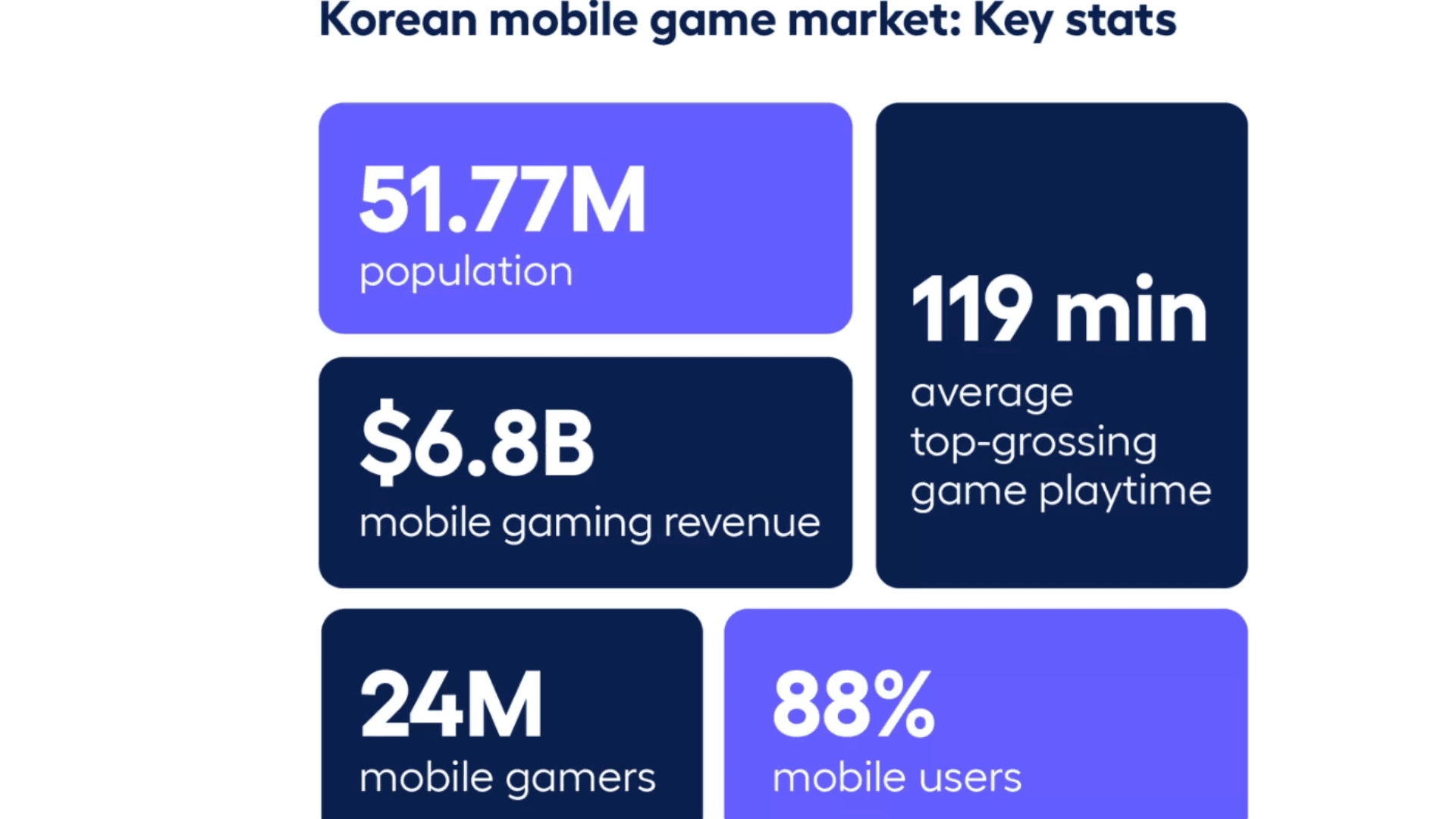
South Korea ranks as the fourth-largest gaming market by revenue, trailing only China, the United States, and Japan. In 2025, total gaming revenue reached approximately USD 14.6 billion, with mobile gaming accounting for USD 6.8 billion. Beyond size, South Korea exhibits significant market density:
These figures demonstrate that South Korea is a highly engaged market, with a high proportion of users actively playing and spending.
Demographics and Platform Preferences
Korean mobile gaming spans a wide demographic. Gen-Z (born 1997–2012) comprises roughly 40% of active gamers, while adoption remains notable among older players, with 28% of those 60+ engaging with mobile games.
Platform usage also varies by gender and play style:
Male players tend to favor PC for competitive, high-immersion genres, while female players show higher engagement on mobile platforms, particularly iOS. This distribution has direct implications for campaign targeting and creative strategies.
Gamer Behavior Patterns
Average sessions in top-grossing mobile games reach 119 minutes, indicating that players approach games with intent and build routines around gameplay. Disruptions such as intrusive ads, weak onboarding, or slow content updates can significantly increase churn.
Competitive mechanics, including guilds, leaderboards, and real-time PvP, are strong drivers of both engagement and monetization. Players’ willingness to make in-app purchases is often linked to competitive positioning rather than an inherent preference to spend.
Reward sensitivity is present but selective. Daily bonuses and time-limited events are effective only when aligned with in-game progression.
Genre Trends
RPGs dominate revenue, casual and puzzle games lead in downloads, and IP-based titles show rapid growth.
Challenges for User Acquisition (UA)
Korean mobile UA campaigns face rising acquisition costs and narrow retention windows. User acquisition costs rose 22% year-over-year in 2025 due to competition from major publishers like Netmarble and NCSoft. Ad-based monetization sees as much as 93–95% of users lost within seven days.
Early user behavior is not a reliable predictor of lifetime value (LTV). Many players who appear inactive in the first week may engage deeply later during guild events or competitive updates.
Rethinking User Value: State-Based Approach
Instead of categorizing users into fixed types, marketers benefit from considering the user’s current state and likely progression:
Entry State - Curiosity/Reward-Seeking: Initial session driven by incentives.
Activation State - Experiencing Core Loop: Onboarding determines engagement potential.
Engagement State - Voluntary Return: Social mechanics and session routines take hold.
Monetization State - Competitive Willingness to Pay: Spending is activated by competitive context.
Effective campaigns intervene contextually to facilitate progression from one state to the next. Misaligned incentives or premature paywalls can halt user development at any stage.
Best Practices for Korean UA in 2026
Prioritize outcome over CPI - Focus on metrics tied to session depth, mission completion, or in-game events rather than install cost alone.
Design for reward depth - Ensure rewards are meaningfully connected to progression and competitive milestones.
Localize culturally - Incorporate local UI norms, seasonal events, and social platform integration rather than simple translation.
Leverage pre-registration strategically - Numbers and milestone rewards influence install intent and early engagement.
Intent-Focused Platforms
Platforms like Playio, which reward users for actual gameplay rather than installs, provide a bridge between acquisition and engagement. Campaigns on such platforms can use pre-registration, quest-based CPI, and pre-launch testing to target users at the point where they are most likely to transition into engaged players.
Key Takeaways
South Korea rewards publishers who tailor UA strategies to its specific market characteristics rather than applying a global template. Marketers who align campaigns with user intent, progression states, and culturally relevant design are positioned to capture the full potential of this market.
Conclusion
South Korea rewards publishers who approach the market with specificity rather than applying global assumptions. Understanding platform preferences, competitive dynamics, reward sensitivity, and the timing of community events is critical. Marketers who align UA strategies with user behavior and progression states are better positioned to capture long-term engagement and monetization potential.
Source: PocketGamer
Make sure to check out our articles about top games to play in 2026:
Best Nintendo Switch Games for 2026
Best First-Person Shooters for 2026
Best PlayStation Indie Games for 2026
Best Multiplayer Games for 2026
Most Anticipated Games of 2026
Top Game Releases for January 2026
Frequently Asked Questions (FAQs)
What makes the Korean mobile gaming market unique?
South Korea has high engagement rates, long session lengths, and a significant proportion of paying users, making it one of the densest and most monetization-ready markets globally.
Do Korean players prefer mobile or PC gaming?
Both platforms are important. Mobile accounts for over 40% of primary gaming activity, with women and casual players more likely to use mobile, while competitive and immersive genres skew toward PC.
What drives in-app purchases in Korea?
Spending is often triggered by competitive context, such as leaderboards, guild rankings, and time-limited events, rather than a general inclination to pay.
How should UA campaigns be designed for Korean gamers?
Campaigns should focus on outcome-based metrics like session depth, integrate rewards with core gameplay, leverage culturally relevant localization, and use progression-based strategies to guide users through engagement states.
Are pre-registration campaigns effective in Korea?
Yes. Korean players often use pre-registration numbers as a signal of game quality and community activity, which can significantly influence first-session depth and Day 1 installs.
What is the role of intent-focused platforms like Playio?
These platforms engage users in a gaming context and reward actual gameplay rather than installs, helping publishers bridge the gap between acquisition and genuine engagement.