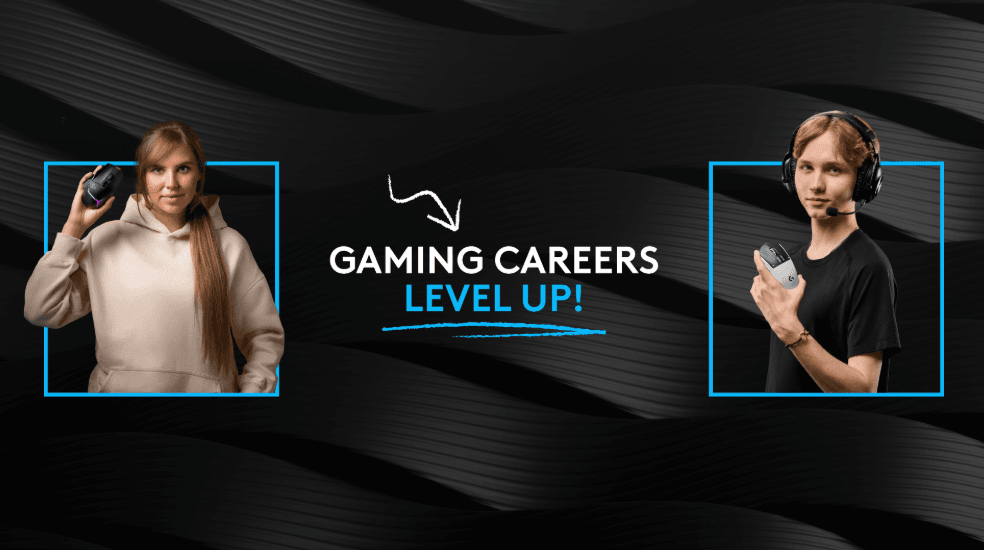


A global survey commissioned by Logitech G reveals growing mainstream acceptance of esports and professional gaming, especially among younger players. The data shows 65% of respondents worldwide want formal education pathways for esports careers, signaling a shift in how competitive gaming is viewed as a profession.
Released on May 13 as part of the Logitech G PRO Series Survey, the findings track changing attitudes toward esports jobs while exposing sharp generational and regional splits in opinion.
Globally, 54% of respondents now see professional gaming as a real career option. Younger generations lead the charge: 67% of Gen Z and 60% of Millennials consider esports a viable profession, compared to just 37% of Baby Boomers.
Regional gaps are even wider. In Germany, only 20% of Baby Boomers view professional gaming as legitimate work. In China, that number jumps to 74% among the same age group.
Derek Perez, Global Communications Gaming Lead at Logitech G, framed the results as evidence of esports maturing into both an entertainment sector and a professional industry.
"This research shows how far esports and gaming have come, not only as entertainment, but as a genuine path to personal and professional success," Perez said. "However, more can be done to support younger generations in pursuing careers in professional gaming."

Esports careers still face respectability challenges
Support for esports careers is rising, but the survey also found persistent doubts about the profession's stability and public standing.
Healthcare workers, lawyers, teachers, and engineers ranked as the world's most respected careers. Professional gaming landed lower on the list, grouped with entertainers, professional racers, and politicians.
Only 1% of Baby Boomers and 3% of Gen X respondents said they would encourage a young person to pursue professional gaming. Even Millennials showed hesitation, with just 4% willing to recommend esports as a career path for someone close to them.
Still, perception is shifting. Two-fifths of respondents said professional gaming is more aspirational in 2026 than it was in 2016.
The survey identified several barriers to wider acceptance. Financial risk topped the list at 42%, followed by industry competitiveness at 34% and lack of parental or societal support at 31%.
A third of respondents also cited job insecurity, while 42% said many people still view gaming as a hobby rather than serious work.
Demand grows for esports education and training
One of the strongest trends in the survey centered on formal esports education and structured career development.
Nearly half of respondents worldwide said schools should offer esports classes alongside traditional sports programs. Support was highest in China, Switzerland, and the United States, while the UK, France, and Germany showed more resistance.
One in five people said the lack of formal qualifications prevents esports from being taken seriously as a profession.
Respondents expressed strong interest in universities, colleges, and specialist institutions offering gaming and esports programs. The 65% global support for structured education pathways reflects demand for clearer routes into esports careers beyond just competing at the top level.
The survey also pointed to broader infrastructure needs. Respondents said expanded media coverage, professional training facilities, transparency around player earnings, and inclusion in major sporting events would help esports gain wider legitimacy.
Competitive gaming seen as mentally and physically demanding
The survey also tracked changing attitudes toward the skills required for professional gaming.
A large majority, 84% globally, described esports as mentally demanding, while 55% also considered it physically demanding.
Training expectations were another area where public understanding appears to be evolving. More than a quarter of respondents believed professional gamers train between 10 and 12 hours per day, a workload that exceeds many traditional careers.
Support for esports in global sporting competitions also continues to grow. Overall, 37% of respondents supported competitive gaming becoming part of the Olympic Games, rising to 49% among Gen Z participants.
Logitech G continues focus on competitive gaming hardware
Alongside the survey findings, Logitech G reiterated its focus on supporting esports athletes and aspiring competitors through gaming technology and training accessibility.
Perez said improving access to equipment, coaching, and facilities remains important for the long-term growth of professional gaming careers.
The company also highlighted products including the PRO X2 SUPERSTRIKE gaming mouse and the Logitech G512 X TMR Analog/Mechanical Gaming Keyboard as part of its competitive gaming lineup.
Founded in 1981, Logitech develops hardware and software products across gaming, productivity, and creative markets, with Logitech G serving as its gaming-focused division.