Use code TRYHARD33 at checkout to redeem this offer before code expires again.
Get 33% Off GAMES+ Subscription
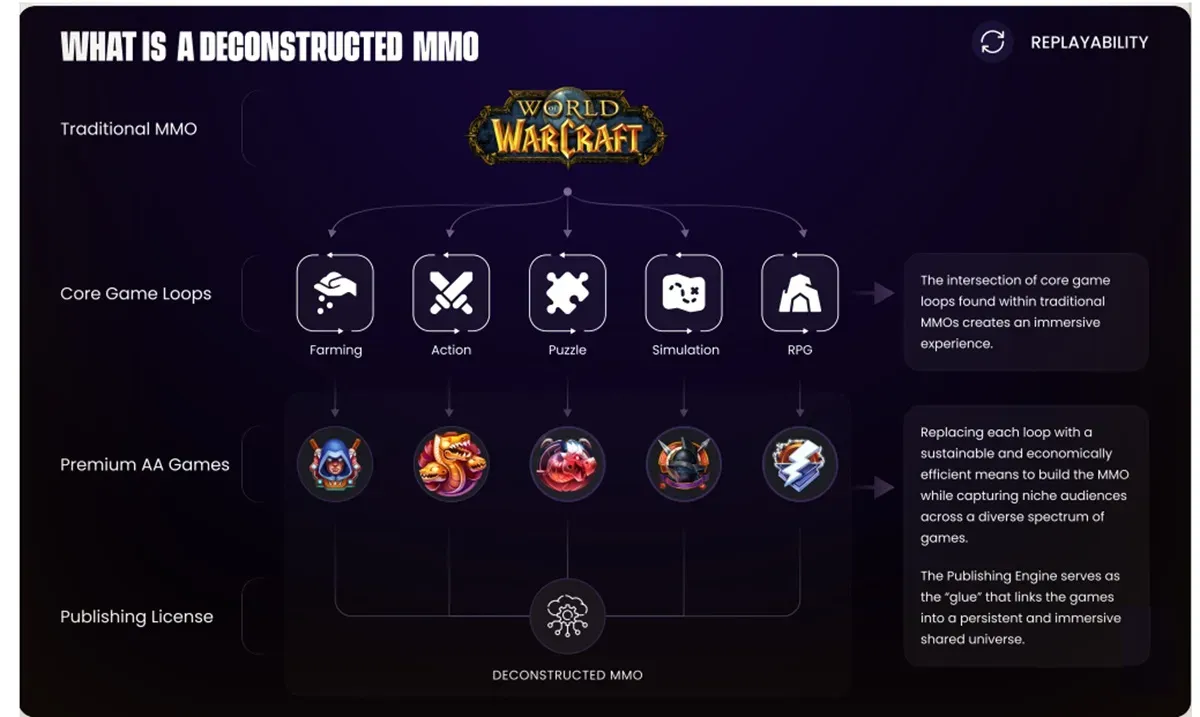
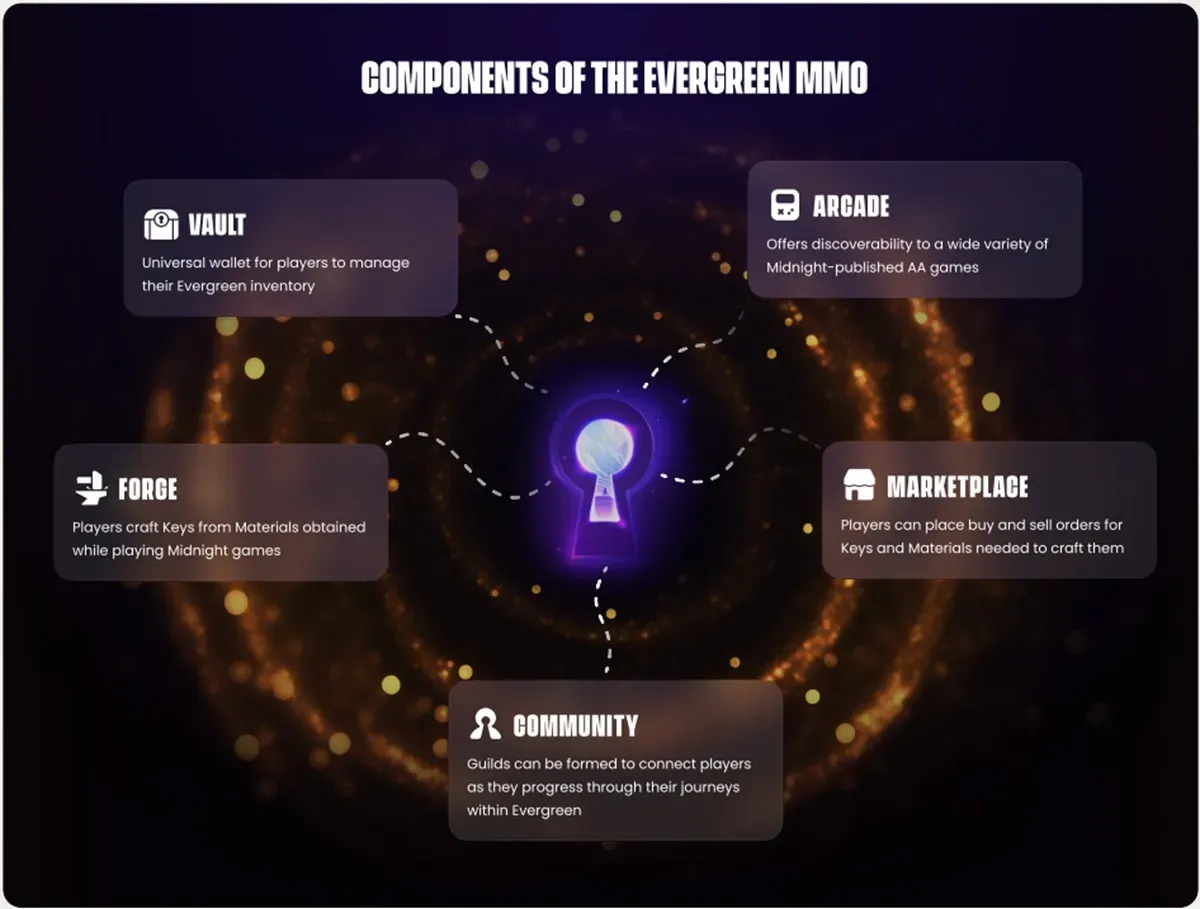
Game publisher Midnight has detailed plans for its web3 MMORPG Evergreen in a newly published white paper. The project positions itself as both a game and a publishing platform, aiming to aggregate multiple games within a single persistent world. The design breaks from traditional MMORPG structure by offering what Midnight calls a deconstructed, composable experience across different game types and genres.
Evolving Gamplay
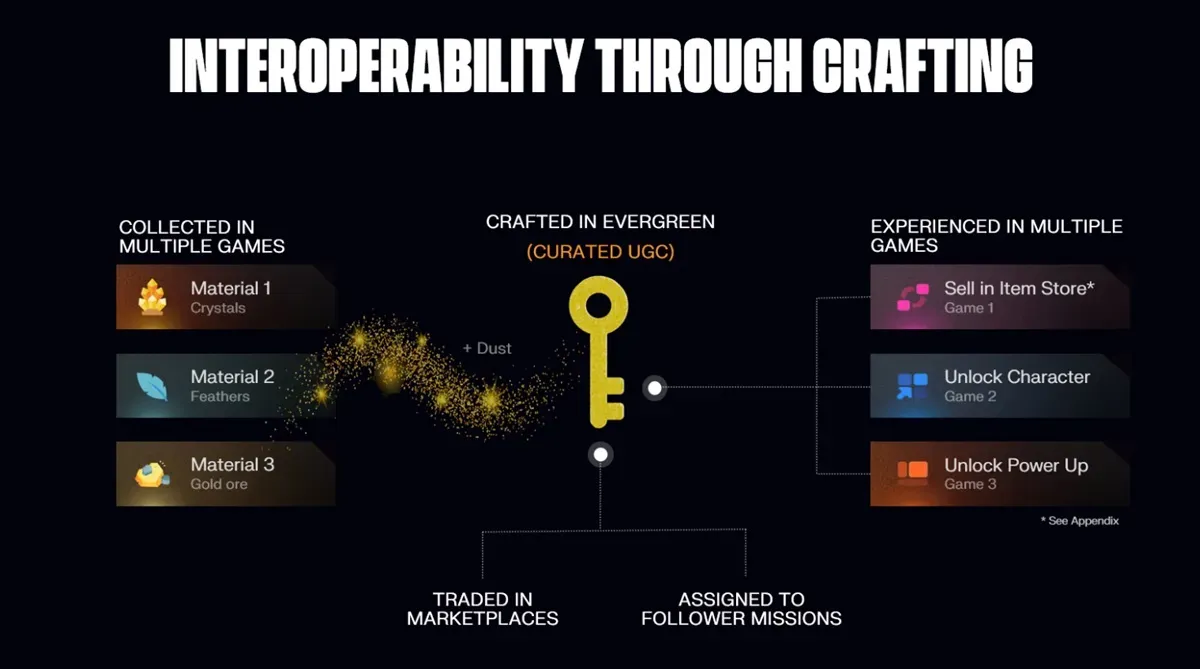
Evergreen's structure combines persistent player progression with rotating gameplay experiences. The white paper describes it as an arcade of interconnected games, designed to deliver the engagement and monetization of traditional MMOs without locking players into a single narrative or theme. Players use keys to move between different worlds, each offering distinct gameplay while maintaining shared progression systems.
AA Games and MMOs
Midnight describes itself as a double-A premium web3 game publisher. The company frames Evergreen as a hybrid between premium double-A games and MMOs, attempting to merge the production values of mid-tier releases with the persistent world structure of massively multiplayer games. Steve Wade, CEO of Midnight, founded the company in late 2021 and secured $7.5 million from Shima Capital in November 2023. Wade positions the project, along with a planned mobile companion app, as a solution to discoverability problems in the gaming industry.

Deconstructed MMO
Wade sees the timing as favorable, pointing to developments like Disney's investment in Epic Games and anticipated shifts in the web3 games market. Midnight targets the $35 billion double-A games sector within the broader $195 billion gaming industry.
The deconstructed MMO model is intended to improve game discoverability while enabling collaboration across genres through Midnight's development tools. The platform plans to support player-owned economies and secondary markets, though specific implementation details remain limited in the white paper.
Evergreen enters beta testing in March, with a full product launch scheduled for October. Midnight is pursuing funding primarily through mergers and acquisitions rather than traditional venture capital. Wade believes 2024 represents a consolidation phase in gaming, creating opportunities for strategic acquisitions.
The company has already acquired portions of SquareTwo, a mobile-first loyalty and gaming startup, gaining backend and web3 platform technologies. Midnight plans to launch a token to establish its web3 presence and community before pursuing additional M&A deals.
Wade's stated goal extends beyond individual game releases. Midnight aims to launch one game per month, with budgets between $500,000 and $5 million per title. Wade emphasizes creating what he calls fun double-A products and describes building Midnight as a "predator" in the gaming industry.
"The things that you've done matter. You've lived in this extraordinary world and the digital world. We're going to be the bridge to help you carry it with you. And I like our tagline — the unofficial official motto — of a multiversal bridge to the metaverse."
Wade, a former investment banker, added: "We're building ourselves to be a predator. We are built to be an acquisition machine. We plan to launch a game a month, and these are double A games. They're not free to play. They cost money. It always comes back to the game. We want to make sure our double-A products are fun. I'm here for the games. I love making people smile."
Final Thoughts
Midnight's Evergreen project represents an attempt to rethink MMORPG structure by aggregating multiple games under a shared progression system. The approach tries to solve discoverability issues while combining elements of premium double-A releases with persistent multiplayer worlds.
The company's focus on M&A activity, token launches, and what it calls a multiversal bridge reflects its interpretation of current web3 gaming trends. Whether the deconstructed MMO model gains traction depends on execution, but Midnight's emphasis on player ownership and cross-game collaboration offers a different angle on web3 integration in gaming. The beta in March will provide the first real test of whether the concept works in practice.