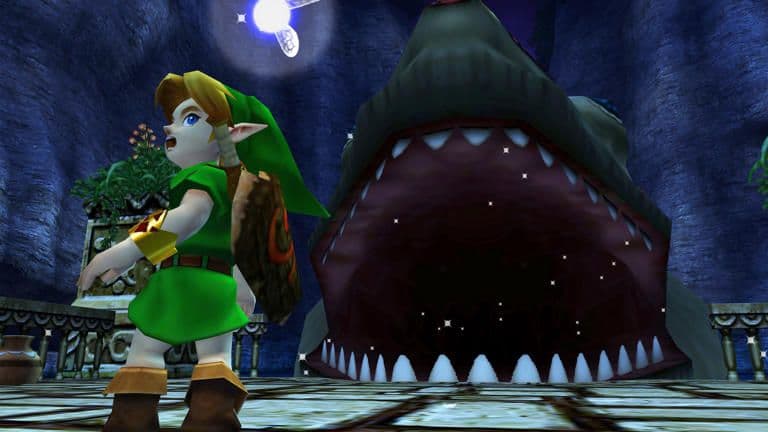


The announcement came fast and landed hard. The Legend of Zelda: Ocarina of Time, the 1998 Nintendo 64 classic that redefined third-person action-adventure games, is getting a full remake for Nintendo Switch 2, targeting a late 2026 release window. The debut trailer already signals that Nintendo is going far beyond a texture upgrade, with a voiced narrator introducing the story and a beautifully rebuilt Kokiri Forest standing in place of the original's blocky geometry. But as the hype settles, two specific design decisions are going to define whether this remake earns its place or just coasts on nostalgia.
Voice acting and music. Both are loaded with risk.

Use code TRYHARD33 at checkout to redeem this offer before code expires again.
Get 33% Off GAMES+ Subscription
The silence that defined a generation
Ocarina of Time has never had voice acting. Not a single line of dialogue spoken aloud, unless you count Navi's infamous "Hey, Listen!" and a handful of grunts from Link himself. For players who grew up with the game, that silence is part of the identity. The story was told through text boxes, musical cues, and your own imagination filling in the gaps. That was a deliberate design choice in 1998, and it worked.
Here's the thing: the debut trailer already shows a fully voiced narrator. That door is open. The question now is how far Nintendo walks through it.
Full voice acting for every character in Hyrule is a massive undertaking, and the stakes are extraordinarily high. Princess Zelda, Ganondorf, Saria, and dozens of other characters have lived rent-free in players' heads for nearly 30 years. Any voice that doesn't match what fans have imagined will draw immediate criticism. The Star Fox 64 Switch 2 remake, which Nintendo used as a parallel project, featured fully re-recorded voices and a complete audio overhaul. If Ocarina follows that same blueprint, Nintendo needs casting that feels authoritative, not safe.
What most players miss is that this isn't just about finding good voice actors. It's about deciding how much of the original's ambiguity to preserve. Ganondorf speaking in a sinister whisper hits differently than Ganondorf delivering a monologue in a booming baritone. Both can work. Neither can be undone once the game ships.
What happens when you touch Koji Kondo's music
The music problem is arguably even more delicate. Koji Kondo's original score for Ocarina of Time isn't just background music. It's mechanically embedded in the game. You learn songs on the Ocarina instrument and play them to solve puzzles, warp across Hyrule, and progress the story. The melodies for Saria's Song, the Song of Storms, and Zelda's Lullaby are not incidental. They are the game.
Remastering those tracks with a full orchestra sounds appealing on paper. The Star Fox 64 remake went that route with its audio, and the results were well received. But Ocarina's music carries a different kind of weight. A fully orchestrated Song of Time might sound incredible in isolation and feel completely wrong the moment you play it on the ocarina in-game, because the original's slightly lo-fi MIDI quality is part of what makes that moment feel intimate and strange.
The key here is that Nintendo has two realistic options. First, a faithful orchestral remaster that keeps the melodic structure identical while upgrading the production quality, similar to what Nintendo did with certain tracks in The Legend of Zelda: Breath of the Wild. Second, a full reimagining that treats the compositions as source material rather than sacred text, which carries enormous creative upside and enormous fan backlash risk in equal measure.
Neither option is obviously correct. Both will be argued about loudly.
Why the Star Fox 64 remake is the best available preview
Nintendo's decision to release the Star Fox 64 Switch 2 remake before Ocarina of Time is not accidental. Star Fox shares a remarkable amount of DNA with this situation: beloved N64 game, already remade for 3DS in 2011, now rebuilt from scratch with new visuals, re-recorded audio, and expanded features for Switch 2.
The Star Fox remake's audio overhaul gives the clearest signal yet of Nintendo's philosophy. Voices were re-recorded with new performances rather than reused from the 3DS version. Music was rearranged with updated instrumentation. The result was a version that felt new without abandoning what made the original work.
If Ocarina gets the same treatment, the voice acting and music decisions will be made by a team that has already navigated this exact challenge once. That's a meaningful advantage. The risk is that Ocarina's emotional footprint is substantially larger than Star Fox's, and the margin for error shrinks accordingly.
The Zelda live-action movie arriving in April 2027 adds another layer of pressure. Nintendo needs this remake on shelves and generating goodwill before that film introduces millions of new players to the franchise. A version of Ocarina of Time with voice acting that lands wrong or music that feels off would be the first Zelda experience for a lot of those newcomers. That's not a small thing.
For a deeper look at how Nintendo handles audio and atmosphere in its adventure titles, our gaming guides hub has been tracking the broader conversation around remakes and what makes them work. The Ocarina of Time remake doesn't have a confirmed release date beyond late 2026, but with Star Fox already out as a proof of concept, the next major reveal should tell players a lot about which direction Nintendo chose.