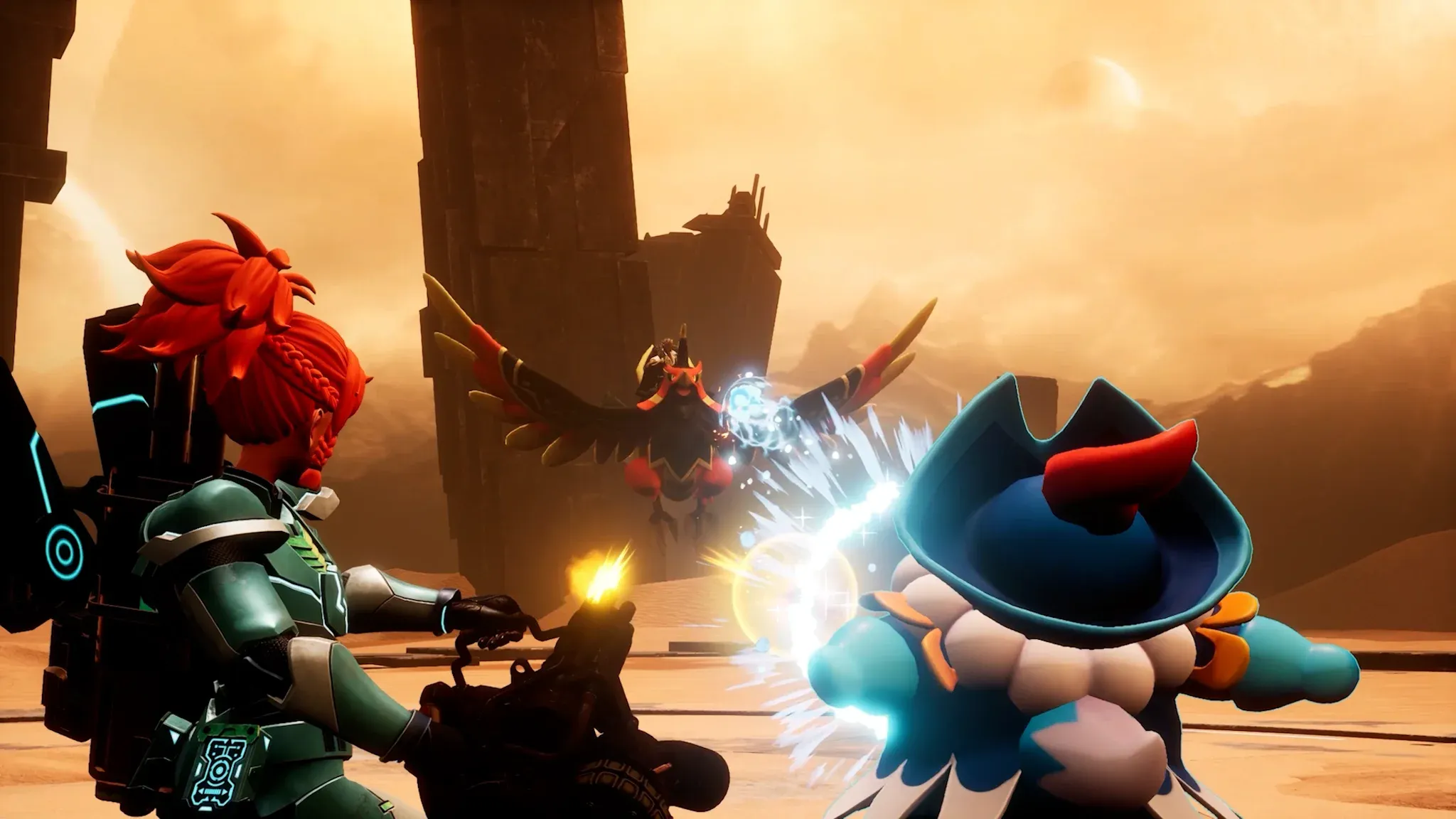
The Palworld OFFICIAL CARD GAME drops on July 30, 2026, and Pocketpair has partnered with tabletop publisher Bushiroad to bring the full Palpagos experience to your kitchen table.
Here's the thing: this isn't just a standard creature-battling card game with Palworld branding slapped on top. The design actually mirrors how Palworld plays, pulling in base building, gear assignment, and resource management alongside the Pal-vs-Pal combat you'd expect.
How the card game actually works
Every deck runs 50 cards and pulls from five card types: Pals, Gears, Structures, Events, and Souls. Souls function as the resource engine, similar to mana in other card games. Each turn you draw 2 additional souls, capping at 10, and the number in the top left of each card tells you exactly how many souls it costs to deploy.
At the start of a match, both players draw 5 cards and get one mulligan opportunity. Whoever goes second draws a soul card before play begins, giving them a slight compensatory advantage. From there, turns follow a rhythm of deploying cards to your Base, assigning actions, and managing your soul supply.
Pals can do one of three things each turn: attack an opposing Pal or Structure, strike the player directly, or hold position to block incoming attacks. Once a Pal acts, it rotates to the rest position until your next turn.

The combat math and life counter
Battle resolution is straightforward. Each Pal has a power number at the bottom of its card, and that number serves as both its attack value and its health pool. If Lamball (300 power) battles Cattiva (200 power), Cattiva goes straight to the graveyard while Lamball survives with 100 health remaining. After each turn, all health values reset to their base numbers.
The actual win condition is reducing your opponent's life counter from 10 to 0 using strikes. When you strike, the defending player flips cards from their deck equal to the number of strikes dealt. Flipping a card with a lucky symbol (the colored stars in the top right corner) cancels the damage. No lucky symbol means the life counter drops accordingly.
Structures add another layer. Once deployed, a Pal can be assigned to work at a structure, unlocking its ability. The Primitive Furnace, for example, lets you draw an extra card once staffed. Structures have durability and can be destroyed.
Gear and events are where games get decided
Gear cards are the highest-ceiling plays in the game when used correctly. The Single-Shot Rifle card deals 1,000 damage to any opposing Pal the moment it enters play, which almost guarantees a kill given most Pals sit well below that threshold. The trade-off: Gear cannot be used to strike the life counter directly.
Event cards are one-time effects that last for the duration of the turn. Reckless Charge bumps a chosen Pal's power by 300 until end of turn, which is exactly the kind of card you hold until you need to save a Pal from a losing matchup or push through a structure you couldn't otherwise crack.
What's available at launch
Two trial decks release on July 30, both pre-built 50-card decks designed to give new players a complete set of every card type from the start. One deck runs red and blue cards, the other runs purple and green. Decks follow a two-color rule (colorless cards excluded), so building custom decks later will require thinking about your color identity.
The first booster pack, Dawn of Palpagos, also launches on July 30 alongside the trial decks. That's your entry point for expanding beyond the starter sets and building toward a custom 50-card lineup.
Palworld's 1.0 launch earlier this month already brought 72 new Pals, a sky island zone, and a full story rework, so the timing of the card game release is clearly part of a broader push to expand the franchise beyond the base game. If you want to catch up on everything the 1.0 update changed before the card game drops, the full Palworld guides collection has you covered.