


Use code TRYHARD33 at checkout to redeem this offer before code expires again.
Get 33% Off GAMES+ Subscription
The build nobody asked for but everyone needed
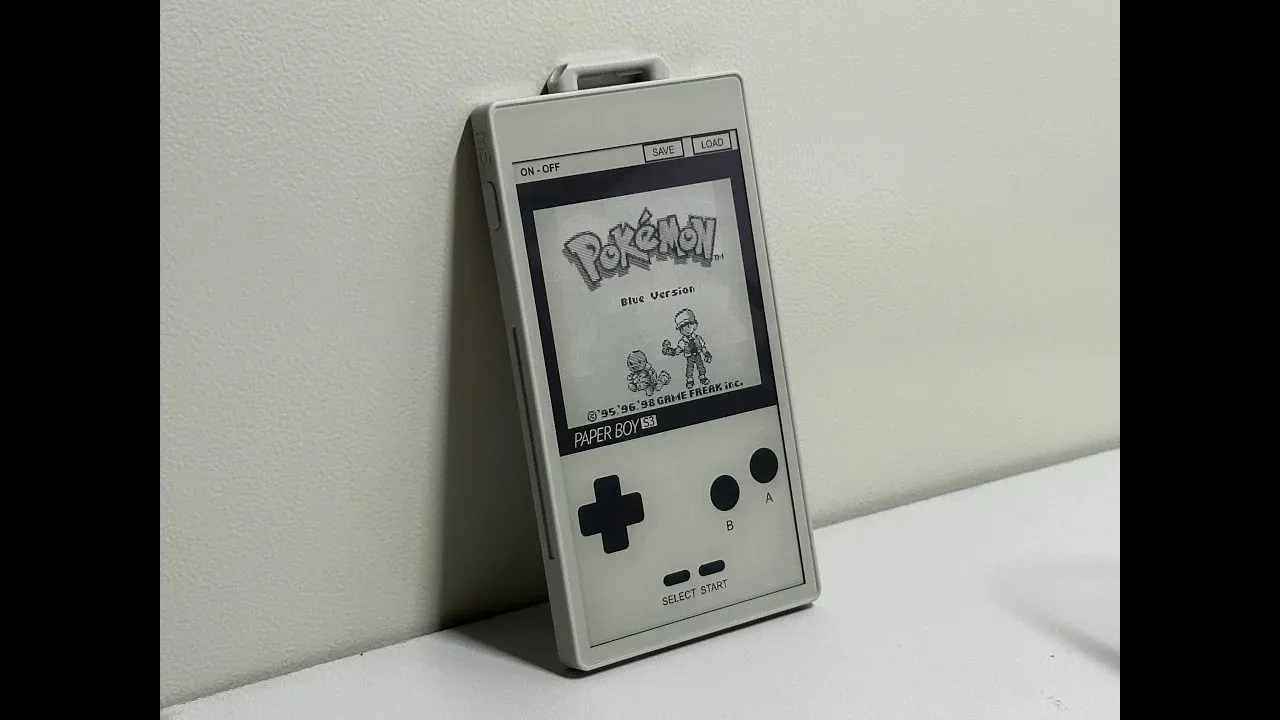
Somebody took an ereader, the device your parents use to read airport thrillers, and turned it into a pocket Game Boy. A YouTuber recently posted footage of a custom Game Boy emulator running directly on ereader hardware, with Pokemon Blue loaded up and moving at a refresh rate that is, against all expectations, actually playable.
This is not a gimmick video where someone boots a ROM, gets two frames of Pallet Town, and calls it a day. The build demonstrates real movement, menu navigation, and battle sequences running on e-ink display technology that was never remotely designed for this kind of workload.
Why e-ink and Game Boy is a weirder match than it sounds
E-ink displays refresh slowly by design. That is the whole point of them. The technology updates pixels by physically moving charged ink particles, which means response times are measured in hundreds of milliseconds rather than the sub-16ms window a 60fps display needs to hit. Standard e-ink panels refresh somewhere between 120ms and 250ms depending on the mode, which works out to roughly 4 to 8 frames per second at best.
Here is the thing: the original Game Boy ran at 59.7fps, but Pokemon Red and Blue are turn-based RPGs with minimal animation demands outside of battle sequences. The overworld moves at walking pace. Menus are static. Battle animations are simple sprite flips.
That combination turns out to be a near-perfect match for e-ink's limitations. What would make an action game unplayable becomes a minor inconvenience in a game where you spend half your time reading text boxes.
The YouTuber appears to have used a partial refresh mode, which updates only the changed portions of the screen rather than doing a full panel wipe. This technique dramatically reduces visible ghosting and gets the effective framerate into a range where walking around Viridian City feels responsive enough to actually play.
The Pokemon factor
Choosing Pokemon Blue for this demonstration was not accidental. The Gen 1 games are arguably the ideal software for an e-ink emulator proof of concept. The color palette is minimal, the display resolution matches closely with many ereader screens, and the gameplay loop of exploring, opening menus, and sitting through turn-based battles is almost tailor-made for a display that struggles with motion.
The black and white aesthetic also sidesteps the color rendering issues that would make something like Pokemon Ruby or a GBA title significantly harder to read on a greyscale e-ink panel.
For anyone planning a nostalgia replay of the Kanto region, this is a genuinely interesting alternative hardware option. If you want to optimize your experience on more modern Pokemon titles, our best settings guide for Pokemon Pokopia covers everything from text speed to camera configuration worth dialing in.
What makes this more than a YouTube stunt
Ereaders are genuinely compelling emulation hardware that almost nobody talks about. They are cheap, widely available secondhand, run on Linux-based operating systems that accept third-party software, have batteries that last weeks rather than hours, and the screens are readable in direct sunlight where a phone or Switch screen washes out completely.
The refresh rate problem has historically killed the concept before it got started. What this build demonstrates is that the right software choice matters as much as the hardware. A turn-based RPG from 1996 runs on a 2010s ereader better than a 2024 action game would run on dedicated retro handheld hardware with a bad screen.
There is also something fitting about playing Pokemon on a device designed for reading. The original Game Boy games were always more about the journey through text menus and dialogue than any technical spectacle. An ereader, with its paper-like display and quiet operation, captures that low-stakes portable gaming energy better than most modern devices.
The key here is that this build expands what counts as viable retro gaming hardware, and the Pokemon series sits right at the intersection of where e-ink limitations stop being a problem and start being irrelevant.
For deeper Pokemon content across the newer titles, the gaming guides hub has strategy breakdowns worth bookmarking, including a full 3D Printer duplication guide for Pokemon Pokopia covering the best items to copy and advanced techniques.