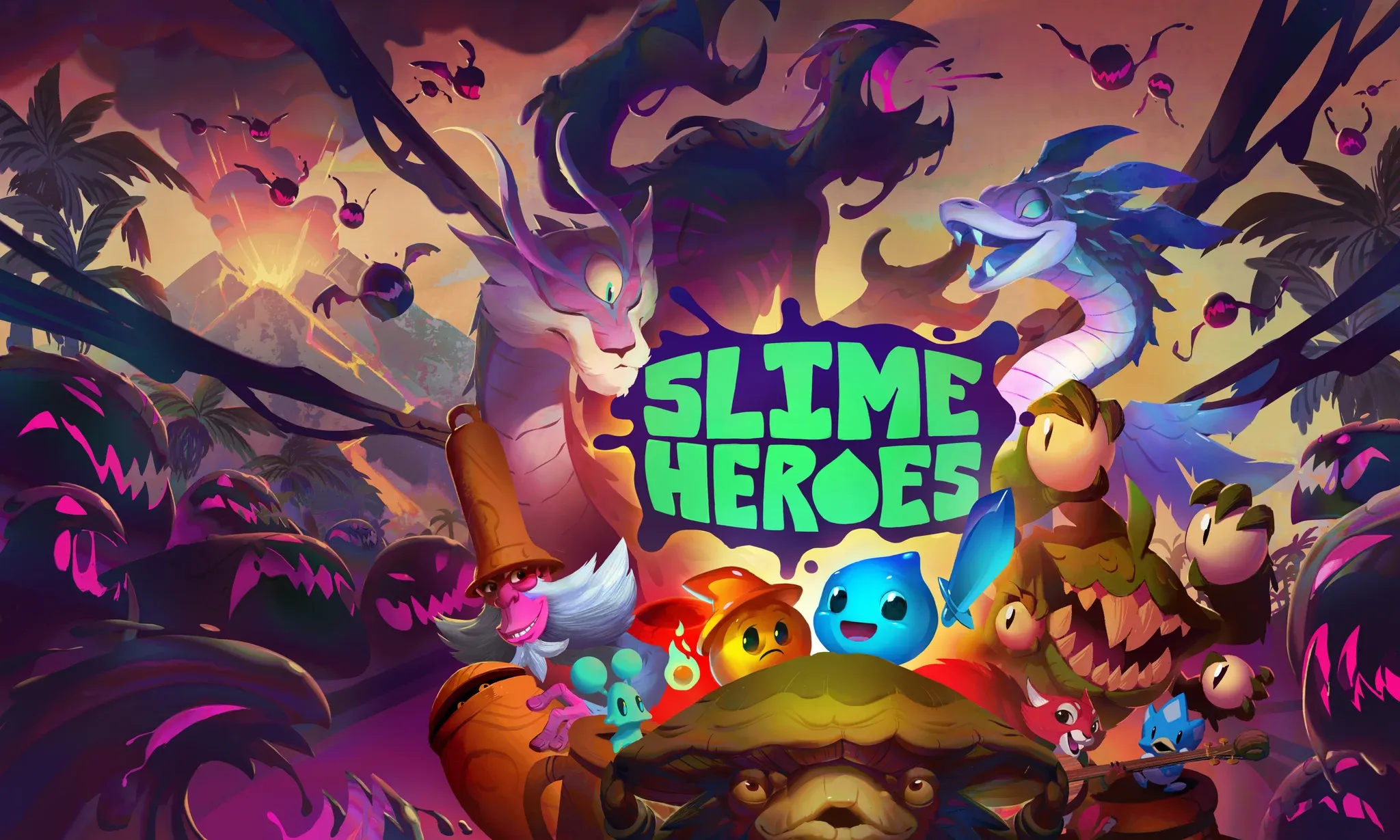

There's something universally compelling about slimes in games. They bounce. They split. They ooze across floors, absorb damage, and occasionally drop the best loot in the dungeon. For decades, game developers have returned to the humble slime as a design touchstone, and players keep falling for it every single time.
Here's a look at gaming's most memorable goo-getters, what makes them tick, and why the slime archetype refuses to die.

Use code TRYHARD33 at checkout to redeem this offer before code expires again.
Get 33% Off GAMES+ Subscription
The original: Dragon Quest's Slime
If you want to talk about slimes in games, you start here. The Dragon Quest Slime debuted in 1986 and became so iconic that it's now the franchise mascot, outranking every hero, villain, and dragon the series has ever produced.
Designed by Akira Toriyama, the Slime's teardrop shape and perpetual grin turned what should be a throwaway early-game enemy into a cultural phenomenon. Merchandise, spinoff games, and cameos in everything from Super Smash Bros. to real-world theme park attractions followed.
Here's the thing: the Slime works because it's disarming. That smile suggests it's happy to be here, even as you murder it for 2 experience points. That tension between cute and disposable is the whole joke, and it landed so well that players have been buying Slime plushies for nearly 40 years.

Pro tip: In Dragon Quest XI, the Metal Slime variants drop some of the best experience in the game. Killing them before they flee requires either very fast attacks or a lot of patience.
Slime Rancher's ranching revolution
Slime Rancher (2017) flipped the script entirely. Instead of killing slimes, you're farming them. Developer Monomi Park built an entire economy around slime behavior, and the result was one of the most relaxing games of that console generation.
The variety here is what makes it work. Pink Slimes are basic and friendly. Tabby Slimes mimic cat behavior. Boom Slimes explode periodically. The Tarr, a dangerous fusion of incompatible slimes, functions as the game's primary threat, and it's genuinely unsettling in a game that otherwise feels like a vacation.
Slime Rancher 2 launched in Early Access in 2022 and expanded the roster significantly, introducing Cotton Slimes, Angler Slimes, and the deeply weird Flutter Slime. The franchise has sold over 8 million copies combined, which tells you everything about how far the slime has come from Dragon Quest's opening fields.
Minecraft's Slimes: Rare, bouncy, essential
Minecraft Slimes occupy a strange place in the game's ecosystem. They're uncommon enough that finding a Slime chunk feels like a discovery, but common enough in swamp biomes that veteran players know exactly where to look.
What makes Minecraft Slimes genuinely useful rather than just decorative is the Slimeball drop. Slimeballs are a crafting component for Sticky Pistons, Slime Blocks, and Leads, making them essential for redstone engineering and animal management. The moment Slime Blocks were added in version 1.8, the entire technical Minecraft community went into overdrive building flying machines and bounce pads.
The Magma Cube, Slime's Nether counterpart, adds a more threatening version of the same concept. Same splitting mechanic, more damage, fire immunity. It's a clean design evolution that rewards players who understand the original.
Terraria's slime problem
Terraria takes a different approach: slimes are everywhere, and that's intentional. The King Slime boss is often the first major encounter new players face, and the game's slime variety spans dozens of types across different biomes and difficulty levels.
What's interesting is how Re-Logic used slimes as a difficulty scaling tool. Early-game slimes are trivial. Slimed Zombie variants add complexity. The Rainbow Slime drops Gel in massive quantities. By endgame, the Corrupt Slime and Crimslime variants hit hard enough to catch unprepared players off guard.
The Slime Rain event, where slimes fall from the sky for an extended period, is one of Terraria's more chaotic early experiences. It's annoying the first time and nostalgic every time after that.
The philosophical slime: Slime-san
Slime-san (2017, Fabraz) is a precision platformer where you play as a small green slime who has been swallowed by a giant worm and needs to escape. The premise is absurd. The execution is excellent.
What Slime-san does that most slime games don't is give the slime genuine personality through movement. The ability to phase through green objects, slow time, and dash creates a movement system that feels distinctly slimy without being imprecise. The game respects the physics of what a slime might actually do.
What makes slimes work as game design
The slime archetype persists because it solves several design problems simultaneously:
- Visual clarity: A blob is immediately readable as an enemy or creature at any size
- Scalability: Splitting mechanics create natural difficulty progression
- Approachability: The round, non-threatening shape lowers player anxiety in tutorials
- Flexibility: Slimes can be cute, threatening, useful, or comedic depending on context
- Memorability: The silhouette is distinctive without requiring complex art
Game designers keep returning to slimes because slimes keep working. The Dragon Quest Slime and the Slime Rancher Tarr are separated by 31 years and couldn't be more different in tone, but both succeed for the same underlying reasons.
The ones that got away
A few honorable mentions deserve recognition:
The Chuchu from Zelda: Skyward Sword deserves particular attention. Different colored Chuchus drop different elemental Jelly types, making them one of the few slime enemies that function as a crafting resource you actually want to farm rather than avoid.
For players who want to experience the slime genre at its most refined, the Slime RNG beginner's guide covers the fundamentals of one of Roblox's most popular slime-themed games, including how the rolling and upgrade systems interact. If you're specifically farming resources, the guide on how to get Goop in Slime RNG breaks down the most efficient farming routes. And for players who want to maximize their progression, the Slime RNG upgrades priority guide explains which upgrades matter most at each stage of the game.
Slimes have been part of gaming since the medium's earliest days, and there's no sign of that changing. If anything, the archetype is expanding, finding new contexts in idle games, survival crafters, and Roblox experiences that introduce the concept to entirely new generations of players. The goo endures.