

I’ve been a huge fan of TCGs for years, from classics like Magic: The Gathering and Pokémon TCG to digital hits like Legends of Runeterra, Hearthstone, and Yu-Gi-Oh. So getting early access to Koin Games’ new TCG, Project O, definitely put a big TCG-player smile on my face. Before we dive in, just a heads-up, this first impressions piece is based on the game's pre-alpha version, and a lot could change by the time it officially launches. With that disclaimer out of the way, let’s jump into our first look at Project O.
About Project O
Developed by seasoned veterans from both web2 and web3 at Koin Games, Project O is a new card game where you use upgradeable 3D cards to battle across a world filled with myths, legends, and fairy tales. Matches are fast, chaotic but fun, and keep you on your toes as you try to outplay your opponent.
The gameplay focuses on a relatively short, 13-card deck, with the goal of destroying two out of your opponent’s three generators (shields). With familiar TCG mechanics like on-summon effects, spell cards, and more, mixed with simultaneous (instead of turn-based) turns, Project O adds a fun twist to the genre without overcomplicating the gameplay.
First Playtest: First Impressions
I was able to get access to the pre-alpha version of the game, thanks to the friendly team at Koin Games. As of the time of writing, the version I tried was available for both Windows and macOS, and I played on the Windows build.
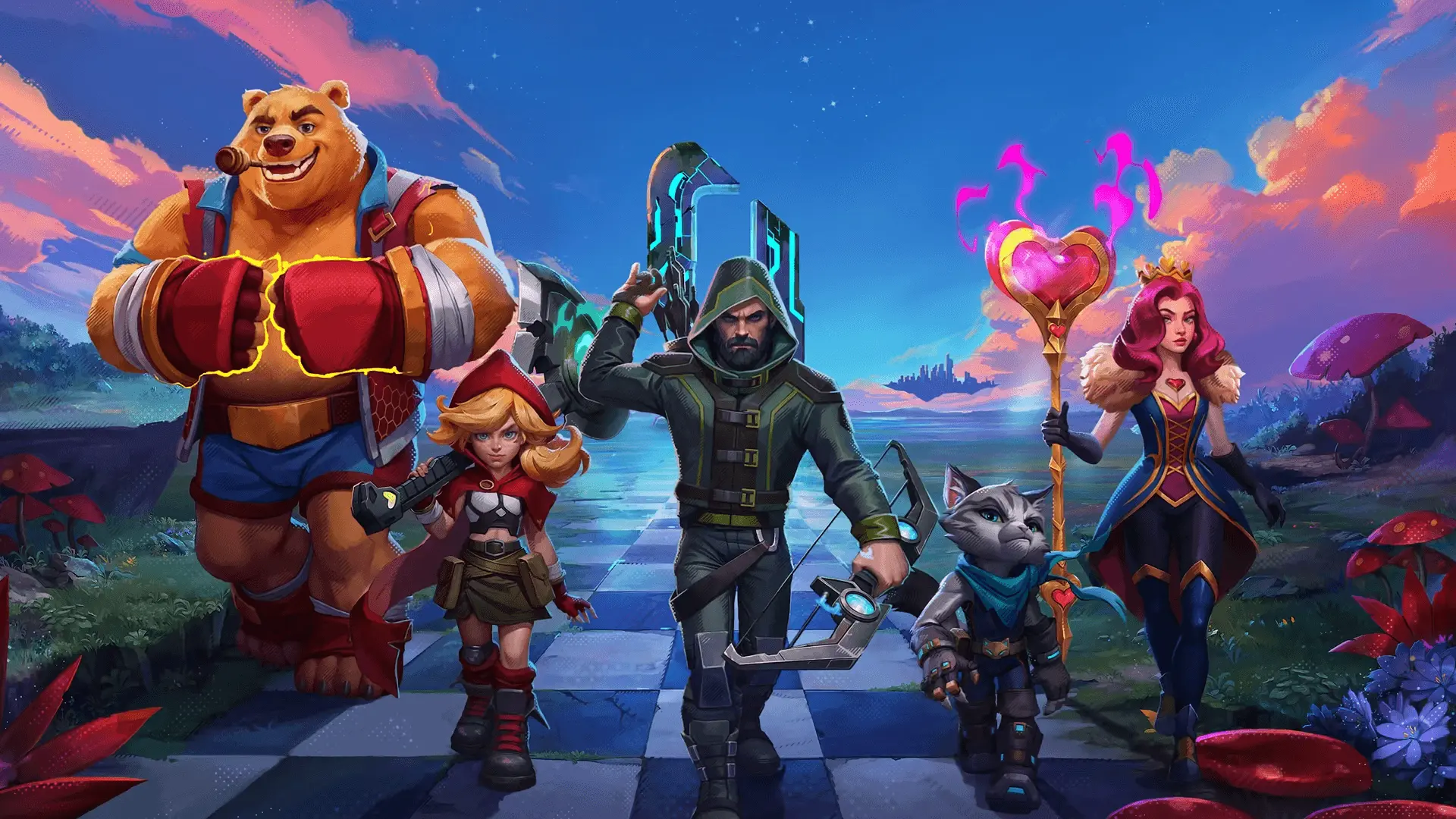
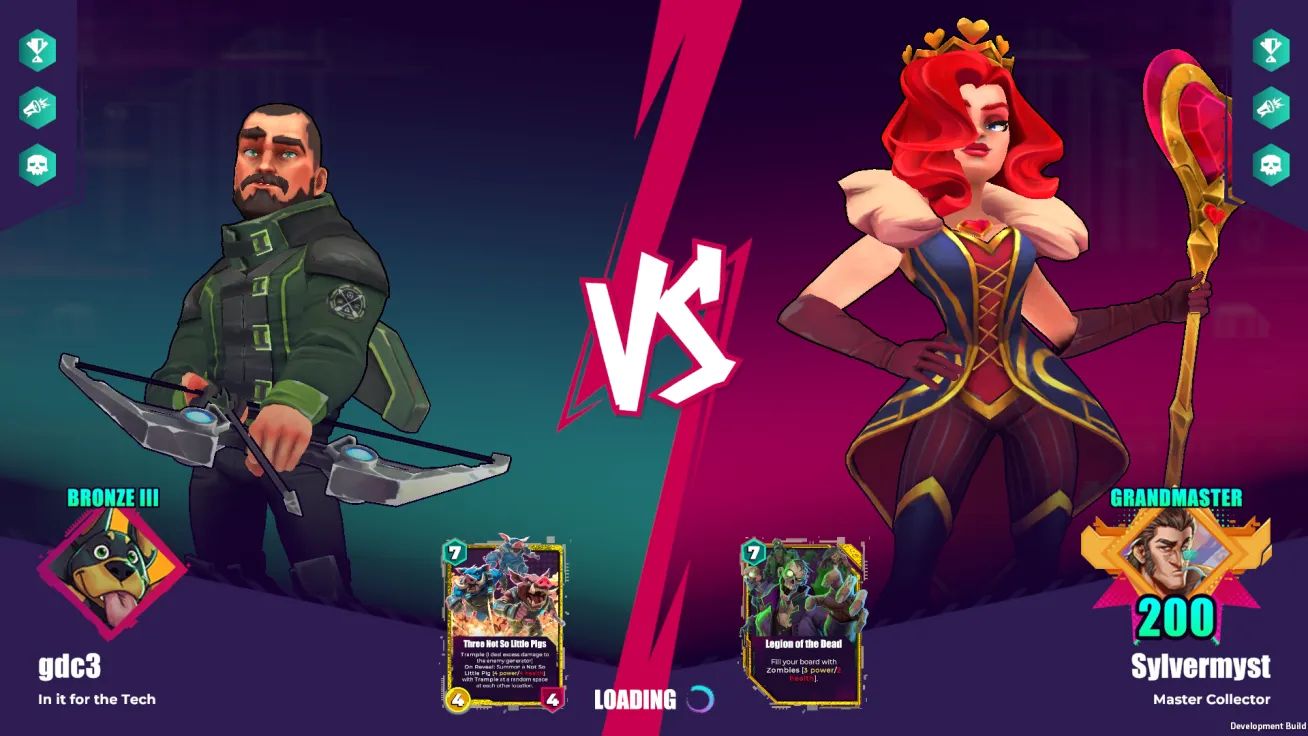
As soon as you enter the home screen, or if you’ve seen the trailer, the first thing that immediately stands out are the characters. You’ll recognize a bunch of well-known public domain figures like Robin Hood, Winnie the Pooh, Red Riding Hood, and many others. Of course, there are also original characters created just for the game. With so much public domain IP available, Project O seems to have endless ideas to pull from for future cards.
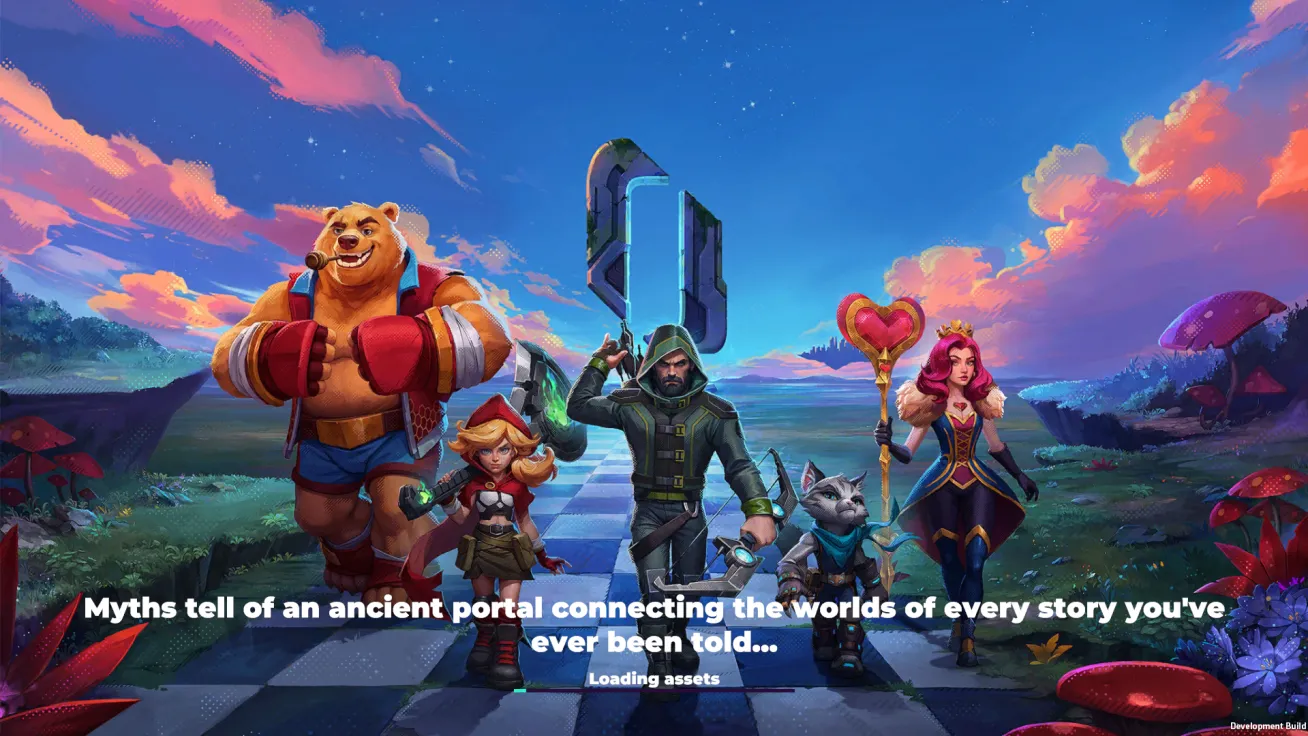
With the characters front and center, my first assumption was that they might act similarly to Heroes in Hearthstone, where deck building and Hero Powers are tied to your chosen class, which, in Project O's case, would be the characters. But after trying the pre-alpha, I can’t confirm if deck building is tied to the character selection. Instead, characters seem to serve a similar role to tacticians in TFT (TeamFight Tactics), mainly acting as your personal avatar with unique victory (finisher) animations. I actually find this a fun touch, it’s one of those things that feels right at home in the genre. (Insert me spending a pretty penny trying to pull a rare gacha TFT skin.)
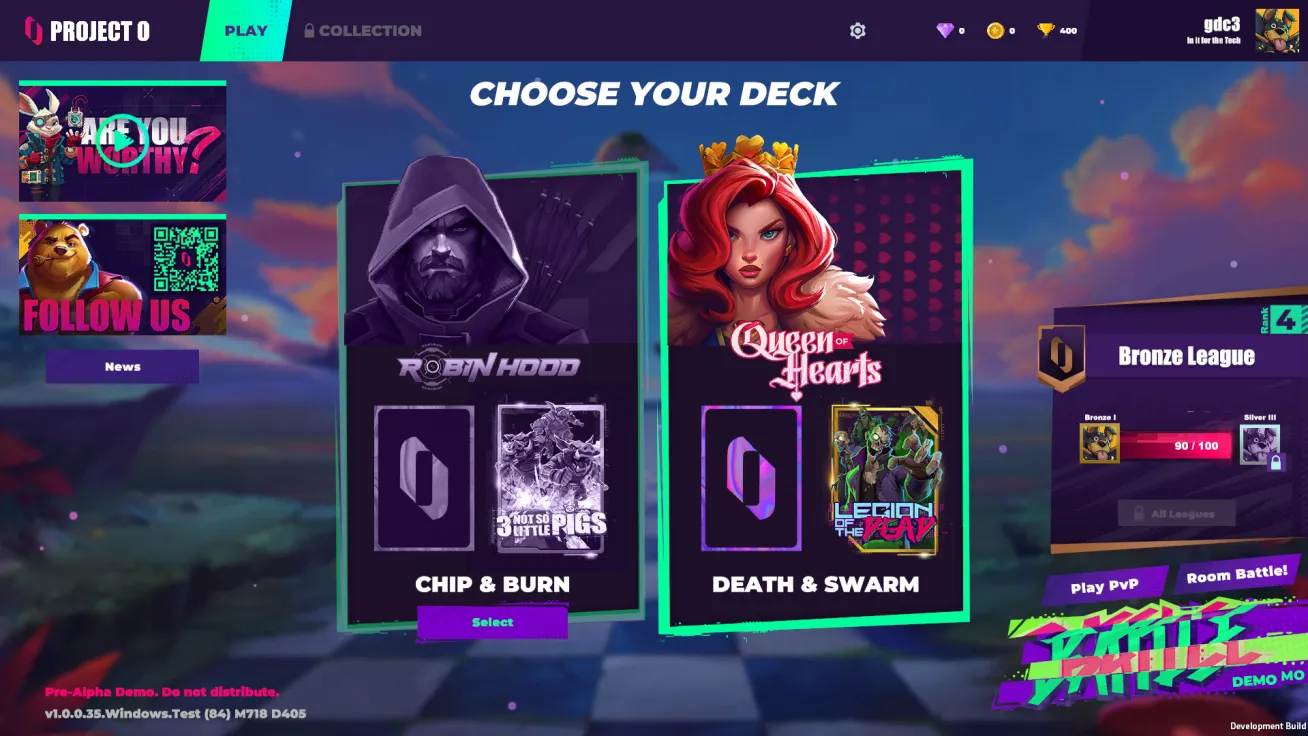
As for the actual game build, the pre-alpha is still pretty limited. Right now, there are only two available pre-constructed decks to choose from. But even at this early stage, the home screen UI and UX feel smooth, intuitive, and give off real quality-game vibes.
Gameplay
With the first-look shenanigans out of the way, let’s move on to the actual gameplay. To put it simply, Project O shares a lot of similarities with the core gameplay of Marvel Snap, especially with the concept of three locations, often tied to game-changing effects, and the goal of capturing two out of three.
But here’s where things get interesting. Instead of just stacking power to take control like in Snap, Project O brings in classic TCG mechanics like stuff you’d expect from Hearthstone or Runeterra. Units can attack each other, and there are keyword effects like on-summon, ongoing, on-death, and, of course, spell cards. It ends up feeling a lot more strategic and, honestly, a lot more fun.
The game board is split into three locations, each with three card slots per player. As mentioned earlier, every location has its own unique effect that can impact how the game plays out. Some reduce the mana cost of cards played there, others give an advantage to the first player who fills all their slots, and many more variations are possible.
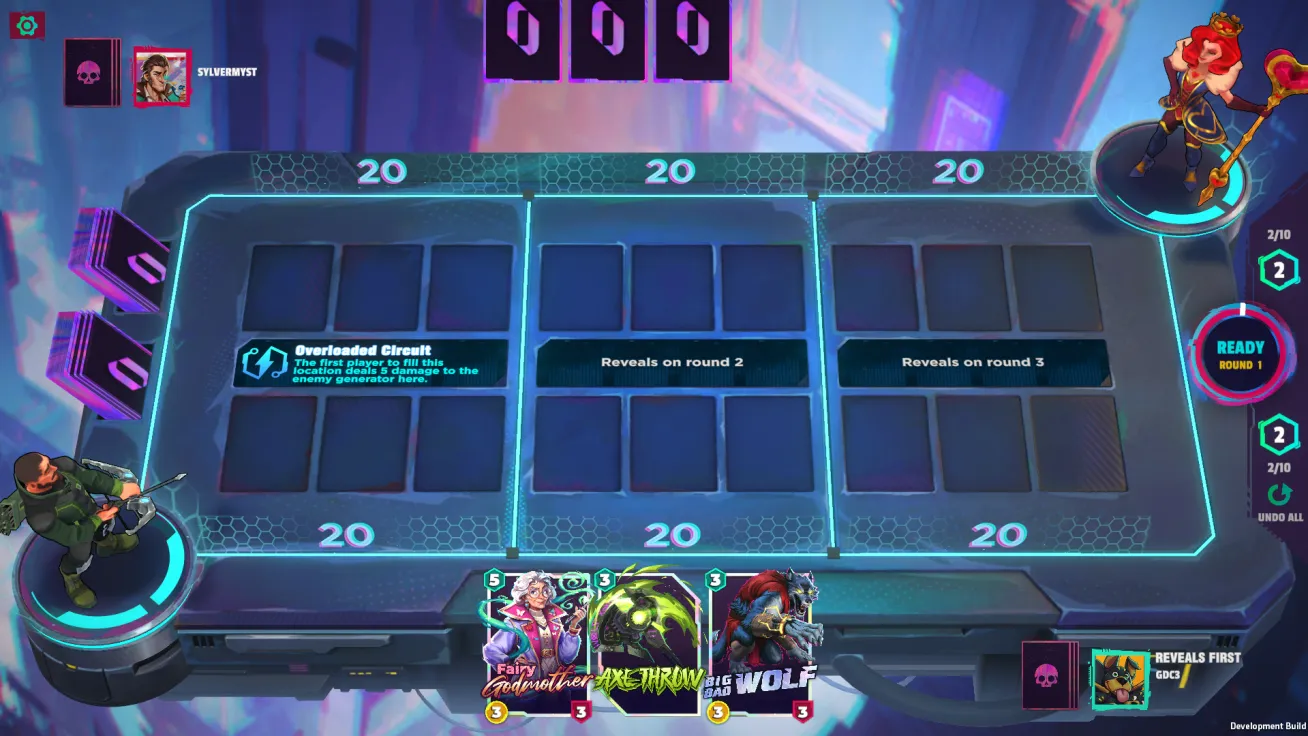
Card design follows the usual TCG layout, mana cost at the top left, attack at the bottom left, and HP at the bottom right. The goal is to break two of your opponent’s generators (basically their location health bars), which then lets you hit their main character and win the match. Technically, you can also break the same lane twice to win, but the generator comes back with more HP the second time, so good luck with that route.
Matches start with a mulligan, where you can redraw some of your opening cards. Both players start with 1 energy on turn one, and gain +1 each round (so 2 on turn two, 3 on turn three, and so on). One thing to keep in mind: unused energy doesn’t carry over. It’s a use-it-or-lose-it system, so you’ll want to make the most of every turn. You can drop units on any open slot across all three locations.
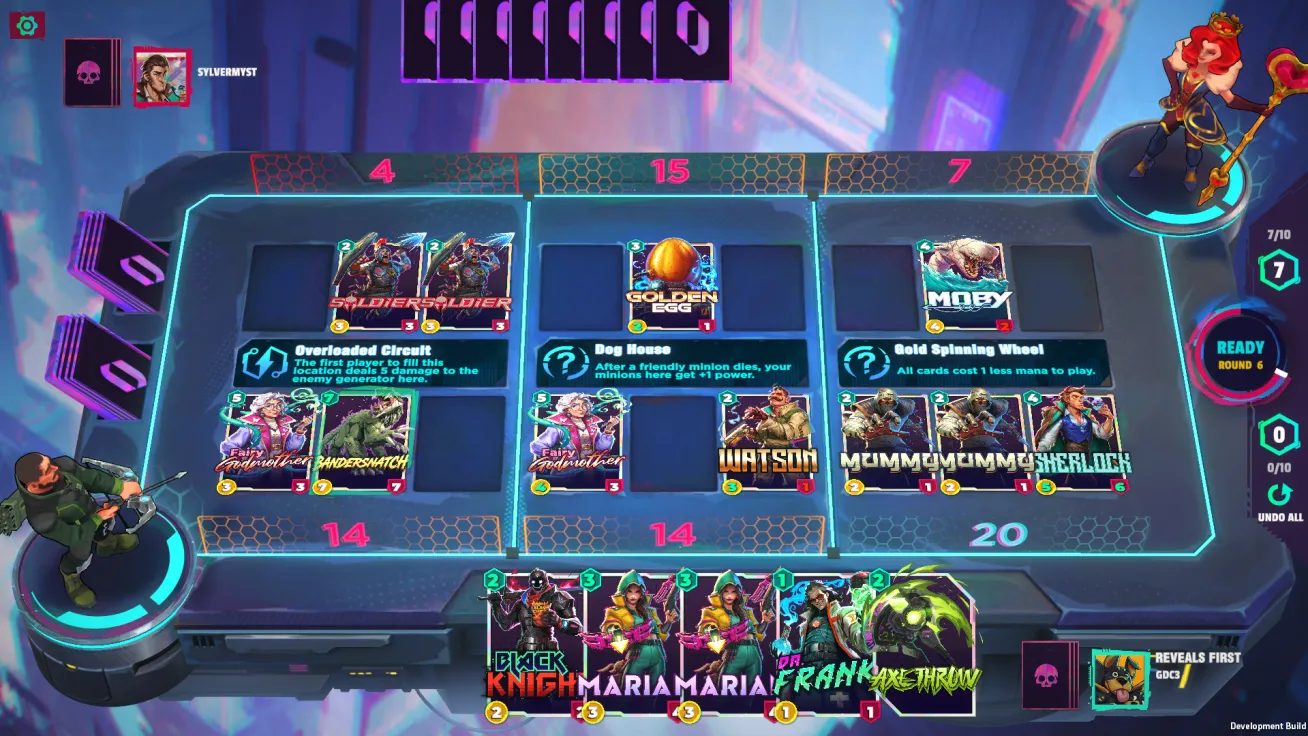
Now here’s a big difference: Project O uses simultaneous turns. Both players take their actions within the same round timer, so while you're still waiting for the turn to resolve, you're not sitting through someone else's full turn like in traditional TCGs. So there’s no need for the usual +1 mana advantage for whoever goes second. Once both players lock in their moves (or the timer runs out), the game resolves everything from left to right across all lanes. If your unit doesn’t have a blocker in front of it, it deals damage straight to the enemy generator. If it’s facing another unit, they fight, exchange damage, and if either one hits 0 HP, they’re gone.
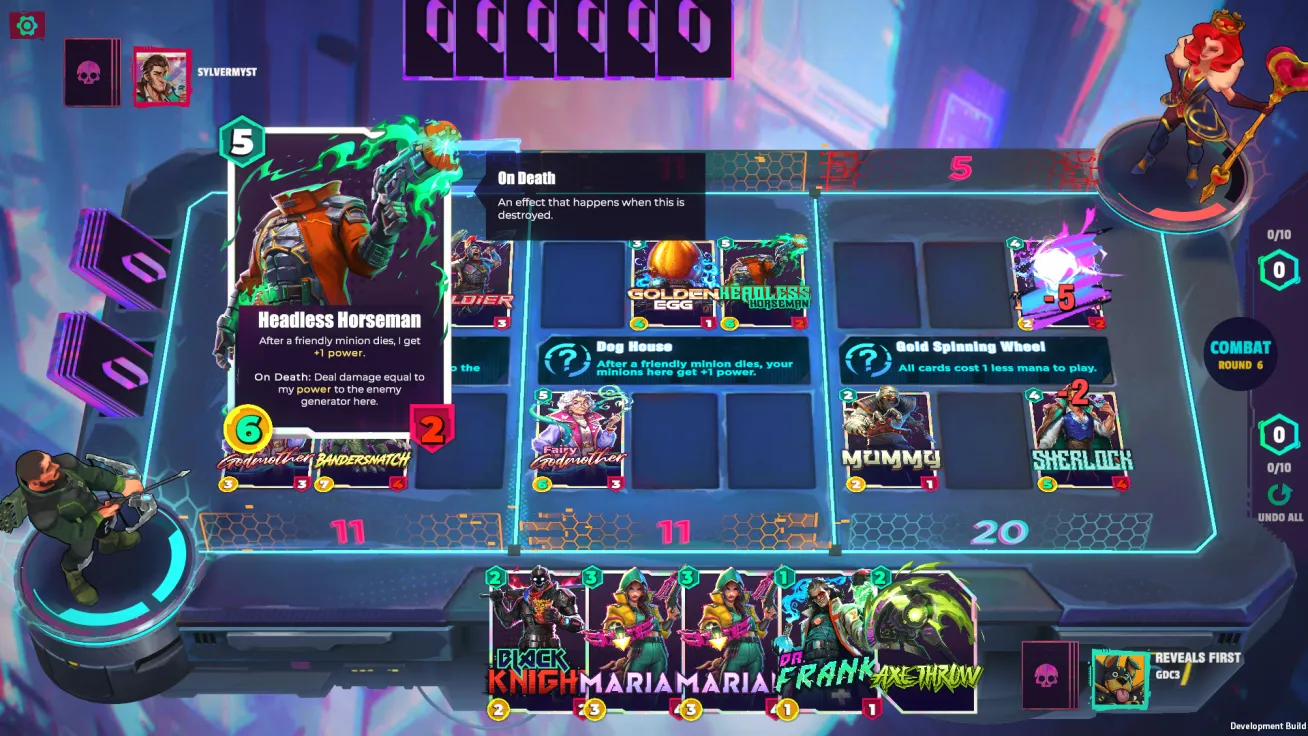
As the rounds go on and energy ramps up, you start pulling off bigger plays and things get more intense. You’ll find yourself setting up combos, trying to bait your opponent, and throwing in a bluff or two — it keeps you thinking. One thing that adds real depth is how unit placement works. Once you drop a unit into a slot, it’s stuck there unless you’ve got a card that lets you move it. So every placement counts, and deciding where to commit your units becomes a big part of the mind games.
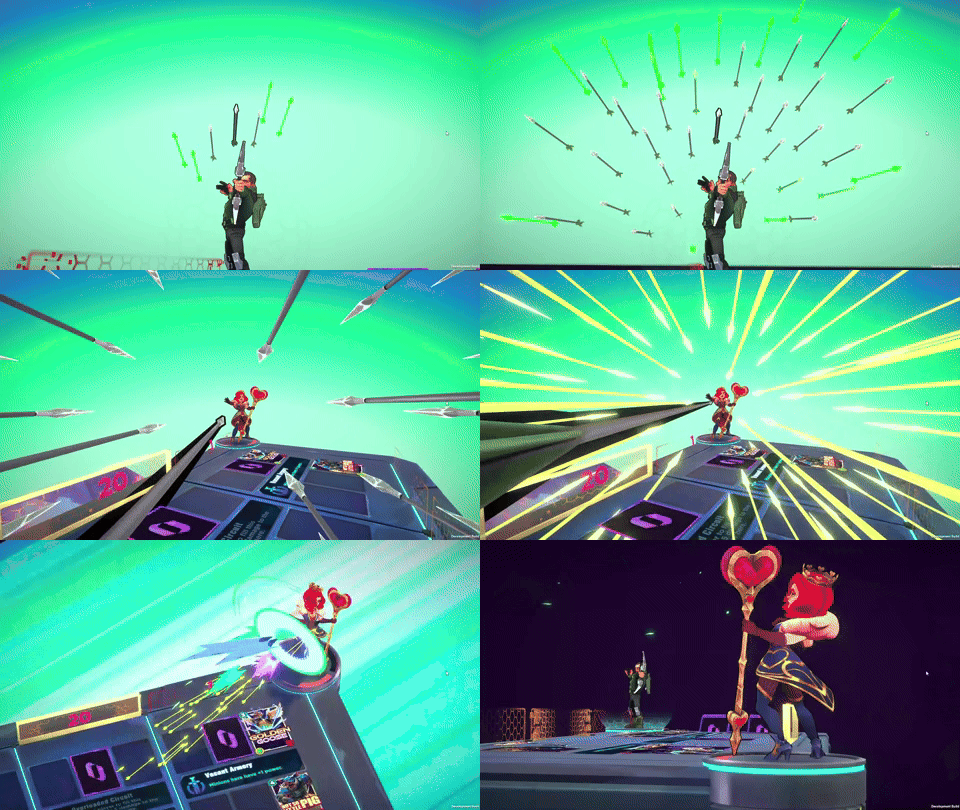
When you take down your opponent’s second generator and win, your character does a finisher, kinda like the animations you see with tacticians in TFT, or a PG-rated Mortal Kombat move. Just a nice little way to flex the W and rub it in.
Collectibles
By now, you can probably see the core gameplay loop of Project O, but there’s still a lot more to unpack. Card games aren’t just about playing, they’re also a hub for players who love strategy, theorycrafting, and deckbuilding. And, of course, there’s always the collectors out there who just want to complete every set, rip packs, and chase rare cards like holos, animation cards, and whatever else they can get their hands on.
Project O definitely has something lined up for the collector crowd with their "Blueprint" system. Keep in mind this info isn’t fully set in stone yet, so take it with a grain of salt. On the surface, Blueprints are collectible cosmetic cards. But digging a little deeper, they’re Project O’s way of giving players “true ownership.” Owning a Blueprint means you’ll have some form of digital card IP rights and access to a royalty-sharing system.
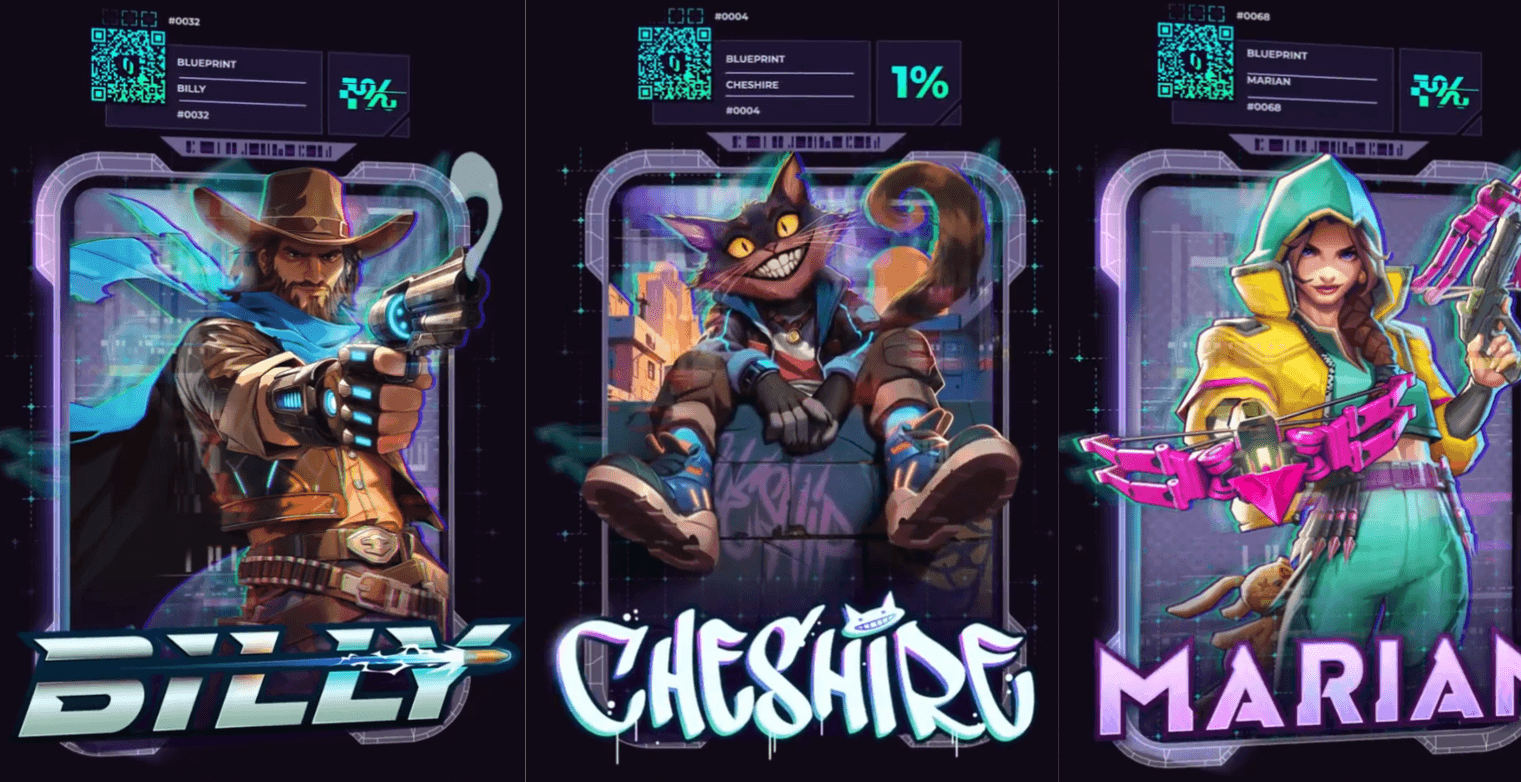
Card packs are also expected to be the main way to get new cards, aside from picking them up through the player-to-player trading system. Beyond that, Project O is looking to add a few other cool features too, like card leveling, card grading (for the hardcore collectors chasing grails), and card fusion — where you can merge cards for a shot at rarer ones.
Final Thoughts
Project O has already captured the TCG player in me, and I’m excited to see how it grows. The gameplay hits a sweet spot between Marvel Snap’s fast-paced location battles and the depth of classic TCG combat. Even in its early phase, the animations and voiceovers are surprisingly smooth and polished.
Strategy heavily revolves around adapting to the location effects, much like how portals or augments work in TFT, forcing players to stay flexible. Even with the limited cards and decks available in the version I played, I could already see the potential for creative deck-building and synergies. Certain keywords and combos just click together naturally. Of course, since locations are a core part of the gameplay, they do add some RNG into the mix, but it feels more manageable compared to harsher randomness like self-damaging mechanics in Hearthstone.
Project O feels like an easy recommendation, especially for existing TCG fans. Matches are quick, decks are small, and it’s easy to see myself sinking several hours into ranked mode once it fully launches. Plus, with the Blueprint system tied to card ownership and pack ripping, it scratches that collector itch perfectly, combining the thrill of pulling rares with real digital ownership. It’s still early days for Project O, but the potential is clear. Could it become the next Parallel? Maybe. Only time will tell, but it’s already off to a promising start.