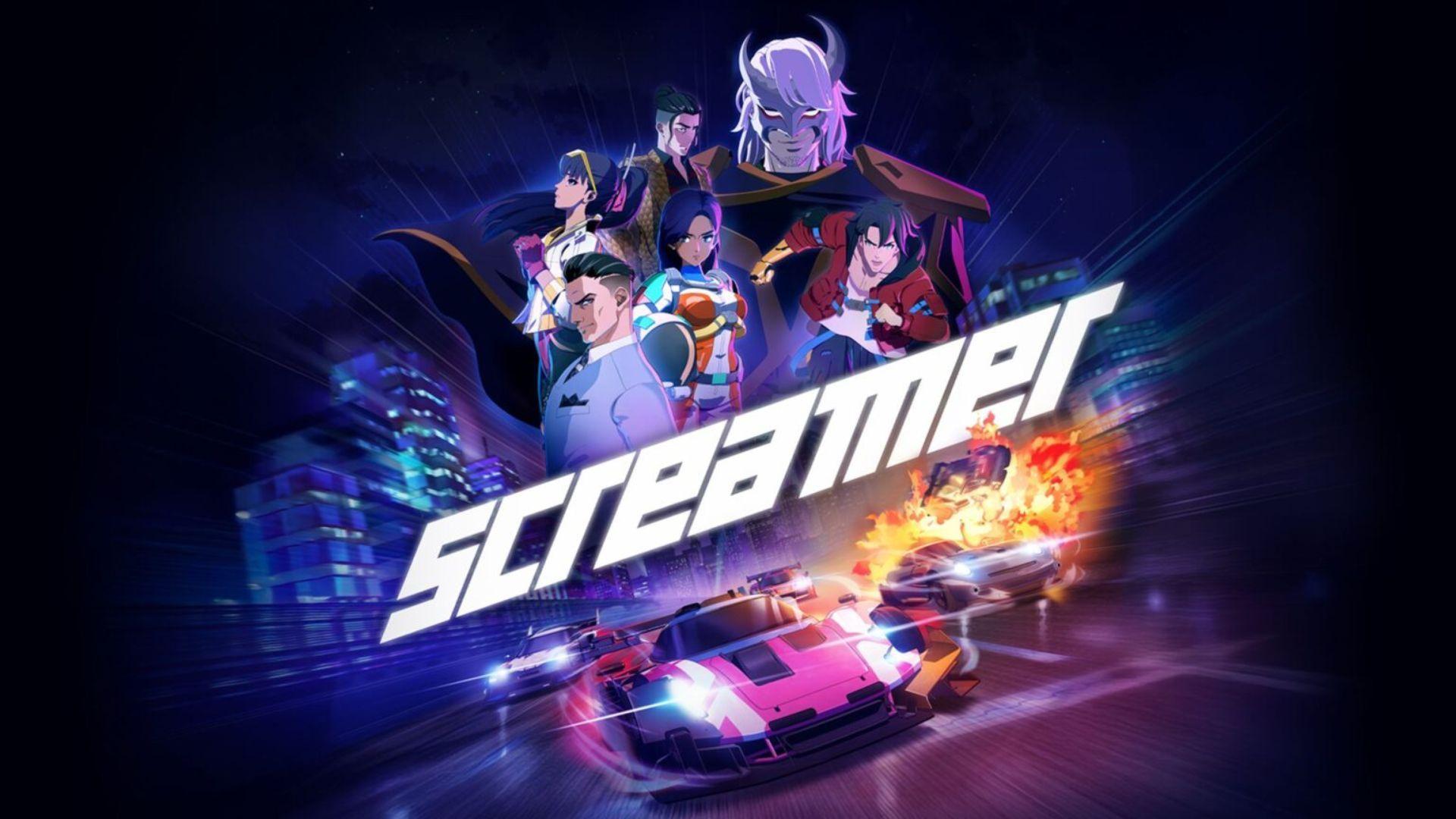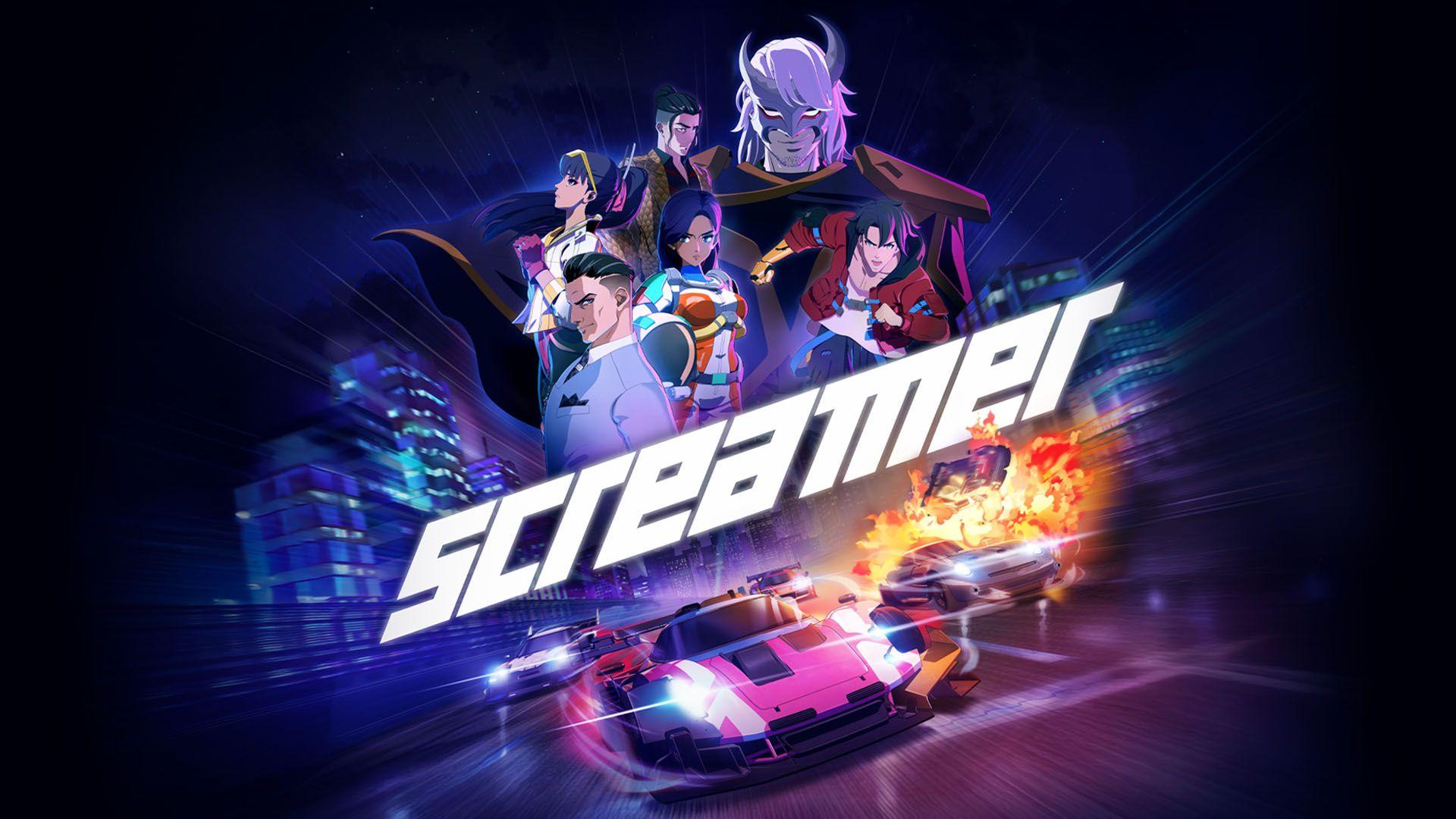


Picture Blur locked in a room for a year with nothing but a Crunchyroll subscription. That's basically Screamer in a sentence, and somehow, that pitch actually delivers. Milestone's neon-drenched arcade racer launched on March 26, 2026 across PS5, Xbox Series X/S, and PC, and it arrives with a genuinely distinct identity in a genre that rarely takes risks.
Twin Sticks, Big Commitment
The defining feature is the control scheme. Screamer demands both analog sticks at once: left stick handles general steering, right stick physically kicks the rear end out and controls your drift angle. Skip the right stick input on a tight corner and you'll plow wide like a whale on a rollerskate. It takes commitment, but once it clicks, it clicks hard.
On top of that sits a power system lifted straight from fighting games. Two linked meters manage boost and combat, and the combat meter only fills when you burn boost. Each character divides their meters into different segment counts, creating distinct profiles for boosting, attacking, and defending. It's a legitimate juggle that rewards system mastery over raw throttle discipline.
Some characters come with sharp drawbacks that make certain tracks genuinely punishing. One driver literally detonates if he grazes a wall while in the attacking Strike state, which becomes a serious liability on technical circuits. That asymmetry adds real depth, but picking the wrong racer for a given track type can turn the experience noticeably rougher.
Where the Tracks Make or Break It
Track quality in Screamer varies wildly. The open layouts with long straights and sweeping bends are where the game absolutely sings. The neon-lit, rain-soaked urban circuits look stunning and play even better at full speed.
The twisty tracks are a different story. Constant switchbacks force repeated braking, and Screamer feels oddly sluggish at low speeds. The same game that feels electric at full tilt becomes flat when the layout demands you slow down. It's the most consistent flaw in the package.
Story Mode: Anime Ambition, Mixed Results
Milestone partnered directly with Japanese animation studio Polygon Pictures on Screamer's story mode, and that investment shows from the opening cutscene. The production quality is genuinely impressive, with sharp character illustrations, accomplished animated sequences, and a multilingual cast that communicates through an in-universe universal translator chip (yes, really).
The story follows five race team trios competing in an illegal tournament hosted by a masked stranger, with a prize of 100 billion dollars on the line. The competitors include pop stars, astronauts, and private military contractors, supported by a mechanic who struggles with shirt buttons and his apparently sentient, car-driving dog. It's exactly as anime as that sounds.
What most players miss is how much the story mode functions as the game's extended tutorial. Screamer funnels you directly into tournament missions before the main menu even becomes accessible, which makes sense given how much time the control scheme needs to click. The downside is that players who bounce off the early character-heavy cutscenes may never see the full breadth of what the game offers.
The cast leans hard into brooding and dramatic energy, and the sheer volume of dialogue can wear thin. Characters jump between five teams, making it difficult to build any real connection with any of them. The story fills in backstory gaps as it progresses, but the opening hours drop you into what feels like the middle of an ongoing saga.
Beyond the Campaign
Here's the thing: Screamer's tournament mode is only part of the picture. The arcade mode is genuinely excellent, offering deep customization that goes well beyond lap counts. Players can adjust the rate meters fill, force all cars into Overdrive boost state, or disable offensive attacks entirely for clean racing.
Challenge modes with global leaderboards and online racing round out the package. But the headline feature for couch play is four-player splitscreen, a mode that feels almost radical in 2026. The game's accessibility options also deserve recognition, including colourblindness filters, an offline speed slider, and full one-handed control remapping that fuses steering and drifting to a single stick with auto-throttle.
Players who pre-purchased the Digital Deluxe, Echo, or Collector's Edition gained early access ahead of the standard launch date. Full release timing details are available on FRVR's official site.
For more on Screamer and other recent releases, check out the latest reviews on our site to see how it stacks up against the current field. Make sure to check out more: