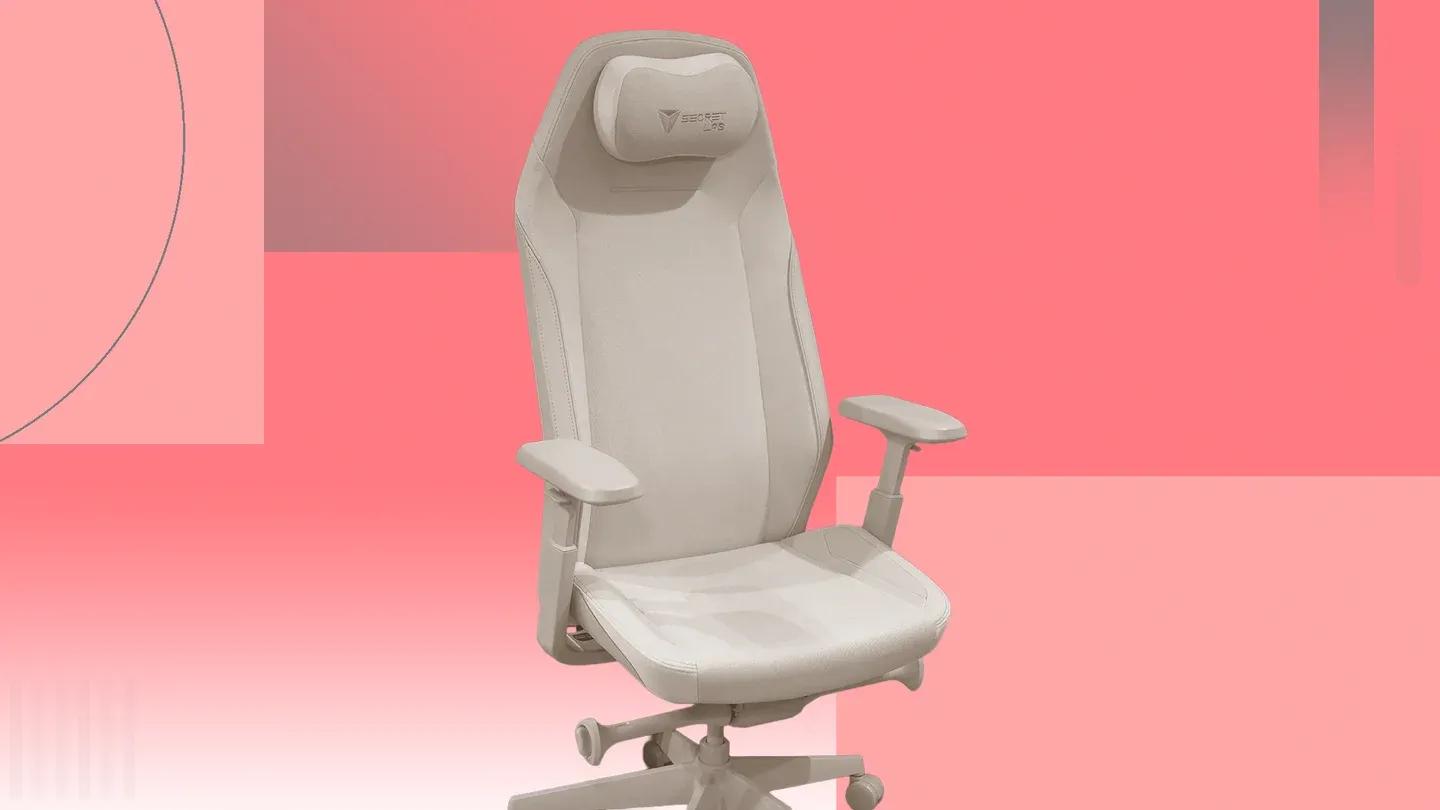

Secretlab has sold chairs to over 4,000,000 customers, the vast majority of them gamers. The brand's co-founders met through video games. Esports partnerships and officially licensed game liveries are core to its identity. So when Secretlab announced the Atlas, a productivity-focused chair that deliberately steps back from the gaming aesthetic, the natural question isn't "why?", it's "does it actually work for the people who'll end up buying it anyway?"
Four days of hands-on testing suggest the answer might be yes, and in ways that matter more than the marketing copy lets on.
The Atlas starts at $499 in the US, which makes it a notably more accessible entry point than the Titan Evo. That price difference alone will push a lot of Secretlab fans toward it. But the more interesting story here is what Secretlab actually changed under the surface, and why those changes could make this the better daily driver for long gaming sessions.
The firmness question that has followed Secretlab for years
Here's the thing: the Titan Evo's cushioning has been a point of contention for a while. The build quality is genuinely excellent, arguably second to none in the gaming chair space, but that same structural solidity can translate into a sitting experience that feels unyielding after several hours. The frame has almost no give, and even the NanoGen upholstery edition doesn't fully resolve that.
The Atlas uses the same homegrown upholstery material as the Titan Evo, but the overall construction is noticeably lighter. The backrest is taller and slimmer, with an integrated lumbar curve built into the shape rather than bolted on as an afterthought. The seat base sits lower to encourage a more ergonomic posture in your lower body. Taken together, these changes mean the cushioning doesn't need to do as much heavy lifting, and paradoxically, the slightly thinner padding feels more comfortable because the chair's geometry is doing more of the work.
The Dune+ colorway tested here includes NanoGen cushioning, the premium upholstery tier. For reference, the standard Titan Evo NanoGen edition was tested previously, and it didn't feel as inviting as the Atlas does after the same amount of time. Less padding, better design, more comfort. It sounds counterintuitive until you sit in it.
Armrests: mostly great, one real frustration
The armrests on the Atlas are genuinely one of its strongest first impressions. Adjusting height uses a lever on the outside. Rotation and forward-back movement work by simply pushing the armrest until it clicks into position. What makes them stand out is that they actually stay where you put them, requiring deliberate force to reposition rather than shifting from incidental pressure during a session.
The surface and cushioning feel plush and well-made. The problem is that Secretlab dropped from 4D armrests on the Titan Evo to 3D armrests on the Atlas, removing the ability to adjust width inward. For anyone with a narrower shoulder span, this creates a situation where the armrests sit slightly too wide to provide full elbow support without forcing a slight outward slump. Rotating them inward partially compensates, but it's not a complete fix.
Ergonomics Specialist Dr. Lindsey Migliore, a PMR Physician and founder of GamerDoc who sits on Secretlab's Ergonomics Advisory Board, highlighted the 90-90-90 rule at the Atlas reveal event: 90-degree angles at the knees, hips, and elbows. The armrest width issue directly conflicts with that goal for some body types. It's the Atlas's most concrete design compromise so far.
What the Dune colorway does to a room
The Atlas ships without access to Secretlab's extensive library of licensed colorways, which is a real trade-off given how many gamers buy into the brand partly for designs tied to specific games or franchises. The Atlas has its own aesthetic identity instead, and the Dune and Dune+ colorways are genuinely striking.
The sandy, caramel-beige tone has an unusual quality: it reads as neutral against black setups, white setups, and wood-colored desks simultaneously. It absorbs the sharper angles of the chair's silhouette visually, making the overall profile feel softer and more considered than a standard gaming chair. For a home office that doubles as a gaming space, it's one of the better-looking chairs available right now at any price point.
The lack of licensed designs will be a dealbreaker for some. That's a fair position. But if you're shopping primarily on comfort and aesthetics rather than branding, the Atlas's own colorway lineup holds up well on its own terms. If you're optimizing your setup beyond just the chair, our Apex Legends best controller settings guide and other gaming guides cover the rest of your peripheral setup.
Four days in, the Atlas is earning its price tag
A proper chair review needs at least a month of testing to surface the issues that only appear after extended use. Aches that develop slowly, cushioning that compresses unevenly, build quality that reveals itself through repeated adjustment. That verdict isn't in yet.
What four days of testing does confirm is that the Atlas is comfortable from day one in a way that several more expensive Secretlab products haven't been. The lighter construction, the ergonomic geometry, and the integrated lumbar support all contribute to a sitting experience that feels less like enduring a firm gaming chair and more like actually being supported. The armrest width remains a concern worth monitoring, but it hasn't caused any real discomfort yet.
At $499 as a starting price, the Atlas is asking less than the Titan Evo while delivering what feels like a more refined daily experience. That's a strong position to be in before the full review is even written. Keep an eye on our latest reviews for the complete verdict once the full testing period wraps up.