

Slay the Spire 2 has taken another review hit on Steam. The game's first major update, which pushed beta branch changes into the main build, triggered a second wave of negative reviews that has pushed the game's lifetime score down to 66% positive, with recent reviews sitting at just 48% positive. Over 21,000 negative reviews have landed in roughly five days, beginning around April 17.
This is not the first time developer Mega Crit has faced a review surge like this. A previous wave of roughly 13,000 negative reviews hit after an earlier balance patch, and the team walked back at least one nerf after that backlash. Here's the thing: the pattern is repeating, and this time the scale is bigger.
The Doormaker problem
The loudest complaint in the negative reviews points directly at the Doormaker, an Act 3 boss that was reworked in the update. The Doormaker now cycles through phases that exhaust cards (removing them from play mid-run), prevent drawing, or inflate card costs. Players describe it as the hardest Act 3 boss by a significant margin, and many argue it is not just difficult but actively unfun.
"Nothing more frustrating than having a god-tier run brutally and unforgivingly obliterated by a boss that is not remotely balanced," wrote Steam user Shannegh. "Doormaker needs to be reworked or removed," added Cindecent.
The core of the frustration is that the Doormaker's design does not just punish bad decks. It punishes the act of deckbuilding itself, stripping away cards and denying draws in a genre built entirely around assembling synergies.
When balancing works against the genre
The Doormaker is the sharpest point of criticism, but the broader complaint runs deeper. Many players argue that the update's card adjustments and enemy reworks have made it harder to get any coherent strategy running, with certain combos falling behind enemy scaling. Co-op play is a recurring specific grievance: the mode scales enemies significantly but offers comparatively little to player card power, and several reviewers claim their co-op success rates dropped sharply after the patch even at lower Ascension levels.
"Development philosophy needs to shift away from 'preventing players from deckbuilding in a deckbuilder,'" wrote user Knusdij. "Great game on its surface, but will suffer with more changes like that of recent."
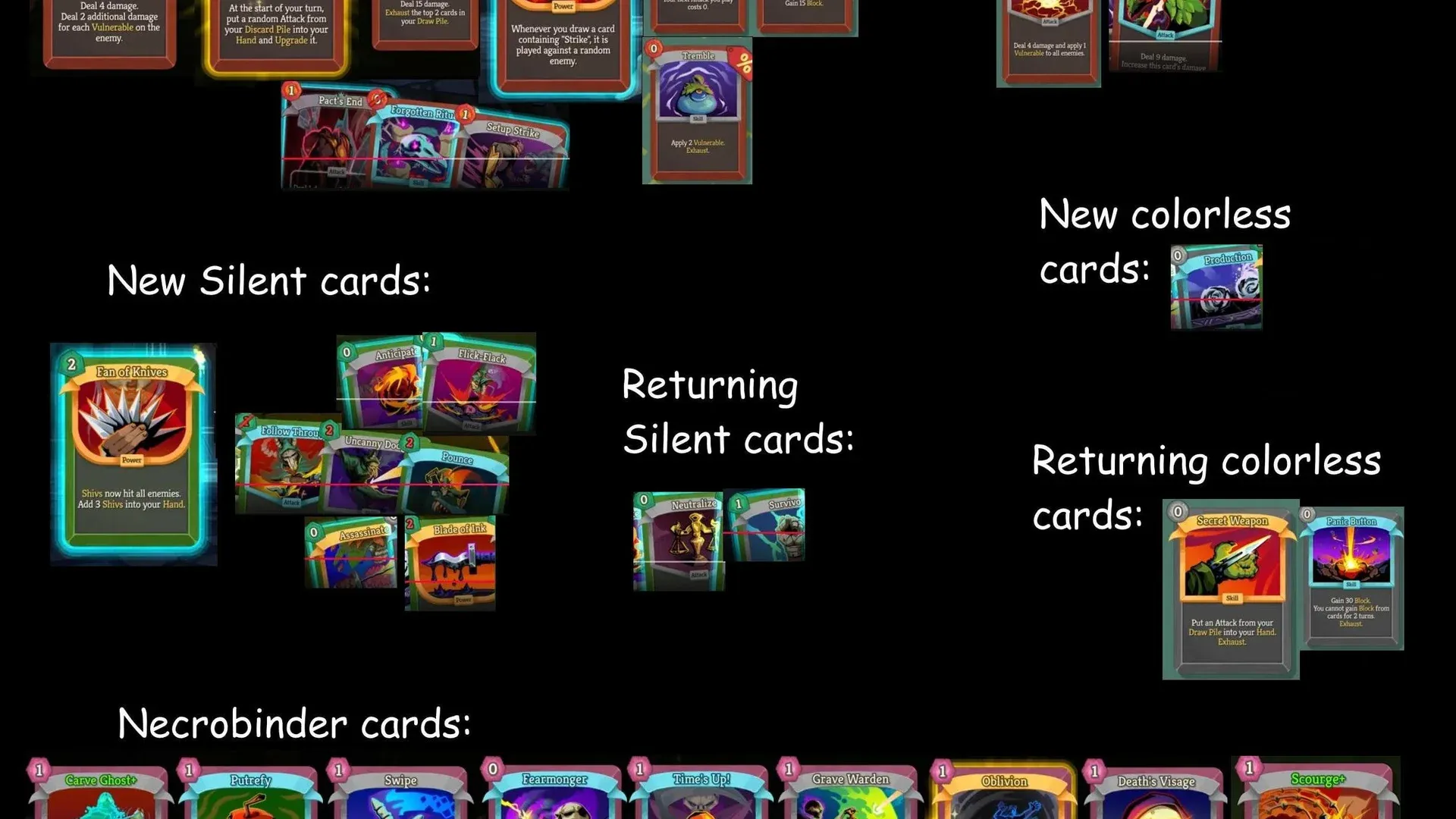
The Silent class is another focal point. Her key draw card Acrobatics was bumped up in rarity in this patch, making it harder to find and build around. For a class whose strategies depend on cycling cards quickly, that single change has a ripple effect on how reliably she can function.
Who is leaving these reviews
Reviews written in simplified Chinese are averaging noticeably lower than other language groups, which sit between "mostly positive" and "overwhelmingly positive." Casey Yano, co-founder of Mega Crit, previously commented on this pattern after the earlier review spike, noting that Chinese players often turn to Steam reviews as a primary feedback channel given online communication restrictions in the region.
That context matters when discussing whether this qualifies as a review bomb. The term usually implies coordination aimed at tanking a score for reasons unrelated to the game itself. Here, the reviews appear to be a direct response to in-game changes. The scale and regional concentration make it easy to dismiss, but doing so risks writing off a large portion of the player base simply for using Steam reviews as their loudest available voice.
What most players miss in these debates is that the line between "review bomb" and "a lot of angry players" gets blurry fast once the numbers get big enough.
What Mega Crit has said
Following the earlier review wave, Mega Crit responded publicly and stated that "no change is necessarily permanent," signaling openness to reversing decisions. The studio walked back the nerf that triggered the first 10,000-review spike. Whether they take a similar approach to the Doormaker rework and the broader difficulty complaints from this update remains to be seen.
The game is still in early access, which cuts both ways: the studio has room to iterate, but players are also paying to be part of a process that sometimes produces patches they actively dislike.
For anyone tracking how the situation develops, our latest gaming news will have ongoing coverage as Mega Crit responds. Keep an eye on the Steam discussion boards and the in-game feedback tool, which Mega Crit has confirmed is available to Chinese players, for the most direct channel to the developers. For broader context on how other early access roguelikes have handled similar backlash, browse our latest reviews to see how community trust plays out over a game's development arc.