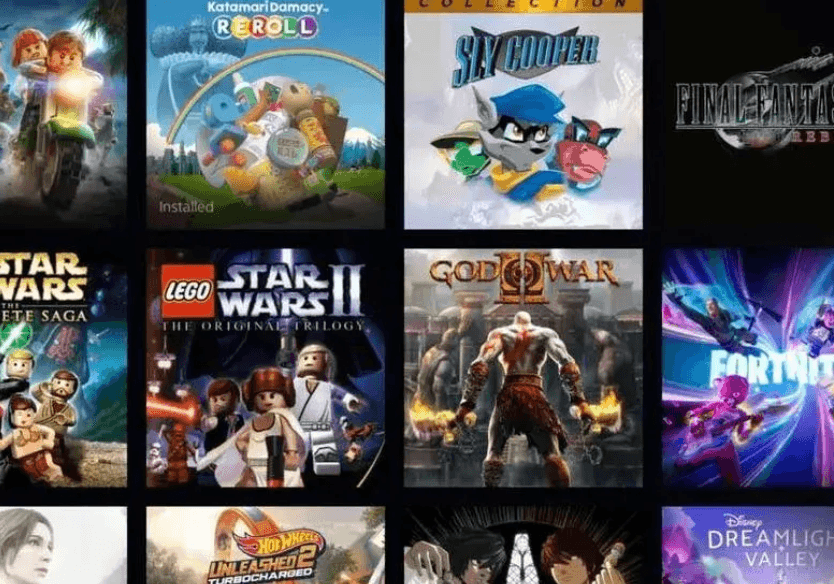

Six hundred thousand discs rolled out of Sony's plant in Thalgau, Austria every single day. That number is about to drop to 60,000.
Sony Interactive Entertainment has officially confirmed it will stop producing physical game discs for all new PlayStation titles starting January 2028. The announcement, delivered by Sid Shuman, Senior Director of Sony Interactive Entertainment Content Communications, draws a hard line: anything launching after that date ships as a digital download through the PlayStation Store or as a digital code through retail partners. Games released before 2028 are unaffected.
The $35 million retool already underway
This isn't a roadmap item or a vague future plan. The Sony DADC (Digital Audio Disc Corporation) facility in Thalgau is already being converted. A roughly $35 million infrastructure investment is funding the transformation, and production lines are being physically dismantled and rebuilt right now.
PlayStation titles currently account for around 50 percent of that 600,000-disc daily output. By 2028, total output drops to 60,000 discs per day, a 90 percent reduction. The remaining capacity will presumably cover legacy catalog and non-gaming optical media.
Dietmar Tanzer, CEO of Sony DADC, confirmed the plant's 300 employees won't face layoffs. Workers are being retrained to manufacture optical microlenses for automotive lighting systems, LiDAR sensors, and medical equipment. It's a genuinely interesting pivot: the same precision optics expertise that went into Blu-ray discs translates directly into next-generation sensor components.
The numbers that made this decision easy for Sony
Sony frames this as following consumer behavior, and the data makes that argument hard to dismiss. During the 2025 fiscal year, digital downloads accounted for 80 percent of full-game software sales across the PlayStation ecosystem. Compare that to 2013, when digital purchases made up just 13 percent of PS4 launch-era sales. That's a complete market inversion in roughly 12 years.
Here's the thing: the financial logic extends well beyond consumer preference. Eliminating physical media removes Blu-ray manufacturing costs, artwork printing, packaging, and international freight from the equation entirely. A fully digital storefront also severs Sony's dependence on brick-and-mortar retail margins. Sony shares moved upward following the announcement, with analysts pointing toward expected margin improvements as the driving factor.
What players actually lose here
The investor reaction and the player reaction are running in completely opposite directions.
The core tension is a legal one. When you buy a disc, you own a physical object. When you buy from the PlayStation Store, you purchase a license to access software, not the software itself. That distinction has real consequences:
- Resale is gone. Physical discs can be sold, traded, or lent. Digital licenses carry zero resale value, which effectively ends the pre-owned games market for PlayStation.
- Price-sensitive markets take a harder hit. In regions where new triple-A titles carry premium pricing relative to local incomes, second-hand trading has historically been the primary way players access games affordably.
- Preservation becomes fragile. If a publisher pulls a title from the storefront due to licensing disputes, or if an account gets locked, the game disappears. Consumer anxiety around this spiked in June 2026 when Sony removed 551 previously purchased discovery television titles and movies from active user libraries, triggering legal action and criticism over the platform's "Buy Now" terminology.
Frustrated players have attempted to organize boycotts, with communities urging PlayStation Plus cancellations as a show of force. With factory floors already being converted in Austria, that pressure is unlikely to change the trajectory.
What this signals for PlayStation 6
The manufacturing pivot is doing more than ending physical game production. It's telegraphing the hardware roadmap. Industry analysts have pointed out that a fully digital software strategy makes most sense when paired with disc-drive-free hardware, and the implication is that PlayStation 6 will launch without an optical drive at all.
Microsoft appears to be moving in the same direction with its next-generation Xbox hardware. If both major platform holders go disc-free simultaneously, the retail gaming shelf as it exists today stops being a viable format.
For PS5 players navigating the current transition period, understanding storage management is going to matter more than ever. Check out the Saros file size and pre-load date guide for a practical look at what managing a digital-only library demands from your console storage. For broader coverage of the PS5 ecosystem as it evolves, the Starfield PS5 guide covers DualSense features, PS5 Pro modes, and what the platform's digital future looks like in practice.
The disc isn't dead yet, but the factory that made it is already becoming something else.