Sony has unveiled its 2025 business strategy for the Game & Network Services division, the corporate umbrella for PlayStation. The presentation came during an investor segment led by CEO Hideaki Nishino and studio head Hermen Hulst. Through a series of charts and commentary, the company laid out PlayStation's current performance, platform trends, and evolving priorities. The focus throughout was on financial stability, service expansion, and maintaining long-term user engagement across the ecosystem.
Sony Outlines PlayStation's 2025 Strategy
PlayStation 5 Delivers Consistent Profitability
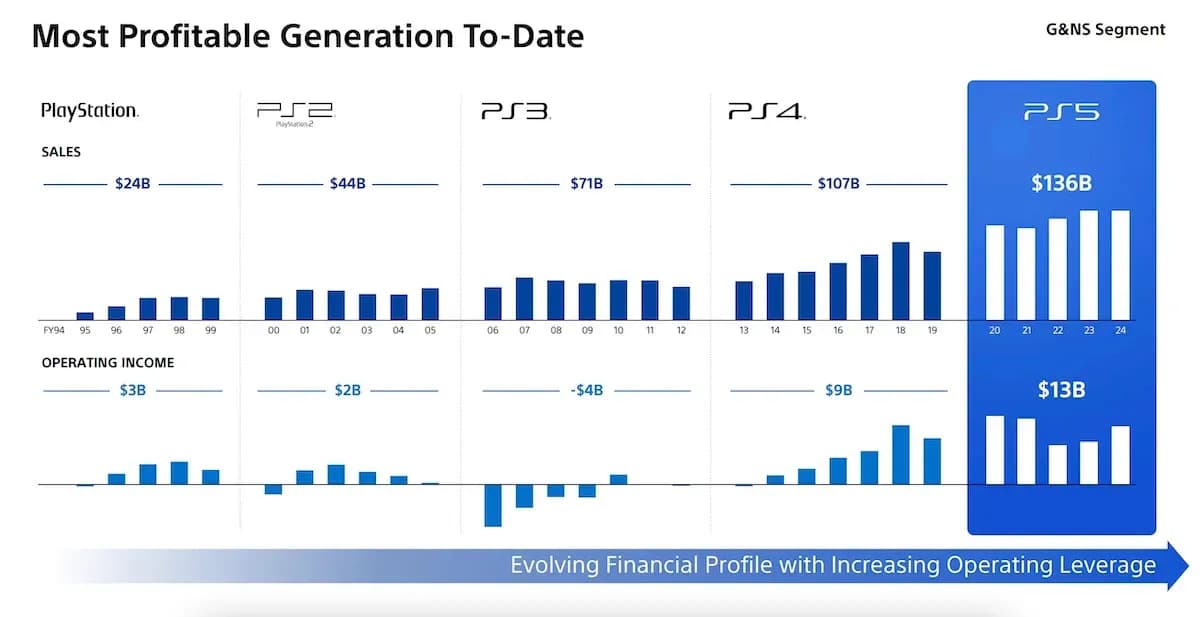
The PlayStation 5 has generated approximately 136 billion U.S. dollars in revenue and 13 billion dollars in profit since launch. By comparison, the original PlayStation produced 24 billion dollars in revenue and 3 billion dollars in profit over its entire lifespan. Even after adjusting the PlayStation 1's figures for inflation, the PS5 has more than doubled that performance. Part of this success stems from favorable exchange rates, as the weaker yen has amplified reported revenue and profitability in global markets.
The numbers also reflect how Sony has refined hardware development since the PlayStation 3 era. The PlayStation 3's complicated architecture, anchored by the Cell processor, created profitability challenges that Sony learned from. Those lessons informed the more streamlined designs of the PlayStation 4 and PlayStation 5, which have delivered stronger financial results.
Sony Outlines PlayStation's 2025 Strategy
Monthly Active Users Shift Toward PlayStation 5
For the first time, the PlayStation 5 has surpassed the PlayStation 4 in monthly active users on PlayStation Network. Of the 124 million monthly active console users, the majority now access the platform through a PlayStation 5. This marks a clear generational shift as adoption of the latest hardware accelerates.
Spending per user has climbed as well. Consumer spending on the PlayStation 5 is 26 percent higher than on the previous generation. The most dramatic increase, however, has been in services, particularly subscriptions, which have seen a 67 percent rise in spending. This underscores the growing importance of digital services in Sony's revenue model, especially as pricing structures have adjusted over the years to reflect broader economic trends like inflation.
Subscription Upselling Strengthens PlayStation Plus Revenue
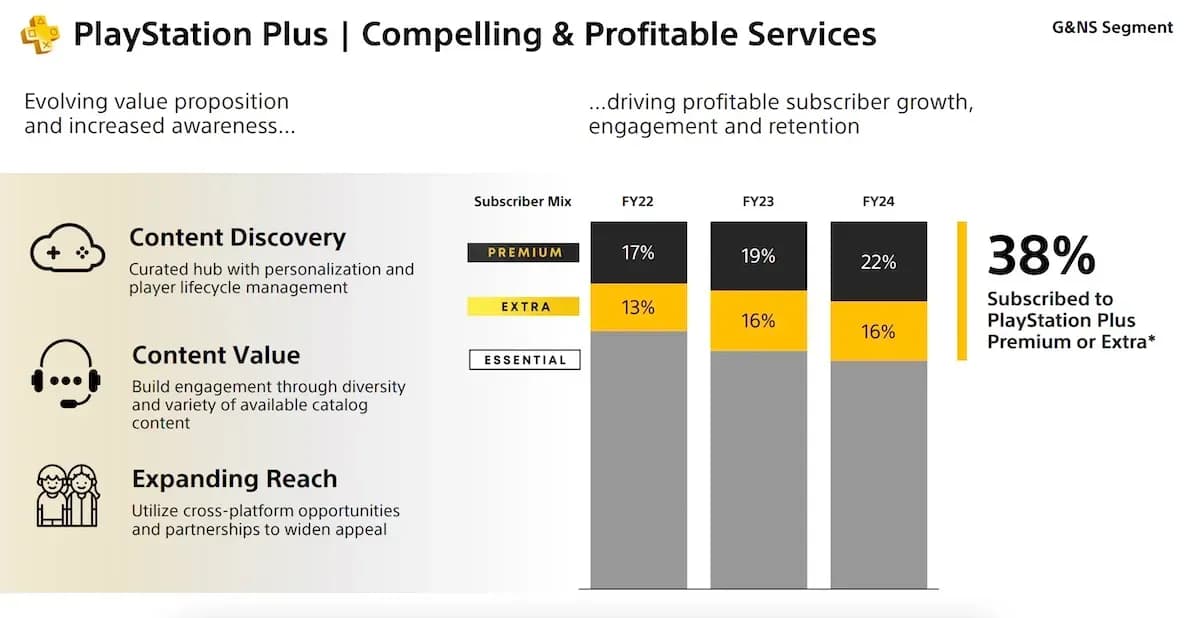
Sony's PlayStation Plus strategy has centered on extracting more revenue from existing subscribers rather than aggressively growing the total user count. In fiscal year 2022, 30 percent of PlayStation Plus users subscribed to higher-tier options like Extra and Premium. By 2024, that figure had risen to 38 percent. These tiers include perks like expanded game catalogs, Ubisoft+ titles, cloud streaming for PS5 games, and early game trials.
While this shift hasn't dramatically changed the total subscriber base, it has increased average revenue per user. The growth reflects a deliberate upsell strategy, nudging users toward higher-value offerings within the PlayStation ecosystem. This incremental approach fits Sony's broader emphasis on building durable revenue sources and reducing volatility.
Sony Outlines PlayStation's 2025 Strategy
Live Service Game Strategy Undergoes Revision
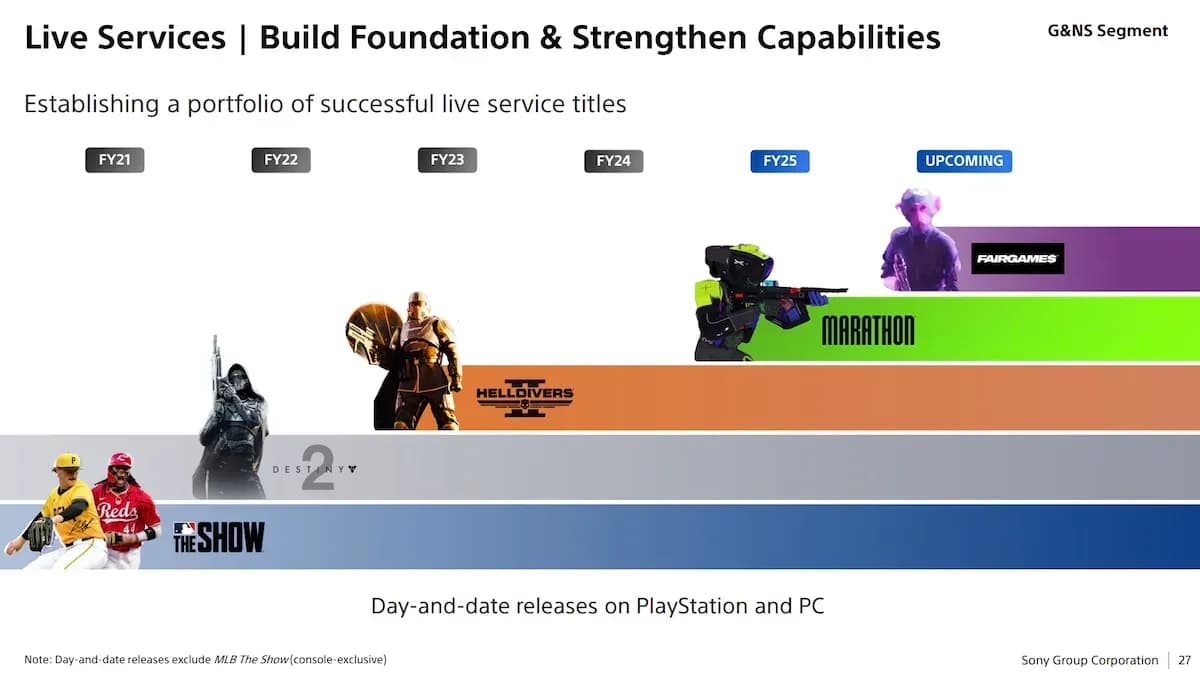
Sony's previous push into live service games has been dialed back in recent months. In 2022, former SIE president Jim Ryan framed live service as a major untapped opportunity, suggesting that a significant portion of Sony's major titles would eventually adopt that model. The current outlook, however, is more selective and cautious.
Titles like Destiny 2 and MLB The Show are now formally categorized as live service games. While Helldivers II has performed well in the live service genre, upcoming releases like Marathon and Fairgame$ remain uncertain in terms of audience reception and commercial viability. This recalibration suggests Sony is prioritizing sustainable models over aggressive expansion into unproven formats.
Engagement Hours Emerge as a Key Performance Indicator
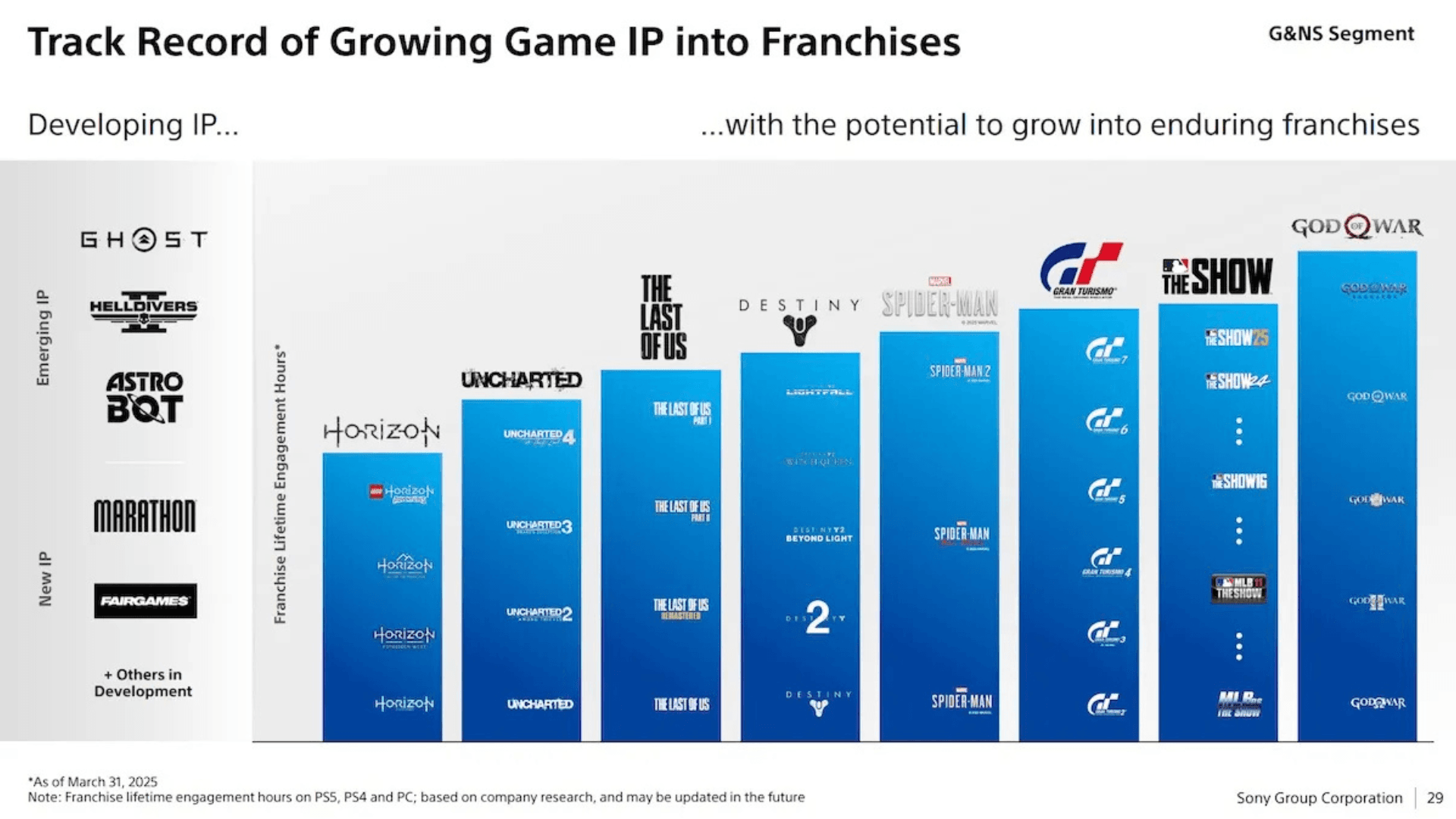
Sony introduced a new metric in its latest update: franchise engagement hours. Instead of focusing solely on sales or direct monetization, this measurement tracks how much time users spend within individual game franchises. It provides a broader view of the depth and consistency of user interaction across different titles.
Franchises like Gran Turismo (the sim racing video games) show high engagement levels, indicating strong ongoing interest even when total revenue doesn't always reflect that time investment. The use of engagement hours allows Sony to evaluate its intellectual properties more holistically, particularly in a market where ongoing user retention can be as valuable as individual game purchases.
Sony Outlines PlayStation's 2025 Strategy
A Strategic Shift Toward Revenue Stability and User Loyalty
The central theme of Sony's PlayStation strategy in 2025 is a clear emphasis on predictability and diversification. Phrases like "durable, predictable revenue base" appeared multiple times throughout the presentation. The company is positioning its gaming business as less reliant on hardware sales and more anchored in service offerings and ongoing user activity.
This messaging likely aims to address concerns about the volatility of the gaming sector, which, like the film industry, is often subject to unpredictable consumer behavior and hit-driven dynamics. By focusing on subscription services, diversified content strategies, and engagement metrics, Sony is presenting a more stable and investor-friendly outlook.
Final Thoughts
Despite these strengths, Sony still faces external challenges, including unresolved tariff policies in the United States and internal adjustments related to its first-party development pipeline. As the company moves away from some of its previous live service ambitions, it will need to manage these transitions carefully to maintain user satisfaction and platform momentum.
As of mid-2025, Sony appears to be pursuing a balanced strategy that emphasizes sustainable growth, platform engagement, and long-term revenue consistency. While the gaming landscape continues to evolve, including developments in mobile, pc, and even web3 gaming, PlayStation's direction remains firmly rooted in its core ecosystem, supported by a loyal user base and a diversified business model.