
Valve's Steam Machine costs $1,049. The PS5 costs significantly less. So the real question isn't whether the Steam Machine is a good PC, it's whether it's good enough to justify that price gap against a console that already plays everything well.
A direct side-by-side test across four games gives a clearer picture than spec sheets ever could.
Four games, one honest verdict
The test methodology kept things fair: the Steam Machine ran at 4K (3840x2160) with FSR set to Performance and each game's medium preset, which broadly mirrors what the PS5 delivers in its performance mode. Four games were tested: Cyberpunk 2077, 007 First Light, Resident Evil Requiem, and Death Stranding 2.
The results split almost cleanly down the middle. Two games ran neck-and-neck with the PS5. Two did not.
In Cyberpunk 2077, the Steam Machine averaged 68 fps, occasionally dipping to 56 fps but mostly sitting in a smooth 60-70 fps window. The PS5 locks at a steady 60 fps in performance mode, so neither machine is dramatically ahead. The trade-off is texture detail: zooming into character models shows the PS5 has a sharper image at medium settings, a side effect of lower texture quality on the Steam Machine's preset rather than any fundamental hardware gap.
Resident Evil Requiem told a similar story. The Steam Machine averaged 59.74 fps, dropping to the low 50s in cutscene-heavy moments. The PS5 stayed locked at 60 fps. In practice, you likely wouldn't notice the difference while actually playing.
Where the cracks start to show
007 First Light is where things got more complicated. The Steam Machine averaged just 53 fps at 4K with a mix of medium and low settings, and dropped as low as 35 fps during explosion-heavy sequences. The PS5 held its 60 fps lock throughout.
Here's the thing, though: dropping the Steam Machine's output resolution to 1800p pushed the average up to around 70 fps, and the image actually looked sharper than the PS5 version. The PS5 dynamically scales its internal resolution as low as 720p to maintain frame rate, which creates visible fuzziness on environmental details. The Steam Machine, even at a lower output resolution, rendered cleaner geometry on character models and props.
That's the PC gaming trade-off in a nutshell. You get control. The PS5 makes those decisions for you.
Death Stranding 2 exposes the ceiling
Death Stranding 2 is the Steam Machine's worst result by a significant margin. At 4K with FSR Performance and the medium preset, it averaged just 35 fps. Dropping to 1440p and the low preset still only produced 45-50 fps. A stable 60 fps only arrived at 1080p output with Dynamic Resolution Scaling, which on a 4K display is a rough ask.
Next to the PS5 version, the gap is hard to ignore. The PS5 delivers denser vegetation, better global illumination, and cleaner shadows while staying locked at 60 fps. The Steam Machine version looks like what you'd expect from a handheld gaming PC. Given that Death Stranding 2 was one of the biggest PS5 exclusives in recent memory and likely received heavy platform-specific optimization from Kojima Productions, some of that gap is expected. But the scale of it still stings.
The size and noise angle that gets overlooked
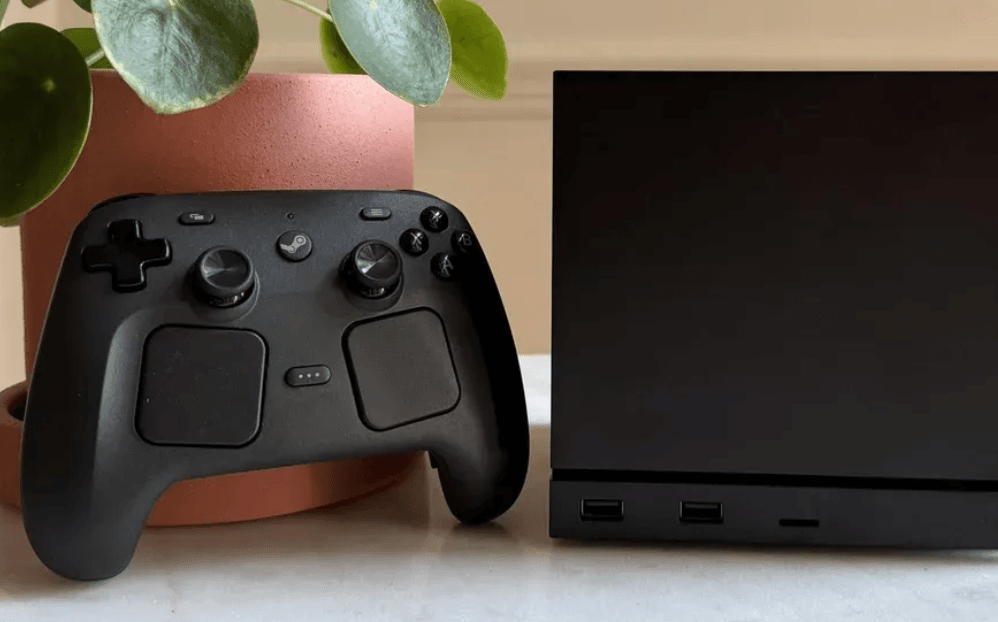
The Steam Machine is nearly a third of the PS5's physical size and runs significantly quieter under load. For anyone building a living room setup where a full tower PC isn't an option, that matters. What most players miss in the spec comparison debate is that the Steam Machine isn't really competing with a PS5 on raw power. It's competing with the idea that you need a big, loud PC to get PC gaming performance.
On that front, it mostly delivers. Three out of four games tested ran at PS5-equivalent performance levels. The fourth was a clear loss, but it's also one of the most demanding titles available.
For players who already have a Steam library, the value calculation shifts considerably. Access to thousands of PC titles, mod support, and settings flexibility changes what $1,049 buys you compared to a console that's locked to its own ecosystem. If you're starting from zero with no Steam library, the PS5 is still the smarter entry point.
For PS5 players curious about how specific titles run on Sony's hardware, the Starfield PS5 guide covering DualSense features and PS5 Pro modes is a good reference for what platform-optimized performance actually looks like. Players comparing cross-platform performance across titles will also find value in the Nova Roma best settings for PC and PS5, which covers how to close the gap between PC and console visuals in a demanding title.
The Steam Machine's full picture is still developing as more games get tested. Check back at our gaming guides hub as coverage expands across more titles and hardware configurations.