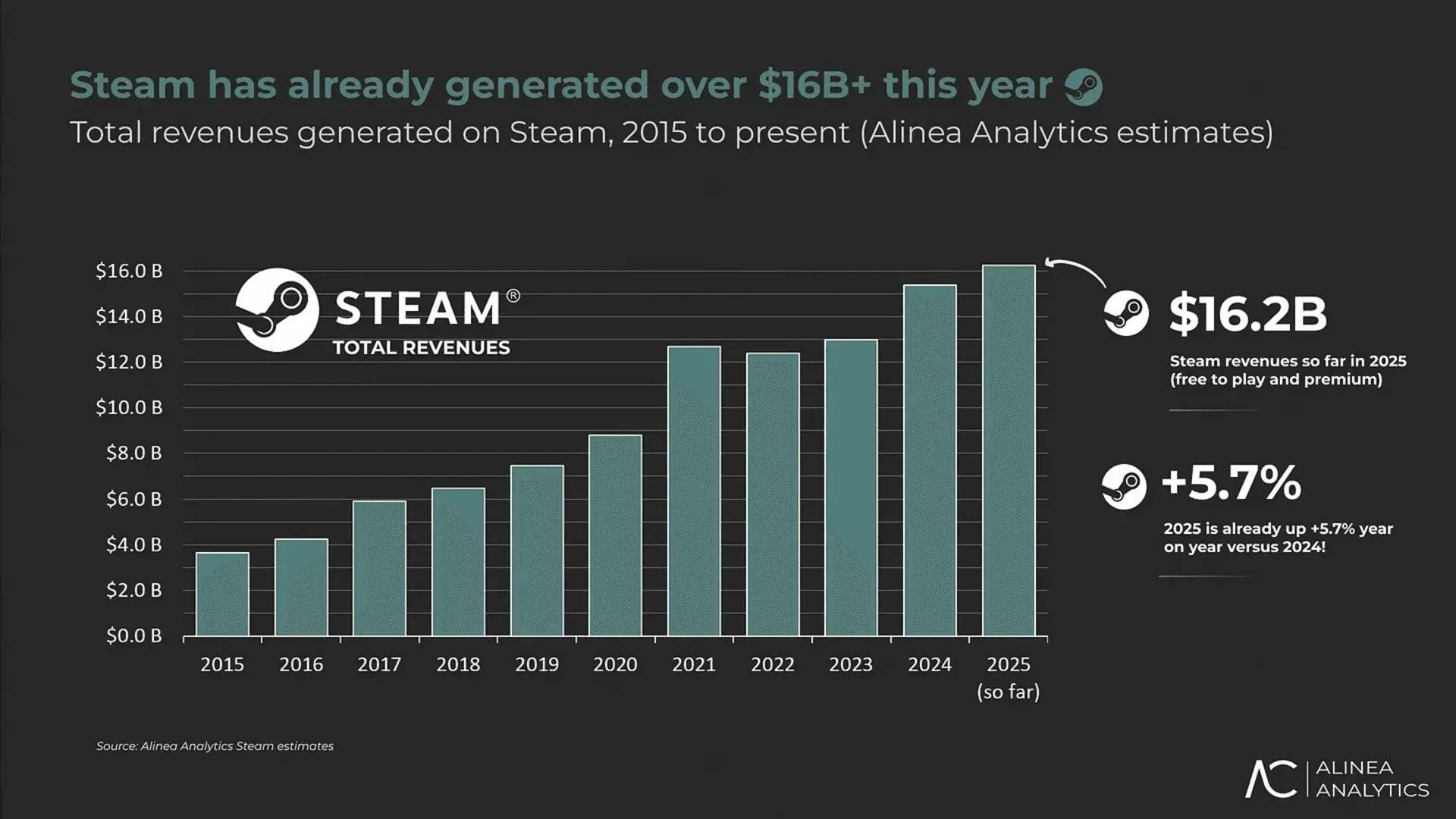

Valve just had its best six months ever. Steam generated $11.1bn in revenue in the first half of 2026, a figure that nearly matches what the platform made across the entire year of 2023. That number puts the PC storefront in a league of its own, and the gap between Steam and the console platforms is only getting wider.
Zoom out a decade and the scale of what Valve has built becomes clearer. Steam has nearly quintupled its half-year revenue since 2017, with market analysis from Alinea Analytics head Rhys Elliott pointing to seven consecutive half-years of growth. The pandemic dip is visible in the data, but it barely registers against the long-term upward curve. As Elliott put it: "Zoom out over the last decade and things get really crazy."
What is actually driving Steam's growth
Here's the thing: this is not just one factor pulling Steam upward. Several forces are converging at once.
The Chinese market has become a structural pillar of Steam's business. By February 2025, 50 percent of all Steam accounts belonged to Chinese-speaking users, and that share has not shrunk. Higher launch prices on new releases are also padding the revenue line, as publishers push $70 and $80 price points on major titles. Then there is the publisher homecoming story: third-party studios that spent years running their own launchers have been quietly returning to Steam, putting their catalogues back in front of the platform's enormous user base.
The top-earning games in H1 2026 tell their own story. Forza Horizon 6 pulled in $197.7m in under two months on Steam. Resident Evil Requiem hit $194.5m since its February launch, with 3.4 million copies sold on Steam alone. Crimson Desert, a brand new franchise from Pearl Abyss, landed $190m since March. What is notable is that three indie titles are sitting just below that tier: Slay the Spire 2 earned $141.7m, Subnautica 2 brought in $133.6m, and Meccha Chameleon added $71.3m. The PC platform is generating serious money across the full spectrum of game types, not just blockbusters.
The console side of the ledger
Microsoft's gaming revenue is down 7 percent year-on-year, and the recent restructuring that shuttered or gutted several Xbox Game Studios teams is not a quick fix. Studios like Double Fine, Compulsion, and Ninja Theory have all been caught in the cuts. The ship is not righting itself in the near term.
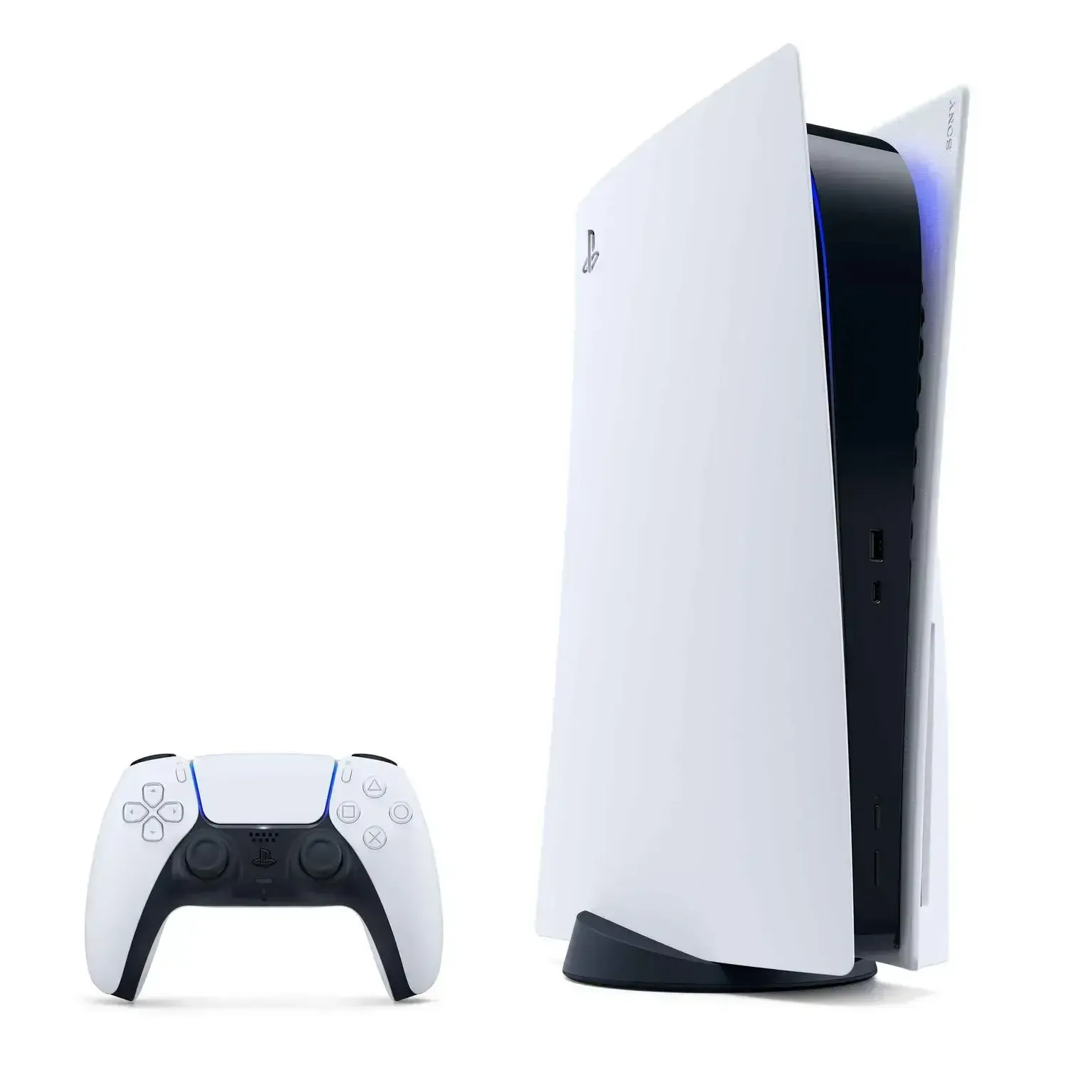
PlayStation is dealing with a different but equally real problem. First-party exclusive sales have been declining steadily since 2020, and Sony's decision to stop bringing single-player exclusives to PC removes a meaningful revenue channel it had been building. The announcement that physical disc production will end in 2028 has also turned consumer sentiment sharply negative, with widespread backlash across the community.
Both platforms are also absorbing the cost pressure of an AI-driven RAM shortage that has pushed hardware prices up. That squeeze hits both the companies manufacturing consoles and the players buying them.
A gap that keeps widening
The contrast here is not subtle. Steam is posting its best numbers ever while the two major console platforms are each managing their own version of a difficult year. PC gaming's advantages, lower platform fees for players, no hardware lock-in, and a massive back catalogue, are resonating with a global audience that is clearly spending.
For players still invested in the console side, optimization still matters. If you are playing on PS5 or Xbox, our Starfield PS5 guide covers everything you need to know about DualSense features and PS5 Pro modes, and the Borderlands 4 PS5 and Xbox settings guide will help you get the best performance out of your hardware. The consoles may be under commercial pressure, but the games on them are still worth playing well.
The second half of 2026 will be telling. If Steam's momentum holds and Microsoft's restructuring continues to drag on morale and output, the platform gap could look even starker by year end. Check out our gaming guides hub for the latest coverage across all platforms as the year plays out.