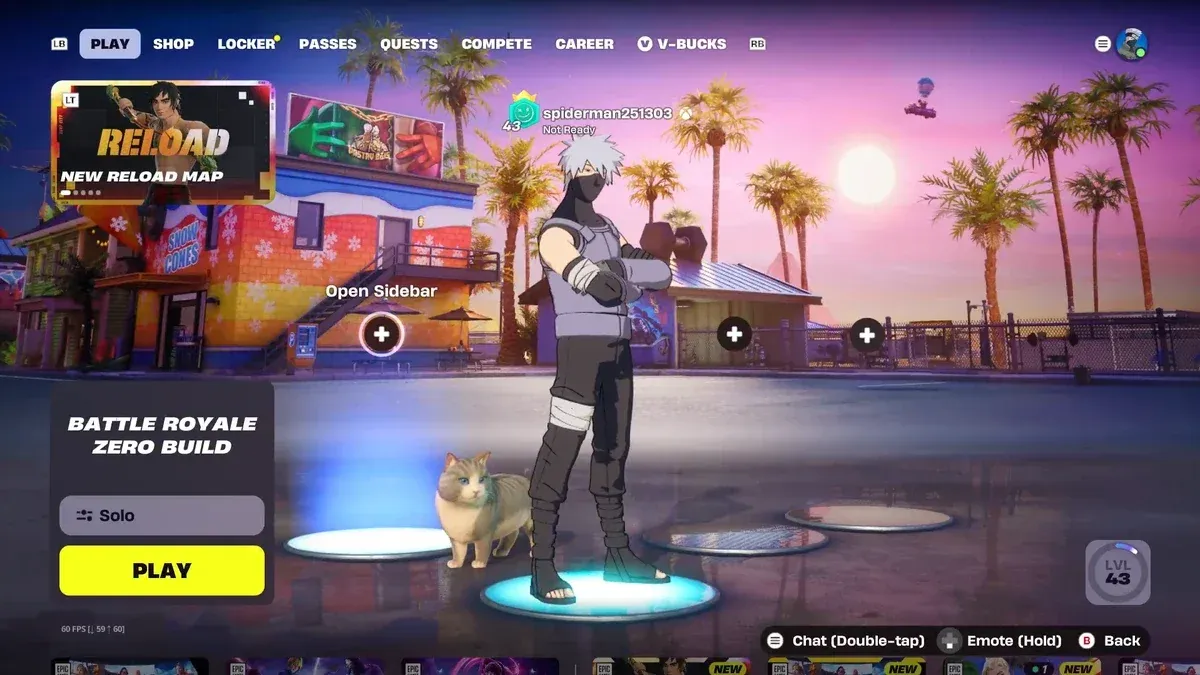


Epic Games CEO Tim Sweeney has a blunt explanation for why so many new multiplayer games crash and burn: your friend group already lives in Fortnite, and nobody wants to leave alone.
Speaking in a recent interview with a South Korean gaming publication, Sweeney put it plainly: players have "already formed solid human networks in Fortnite, Call of Duty, Counter-Strike, and Apex Legends," and there is simply "no reason to leave friends behind and go to a new game alone." That one sentence explains a lot of recent multiplayer graveyard additions.
Why new multiplayer games face an impossible uphill climb
Here's the thing about live-service games that most people outside the industry rarely acknowledge. They are not just games. They are social infrastructure. The friend list, the party system, the shared battle pass progress, the in-jokes about last night's squad wipe on a named POI. All of that builds up over months and years into something that functions more like a social platform than a video game.
Sweeney's argument is that moving a group of friends from an established game to a new one is nearly impossible. You can convince one person. Maybe two. But getting an entire squad to abandon their skins, their stats, and their weekly routine to start fresh somewhere unfamiliar? That almost never happens organically.
"Only the massive mega-hits that appear once every few years succeed in this community migration," Sweeney said, framing it as the defining obstacle for any new multiplayer release trying to compete for player time.
The names he cited are not random. Fortnite has been running since 2017. Call of Duty has had a grip on shooter audiences for over two decades. Counter-Strike's competitive community is one of the most deeply rooted in all of gaming. Apex Legends, despite its rocky periods, still holds a loyal core. These games did not just win players. They won the players' social calendars.
The games that paid the price
Sweeney pointed to "many complex factors" behind recent multiplayer failures, including development budgets that have ballooned to unsustainable levels and production cycles that have stretched far too long. But for multiplayer specifically, the social lock-in problem sits on top of everything else as a "unique barrier" that single-player games simply do not face.
The recent casualty list is hard to ignore. Concord shut down within two weeks of launch despite years of development at a major studio. Highguard, which had genuine mechanical promise, never found a stable player base. Both games had the misfortune of asking players to leave warm, familiar social spaces for something unproven.
The key here is understanding what battle passes and seasonal content actually do beyond generating revenue. They create a sense of ongoing investment. Skipping a week in Fortnite feels like falling behind. That psychological weight makes players far less likely to experiment with something new, especially when their friends are still grinding the current season.
What this means for anyone trying to build the next big multiplayer game
Sweeney's framing is essentially a warning label for the entire genre. Building a great multiplayer game is no longer sufficient. The product also needs a credible answer to the question: why would a group of friends uproot their entire social routine to be here instead?
The studios that have cracked it recently did so by offering something structurally different, not just mechanically better. Games that let you play alongside friends from other titles, or that target audiences currently underserved by the existing giants, have a better shot than anything trying to go head-to-head with Fortnite on its own terms.
For players new to Fortnite who want to understand what keeps millions of people locked in, the Fortnite beginner guide covering landing spots, weapon picks, and survival tactics is a solid starting point. The depth of systems that game offers goes a long way toward explaining why leaving feels like such a commitment. If you want to stay current with the latest mechanical shifts, the full Fortnite v40.40 patch notes covering the Zero Build overhaul breaks down exactly how Epic keeps the experience fresh enough to retain those networks Sweeney is talking about.