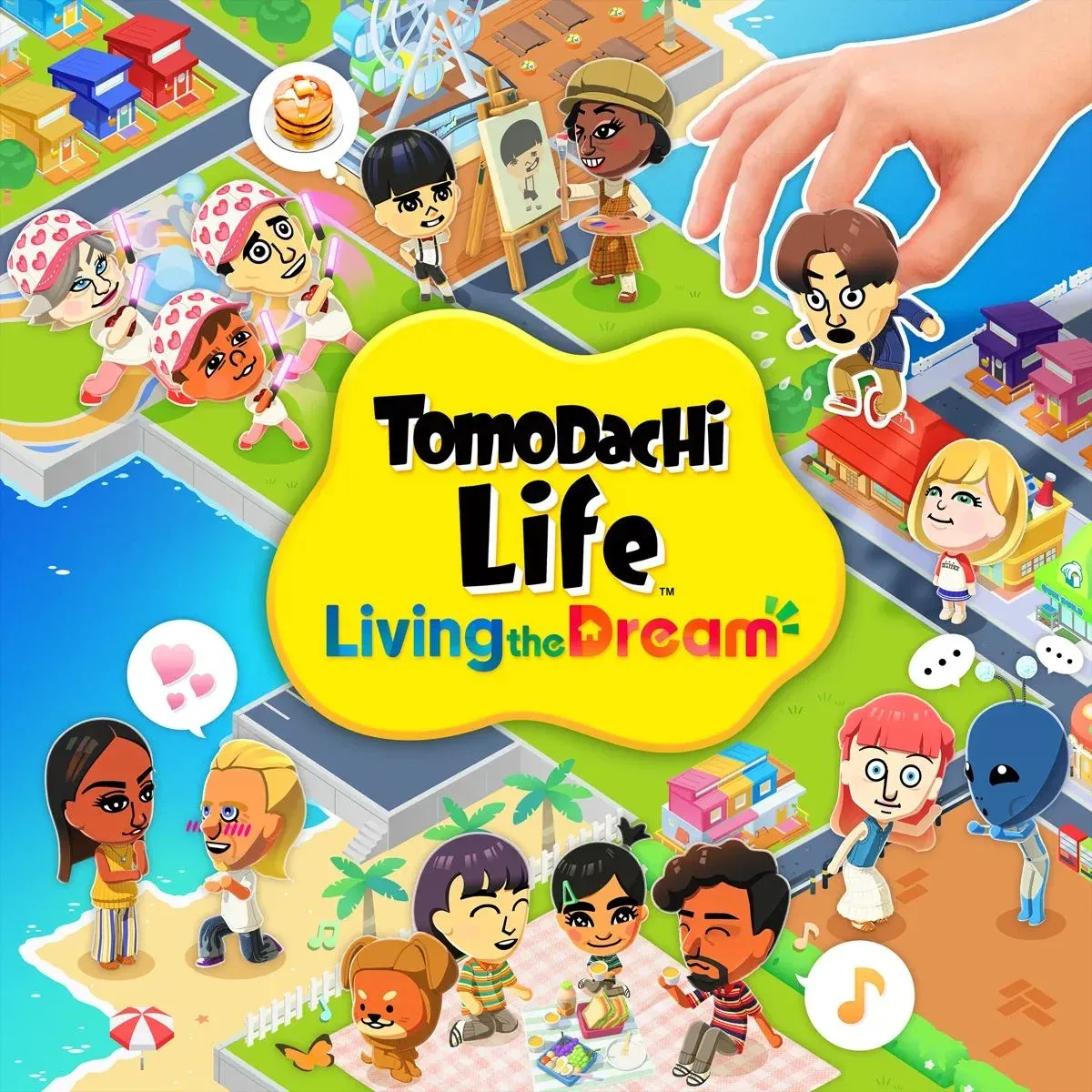


Nintendo finally brought Tomodachi Life back after more than a decade of fan requests, and Tomodachi Life: Living the Dream is already doing something Animal Crossing: New Horizons never quite managed for a lot of players. It respects your time. But there is a problem sitting right next to all that goodwill, and it has everything to do with which hardware Nintendo chose to prioritize.
What makes Living the Dream click where New Horizons didn't
Animal Crossing: New Horizons built its entire identity around daily commitment. Log in every day, complete your tasks, tend your island. Miss a few weeks and you return to weeds, missing villagers, and a stalk market that punished your absence. For a lot of players, that structure eventually flipped from rewarding to suffocating.
Tomodachi Life: Living the Dream takes a different approach. You are the island's overseer, not its resident laborer. You design your Miis, set up the space, and then watch the chaos unfold. Five minutes of checking in on your islanders feels satisfying on its own. There is no mounting backlog of tasks waiting to guilt you back into a longer session.
The comparison that keeps circulating is apt: playing Animal Crossing: New Horizons is like sitting down for a long-form video essay every single day. Tomodachi Life is more like scrolling through a few genuinely funny short clips. Neither format is wrong, but one is a lot easier to return to after a two-week break without feeling like you failed the game.
The Mii customization depth, the absurd random interactions between residents, and the low-pressure real-time clock all combine into something that feels genuinely fresh for the life-sim genre. Fan communities are already building companion tools to track island events that the game itself doesn't surface clearly, which is a strong signal that people are invested.
The Switch 2 question Nintendo hasn't answered
Here's the thing: Tomodachi Life: Living the Dream launched on Nintendo Switch at a moment when the Switch 2 is already out and in players' hands. That timing creates a real tension.
Backward compatibility means Switch 2 owners can play it, so it is not a locked-out situation. But there is a meaningful difference between a game that runs on your hardware and one that was built for it. Living the Dream launching without a Switch 2 native version means it misses out on whatever hardware improvements Nintendo's new console brings, and it signals to the growing Switch 2 install base that this title was not designed with them in mind.
For a game with this much momentum, that feels like a missed opportunity. The life-sim audience skews toward players who put serious hours into a single title over months. Those are exactly the players who upgrade their hardware and then want their favorite games to grow with it. Launching Living the Dream as a Switch title in a Switch 2 era puts a ceiling on what the game can become.
Nintendo has not announced any Switch 2 version or enhancement update for Living the Dream. Whether that changes is an open question, but given how quickly the community has embraced the game, the demand is clearly there.
What this means for players right now
If you are on original Switch hardware, Living the Dream is an easy recommendation for anyone who burned out on Animal Crossing or who missed the original Tomodachi Life on 3DS entirely. The low daily time commitment and genuinely unpredictable Mii interactions make it one of the more enjoyable life-sims Nintendo has released in years.
Switch 2 owners get the game through backward compatibility, and by most accounts it runs fine. But "runs fine" is a lower bar than "takes advantage of what your hardware can do."
The key here is that Nintendo has a game generating real buzz right now. The window to announce a Switch 2 version or enhancement is open. How long it stays open depends on whether Nintendo treats Living the Dream as a legacy title or as the start of something bigger.
For more on what is worth playing right now, check out the latest reviews or browse more guides to get the most out of your current library.