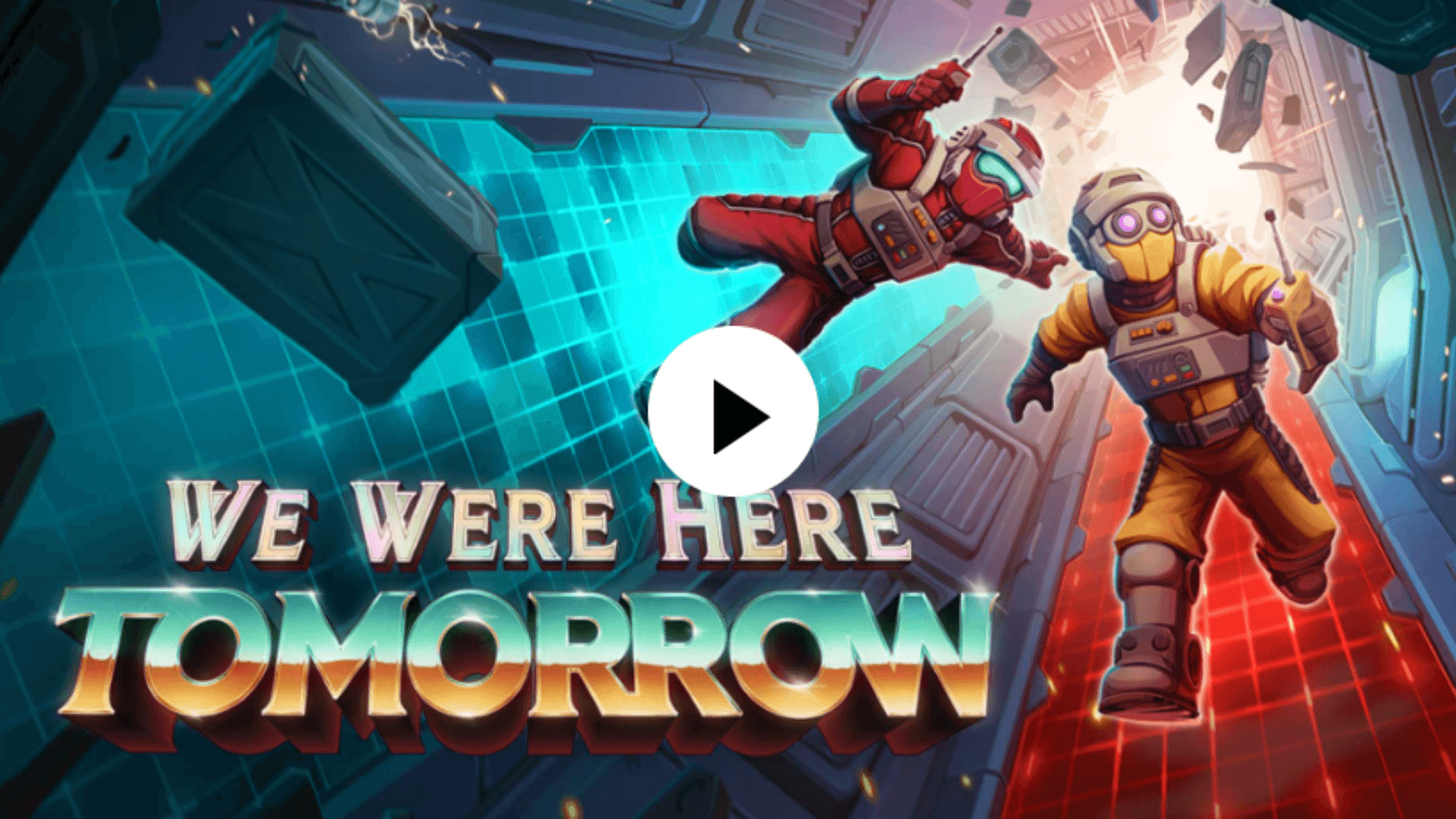

We Were Here Tomorrow marks a notable shift for Total Mayhem Games' cooperative puzzle series. Now available on Xbox Series X|S, the game trades the franchise's signature icy castles and medieval dungeons for a retro-futuristic aesthetic pulled straight from 1980s sci-fi. The core loop of two-player communication and problem-solving stays intact, but the setting feels lighter, more colorful, and deliberately nostalgic.
Executive Producer Luite Douma describes the game as an effort to deepen the series' emphasis on shared moments — exploring together, solving puzzles in tandem, and discovering secrets as a team within a world that balances familiarity with something genuinely different.

Use code TRYHARD33 at checkout to redeem this offer before code expires again.
Get 33% Off GAMES+ Subscription
A cassette-futurism playground
The world of We Were Here Tomorrow leans hard into cassette futurism — chunky tech, bold colors, and design choices that scream 1980s retrofuturism. Previous games in the series leaned on tension and isolation. Tomorrow opts for something closer to cozy exploration with a mystery layered on top. The shift in tone is immediate and intentional.
Environments are bigger and more open than what the series has offered before. Players move through puzzle-dense spaces that reward observation and collaboration. As you complete challenges, the world reacts — visual changes mark your progress and give weight to the teamwork required to get there. It's a tangible payoff that earlier entries handled more subtly.
Sequels and starting points
Narrative-wise, We Were Here Tomorrow picks up after We Were Here Forever. Series veterans will catch story threads and Easter eggs that tie back to earlier games, including some long-awaited answers about the Jester and other recurring mysteries.
That said, newcomers can start here without confusion. The story stands on its own. Returning players get bonus context and hidden details, but the game doesn't gate its enjoyment behind franchise knowledge.
Talking through walls
Communication is still the backbone of the experience. Players rely on an upgraded walkie-talkie system and proximity chat to coordinate while separated. Asymmetrical design means each player has different tools and sees different information. Solving puzzles requires clear descriptions, active listening, and the ability to interpret what your partner is telling you from their perspective.
Puzzle variety ranges from logic-heavy brain teasers to traversal challenges that lean on unique abilities. The pacing shifts between these types to keep the rhythm from stalling. Narrative beats also respond to how well players communicate, adding another layer to exploration beyond just flipping switches and opening doors.
Bigger spaces, smoother movement
We Were Here Tomorrow ditches the room-to-room structure of earlier games. Instead, players explore larger themed areas with distinct visual identities. Completed objectives trigger environmental changes that reflect progress — a design choice that makes the world feel reactive rather than static.
Movement has been refined to support this shift. Traversal feels more fluid, which helps when navigating the expanded spaces. The result is a game that encourages taking in the environment as much as solving what's in front of you.
Built for two
We Were Here Tomorrow lives and dies on cooperative moments. The series has always thrived on miscommunication, sudden breakthroughs, and shared victories. Tomorrow doubles down on perspective and teamwork. Many puzzles force players to consider not just their own view but their partner's, reinforcing trust and collaboration as core mechanics.
The new mechanics, expanded environments, and sci-fi setting give the series a fresh coat of paint without abandoning what made it work. Whether you're playing with a regular co-op partner or someone new, the game aims to deliver an experience that feels both recognizable and different enough to justify the shift.
Make sure to check out our articles on gaming gadgets:
Best Apple Products for Gaming
Best Nintendo Switch Accessories
Best Gaming Androids (phones)
Frequently Asked Questions (FAQs)
What platforms is We Were Here Tomorrow available on?
We Were Here Tomorrow is available exclusively on Xbox Series X|S.
Do I need to have played previous We Were Here games to enjoy Tomorrow?
No. The story works as a standalone experience. Newcomers can jump in without prior knowledge. Series fans will spot extra connections and Easter eggs, but they're not required to understand what's happening.
How does co-op communication work in the game?
Players use an upgraded walkie-talkie system and proximity chat to share information while solving puzzles from separate locations. Clear communication is the difference between progress and frustration.
What is asymmetrical gameplay in We Were Here Tomorrow?
Each player has different tools and sees different information. Puzzles require both players to coordinate and understand how their roles fit together.
What kind of setting does the game feature?
The game takes place in a retro-futuristic world inspired by cassette futurism — think 1980s sci-fi with chunky tech, bold colors, and larger explorable areas compared to previous games in the series.
Will there be large exploration areas?
Yes. The game features expansive themed environments that change as you complete puzzles, giving a sense of progression and shared accomplishment that earlier entries handled more subtly.