Search games, articles, guides...CtrlK
Sign InGet Started

Every resource in Subnautica 2 listed by category, with crafting uses and tips for finding them fast on the ocean floor.

Written by Larc
Content Writer
See more GAMES.GG guides on Google
Add us as a preferred source and our guides show up first in your results.
Subnautica 2 Guide: How to Craft a Battery
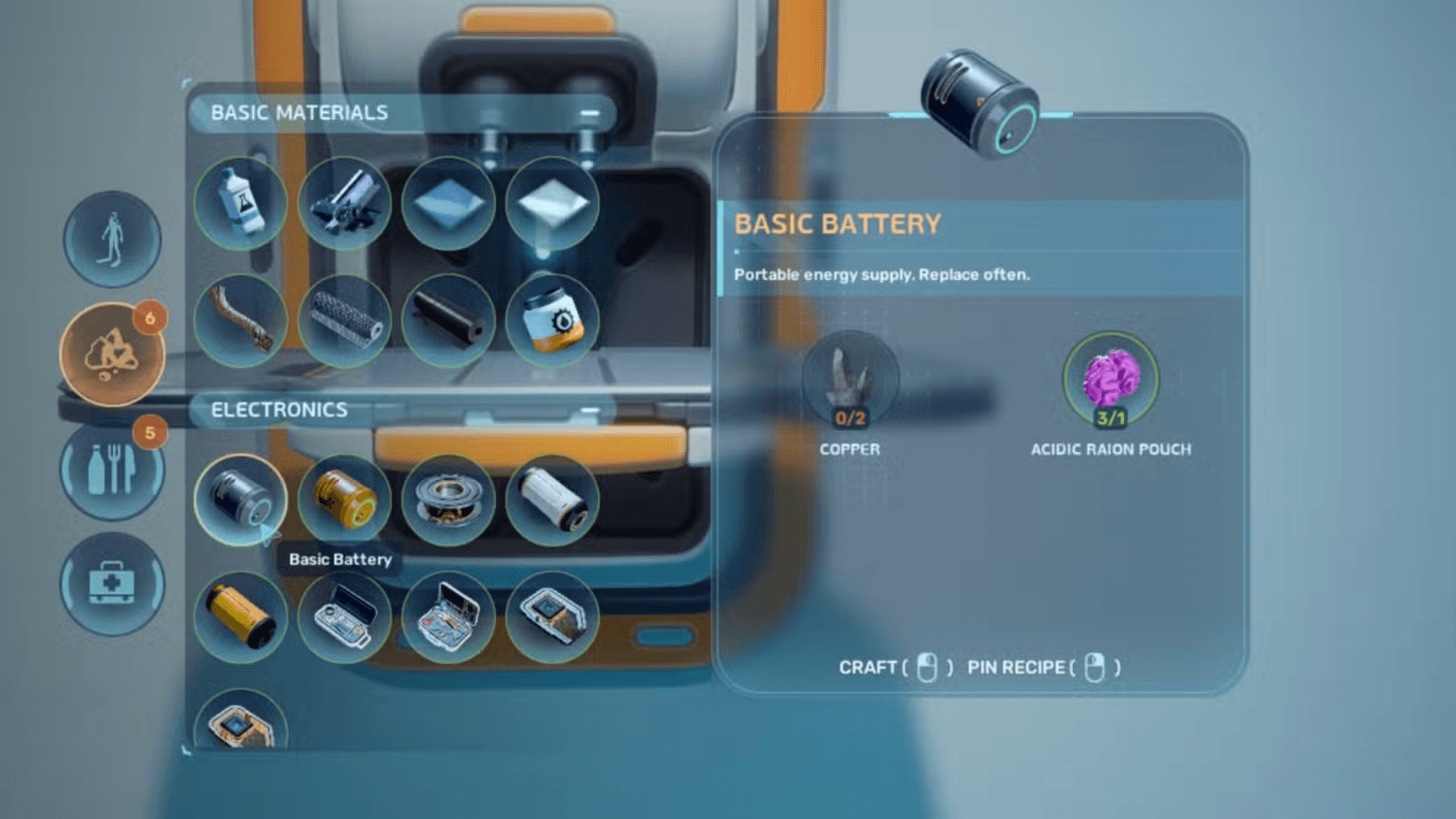
Craft a Basic Battery in Subnautica 2 using 2x Copper and 1x Acidic Raion Pouch. Here's where to find both materials fast.
Subnautica 2 Adavnced Survival Tips
Master oxygen, beacons, base building, and the Tadpole vehicle with these essential Subnautica 2 survival tips for new players.
Subnautica 2 Food, Water, and Digestion Guide: Stay Alive
Master hunger, thirst, and Digestive Incompatibility in Subnautica 2 with this step-by-step survival guide.
The seabed in Subnautica 2 is packed with materials, but the game does almost nothing to point you toward them. You can spend an entire session swimming in circles wondering why you can't craft that next piece of equipment, only to realize the resource you need has been sitting on a cave ceiling the whole time. This guide covers every resource currently available, broken down by category, with notes on what each one actually builds.
Resources split into three groups: Inorganic Resources (minerals and ores you mine from the environment), Flora and Fauna (organic materials harvested from plants and creatures), and Salvage (wreckage and debris found in the world). A small handful of items exist in the current build but have no crafting recipe attached yet.
Knowing which category a resource belongs to tells you where to look. Inorganic materials are mostly on cave walls and the ocean floor. Flora and fauna resources come from specific plants and sea creatures. Salvage turns up near wrecks and debris fields.
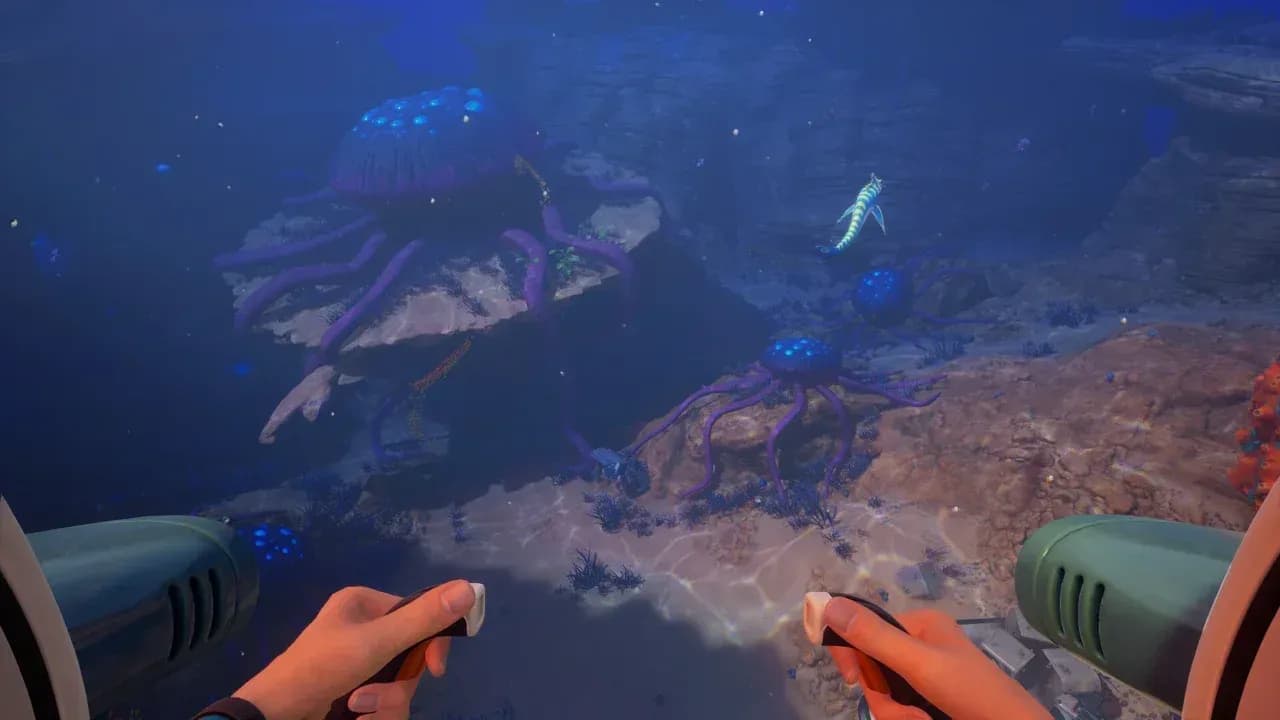
Fabricator resource crafting menu
These are the backbone of most equipment recipes. Titanium, Copper, and Quartz come from Raw Ore nodes, so finding Raw Ore deposits is your fastest path to all three at once. Raw Ore processes into Copper, Quartz, and Titanium at the Fabricator.
Titanium ores appear as rock-like structures scattered across the ocean bed near the surface. Copper grows along the walls and ceilings of underwater caves. Quartz sits inside the large orange coral formations on the ocean floor, which are easiest to spot at night when they glow. For a dedicated location guide, check out where to find Quartz in Subnautica 2.
| Resource | Key Crafting Uses |
|---|---|
| Atacamite | Axum Interface Chip, Echo Location, Mangalloy Ingot, Ultra High Capacity Air Tank |
| Axum Bacterial Culture | Metal Form |
| Celestine | Axum Pot, Axum Street Lamp, Modification Station, Strontium, Tadpole Depth Module Mk. 1 |
| Conduit Crystal | Advanced Battery, Bioscanner, Entangled Power Cell, Feedback Resonator, Improved Fins |
| Crab Feces | Biofuel Block |
| Creature Enamel | Enameled Glass |
| Cyan Pigmente | Cyan Glowstick |
| Deepwing Egg Clump | Axum Etching Acid, Pavlova |
| Gold | Advanced Wiring Kit, Gold Ingot, Thermal Plant |
| Lead | Sonic Resonator, Sugar of Saturn |
| Lithium | Current Ring, Lithium Grains, Plasteel Ingot, Portable Oxygen Generator |
| Pent | Biofuel Block, Mild Acid |
| Prismatic Shell | Mineralized Water Tablet, Powdered Shell |
| Raw Ore | Copper, Quartz, Titanium |
| Salt | Glass, Halfmoon Jerky, Isotonic Water, Nutrient Block, Power Cell, Power Storage, Tailing Jar |
| Sulfur | Advanced Wiring Kit, Heat Resistance Chip, Repair Tool, Strong Acid |
| Troilite | Entangled Power Cell, Mangalloy Ingot, Photovoltaic Charger, Tadpole Depth Module Mk. 2 |
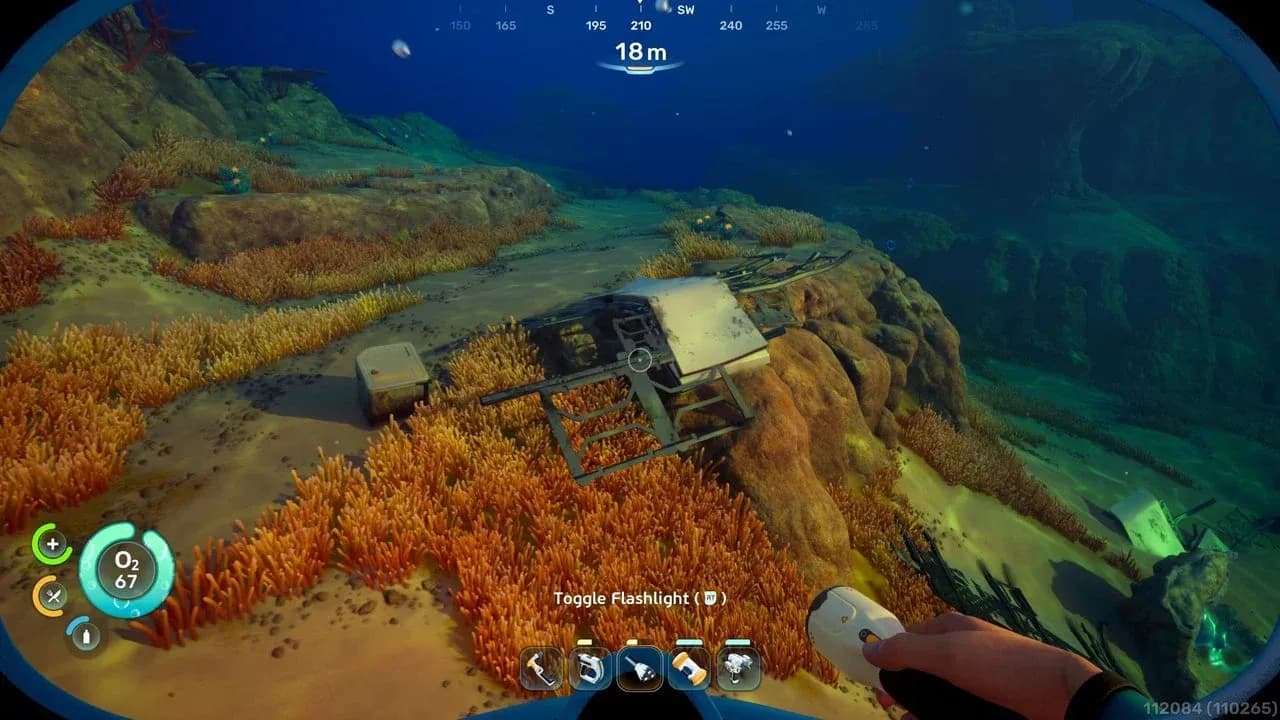
Copper nodes on cave ceilings
Organic resources come from the living parts of the ocean. Some you harvest directly from plants, others drop from creatures or their byproducts. Fibrous Pulp is arguably the most useful flora resource in the early game, feeding into Alcohol, Biofuel Block, Fiber, Water, and several food recipes. Lucifer Rotsac is the orange glowing organism you'll spot along the ocean floor, and it's the only source of Rubber in the game. You craft Rubber at the Fabricator using 2 Lucifer Rotsac.
Medical Gel Sac feeds directly into First Aid and Enhanced First Aid Kit recipes, so keeping a supply on hand matters for longer dives. Acidic Raion Pouch is your source for Basic Battery and Mild Acid, two things you'll need early and often.
| Resource | Key Crafting Uses |
|---|---|
| Acidic Raion Pouch | Basic Battery, Mild Acid |
| Cherimaya Rotsac | Cherimoya Chutney, Pavlova |
| Coral Shavings | Coral Jar, Coral Mash, Small Coral Jar |
| Fibrous Pulp | Alcohol, Biofuel Block, Fiber, Water, Mimic Pylon, Threemoon Temaki |
| Flash Slug | Isotonic Water |
| Halfmoon | Cooked Halfmoon, Grease, Halfmoon Jerky, Threemoon Temaki |
| Harvestmoon | Cooked Harvestmoon, Macaron Crisp Tesst, Threemoon Temaki |
| Hoverthorn | Cooked Hoverthorn, Hoverthorn Souvlaki |
| Lucifer Rotsac | Cradle Shootroot, Floating Support, Glowstick, Grease, Rubber |
| Macaron Lining | Macaron Crisp Tesst |
| Medical Gel Sac | Acid Raion, Enhanced First Aid Kit, First Aid |
| Necrolei Cyst | Strong Acid |
| Water Slug | Biosampling Kit, Mineralized Water Tablet, Water |
Several flora and fauna items, including Aeroshell Sponge, Cooked Pneuma, Pneuma, and Quadrate, appear in the build but currently have no downstream crafting recipe attached to them.
Managing what you eat and drink while farming these materials is its own challenge. The Subnautica 2 food, water, and digestion survival guide covers how to handle hunger, thirst, and Digestive Incompatibility so you can stay underwater longer without dying to your own stomach.
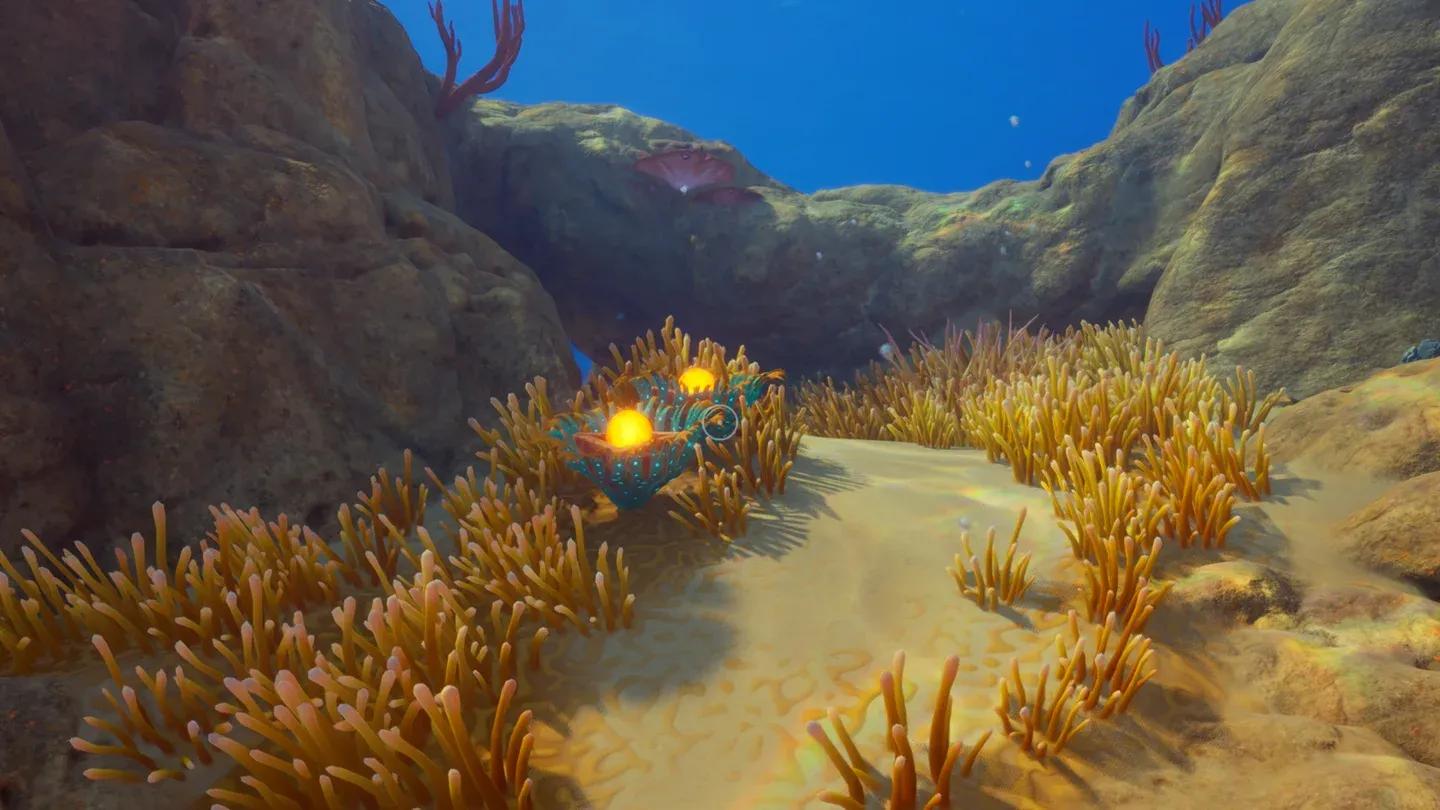
Lucifer Rotsac on the ocean floor
Salvage is the smallest category and currently contains three entries. Metal Salvage processes into Salvaged Titanium at the Fabricator, making it a secondary source of Titanium for when direct ore deposits run thin. Axum Resonator and Biobed Capsule are listed in the current build but have no crafting recipe attached yet.
| Resource | Crafting Use |
|---|---|
| Metal Salvage | Salvaged Titanium |
| Axum Resonator | None (current build) |
| Biobed Capsule | None (current build) |
The following items exist in the game right now but don't feed into any recipe. They may be placeholders for content still being developed:
Hold onto these rather than discarding them. Given that Subnautica 2 is in active development, recipes for these materials could arrive in a future patch.
Finding a resource is only half the job. You also need the corresponding recipe before the Fabricator will let you build anything with it. Scanning items in the world is how most blueprints unlock. The Subnautica 2 scanner guide covering how to scan items and unlock recipes walks through crafting the Scanner and getting the most out of it.
For tools that use these resources as components, the complete Subnautica 2 tool crafting guide lists every tool, what it does, and exactly what materials you need to build it at the Fabricator.
Not all materials are equal in the early hours. Based on the crafting tables above, these are the ones that feed the most recipes and should be your first targets:
Getting these six resources sorted early puts you in a strong position for both survival and base building. Speaking of which, if you're ready to set up a permanent base, the Subnautica 2 base oxygen and power guide covers the Habitat Builder, power sources, and storage, all of which depend on the resources listed here. For more guides covering every system in the game, browse the full Subnautica 2 guide collection.