
The rune system in TBH: Task Bar Hero looks deceptively simple until you spend your first batch of resources in the wrong direction and realize your party still dies on idle runs. There are eight distinct rune paths, each solving a different problem, and the game does not tell you which one matches your current bottleneck. This guide cuts through that ambiguity with a clear priority order built around what actually slows players down at each stage.
What are the rune paths in TBH: Task Bar Hero?
The rune system splits into eight named paths, each targeting a specific aspect of your account. Understanding what each one does before spending anything is the difference between a smooth progression and a frustrating rebuild.
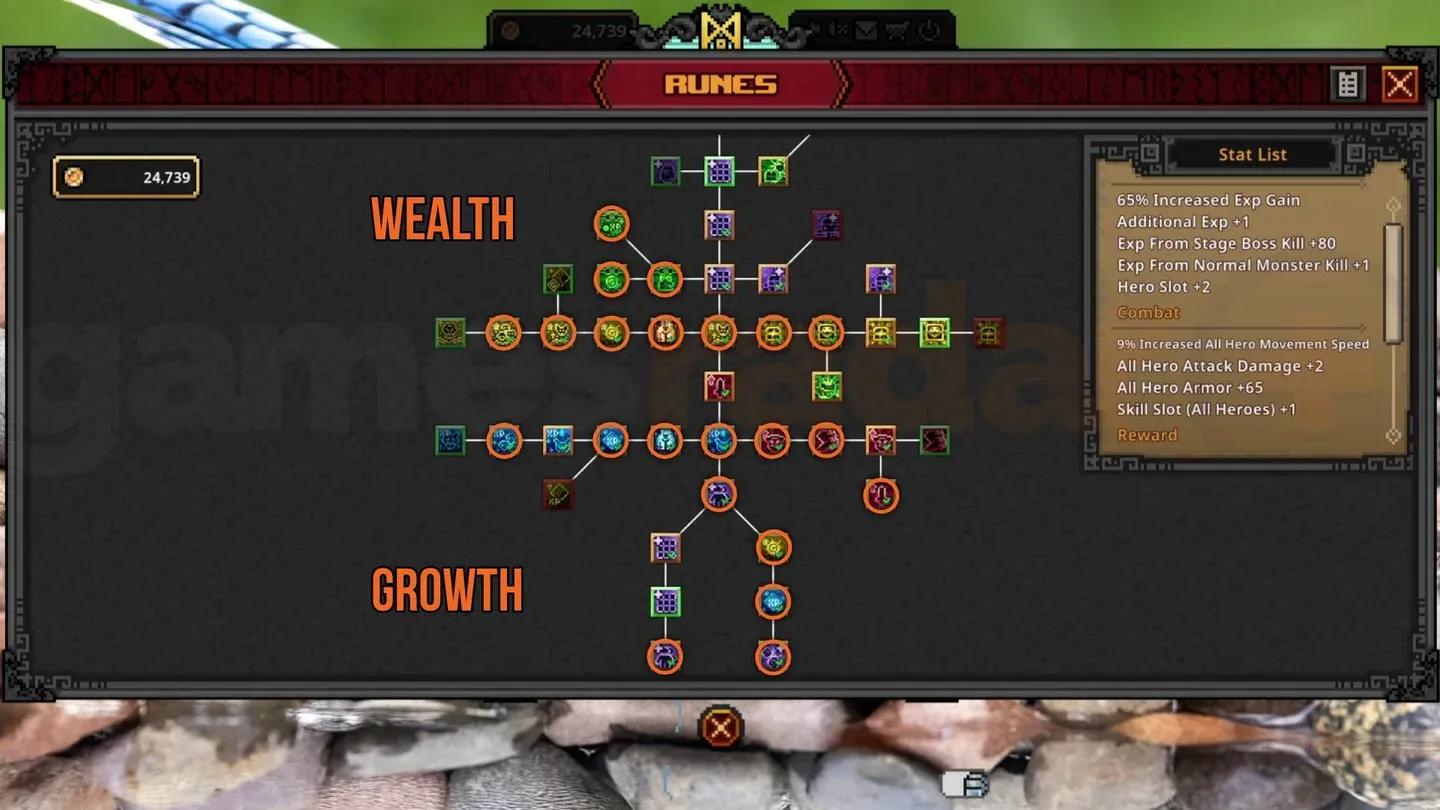
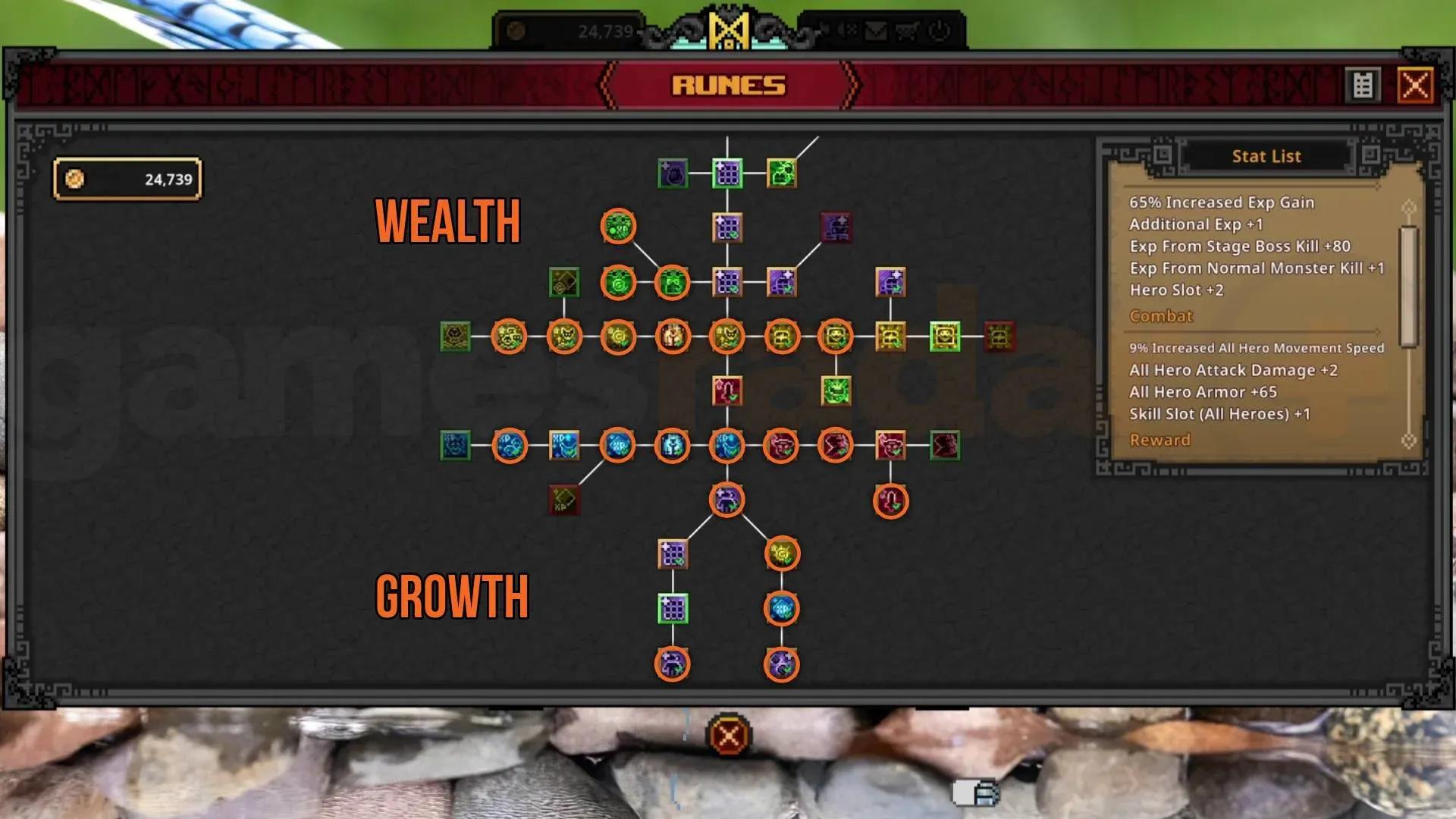
Rune tree selection screen
| Rune | Focus Area | When It Pays Off |
|---|---|---|
| Rune of War | Combat damage and clear speed | Fights are slow or runs keep stalling |
| Rune of Growth | Broad account scaling | Early on, when gains apply to most runs |
| Rune of Command | Hero slots and party composition | Once extra roles would meaningfully help |
| Rune of Awakening | Class-specific late scaling | After your class direction is locked in |
| Rune of Wealth | Gold economy | Once survival is no longer the problem |
| Rune of Expansion | Long-term account utility | Midgame or later |
| Rune of Repose | Idle and offline value | Situational, low-attention playstyles |
| Far North | Chest handling and automation convenience | After Auto-retry and survival are stable |

Which runes should you unlock first?
For most players, the opening priority comes down to two candidates: Rune of War and Rune of Growth. Both are strong early, but they solve different problems.
Go with Rune of War if your runs are failing because fights drag on or enemies are outpacing your damage output. Slow clears mean fewer drops, which means slower progression across every other system. Fixing combat speed first unblocks everything else.
Go with Rune of Growth if your runs are completing but progress feels flat. Growth provides broad gains that apply consistently across multiple runs, making it a reliable early pick when you are not dying but also not advancing quickly.
The one thing to avoid at this stage is jumping straight to economy or utility nodes. Rune of Wealth, Rune of Expansion, and Far North all assume a stable farming loop already exists. Investing there before your party can survive idle runs is wasted potential.
Rune of War node detail
When should you switch to Rune of Command?
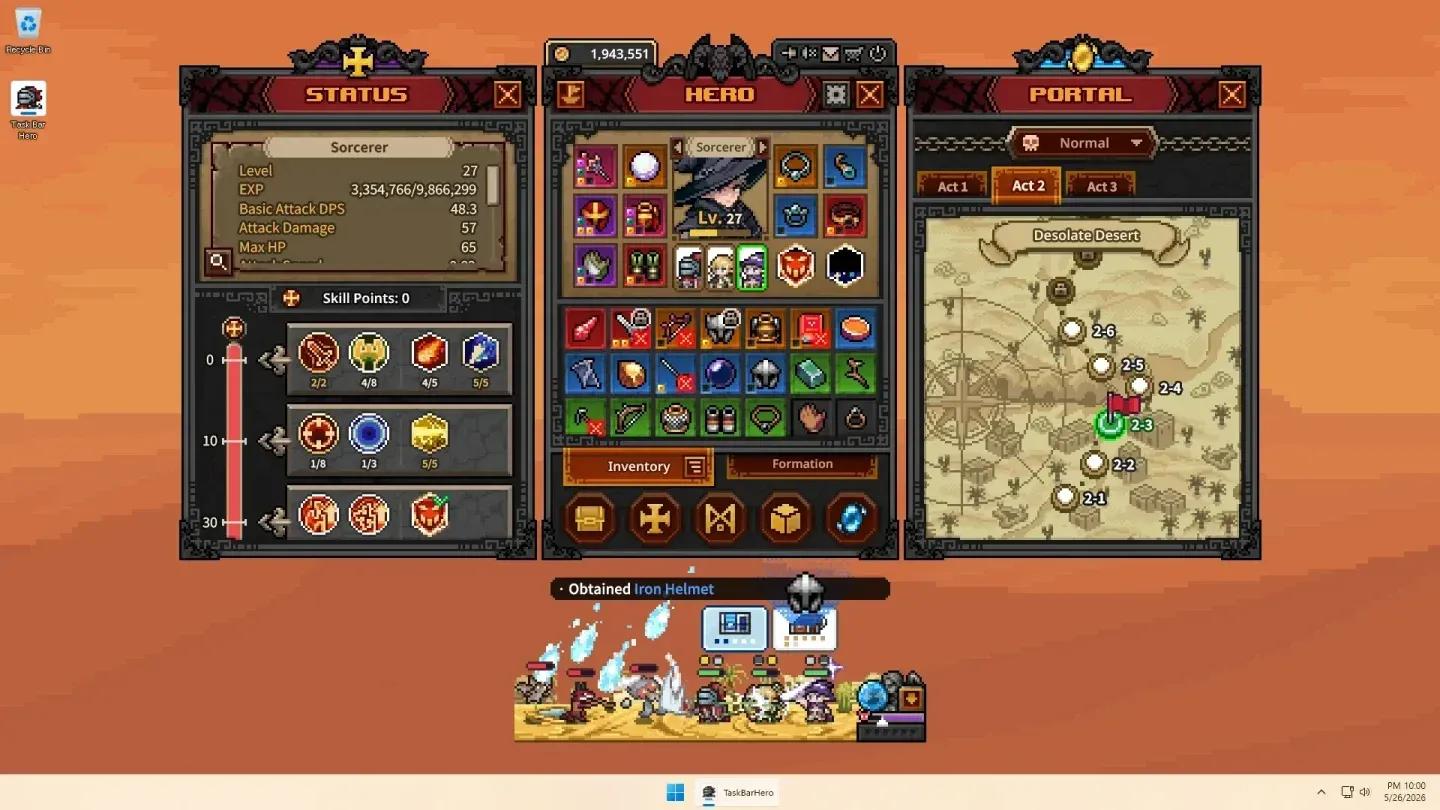
Rune of Command becomes valuable once hero slots and party composition start mattering. If you are running a single hero or a two-hero setup without a support role, adding a healer or sustain unit will do more for your survivability than any damage rune. Command is the path that opens up those composition options.
The practical trigger is this: if adding a second or third hero slot would let you fill a role your party is missing, Command becomes a high priority. Check out the guide on unlocking more hero slots to understand the exact costs and sequencing before committing resources here.
The standard three-role party structure worth building toward is a front-line tank, a healer or support, and a ranged or AoE damage dealer. Command is the rune path that makes that structure accessible.
How do you handle mid and late-game rune choices?
Once survival is stable and your party composition is set, the rune decision becomes about matching your current bottleneck rather than following a fixed order.
Rune of Awakening class path
Use this decision framework:
- Dying on idle runs points to survival and sustain nodes, not damage.
- Safe but slow clears point to the clear-speed lane, which usually means revisiting Rune of War or checking Rune of Awakening for class-specific boosts.
- Repeating the same stage with consistent clears is when Rune of Wealth starts earning its investment.
- Stuck on a specific wall often means the problem is party composition or a class mismatch, not the rune tree at all.
Rune of Awakening is worth noting specifically: it scales well but only after your class direction is already decided. Spending into it before you know which class you are committing to is a common mid-game mistake. If you are still testing classes, hold off and use that time to compare the class tier list to find your best fit.
Are rune choices class-specific?
Some rune paths are genuinely class-agnostic while others, especially Rune of Awakening, are built around amplifying a specific class direction. The safe approach is to treat global unlock order and class-specific choices as separate decisions.
For global progression, the War and Growth lanes work regardless of which hero you are running. Command works for any multi-hero setup. Wealth and Expansion are account-level investments that apply broadly.
For class-specific scaling, Awakening is where the divergence happens. A Knight running a tank build has different Awakening priorities than a Ranger pushing damage output. Check the dedicated Knight build guide or Ranger build guide before spending into Awakening nodes to make sure the path matches your actual build.
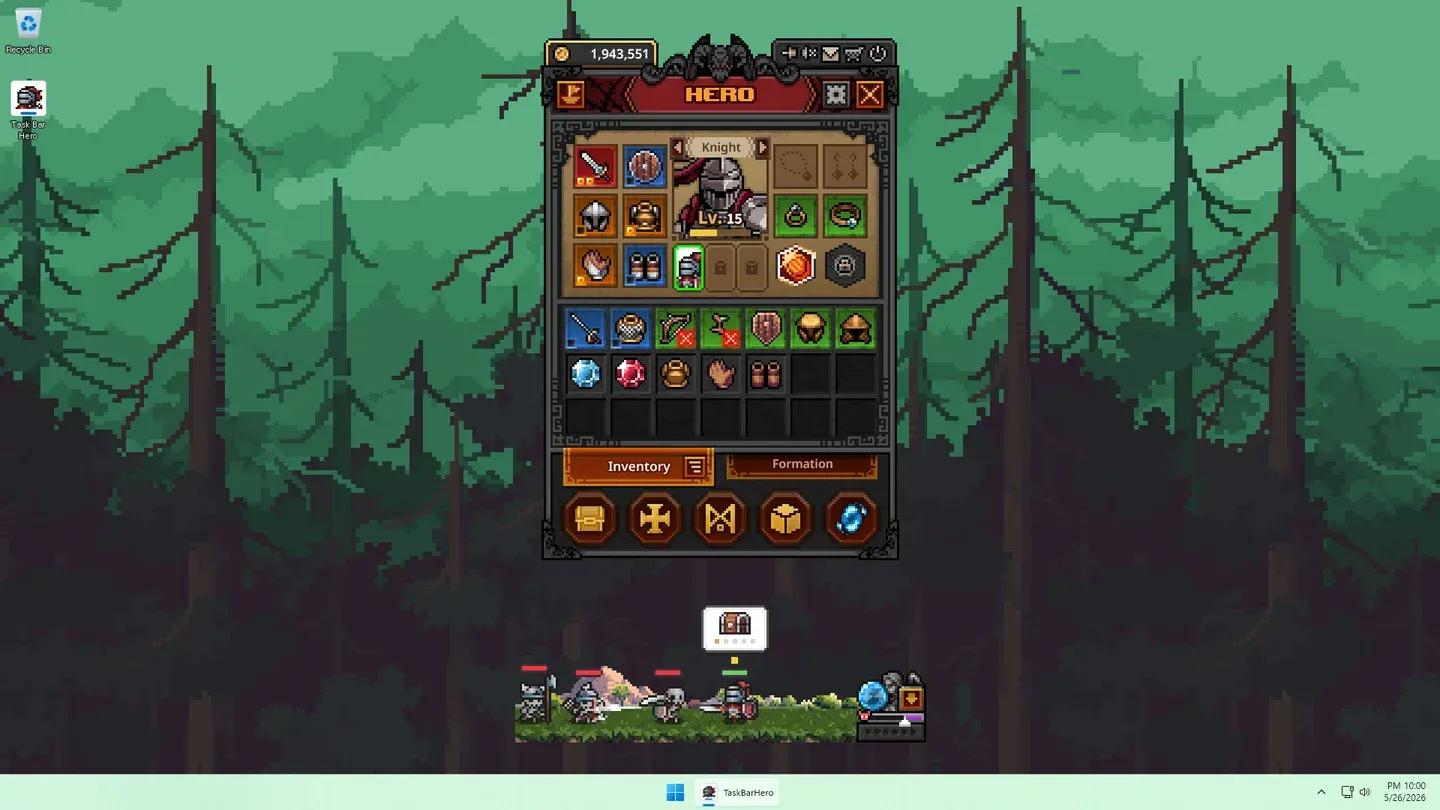
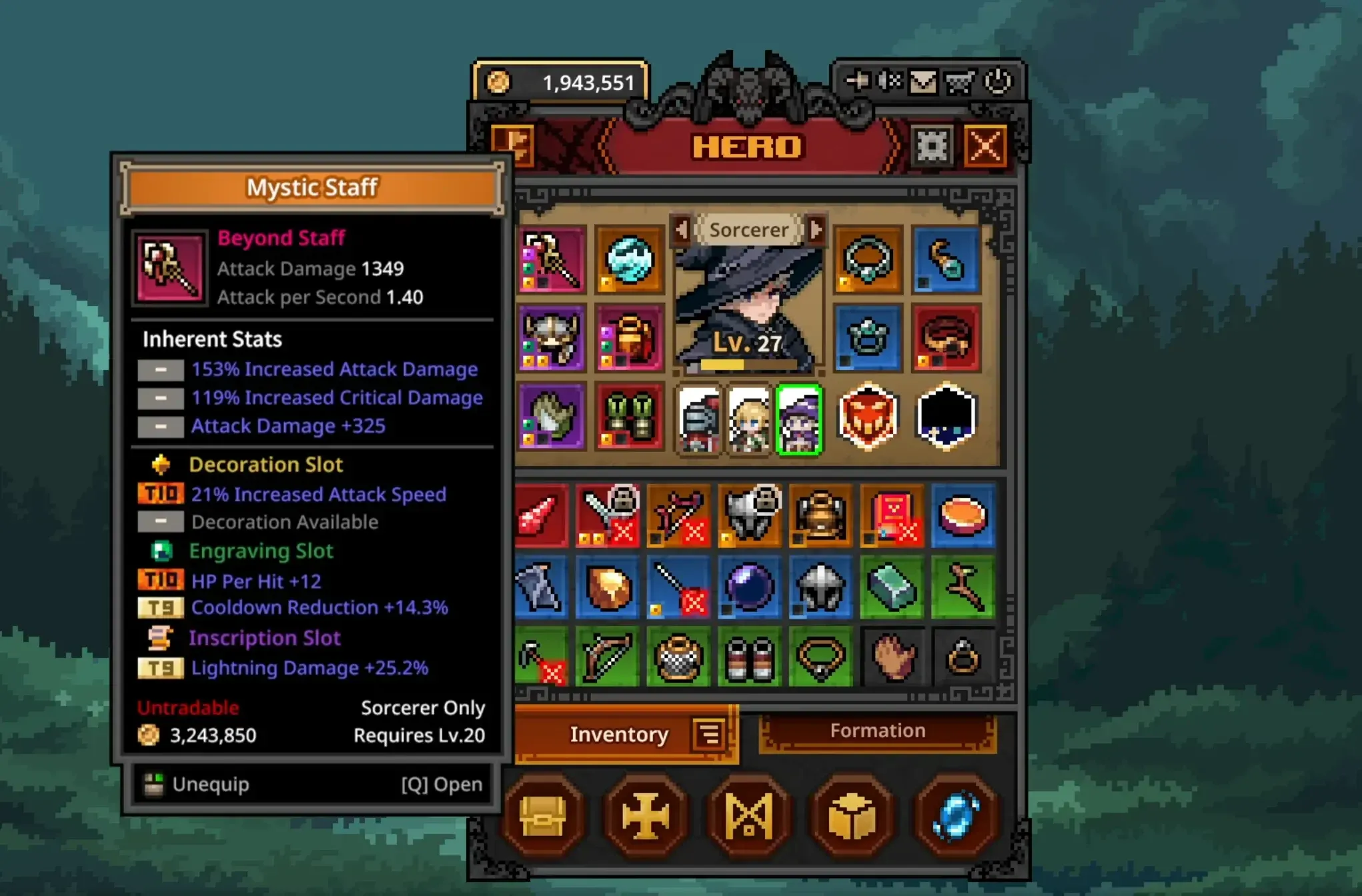
Hero class party setup view
Quick-reference rune priority order
For players who want the short version:
- Rune of War or Rune of Growth first, based on whether fights or progress speed is the problem.
- Rune of Command once hero slots would unlock a missing party role.
- Rune of Awakening after your class direction is confirmed.
- Rune of Wealth once farming runs are stable and consistent.
- Rune of Expansion in midgame when account systems need broader support.
- Rune of Repose and Far North last, and only if they match your playstyle.
The rune tree rewards players who match their spending to their current problem. Chasing late-game utility nodes before the fundamentals are solid is the most common way to stall progress in this game. Get survival and composition right first, then optimize.
For more help across every system in the game, the full TBH: Task Bar Hero strategy guides collection covers everything from beginner routing to advanced team builds.