
The sword is the weapon you start with in The Adventures of Elliot: The Millennium Tales, and it stays relevant through the final boss if you build it correctly. Its balanced attack speed, solid damage output, and reliable range make it the most forgiving weapon in the game. The real question is which magicite you slot in to push it from decent to dominant.
All sword magicite options
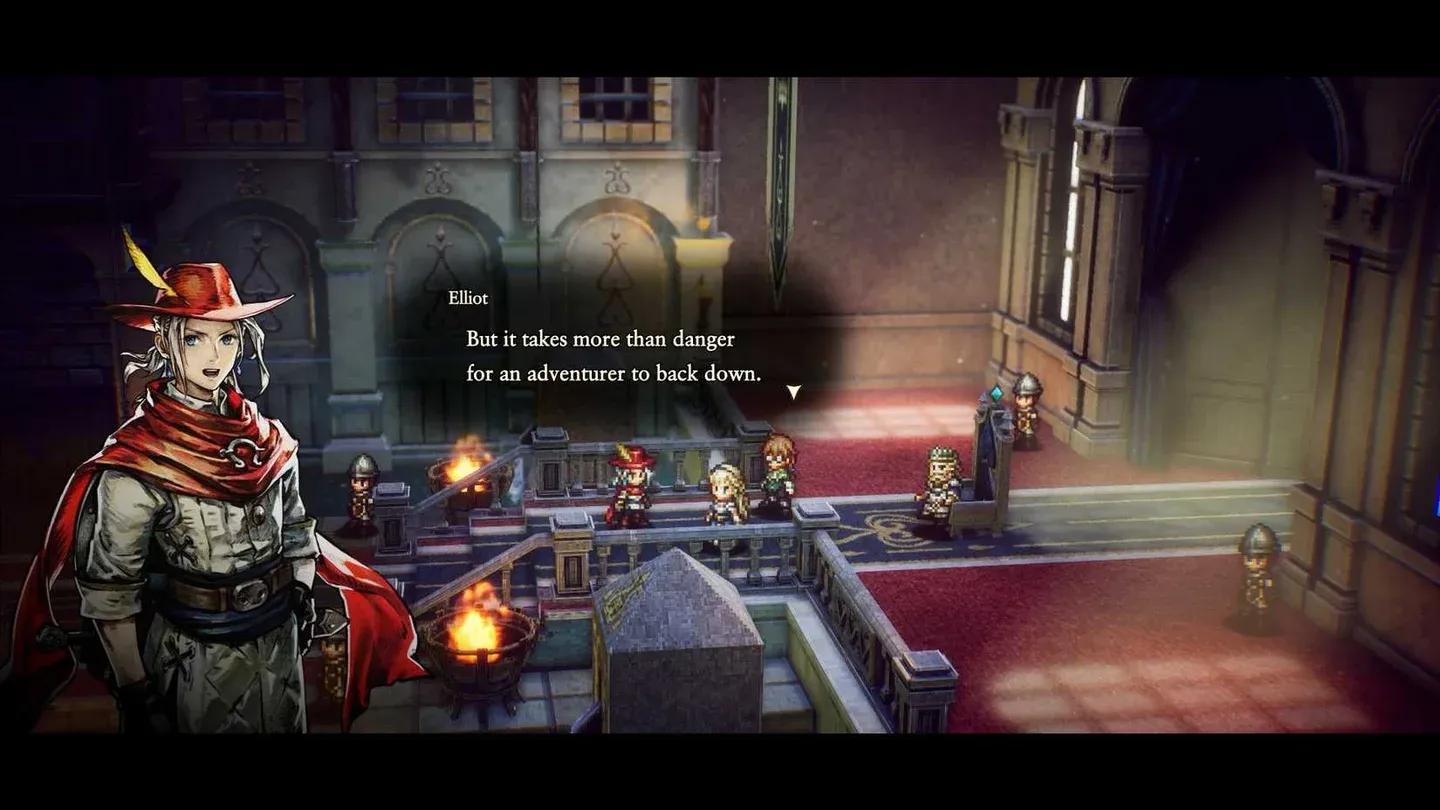
Sword magicite selection screen
Before committing to a build, it helps to see every option laid out. Here is every sword magicite available and what it does:
| Magicite | Effect |
|---|---|
| Attack Up | Raises sword attack damage |
| Critical Rate Up | Increases critical hit chance |
| Critical Damage Up | Increases damage dealt on critical hits |
| Unguarded Mayhem | Boosts sword damage but reduces shield stamina |
| Fortified Offense | Increases damage when shield stamina is high |
| Fighting Spirit | Releases damaging auras during charge attacks |
| Guard Counter | Fires slashes after a successful guard |
| Finisher | Increases damage when Elliot is low on health |
| Success Streak | Raises critical hit chance on the first attack after killing an enemy |
| Double Blade | Adds an extra ranged slash to charged attacks |
| Wide Blade | Increases the size of ranged slashes |
| Shield Repair | Restores shield stamina on hit |
| Total Guard | Improves guards after dealing sword damage |
| Defenseless Combo | Adds ranged slashes when your guard is broken |
| Charge Time Down | Reduces charge attack wind-up time |


What magicite should you prioritize?
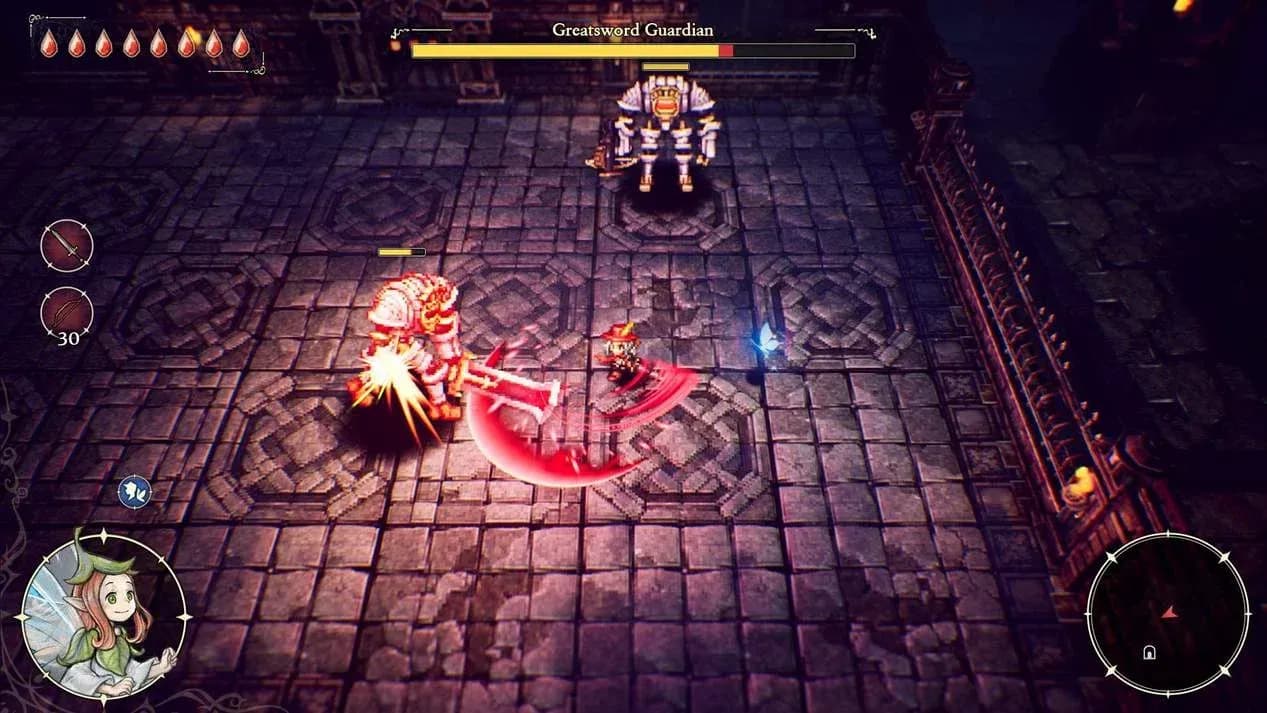
Rapid sword attacks in combat
The sword rewards an aggressive, mobile playstyle. Dash in, land several fast hits, dash out before the enemy counters. That loop is where the sword shines, and your magicite choices should support it.
Attack Up is the safest starting point. It raises sword damage across every attack in your moveset, costs relatively little, and has no downside. Treat it as a permanent fixture in your build regardless of what else you slot in.
Critical Damage Up pairs extremely well with the sword's speed. Because the sword attacks quickly and rewards back-attacks, critical hits come up more often than with slower weapons. A 5-star Critical Damage Up raises critical hit damage by 50%, which turns those frequent crits into a serious damage spike. This one is close to mandatory.
Critical Rate Up stacks naturally with Critical Damage Up. At 5 stars it pushes your critical hit rate up by 20%, meaning the two magicite together create a reliable crit loop that rewards the sword's rapid-attack rhythm.
Unguarded Mayhem is the high-risk, high-reward pick. The damage boost is substantial, but your shield takes more stamina damage when you get hit. Running it alongside Shield Repair offsets that weakness, since landing hits restores shield stamina. Alternatively, if you have invested heavily in health upgrades, the extra incoming damage becomes less threatening. Either way, Unguarded Mayhem is worth the slot once you are comfortable with the game's combat pacing.
Finisher changes how you approach fights at a fundamental level. When Elliot is low on health, sword damage increases noticeably. The magicite is expensive in terms of cost, but the payoff is real. One effective strategy is to use a different weapon as your primary damage source early in a boss fight, then swap to the sword once the boss's health gets low to take advantage of the Finisher bonus.
Should you build around charge attacks?
The short answer is no. The sword has a charge attack that fires projectile slashes forward, and magicite like Wide Blade and Double Blade extend and multiply those projectiles. At 5 stars, Wide Blade increases slash size by 150% and Double Blade adds a second slash to every special attack. The numbers look impressive on paper.
In practice, the sword's actual strength comes from rapid normal attacks, not charge attacks. Charging takes time, and that time is better spent dashing in for two or three fast hits and dashing back out. Weapons like the spear and chain sickle benefit far more from charge-focused builds. Save Wide Blade and Double Blade as situational tools against stunned enemies, not as the core of your strategy.
Best endgame sword build
This build assumes a magicite cap of 60 with all nine slots at 5 stars. It is the configuration that produces the most consistent damage output while keeping the rapid-attack playstyle intact.
| Slot 1 | Slot 2 | Slot 3 |
|---|---|---|
| Unguarded Mayhem | Fortified Offense | Fighting Spirit |
| Guard Counter | Finisher | Success Streak |
| Critical Damage Up | Critical Rate Up | Attack Up |
The combination of Unguarded Mayhem and Fortified Offense creates an interesting tension that actually works in your favor. Unguarded Mayhem weakens the shield, but Fortified Offense rewards you for keeping shield stamina high. The solution is to play aggressively enough that you are rarely getting hit in the first place. Guard Counter adds free ranged slashes after successful guards, which synergizes well with Total Guard-style defensive windows. Fighting Spirit contributes damage during the occasional charge attack against stunned targets.
The crit layer (Critical Damage Up plus Critical Rate Up plus Success Streak) means that the first hit after killing any enemy has an elevated chance of critting, and when it does, it hits hard. In rooms with multiple enemies, this creates a snowball effect that clears groups quickly.
Which swords are worth using?
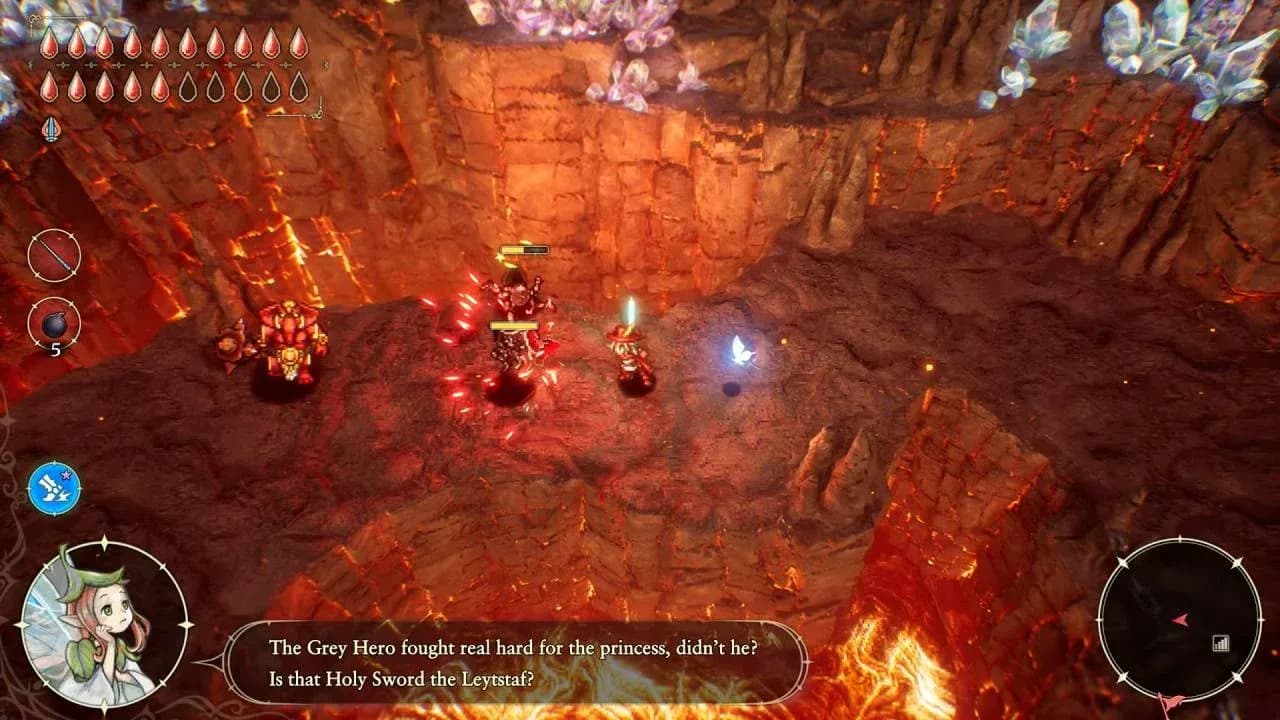
Leytstaf sword stats and location
There are 3 swords in the game, each tied to a specific time period. Here is how they stack up:
| Sword | Attack | Location | Time Period |
|---|---|---|---|
| Longsword | 8 | Starting weapon | Age of Safekeeping |
| Dusk Sword | 12 | Doorway Ruins (Sublevel One) Red Chest | Age of Reconstruction |
| Leytstaf | 16 | Water Ruins Red Chest | Age of Reconstruction |
The Leytstaf is the strongest sword at 16 attack, but reaching its chest requires both the Dive ability and the Best-Weapon Needle item. If you want to track down every weapon across all types, the all weapon locations guide covers every sword, spear, hammer, bow, and more with exact unlock methods.
The Dusk Sword at 12 attack is a solid upgrade over the starting Longsword and accessible much earlier in the Age of Reconstruction without any special prerequisites. Pick it up as soon as you reach Doorway Ruins and use it until you can meet the Leytstaf requirements.
How does the sword compare to other weapons?
The sword sits in a different category from the game's more specialized weapons. The bow and boomerang both have dedicated magicite ecosystems that reward specific playstyles, and if you want to explore those, the best bow magicite build and best boomerang magicite build break those down in full. The sword's advantage is that it never has a bad matchup. It handles single targets, groups, and bosses without requiring you to rethink your approach.
For everything else you need to master the game, the full The Adventures of Elliot: The Millennium Tales strategy guides collection covers builds, weapon locations, farming routes, and more.